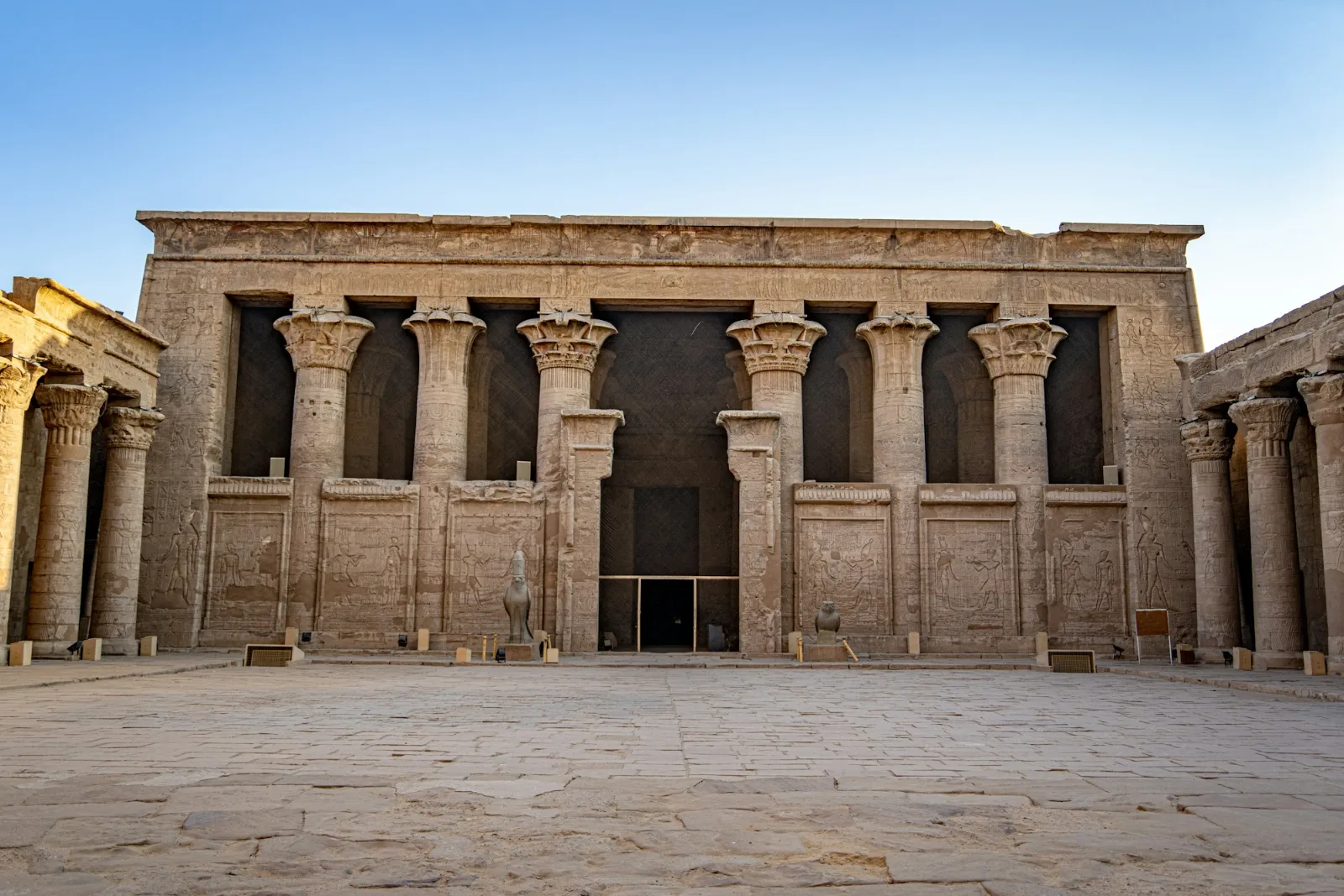
If you want to understand what a complete Egyptian temple looked and felt like, come to Edfu. The Temple of Horus still has its towering pylon, its courtyard, its roofed halls and its sanctuary, with walls covered from floor to ceiling in carved text.
Walking from the bright forecourt into the dim inner chambers, you follow the same path the priests once took.
The temple was built under the Ptolemaic kings in the last three centuries BC, yet it faithfully follows traditions that were already thousands of years old. It is dedicated to Horus, the falcon god of kingship, and is often called the best-preserved temple in Egypt.
Edfu lies on the Nile between Luxor and Aswan, and it is a highlight of almost every Nile cruise.
Construction began on 23 August 237 BC under King Ptolemy III. The main temple was finished about 25 years later, but decoration and additions continued for almost two centuries. The great pylon and the outer halls were completed under Ptolemy XII, father of Cleopatra VII, around 57 BC.
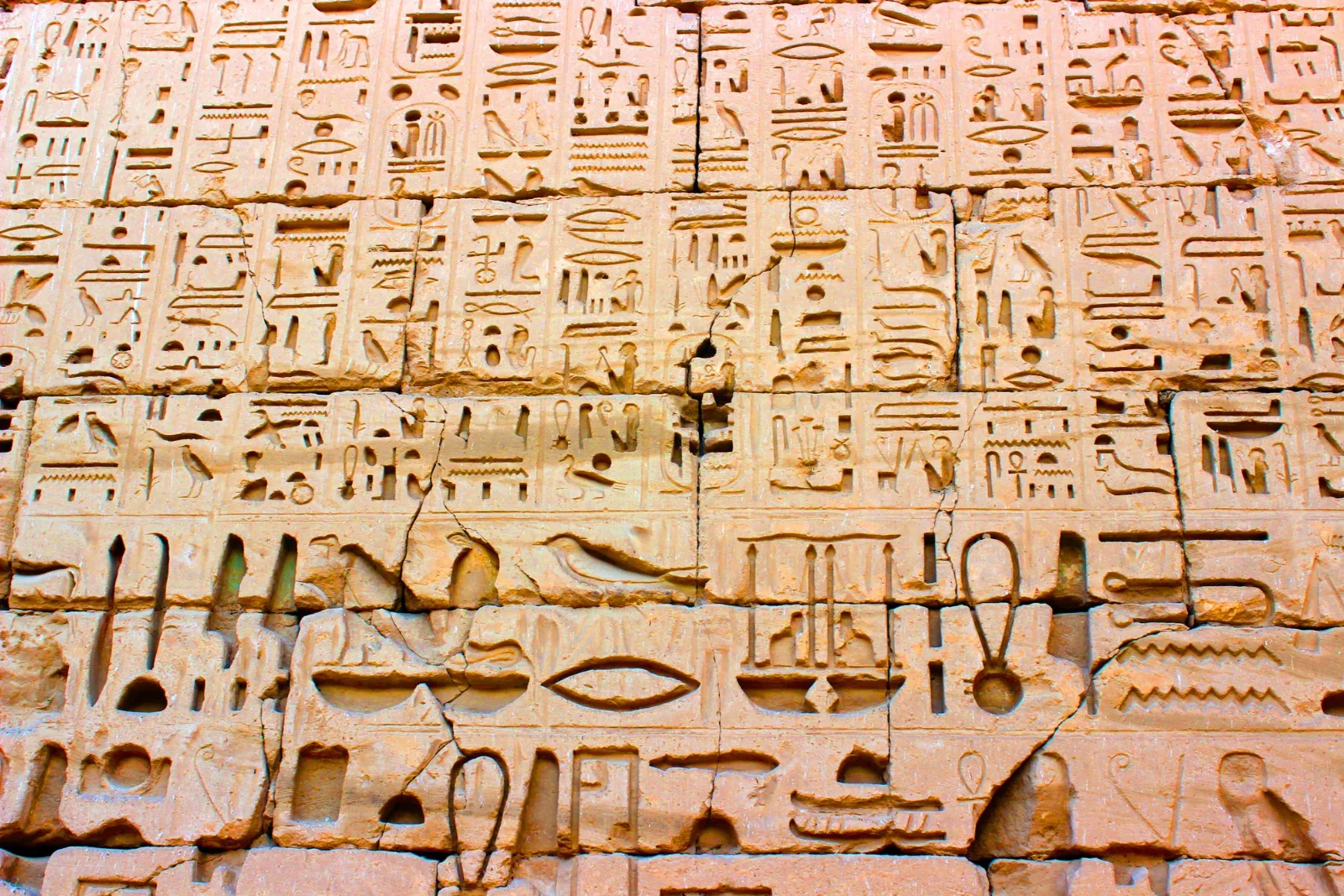
The Ptolemies were Macedonian Greeks, yet in their temples they presented themselves as traditional pharaohs. Edfu’s priests recorded the building process in detail on the walls, including dates, measurements and the names of rooms. This makes Edfu an extraordinary source for how Egyptian temples worked.
After the temple was abandoned, sand and silt filled it almost to the roof, and houses were built on top. The French archaeologist Auguste Mariette began clearing it in 1860. The deep burial is one reason why the temple survived so well.
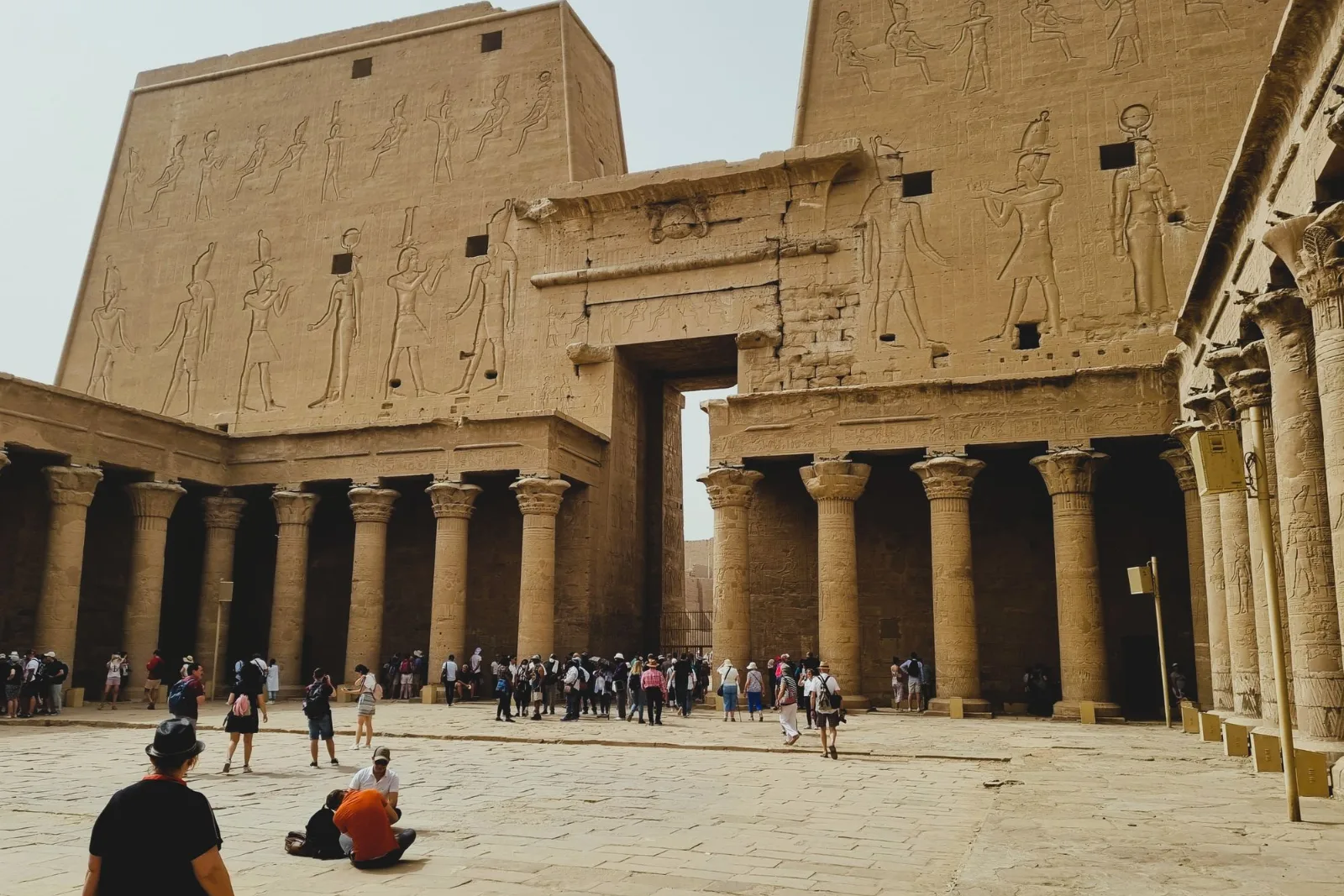
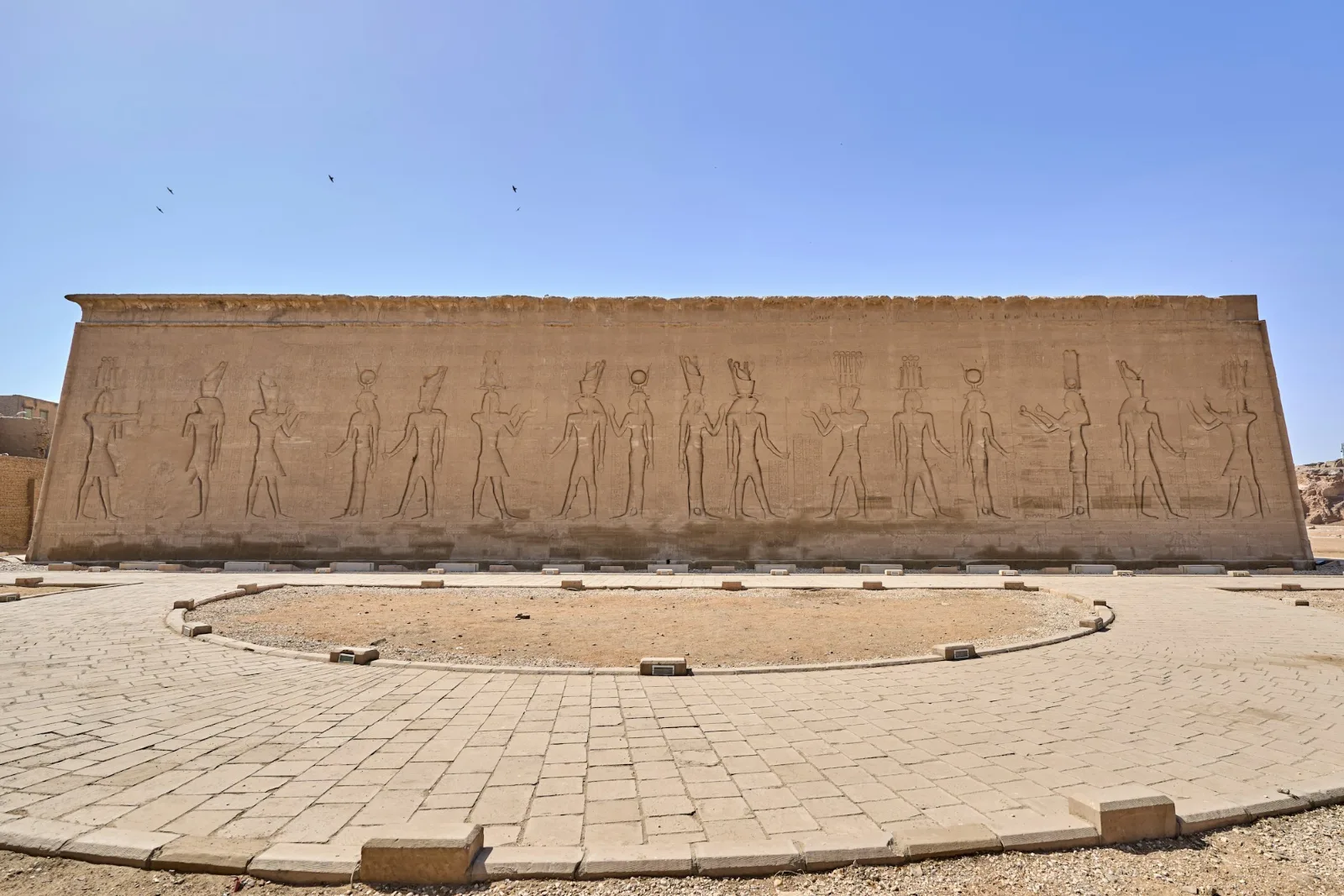
The entrance gateway rises about 36 metres, one of the tallest temple pylons in Egypt. Its towers show the king striking his enemies before Horus and Hathor.
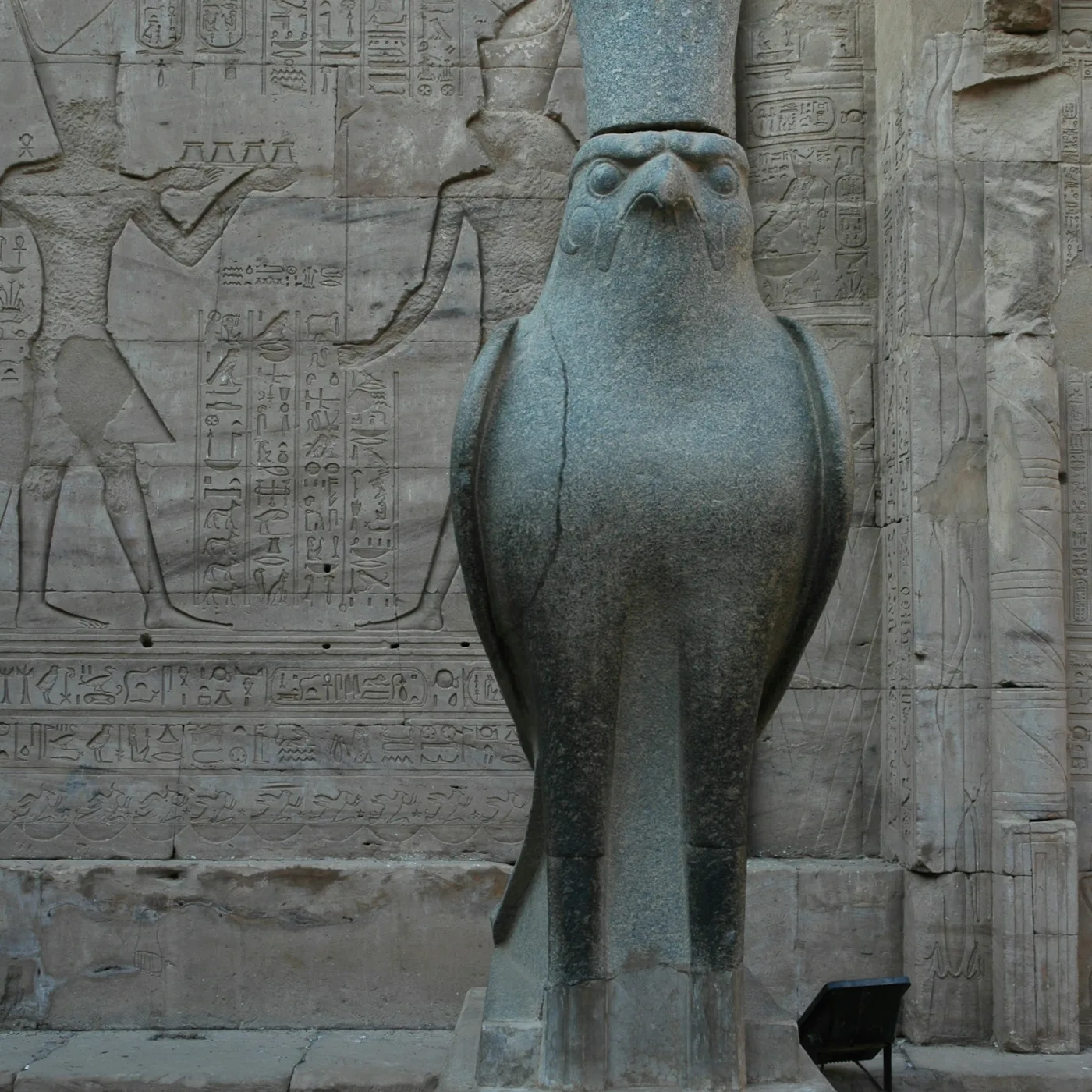
A colonnaded court leads to the temple building. Granite statues of Horus as a falcon, wearing the double crown of Upper and Lower Egypt, guard the entrances. They are among the most photographed sights in Egypt.
Two hypostyle halls, offering rooms and a series of chapels surround the dark sanctuary. Inside it stands a polished granite shrine from the reign of Nectanebo II, older than the temple around it. A replica of the sacred barque of Horus stands nearby.
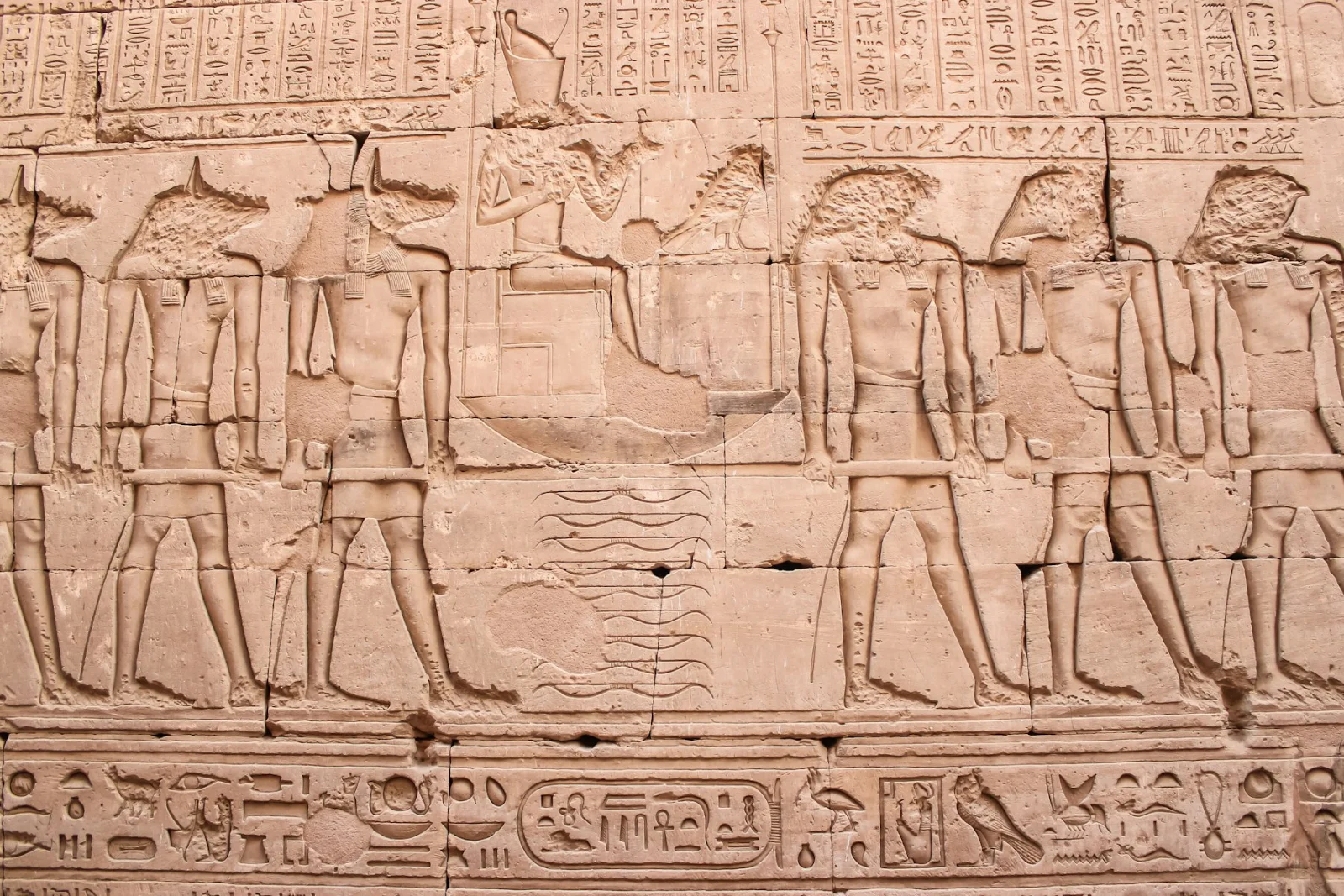
A corridor between the temple and its enclosure wall is carved with the drama of Horus defeating Seth. A stairway leads down to the temple’s Nilometer, used to measure the height of the annual flood.
A divine marriage. Every year the statue of Hathor sailed from her temple at Dendera to Edfu to meet Horus, in a joyful festival known as the Beautiful Reunion.
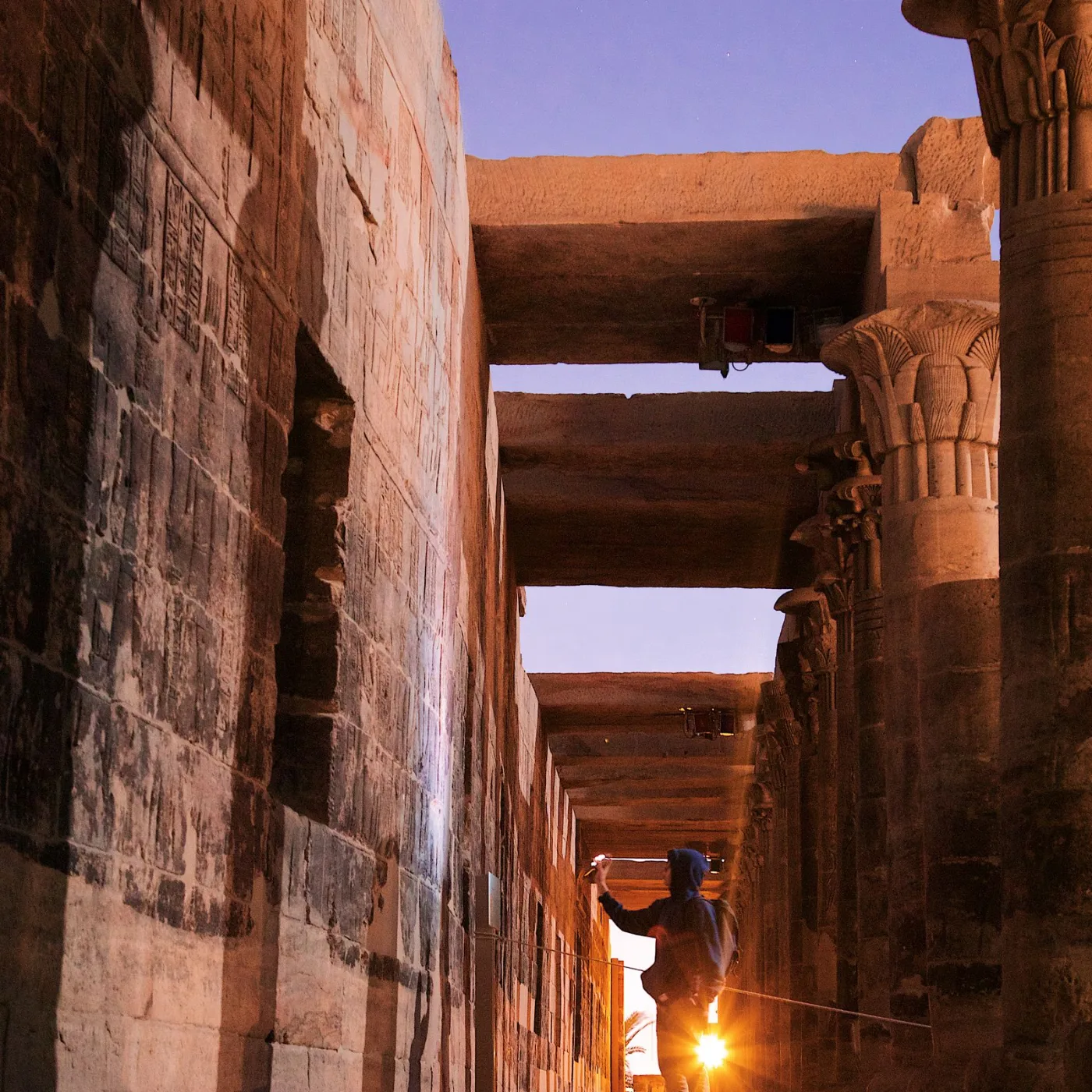
Roof intact. Unlike most temples, Edfu keeps much of its stone roof, so the inner rooms are dark, as they were meant to be.
The temple as a book. Its inscriptions include temple inventories, festival calendars and a mythical account of the creation of the temple.
A sacred battlefield. According to legend, Edfu was the place where Horus fought Seth to avenge his father Osiris.
Ride a horse carriage from the Nile cruise moorings through Edfu town to the temple.
Pose with the falcon at the entrance to the hypostyle hall.
Walk the ambulatory to follow the battle of Horus and Seth.
Visit the sanctuary and see the granite shrine and the barque replica.
Look for the Nilometer and the birth house (mammisi) outside the main temple.
The comfortable season is October to April. Most Nile cruises stop in Edfu early in the morning or late in the afternoon. Both are good times, as the midday sun is strong in the open court.
Early morning visits are usually the quietest. When several cruise ships arrive together, the temple can be busy for an hour or so.
Edfu sits on the west bank of the Nile, roughly halfway between Luxor and Aswan, about 110 km from each.
By Nile cruise: The most popular way. Ships moor in Edfu, and passengers ride to the temple by horse carriage or minibus.
By road: Day trips and transfers between Luxor and Aswan often stop at Edfu and nearby Kom Ombo.
By train: Edfu station is on the main Cairo–Aswan railway line.
The granite falcons. Two statues of Horus as a falcon guard the entrance. The one wearing the double crown of Egypt is one of the most photographed statues in the country.
The battle of Horus and Seth. On the inner walls, reliefs tell the sacred drama of Horus defeating his rival Seth, shown as a small hippopotamus, a story once performed as a play during festivals.
The sanctuary shrine. At the heart of the temple stands a polished granite shrine of Nectanebo II, older than the temple itself, beside a replica of the sacred boat that carried the god’s statue.
The Nilometer. A stairway leads down to a well that measured the height of the Nile flood, used to forecast the harvest and set taxes.
The rooftop stairs. Carved staircases show priests carrying the god’s statue to the roof at New Year to be renewed by the sun’s rays. Further south lies Kom Ombo.
Opening hours: Saturday, Monday, Tuesday, Thursday and Friday from 7:00 AM; Sunday and Wednesday from 6:00 AM. Last entry is at 4:00 PM every day.
Ticket (foreign visitors): EGP 550 for adults and EGP 275 for students.
Where to buy: At the entrance or online through EgyMonuments.
Prices and hours were checked on the official EgyMonuments website in November 2026. They change from time to time, so please confirm them before your visit.
Tips: Agree the horse carriage fare and waiting time in advance. Allow at least an hour inside the temple.
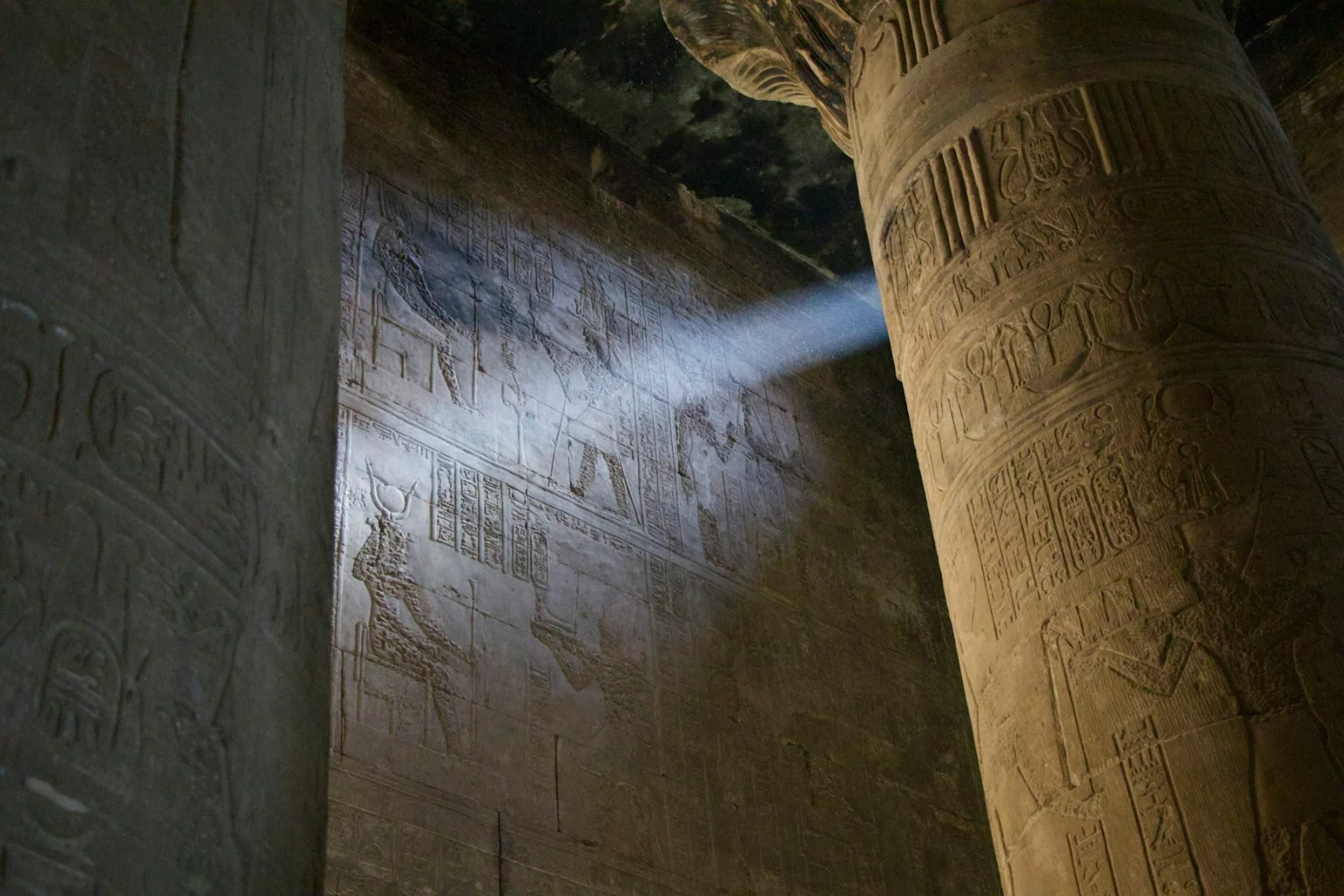
Frame the huge pylon from the courtyard to show the size of the temple.
The granite falcon statue of Horus guarding the temple makes a classic photo.
Inside, the dark sanctuary and the sacred barque create a mysterious atmosphere.
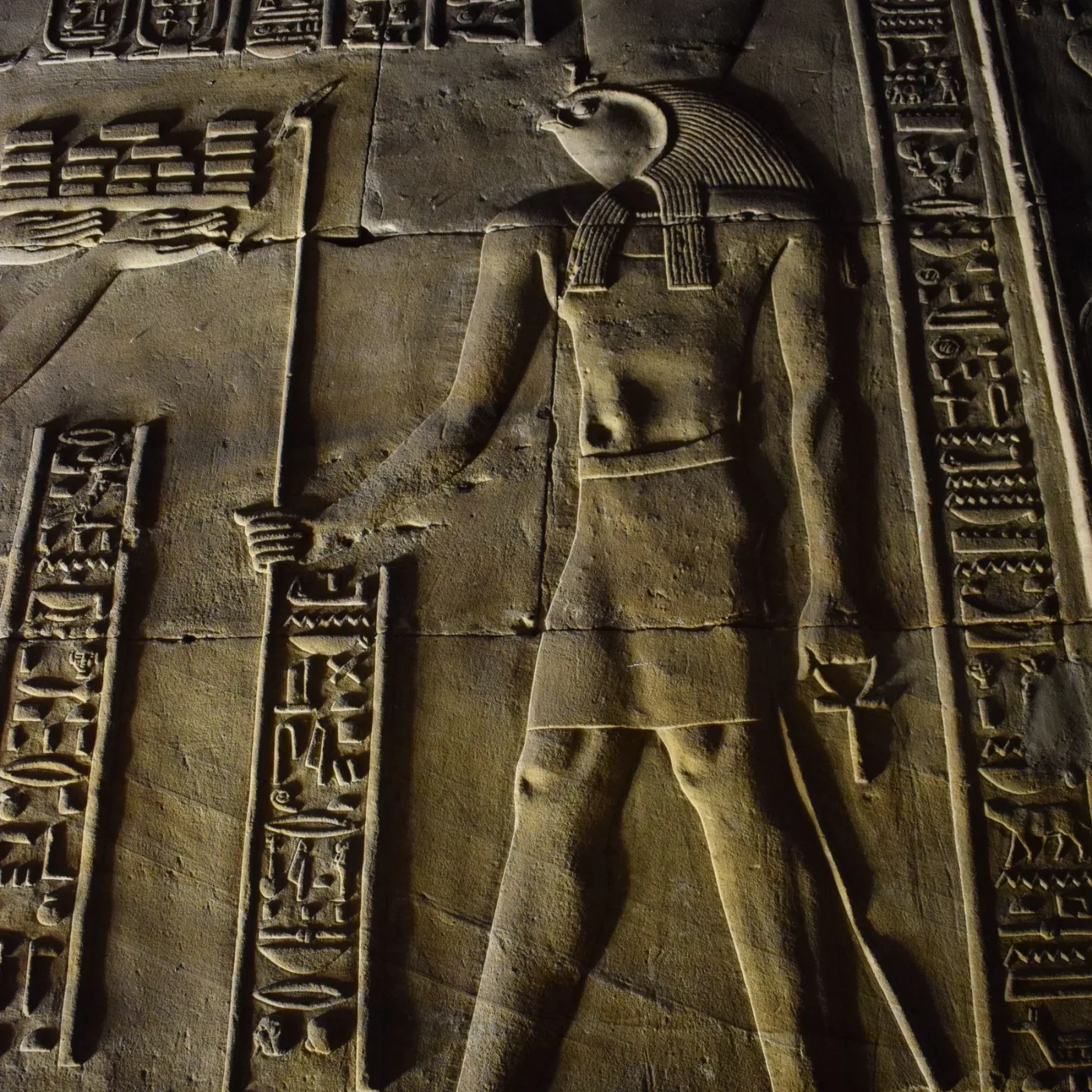
Edfu is the closest you will get to stepping inside a working ancient temple. Its completeness lets you understand the journey from public courtyard to secret sanctuary, as light gives way to darkness and the sacred grows closer. For anyone travelling the Nile, it is an essential stop.
Philae Temple: the island temple of Isis, Horus’s mother, at Aswan.
Karnak Temple Complex: the only Egyptian temple larger than Edfu.
Luxor Temple: a living temple in the heart of Luxor.
Abu Simbel Temples: Ramesses II’s rock-cut temples on Lake Nasser.

Round-the-clock 24/7 support from expert local guides and a professional customer care team, before and throughout your trip.


Copyright © 2026 Egyptista