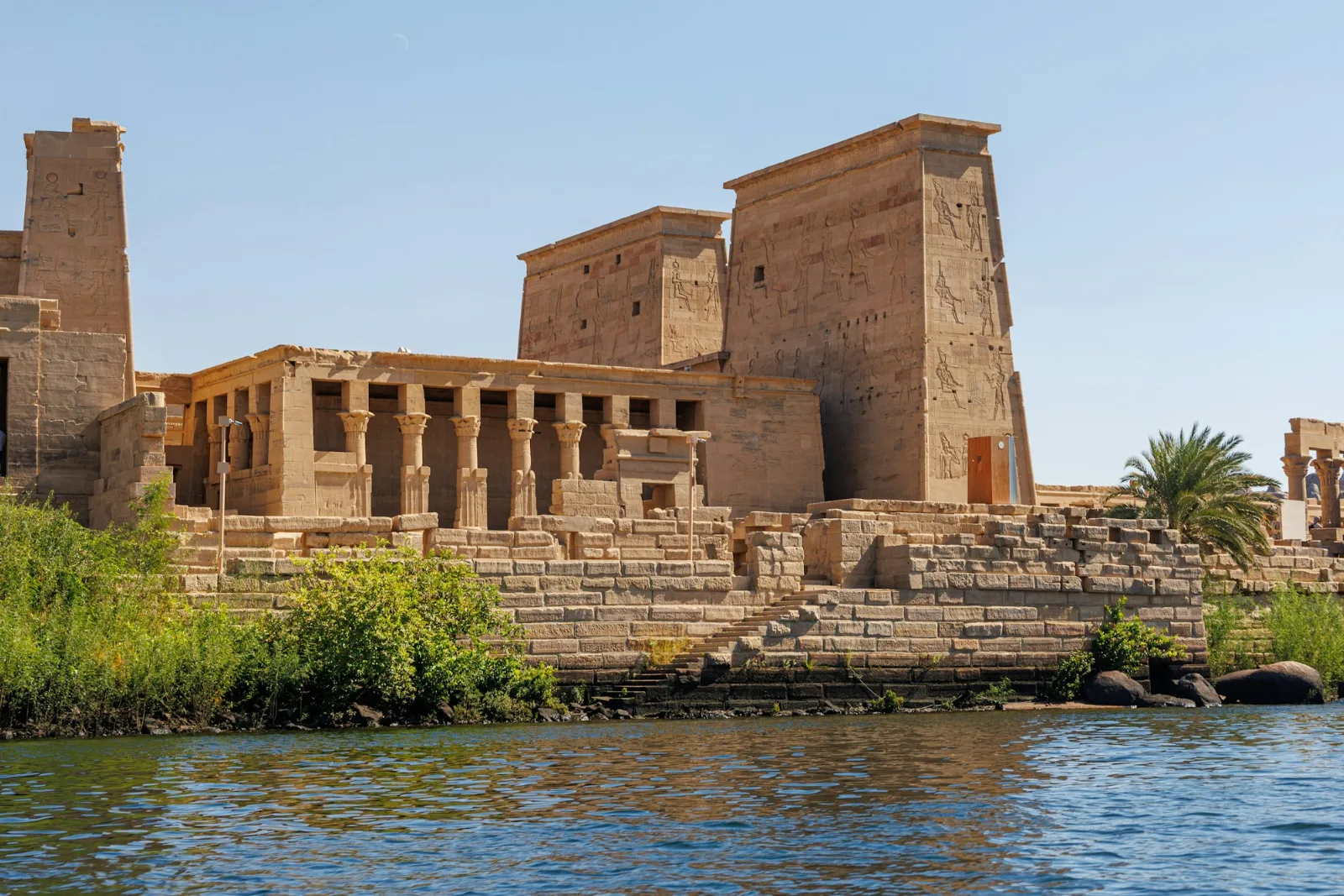
There are temples you walk to, and there is Philae, which you approach slowly by boat. As the motor launch rounds the granite boulders of the Nile near Aswan, the pylons of the Temple of Isis appear above the water, framed by palms and clear Nubian light. Nineteenth-century travellers called it the “Pearl of Egypt”, and the name has stuck.
Philae was one of the last places where the gods of ancient Egypt were worshipped. Pilgrims came from across the Mediterranean world to honour Isis, the great mother goddess and healer.
Today the temple stands on Agilkia Island, where it was rebuilt stone by stone after a remarkable rescue. It is part of the UNESCO World Heritage Site “Nubian Monuments from Abu Simbel to Philae”.
The oldest surviving building at Philae is a small kiosk of Nectanebo I, from the 4th century BC. Most of what you see was built under the Ptolemies, the Greek-speaking dynasty that ruled Egypt after Alexander the Great, starting with Ptolemy II. Roman emperors continued to decorate the temple, presenting themselves as pharaohs before the Egyptian gods.
The cult of Isis spread throughout the Roman Empire, and Philae remained a sacred centre long after other temples had fallen silent. The last known hieroglyphic inscription was carved here in 394 AD.
Priests of Isis continued their rites until the temple was closed in the reign of the Byzantine emperor Justinian, in the 6th century. Parts of it were then converted into a church.
After the first Aswan Dam was built in 1902, Philae was flooded for much of each year. When the Aswan High Dam threatened to submerge it permanently, a UNESCO-backed campaign between 1972 and 1980 dismantled the temples. They were rebuilt on nearby Agilkia Island, which was landscaped to resemble the original.
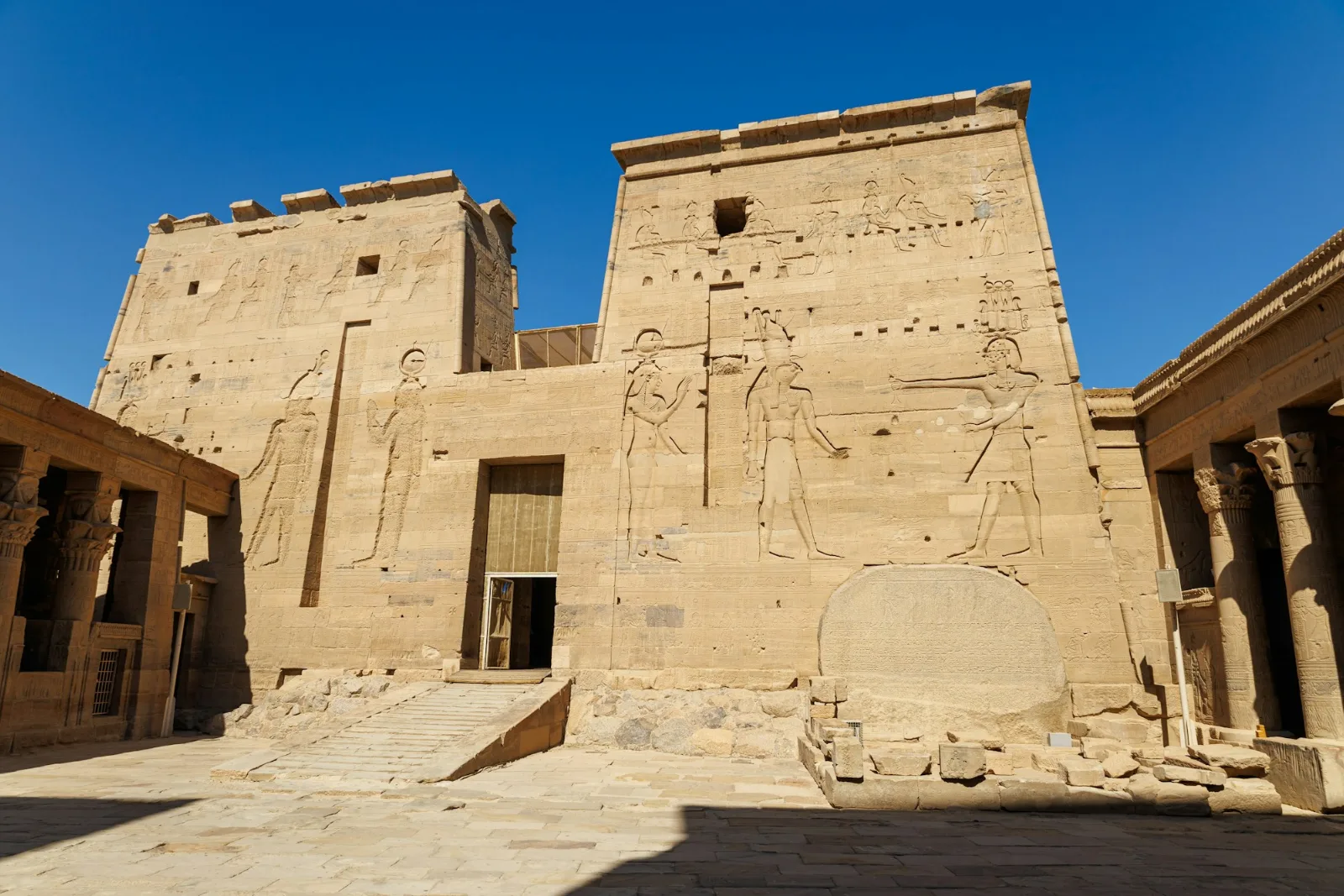
The main temple is entered through the First Pylon, carved with huge scenes of Ptolemy XII striking his enemies before Isis, Horus and Hathor. Beyond it lie a forecourt, the birth house (mammisi) celebrating the birth of Horus, a second pylon and a hypostyle hall that leads to the sanctuary of Isis.
Look out for Coptic crosses carved into the walls when the temple became a church.
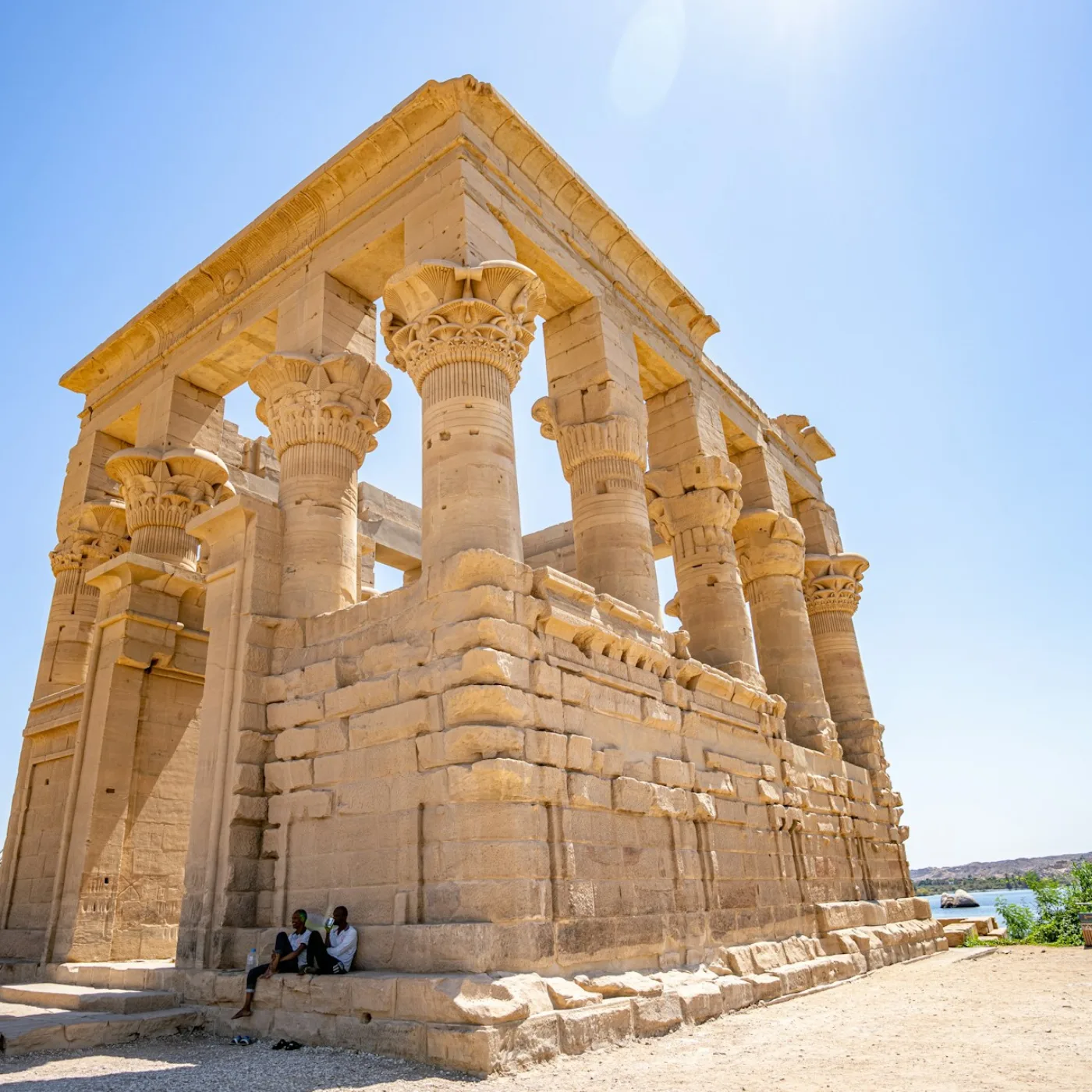
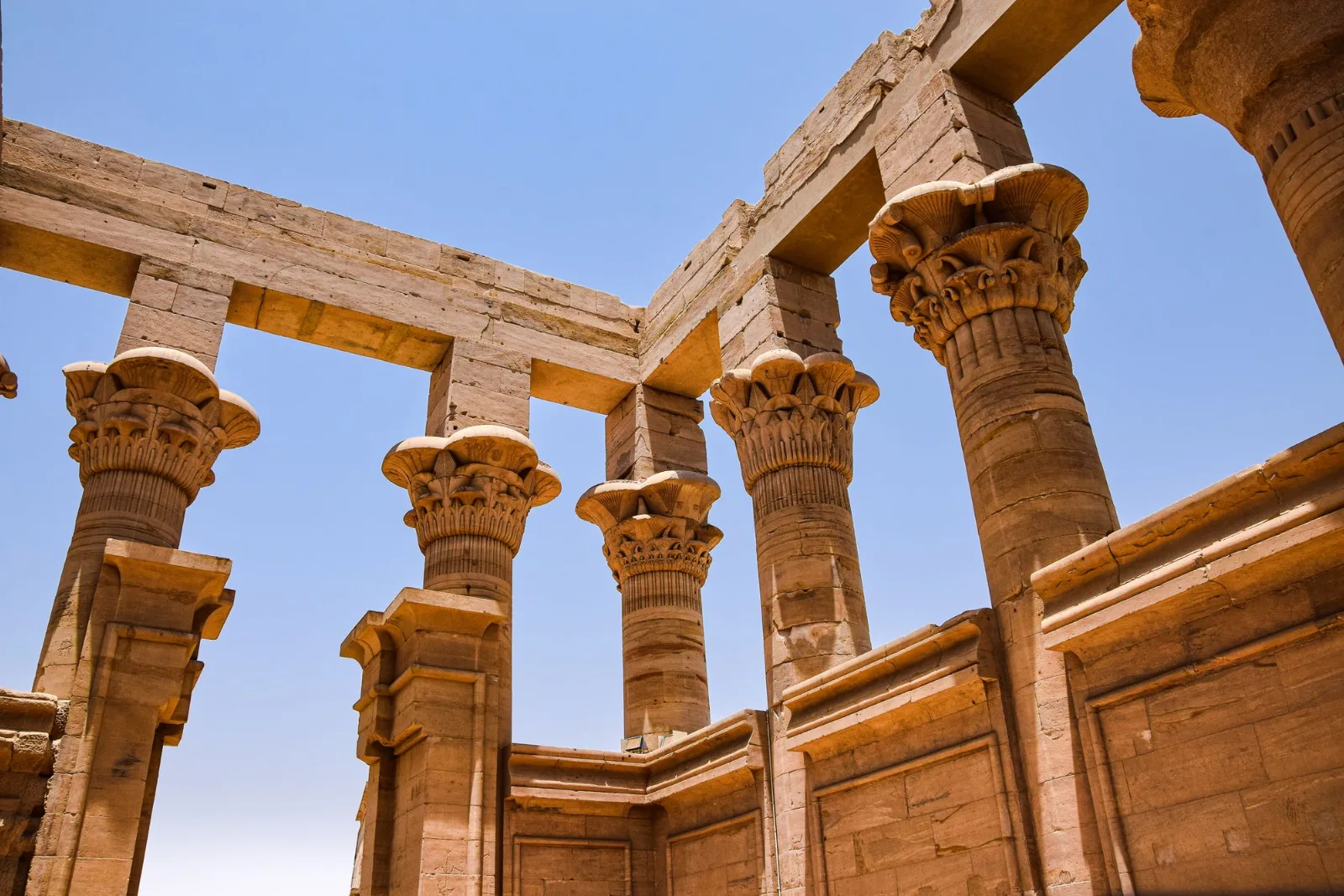
On the eastern edge of the island stands an elegant open pavilion of 14 columns with richly carved floral capitals. It is known locally as “Pharaoh’s Bed” and is probably the most photographed building at Philae.
Look for the colonnaded outer court, the small Temple of Hathor decorated with musicians, and the Gate of Hadrian. One of its reliefs shows the source of the Nile as imagined by the Egyptians.
The last hieroglyphs. An inscription dated to 24 August 394 AD at Philae is the latest known text written in hieroglyphs.
A sacred neighbour. The nearby island of Biga was believed to hold a burial place of Osiris, Isis’s husband, which made the whole area holy.
A pilgrimage centre. Travellers from Nubia and the Roman world visited Philae, and some left inscriptions in Greek, Demotic and Meroitic.
An island reshaped. Engineers re-sculpted Agilkia Island so that the rebuilt temples would face the same directions and views as before.
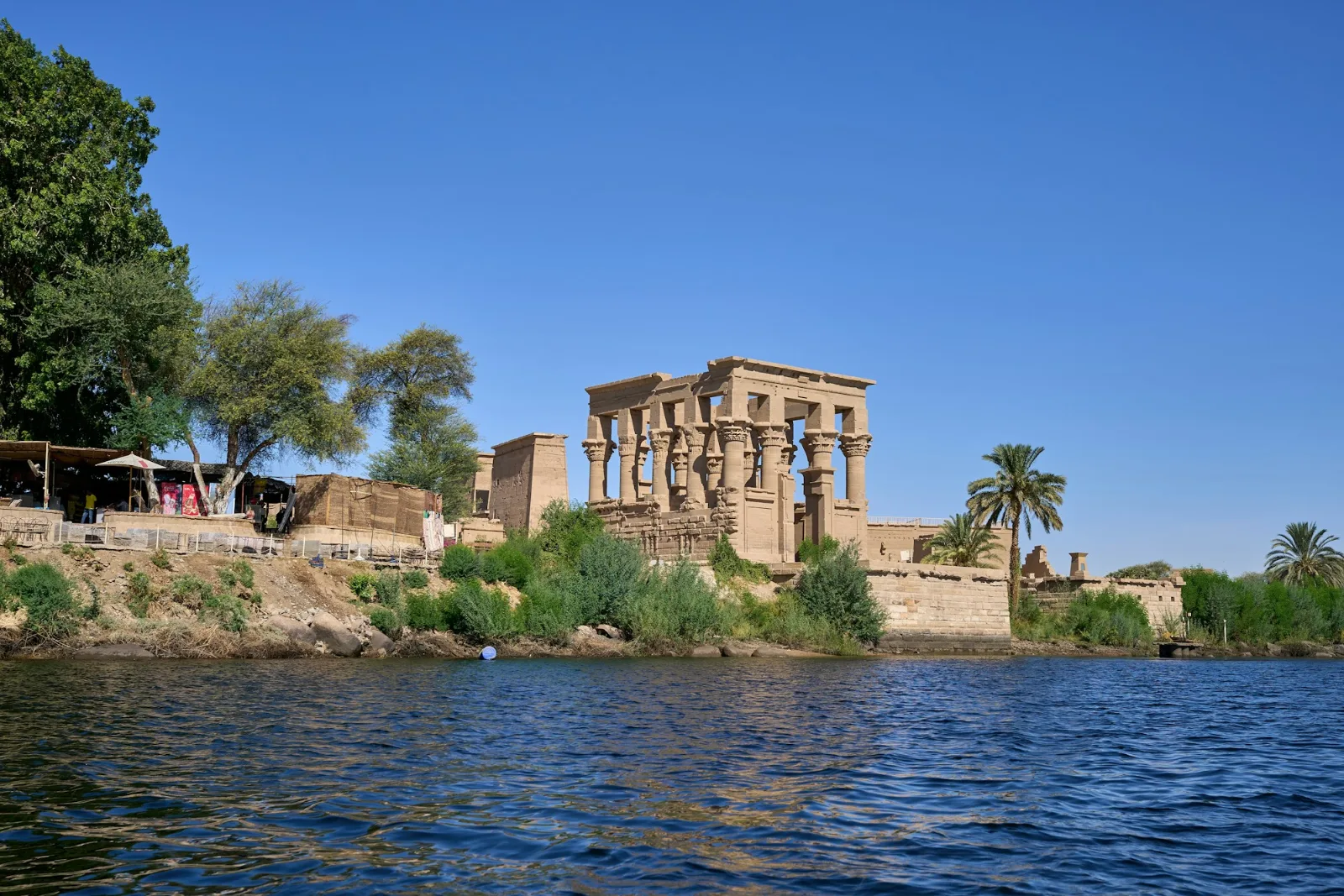
Enjoy the boat ride from the Shellal landing and watch the temple appear from the water.
Follow the story of Isis and Osiris through the reliefs with a guide.
Photograph Trajan’s Kiosk from the water and from the island shore.
Attend the Sound and Light Show, which is held on the island in the evening. Check the current schedule locally.
Combine Philae with the Aswan High Dam and the Unfinished Obelisk on a half-day tour.
Aswan has a hot desert climate, and October to April is the most pleasant time to visit. In summer, go as early as possible, as the island has limited shade.
Morning visits offer soft light on the pylons and calmer water for photographs. Late afternoon is lovely too, but check the last entry time before you set out.
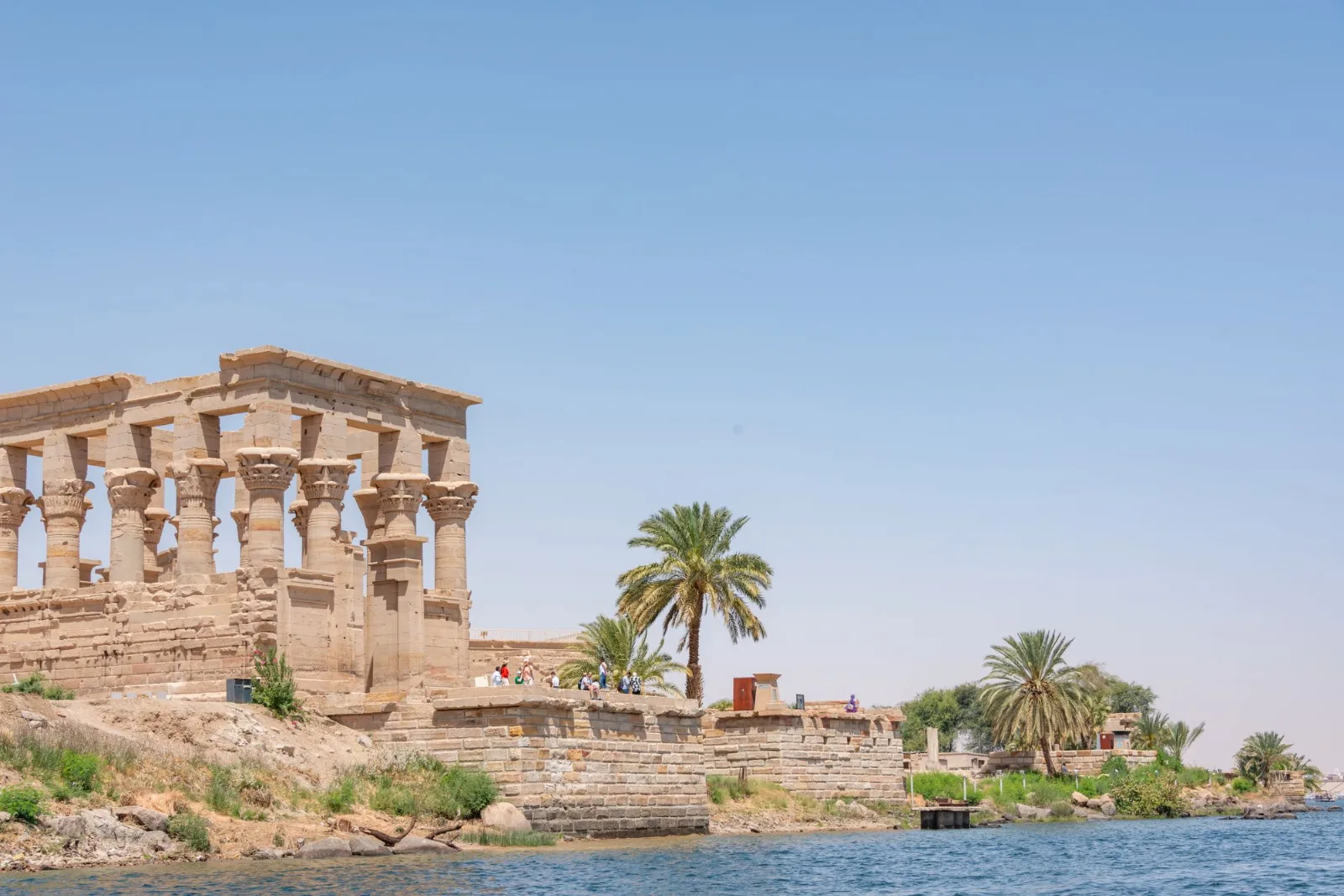
Philae lies on Agilkia Island in the Nile, south of Aswan city, between the old Aswan Dam and the Aswan High Dam.
To the boat landing: Drive about 15–20 minutes from central Aswan to the Shellal marina.
By boat: Motorboats make the short crossing to the island in about 10 minutes. The boat fare is not included in the temple ticket and is usually agreed per boat.
On a Nile cruise: Philae is a standard visit on Aswan sightseeing days.
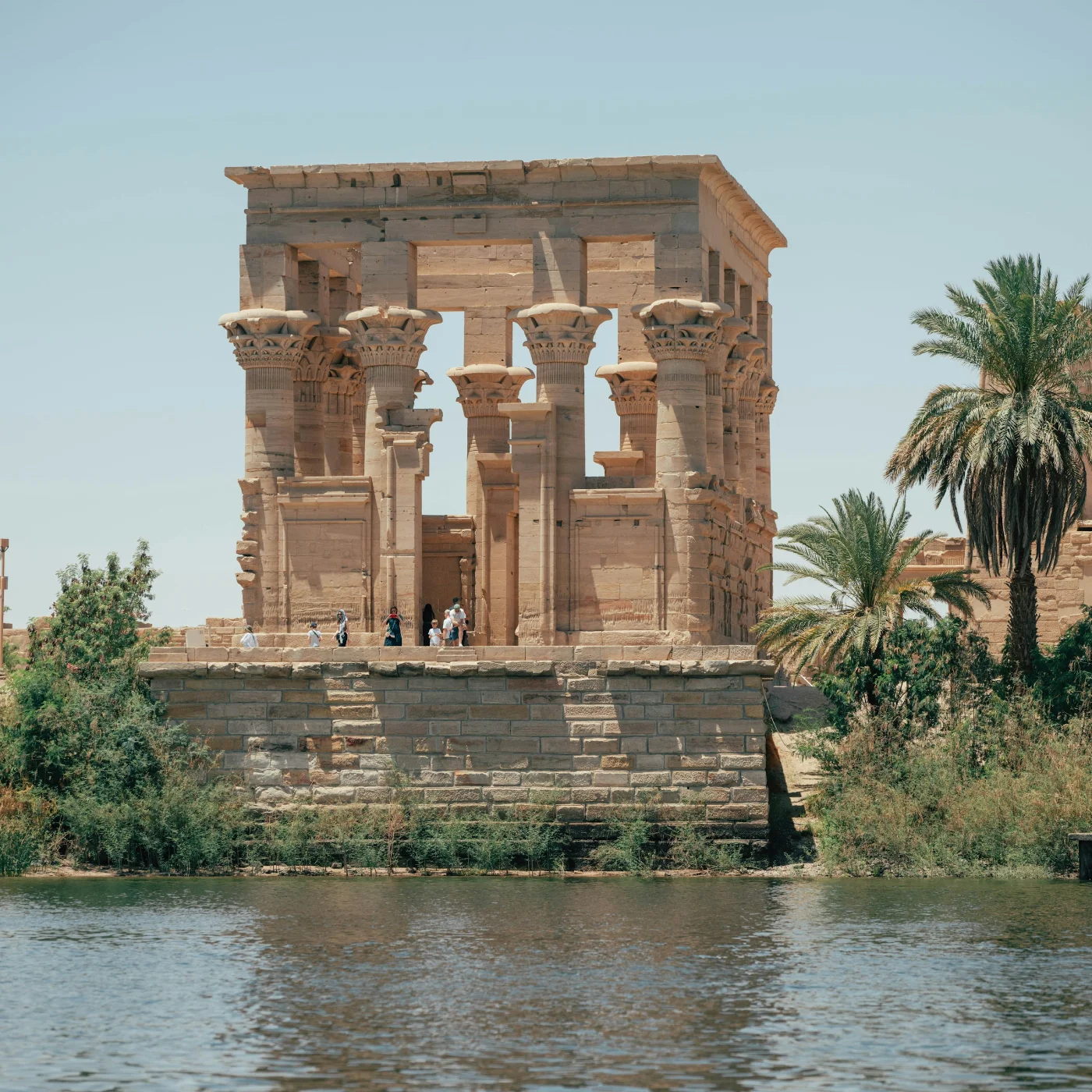
Trajan’s Kiosk. Nicknamed “Pharaoh’s Bed”, this elegant open pavilion with 14 columns stands at the water’s edge and is the most photographed building on the island.
The last hieroglyphs. Philae holds the last known hieroglyphic inscription, carved in 394 AD, when the ancient Egyptian script was used here for the final time.
The birth house. The mammisi celebrates the birth of Horus, son of Isis, with charming reliefs of the goddess nursing her child.
Hadrian’s Gate. One relief here shows the god of the Nile in a cave beneath rocks, pouring out the river’s waters, the ancient image of the Nile’s source.
Saved from the water. In the 1970s the whole temple was moved block by block to the nearby island of Agilkia, landscaped to look like the original Philae. Don’t miss the evening sound and light show. Nearby, visit the Nubian village.
Opening hours: Daily from 7:00 AM, last entry at 3:00 PM.
Ticket (foreign visitors): EGP 550 for adults and EGP 275 for students.
Boat: Paid separately at the marina.
Where to buy: At the ticket office by the marina or online through EgyMonuments.
Prices and hours were checked on the official EgyMonuments website in November 2026. They can change, so please confirm them before your visit.
Tips: Agree the boat price and waiting time before departure, and keep small change for the boatman.
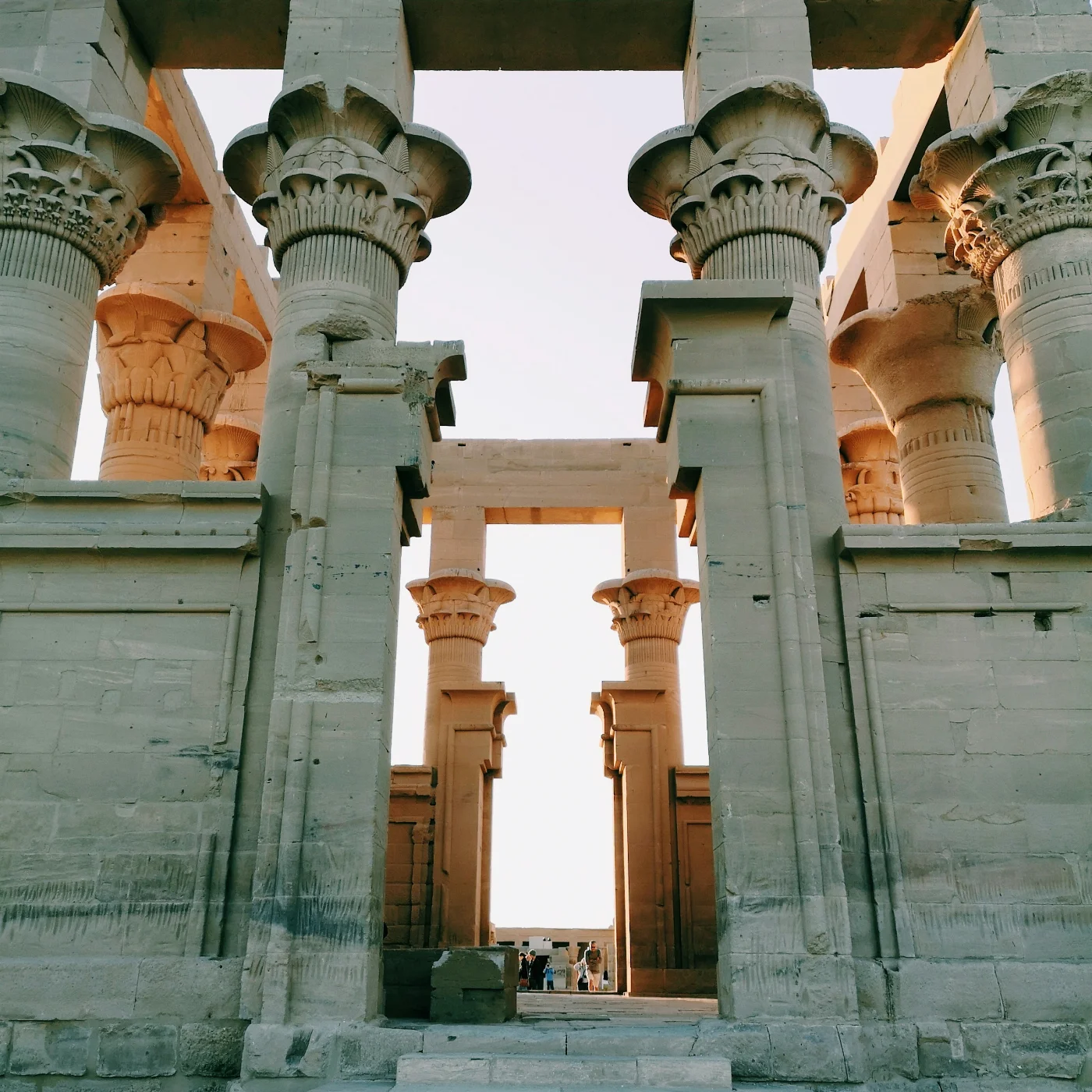
The best views of Philae are from the boat, as you approach the island across the water.
Trajan’s Kiosk, with its elegant columns beside the water, is one of the most photographed sights in Aswan.
Late afternoon light gives the sandstone a warm glow.
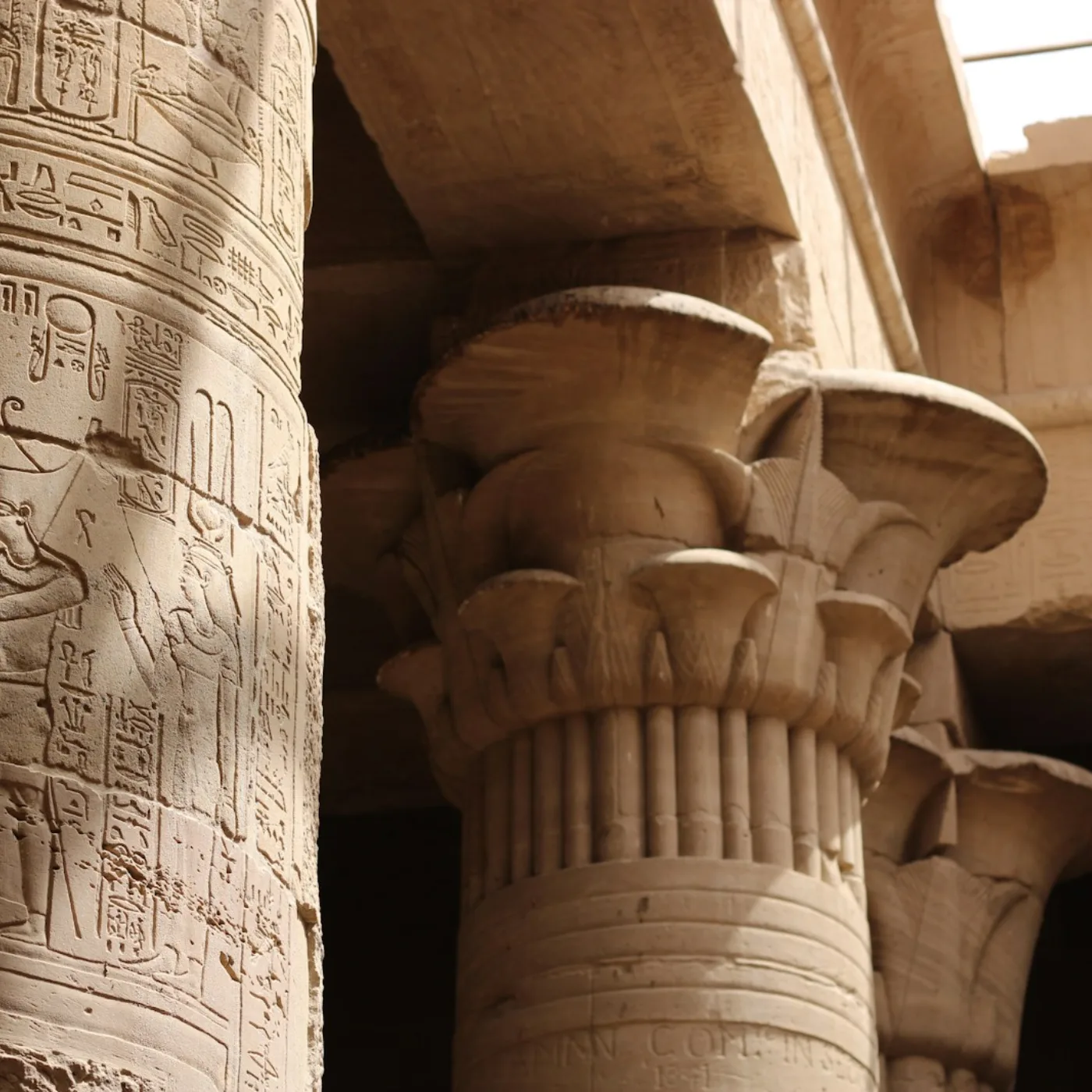
Philae is where the long story of ancient Egyptian religion comes to a graceful close. Its setting on the water is one of the most romantic in Egypt, and its rescue is a triumph of international cooperation. For many travellers it is the most beautiful temple of all.
Abu Simbel Temples: the other great rescued monument of Nubia.
Edfu Temple: a superbly preserved Ptolemaic temple downstream.
Karnak Temple Complex: the great temple of Amun at Luxor.
Temple of Hatshepsut: the queen’s terraced temple on Luxor’s West Bank.

Round-the-clock 24/7 support from expert local guides and a professional customer care team, before and throughout your trip.


Copyright © 2026 Egyptista