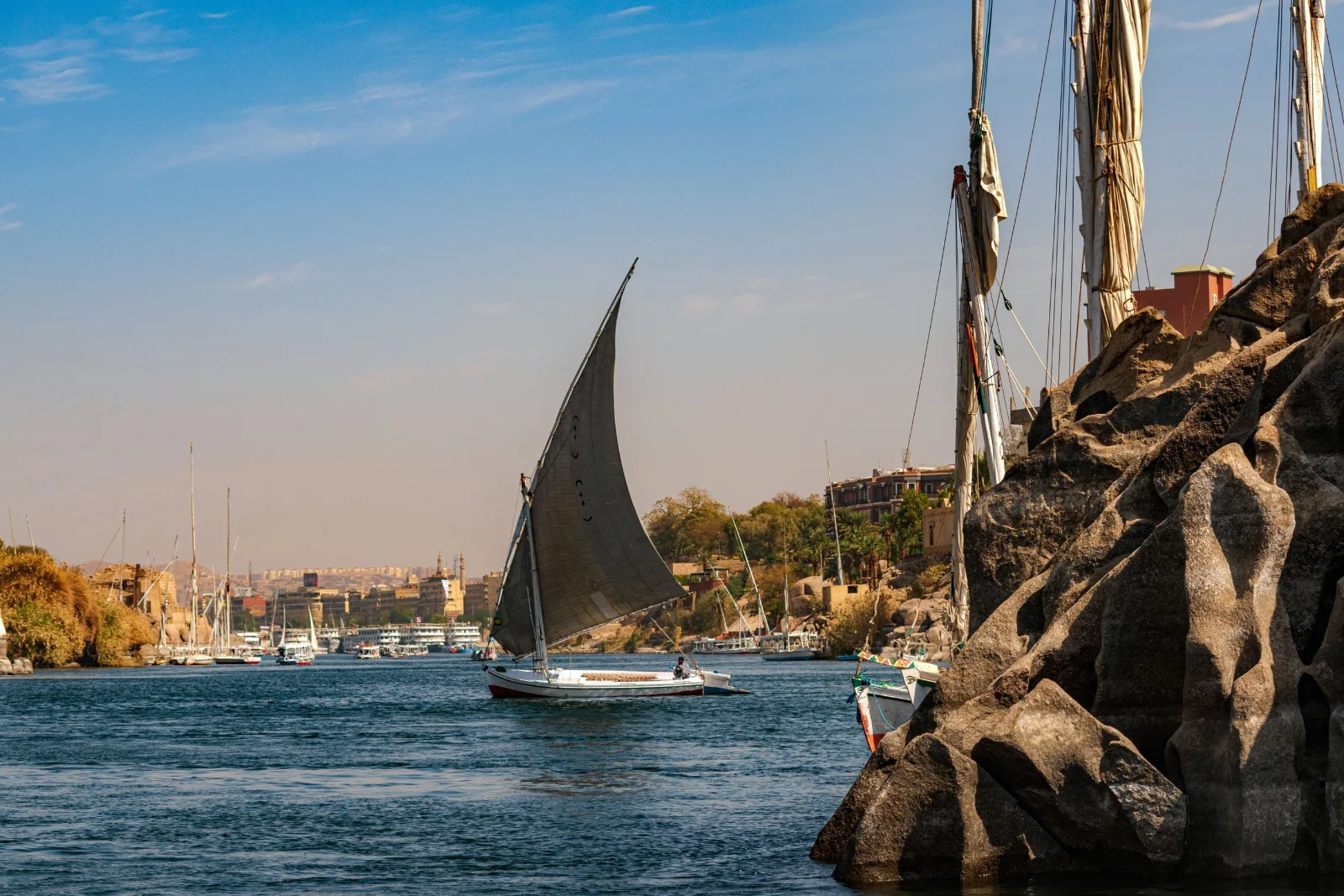
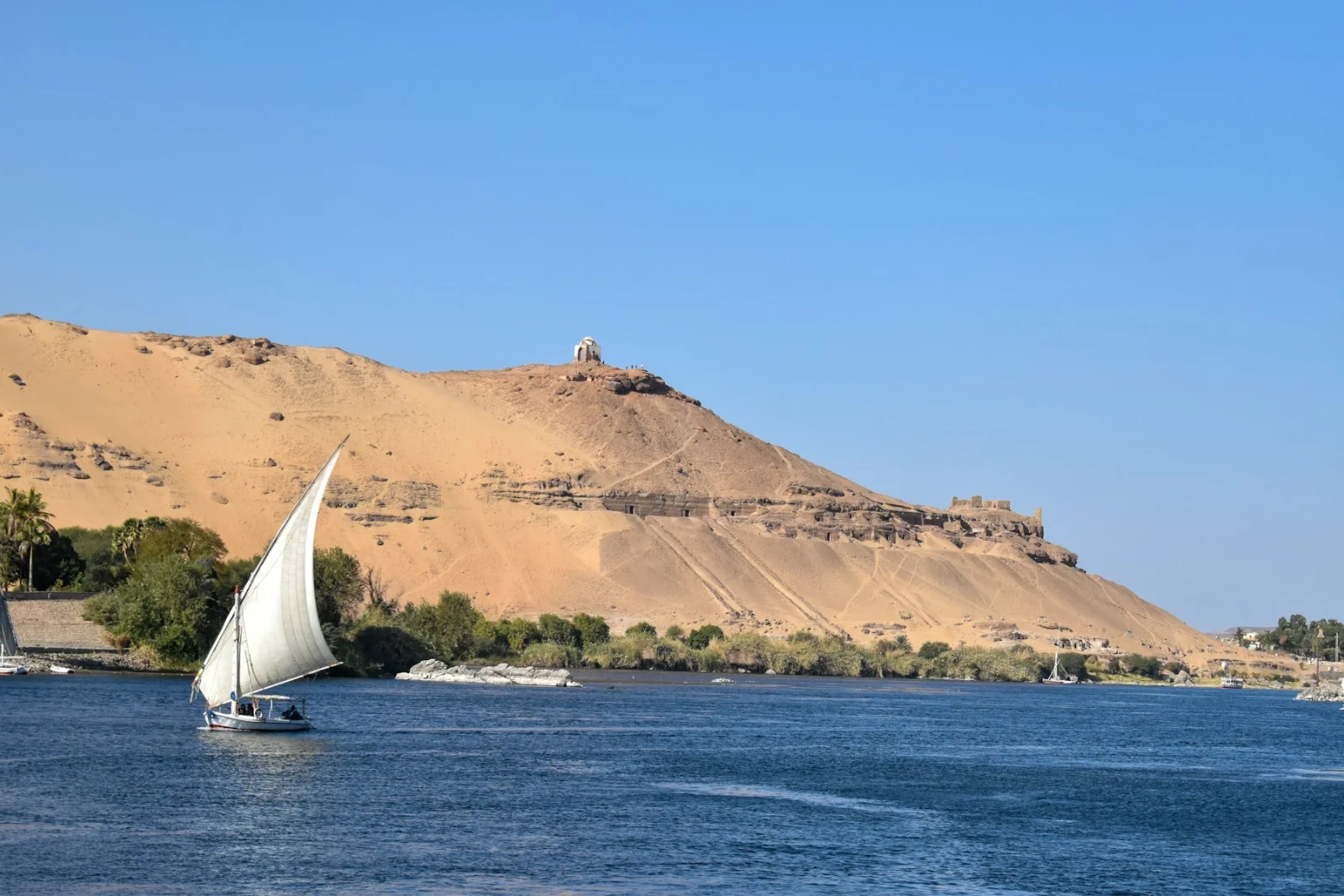
In the far south of Egypt, the Nile flows between golden sand dunes and smooth granite islands, dotted with the white sails of feluccas. This is Aswan, the sunniest and most relaxed city on the river, and for many travellers the most beautiful place in Egypt.
For thousands of years, Aswan was Egypt’s southern gateway to Nubia and Africa. Today it is the starting or finishing point of most Nile cruises, and the base for visiting Philae Temple and the Abu Simbel temples.
In ancient times Aswan was known as Swenett, a busy market town where caravans brought gold, ivory and spices from the south. Its quarries supplied the famous pink granite used for obelisks, statues and temples all over Egypt.
The city stands at the First Cataract, where rocky islands break the flow of the river. In the 20th century, the construction of the High Dam, completed in 1970, created Lake Nasser and changed the region forever, leading to the international campaign that saved Philae and Abu Simbel.
Elephantine Island: the site of ancient Abu, with temple ruins, an ancient Nilometer used to measure the river’s flood, and colourful Nubian villages.
Kitchener’s Island: home to the Aswan Botanical Garden, filled with palms, flowers and plants from around the world, perfect for a peaceful walk.
The West Bank: the Tombs of the Nobles cut into the hillside and the elegant Aga Khan Mausoleum overlooking the river.
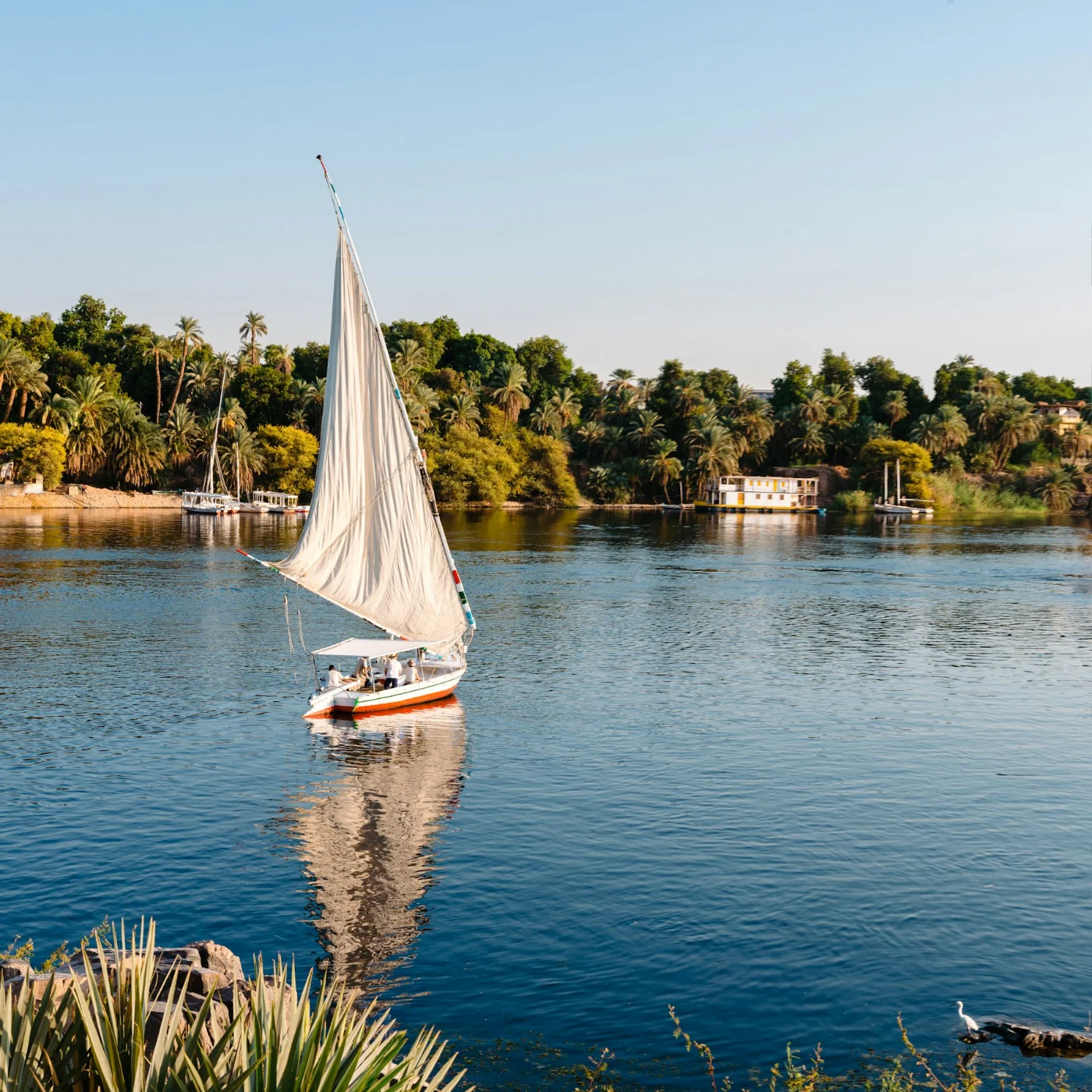
No visit to Aswan is complete without a felucca ride, especially at sunset. These traditional wooden sailboats glide silently between the islands while the sky turns pink and gold over the desert.
Many visitors combine the sail with a stop at a Nubian village for tea and a taste of Nubian hospitality.
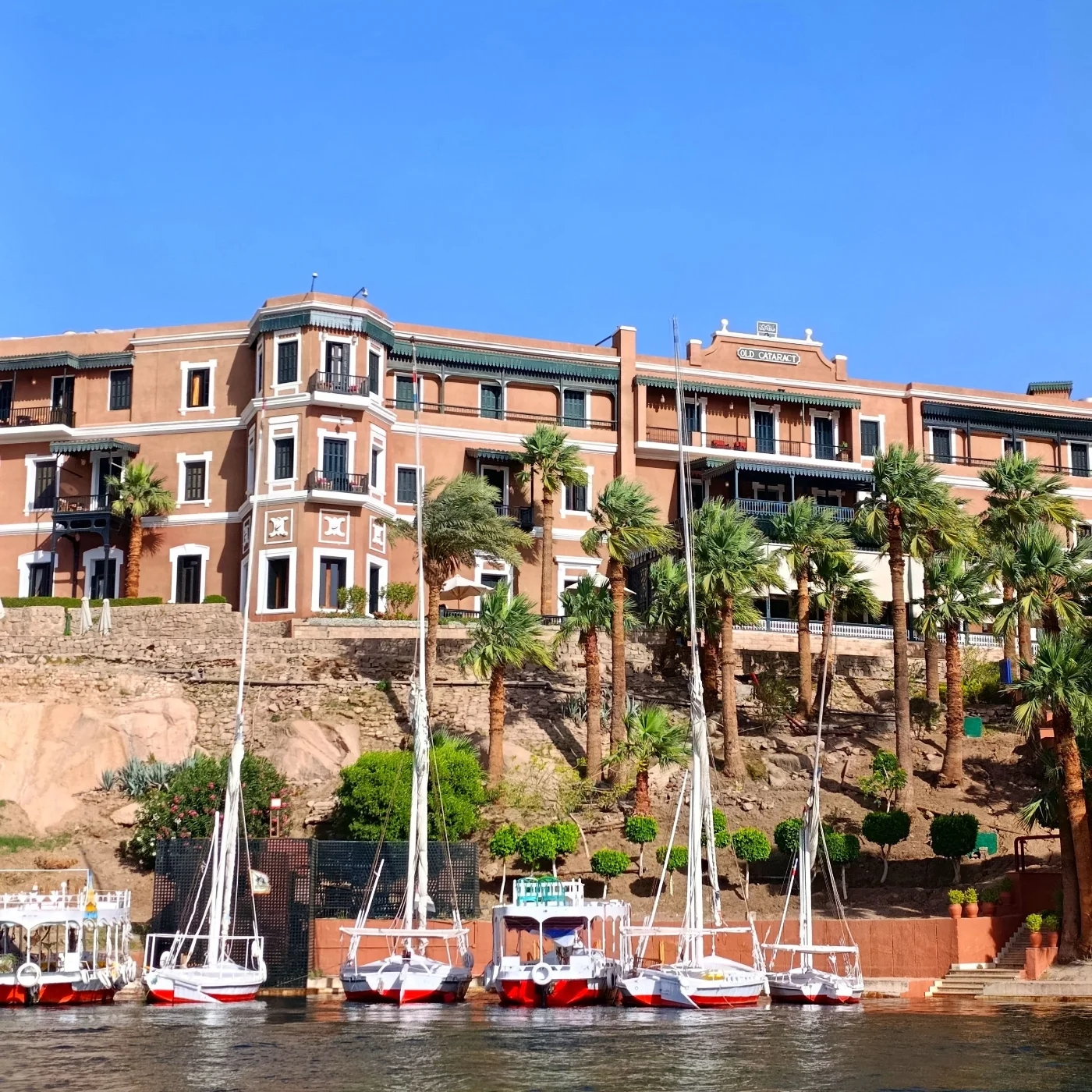
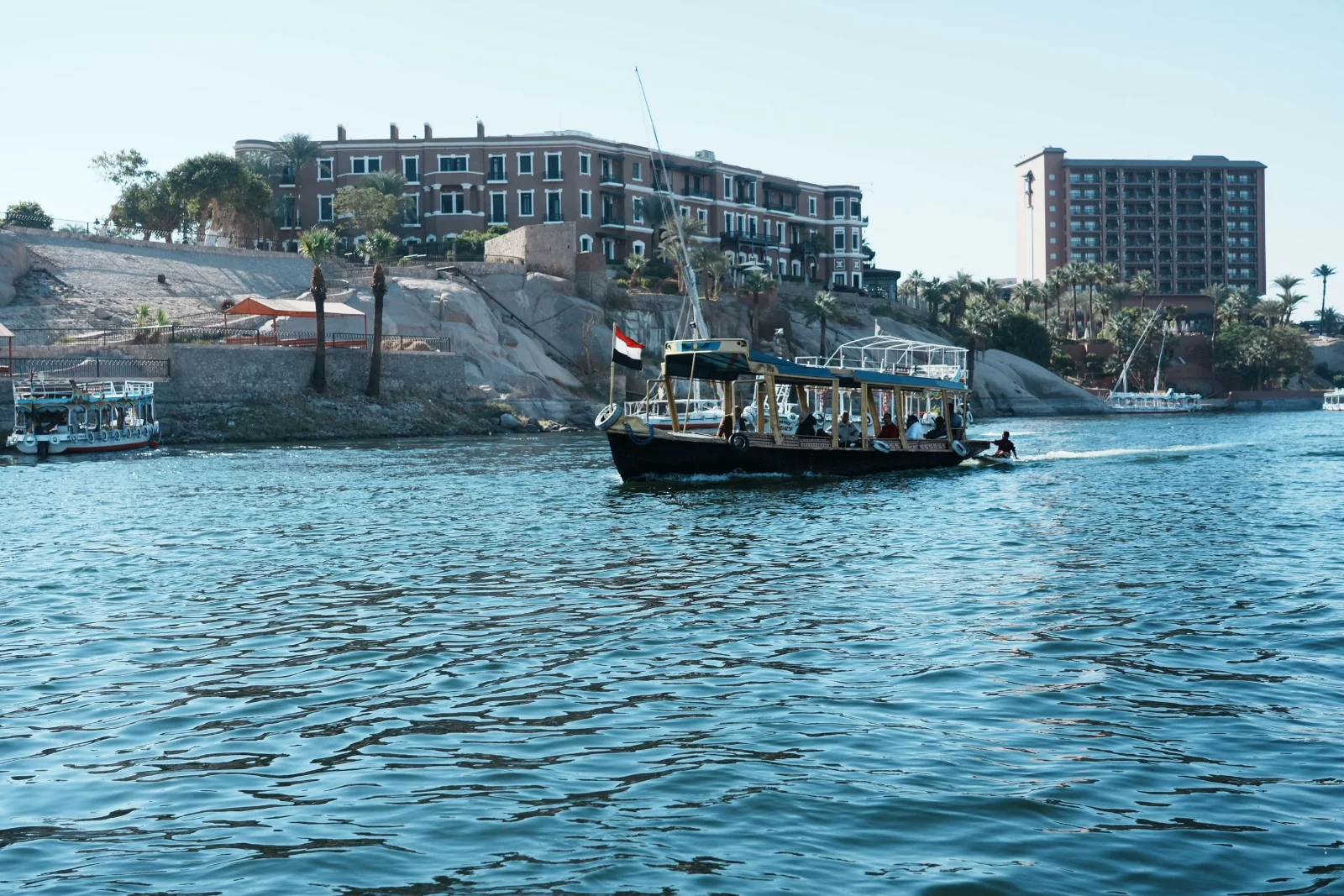
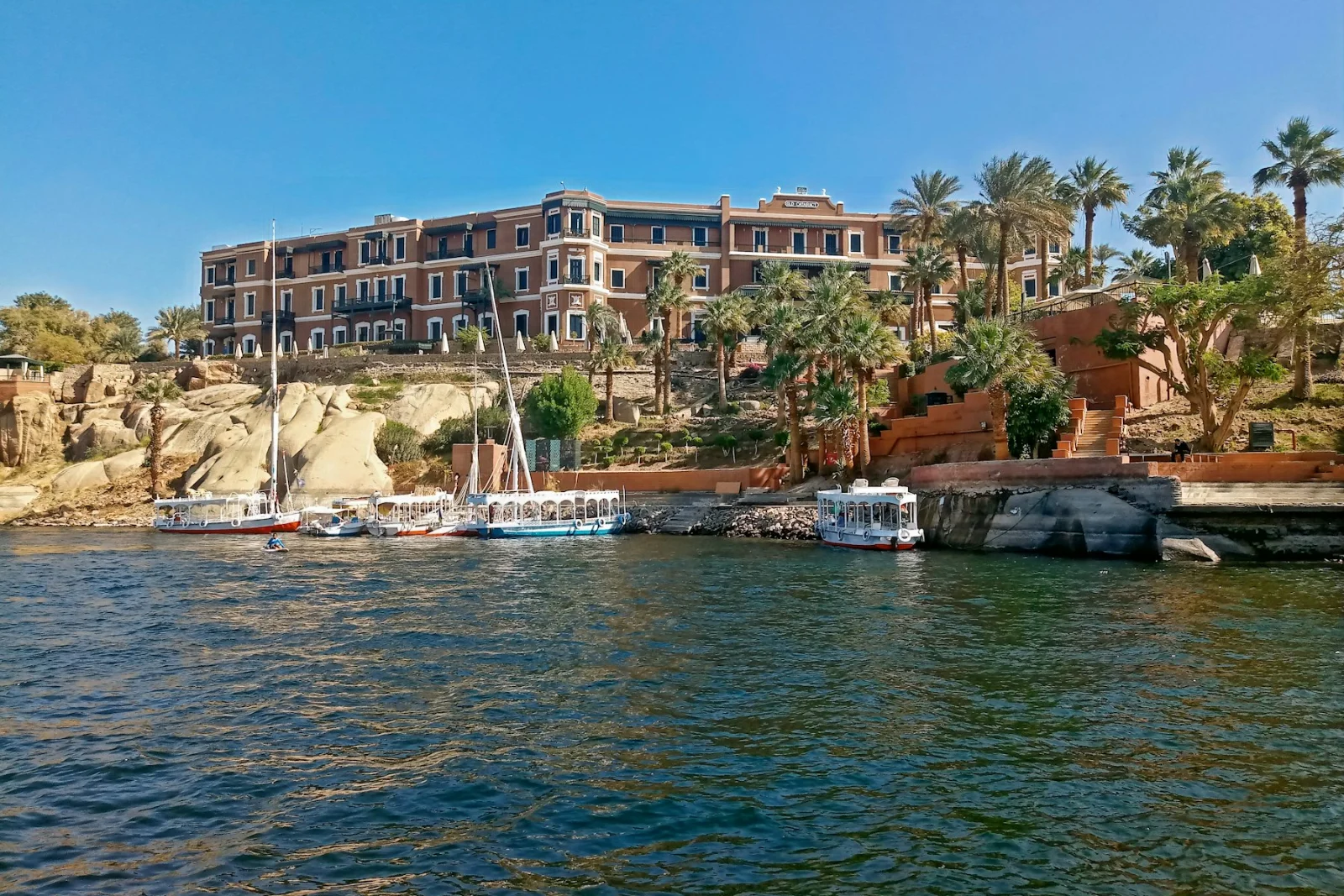
Aswan has welcomed famous travellers for more than a century. The Old Cataract Hotel, built by Thomas Cook in 1899, became a legend when Agatha Christie stayed there and wrote part of Death on the Nile, published in 1937.
Over the years its guests have included Winston Churchill, Howard Carter, the discoverer of Tutankhamun’s tomb, Princess Diana and US president Jimmy Carter. Even today, afternoon tea on its terrace, looking out over the Nile, is one of the city’s classic experiences.
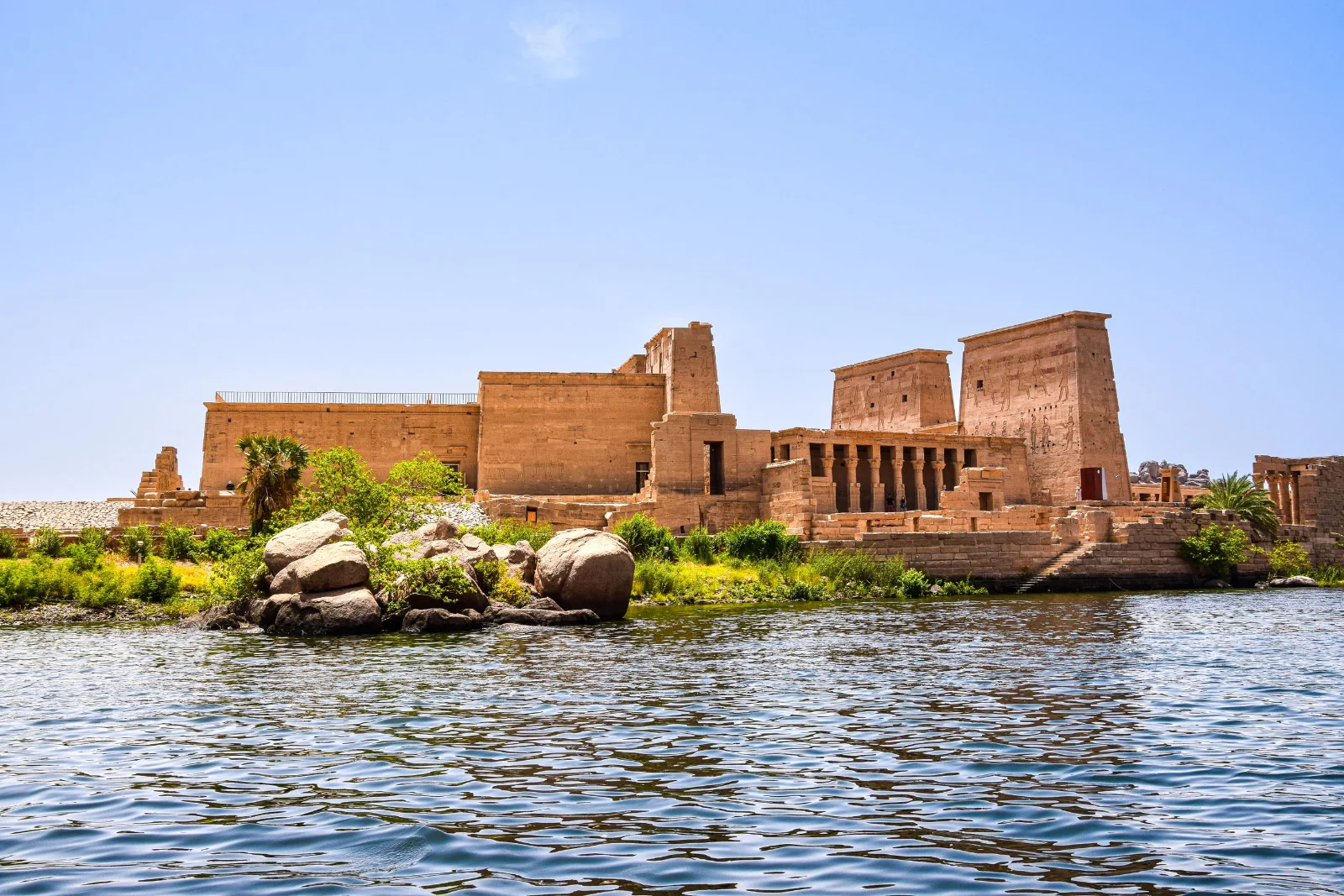
Philae Temple: the island sanctuary of Isis, reached by boat. Read our Philae Temple guide.
The Unfinished Obelisk: a giant obelisk still lying in its granite quarry.
The High Dam: a modern landmark with views over Lake Nasser.
The Nubian Museum: a beautifully presented collection telling the story of Nubia.
Abu Simbel: the famous temples of Ramesses II, a day trip to the south. Discover the Abu Simbel temples.
Kom Ombo: the double temple on the way to Luxor. Read about Kom Ombo.
Around 240 BC, the Greek scholar Eratosthenes used the fact that the midsummer sun shone straight down a well at Syene (ancient Aswan) to calculate the circumference of the Earth with remarkable accuracy.
Aswan’s pink granite was carried hundreds of kilometres down the Nile to build obelisks and statues, some of which now stand in Rome, Paris, London and New York.
Aswan is one of the sunniest cities in the world, with clear skies on almost every day of the year.
The name Aswan comes from the ancient word Swenett, linked to trade.
Aswan lies in the far south of Egypt, about 200 km south of Luxor. It has an airport with flights to Cairo, and it is the start or end point of most Nile cruises between Aswan and Luxor. From Aswan, day trips by road or by air lead to Abu Simbel temples.
The Aswan souk. The long market street near the corniche is full of colour: pyramids of spices, baskets, scarves, dates and dried hibiscus flowers for making karkadeh.
Qubbet el-Hawa at sunset. On the West Bank, the Tombs of the Nobles are cut into the hillside above the river. Climb up in the late afternoon for one of the most beautiful sunset views in Egypt.
The Unfinished Obelisk. In the ancient granite quarries lies a giant obelisk still attached to the bedrock. Had it been completed, it would have been the largest ever made, around 42 metres tall.
The High Dam and Lake Nasser. Completed in 1970, the dam created one of the largest artificial lakes in the world and protects Egypt from floods and droughts.
The Aga Khan Mausoleum. The elegant pink-granite tomb of Aga Khan III crowns a hill on the West Bank and is a graceful landmark from a felucca. Don’t miss the Nubian village and Philae Temple.
Aswan enjoys sunshine almost every day; October to April is the most pleasant time to visit.
Take a felucca at sunset for the best light.
Try Nubian dishes and karkadeh, a refreshing hibiscus drink.
Spend at least one night in Aswan to enjoy its relaxed atmosphere.
Aswan is a highlight of all our Nile cruises and of these tours:
Best of Egypt – 8 Days Cairo & 4-Night Nile Cruise Luxor to Aswan — 8 Days / 7 Nights
Cairo & Nile Cruise Discovery – 7 Days by Flight — 7 Days / 6 Nights
Pyramids & Nile Cruise Escape – 6 Days Cairo, Aswan & Luxor — 6 Days / 5 Nights

Round-the-clock 24/7 support from expert local guides and a professional customer care team, before and throughout your trip.


Copyright © 2026 Egyptista