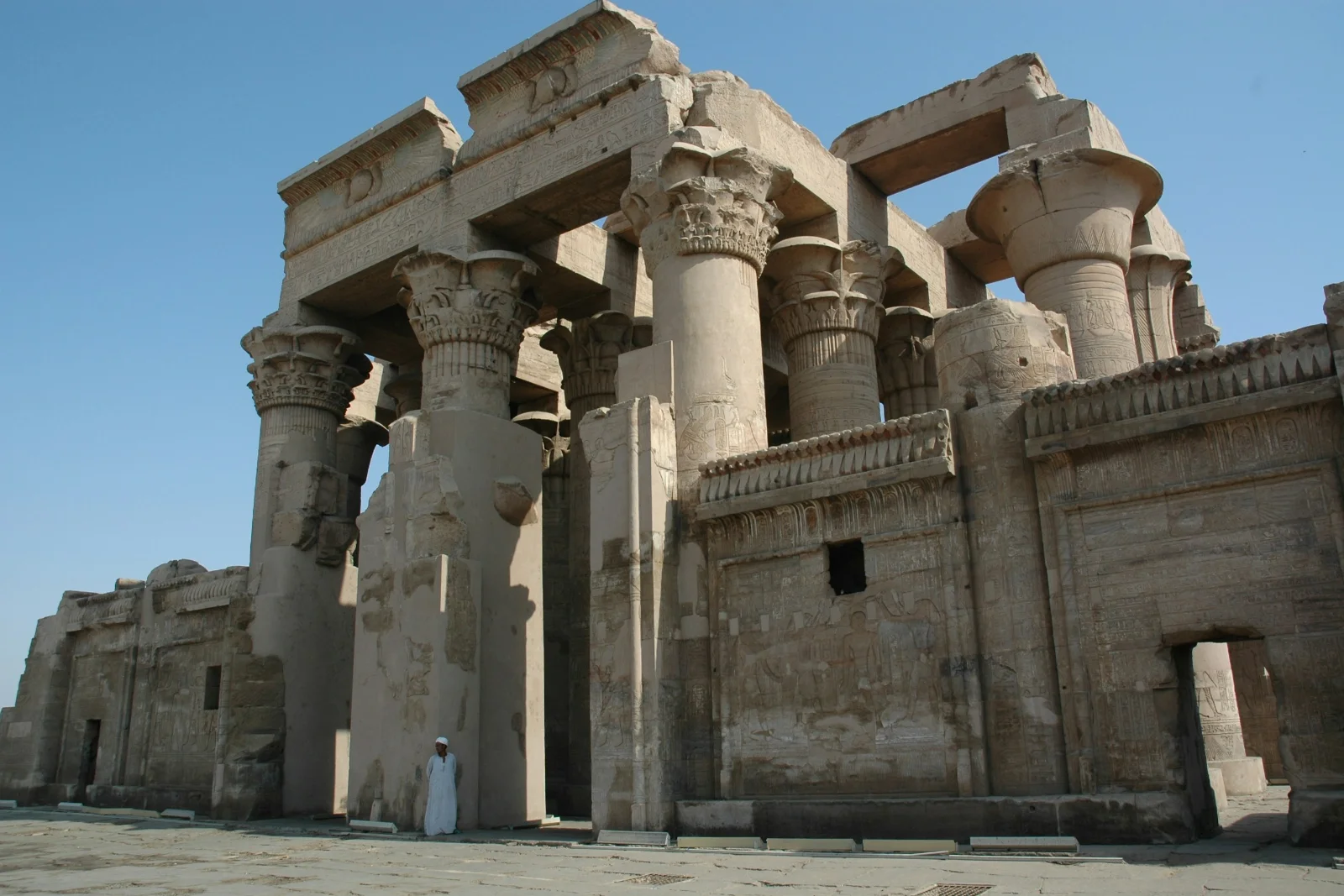
On a bend of the Nile about 45 km north of Aswan, Kom Ombo Temple stands almost on the riverbank, which is why nearly every Nile cruise stops here. What makes it unique is its layout: the whole temple is split down the middle into two identical halves, one dedicated to Sobek, the crocodile god, and the other to Haroeris (Horus the Elder), the falcon-headed god.
Visitors arriving by boat in the late afternoon see the columns glow gold in the setting sun, and after dark the temple is lit up, giving it a completely different atmosphere.
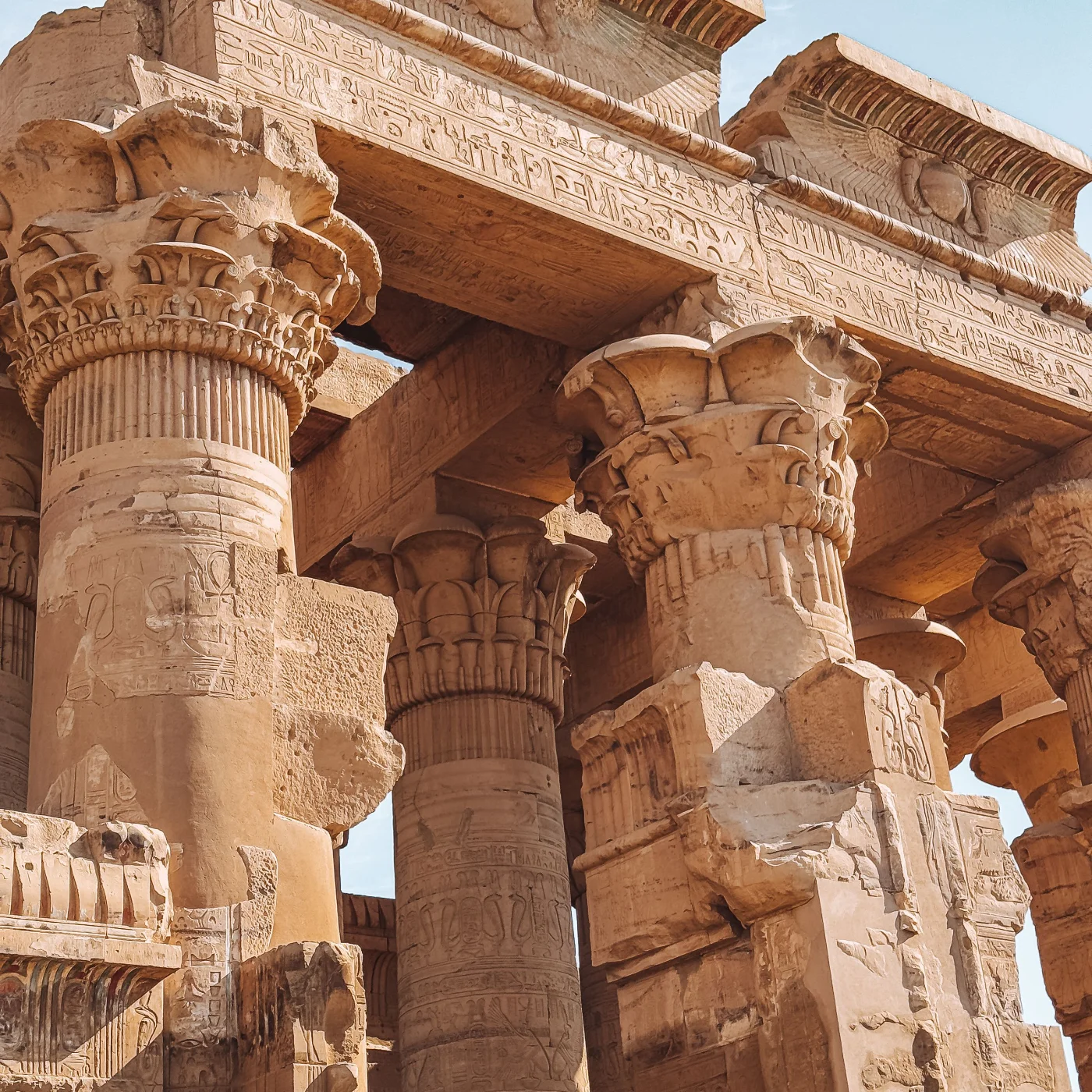
The temple we see today dates from the Ptolemaic period, when Egypt was ruled by the Greek-Macedonian dynasty that followed Alexander the Great. Most of the construction began under Ptolemy VI in the 2nd century BC, and later Ptolemies and Roman emperors added halls and decoration.
The site, known in antiquity as Ombos, stood in an area where crocodiles once basked on the sandbanks, which explains the importance of Sobek here. Over the centuries the river and earthquakes damaged parts of the temple, and much of its front section has been lost.
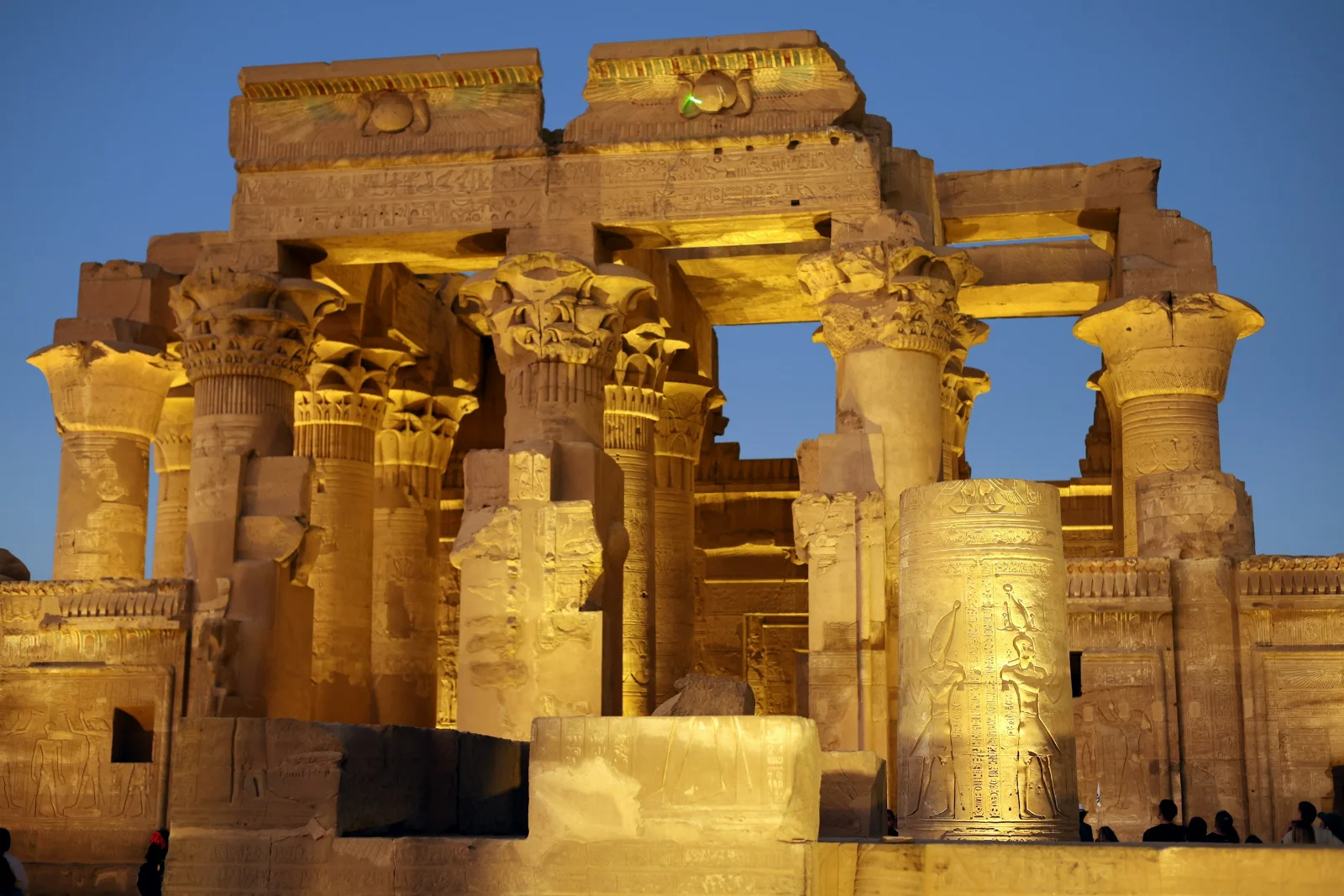
Kom Ombo follows the classic plan of an Egyptian temple, but everything is doubled. There are two entrances, two hypostyle halls, two sets of offering halls and two sanctuaries side by side.
The southern (right-hand) half belongs to Sobek, together with his consort Hathor and their son Khonsu. The northern half honours Haroeris with his family. This perfect symmetry is rare in Egypt and makes the temple easy to read as you walk through it.
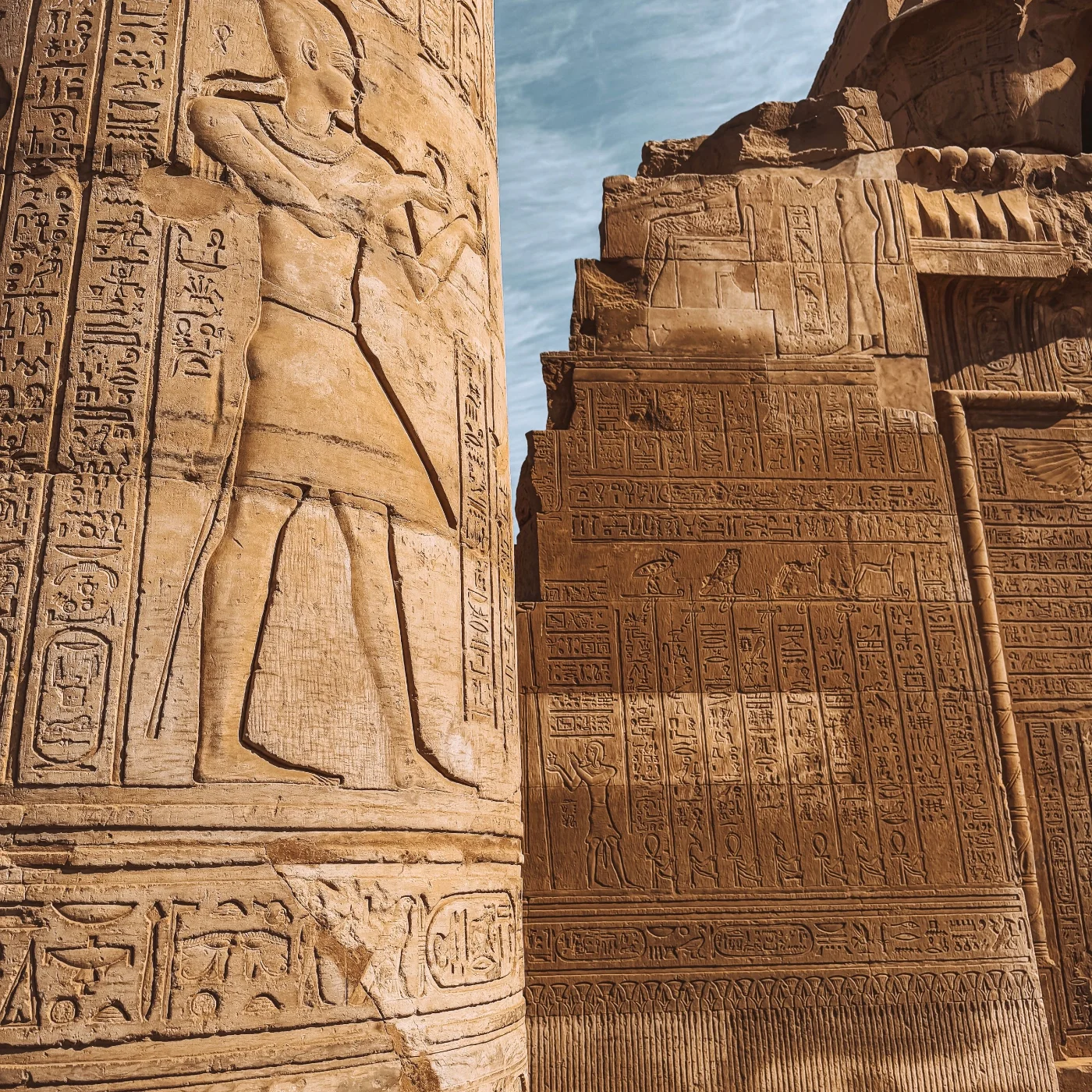
Kom Ombo is famous for several unusual scenes:
The "medical instruments" relief: a carved panel showing objects often interpreted as surgical tools, such as scalpels, forceps and saws.
The temple calendar: a list of festivals and offerings carved on the walls.
Colourful ceilings: in some areas the original paint still survives.
The Nilometer: a deep well with steps used to measure the level of the Nile flood, which helped priests predict the harvest.
Next to the temple, a small museum displays mummified crocodiles found in a nearby cemetery, along with crocodile eggs, coffins and statues of Sobek. It is a short visit, but it shows how seriously the ancient Egyptians took the cult of the crocodile god.
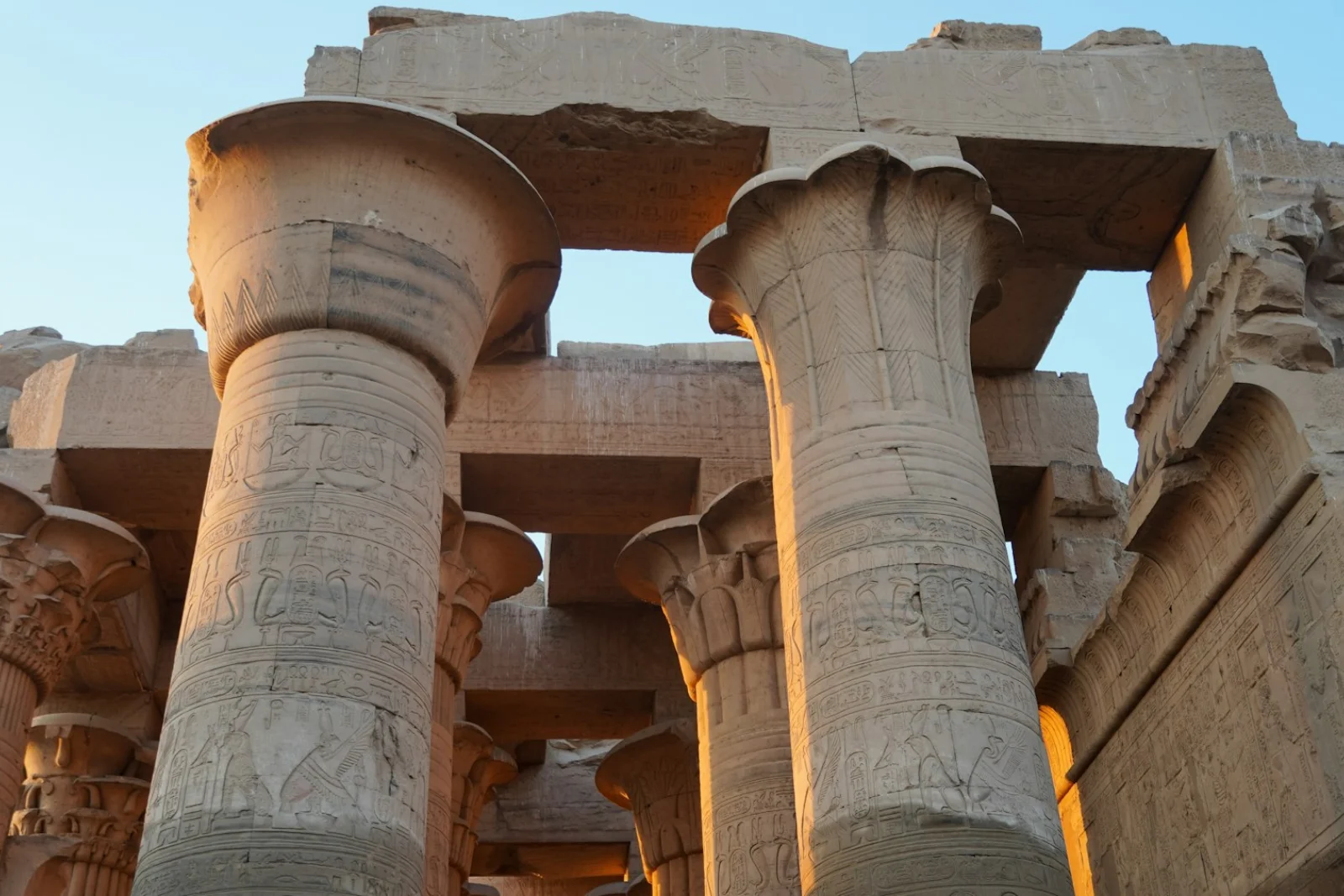
The temple’s ancient name, Ombos, comes from the Egyptian word for gold, a reminder of the region’s importance on the trade routes to the south.
Sobek was linked to the fertility of the Nile, and crocodiles once basked on the sandbanks below the temple.
Much of the temple was buried in sand for centuries; it was cleared and restored at the end of the 19th century.
Its riverside setting makes Kom Ombo one of the very few temples you can see from the deck of your cruise ship.
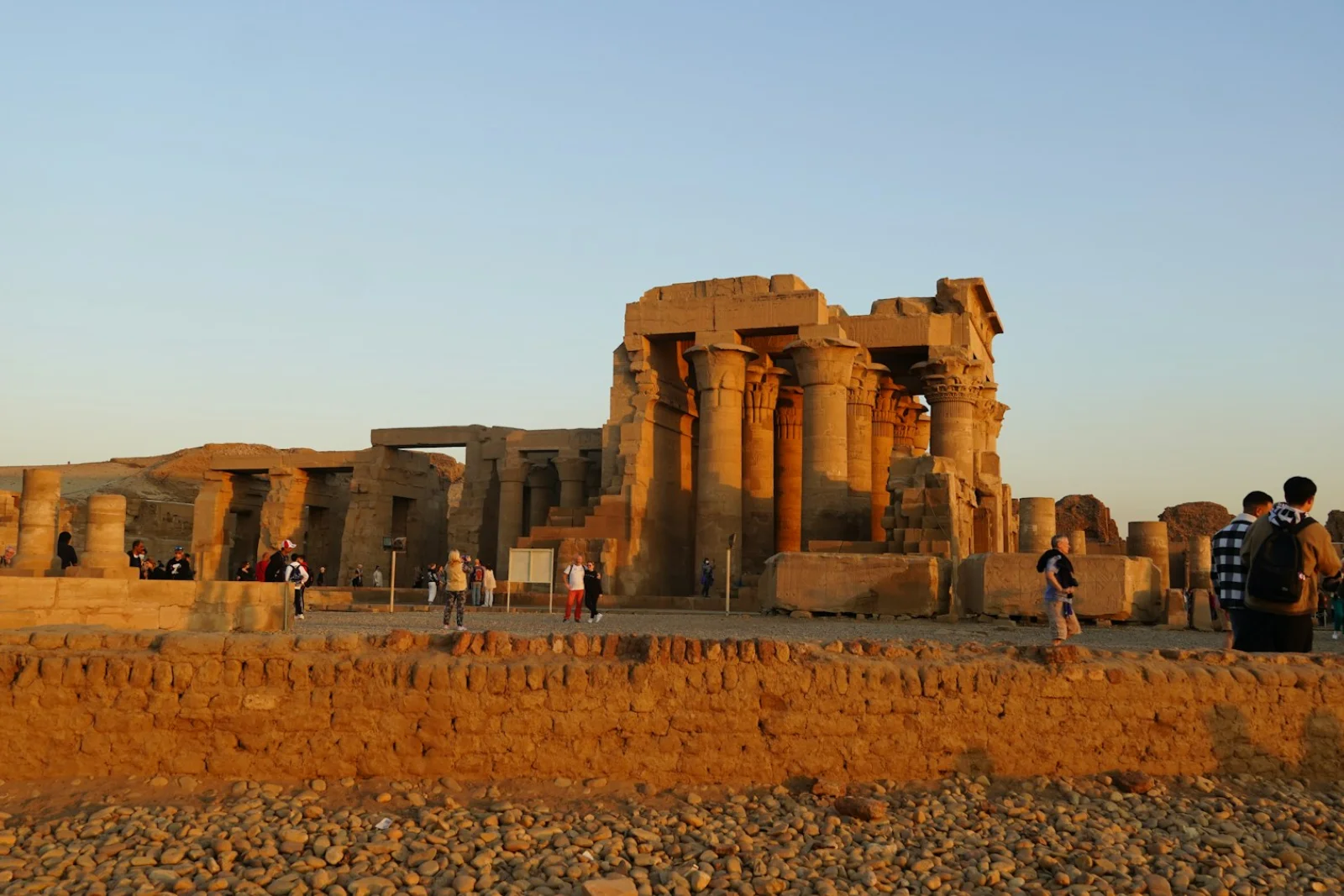
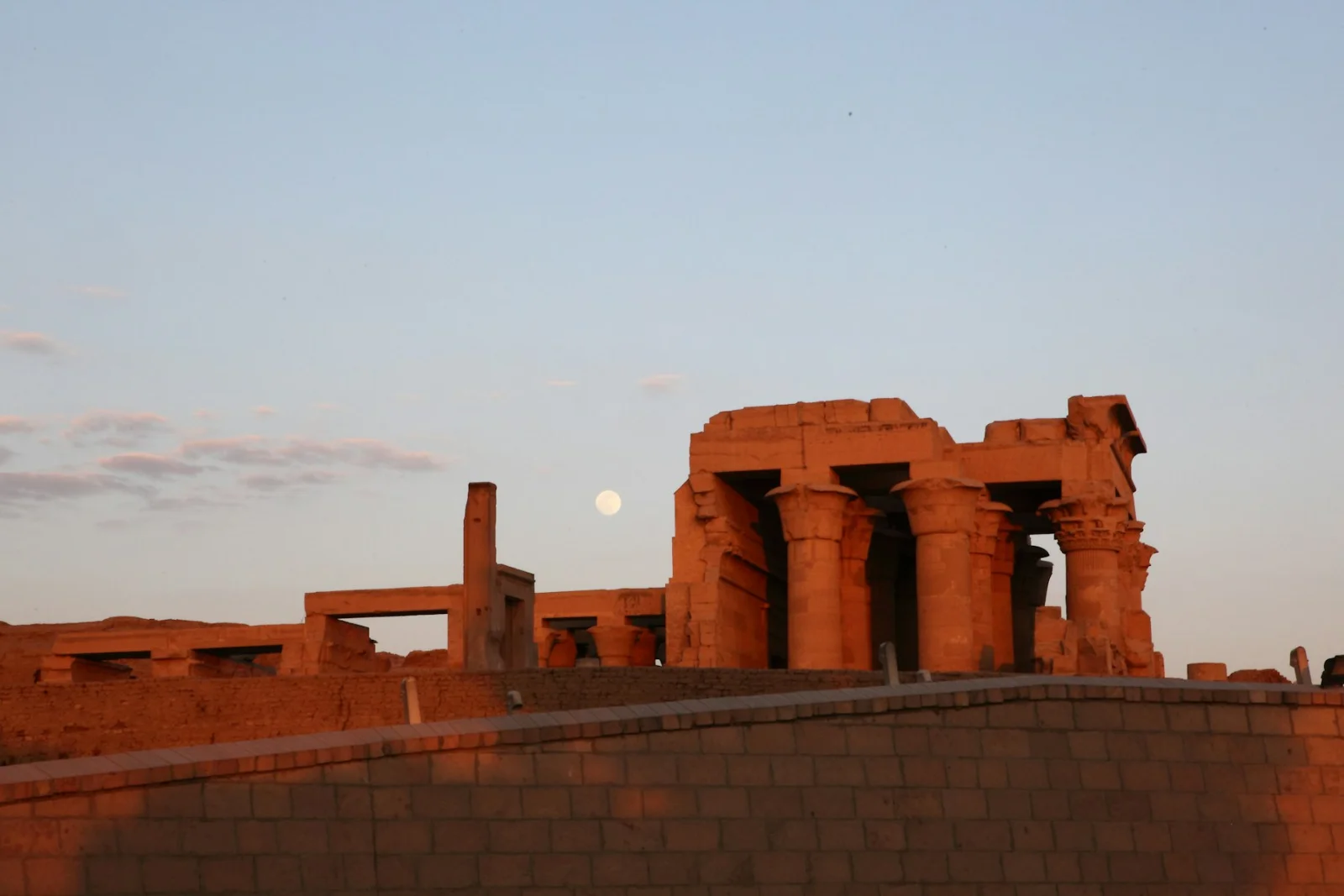
The most magical time to visit is late afternoon and early evening, when the sandstone glows gold and then the temple is illuminated after dark. From October to April the weather is pleasant throughout the day, while in summer an evening visit is the most comfortable choice.
Kom Ombo stands on the east bank of the Nile, about 45 km north of Aswan. Almost every Nile cruise moors directly below the temple, so you simply walk up from the ship. From Aswan, the drive takes around an hour, making it an easy half-day trip that is often combined with Edfu Temple.
Gebel el-Silsila. North of Kom Ombo, the Nile narrows between sandstone cliffs that supplied stone for many of Egypt’s great temples. Here you can see ancient quarries, rock-cut chapels and the shrine of Horemheb right on the riverbank.
The Daraw camel market. Just south of Kom Ombo, Daraw is home to one of Egypt’s best-known camel markets, where traders bring camels from Sudan. It is a lively, authentic slice of local life.
Sunset from the Nile. Most Nile cruises moor right below the temple. Seeing its columns glow in the late afternoon from the deck, then walking up as the lights come on, is one of the magical moments of the cruise.
Between two great temples. Kom Ombo sits between the Edfu Temple to the north and Aswan to the south, so it fits easily into a day of sailing. Continue to Aswan.
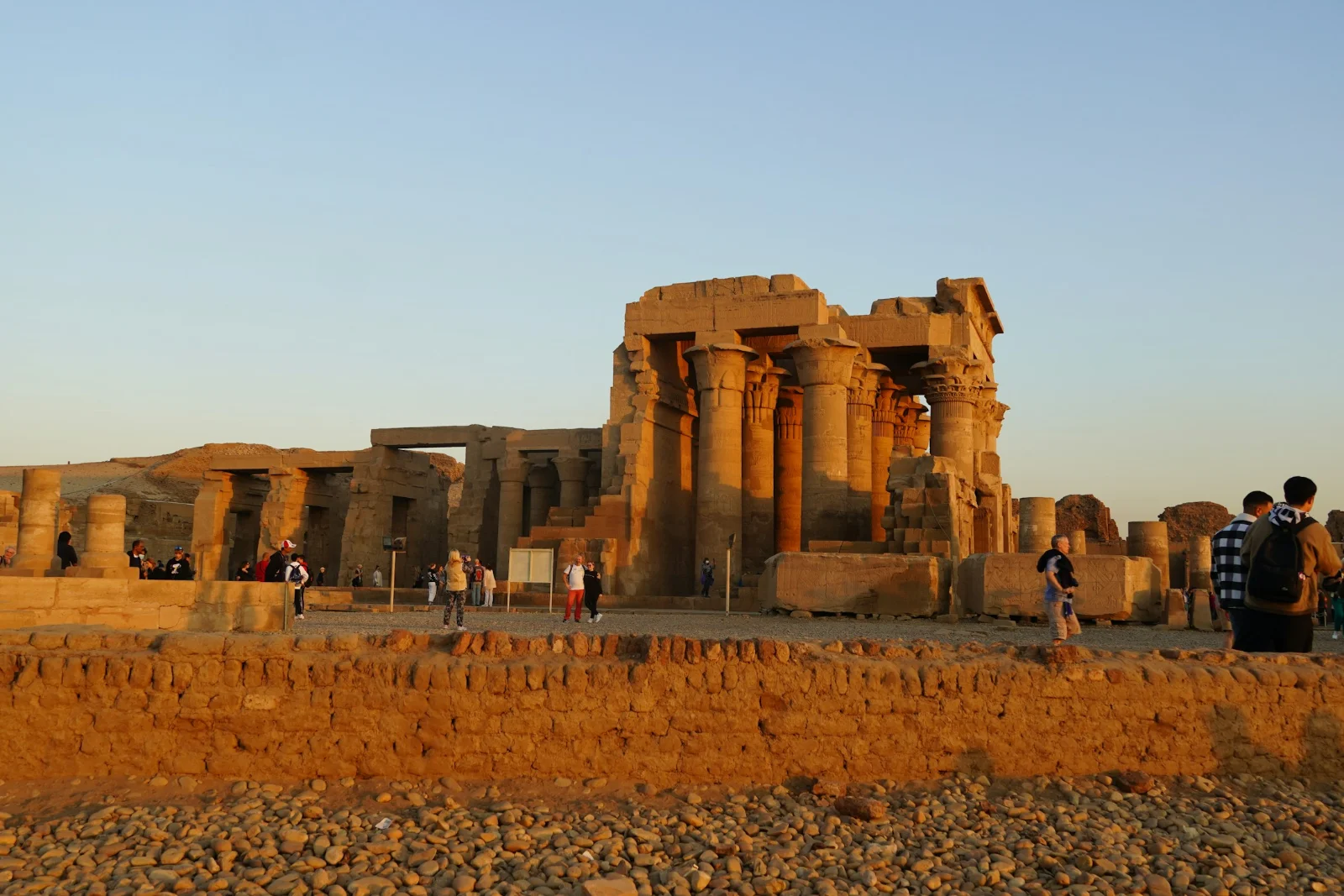
Most visitors come as part of a Nile cruise, which usually moors right in front of the temple.
Bring comfortable shoes; the site is compact but has uneven stone floors.
If you visit after sunset, the illuminated reliefs are especially atmospheric.
Combine Kom Ombo with nearby Edfu Temple and Philae Temple for a complete picture of Ptolemaic temples.
Kom Ombo is included on all our Nile cruises between Luxor and Aswan. Explore our Nile cruises or choose one of these tours:
Pyramids & Nile Cruise Escape – 6 Days Cairo, Aswan & Luxor — 6 Days / 5 Nights
Best of Egypt – 8 Days Cairo & 4-Night Nile Cruise Luxor to Aswan — 8 Days / 7 Nights
Pyramids, Nile & Red Sea – 9 Days Cairo, Nile Cruise & Hurghada — 9 Days / 8 Nights

Round-the-clock 24/7 support from expert local guides and a professional customer care team, before and throughout your trip.


Copyright © 2026 Egyptista