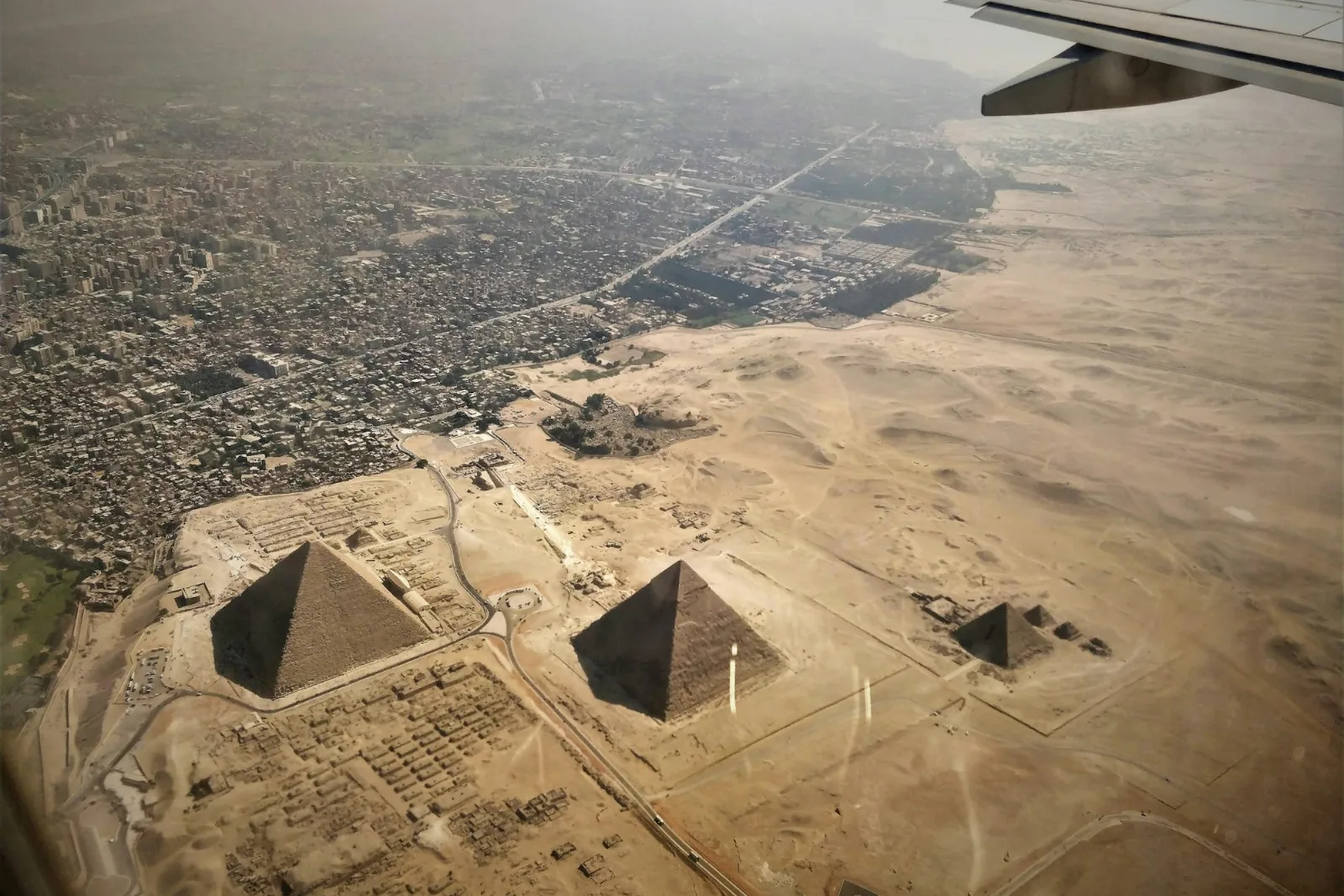
Stand at the edge of the Giza Plateau in the early morning and the city noise seems to fall away. Ahead of you rise three man-made mountains of limestone, built for three kings of Egypt’s Fourth Dynasty roughly 4,500 years ago. They are the oldest of the Seven Wonders of the Ancient World and the only one still standing.
The plateau holds far more than three pyramids. Smaller queens’ pyramids, mortuary and valley temples, causeways, rows of officials’ tombs and the Great Sphinx together form a vast royal cemetery. Since 1979 it has been part of the UNESCO World Heritage Site “Memphis and its Necropolis – the Pyramid Fields from Giza to Dahshur”.
This guide explains who built the pyramids, how they work as architecture, what you can do on the plateau today and how to plan a smooth visit.
The story starts with Khufu, second king of the Fourth Dynasty, who reigned around 2589–2566 BC. His architects chose a limestone ridge on the west bank of the Nile, high above the floodplain, for a tomb that would carry him to eternity.
His son Khafre built the second pyramid beside it, and Menkaure added the third and smallest a few decades later.
Each pyramid was the centrepiece of a complete funerary complex: a temple against its east face, a causeway running down to a valley temple near the edge of the cultivated land, and smaller pyramids for royal women. Around them grew whole streets of mastaba tombs for princes and officials who wanted to be buried close to their king.
Excavations in the 1990s south of the Sphinx uncovered a workers’ town with bakeries, breweries, storerooms and a cemetery for the builders themselves. The finds point to a well-organised workforce of skilled craftsmen supported by rotating teams of labourers, fed and housed by the state. The popular image of slaves under the whip does not match the archaeological evidence.

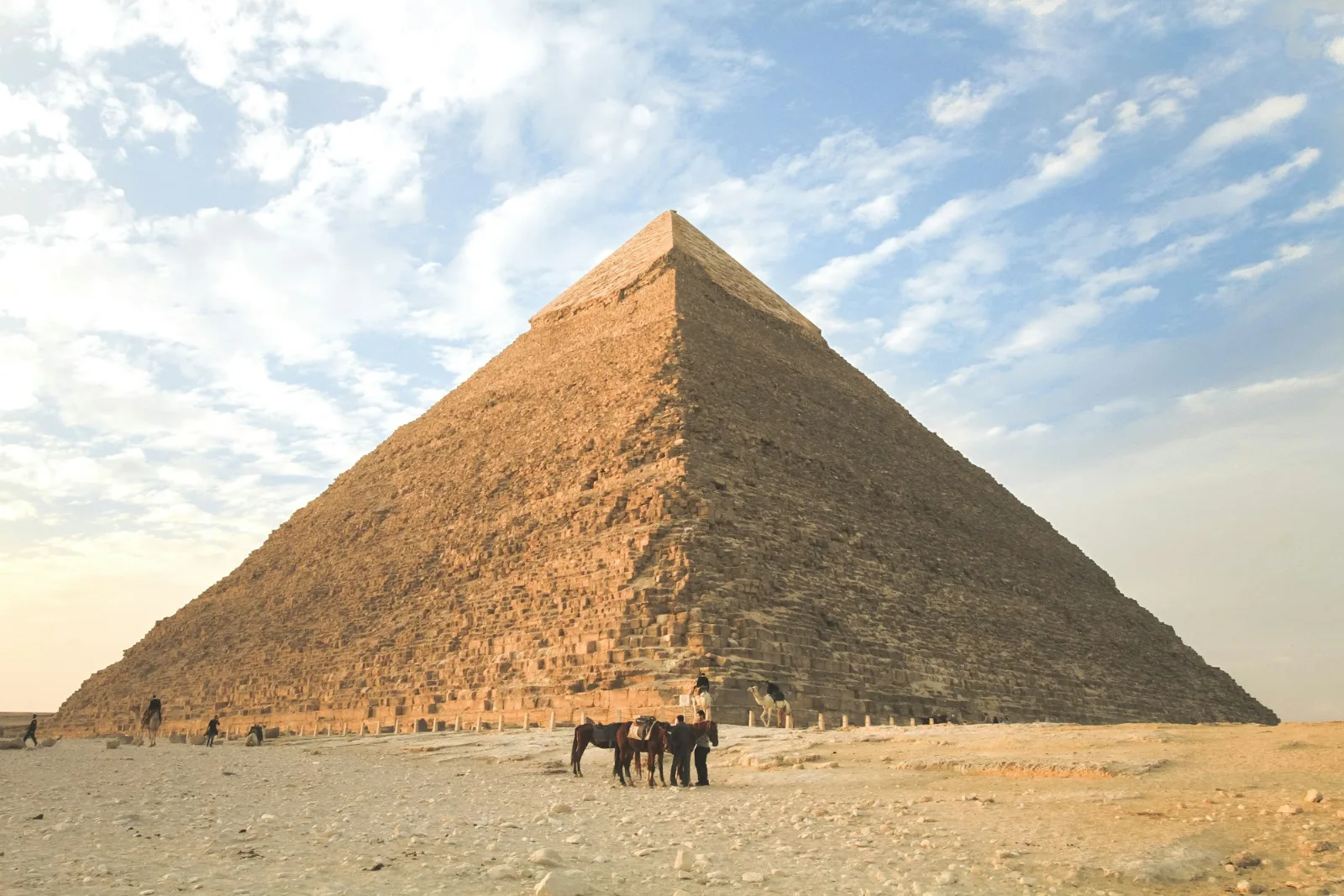
The largest of the three originally stood about 146 metres high. Its outer casing of polished white Tura limestone was later stripped for building stone, so today it reaches roughly 138 metres.
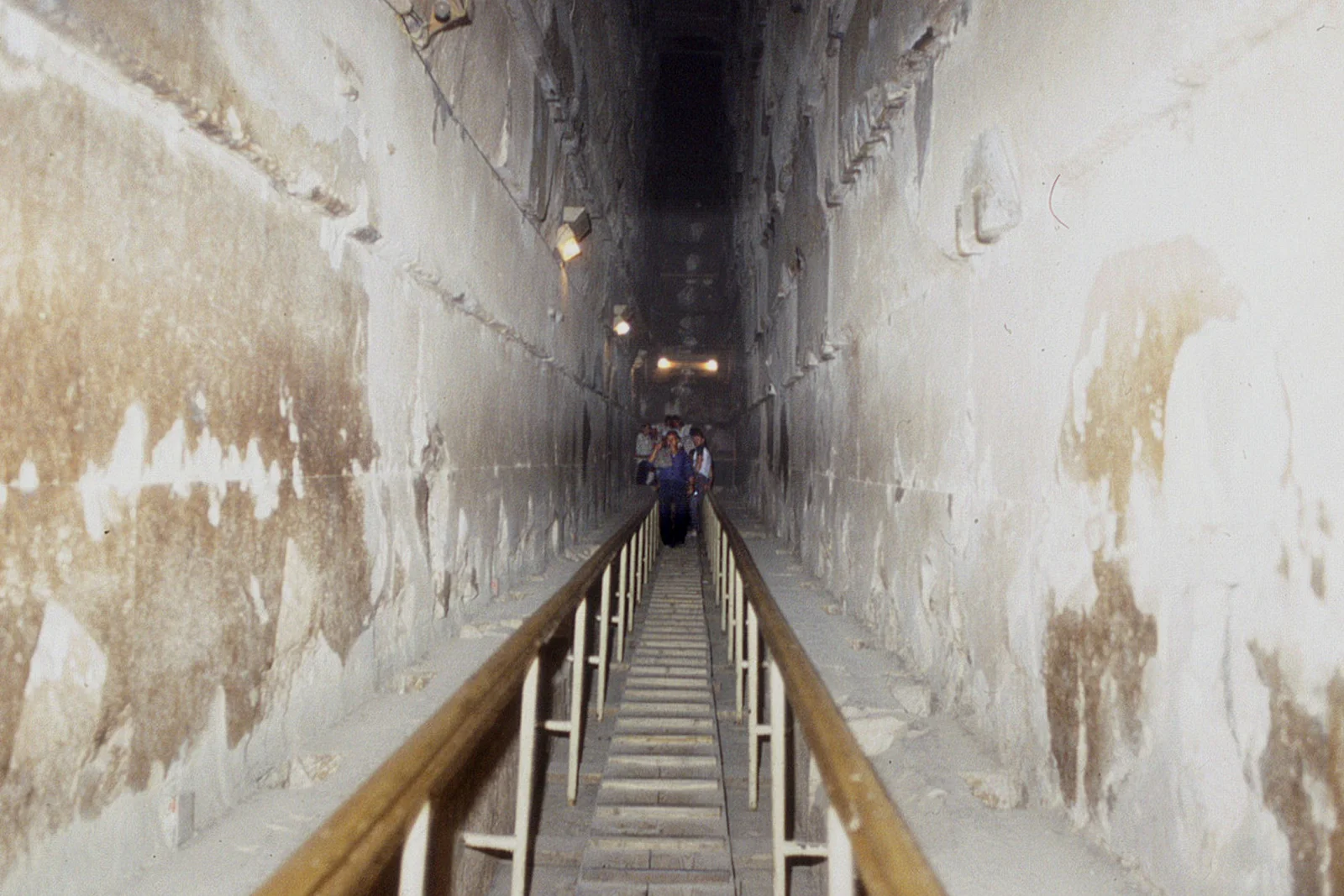
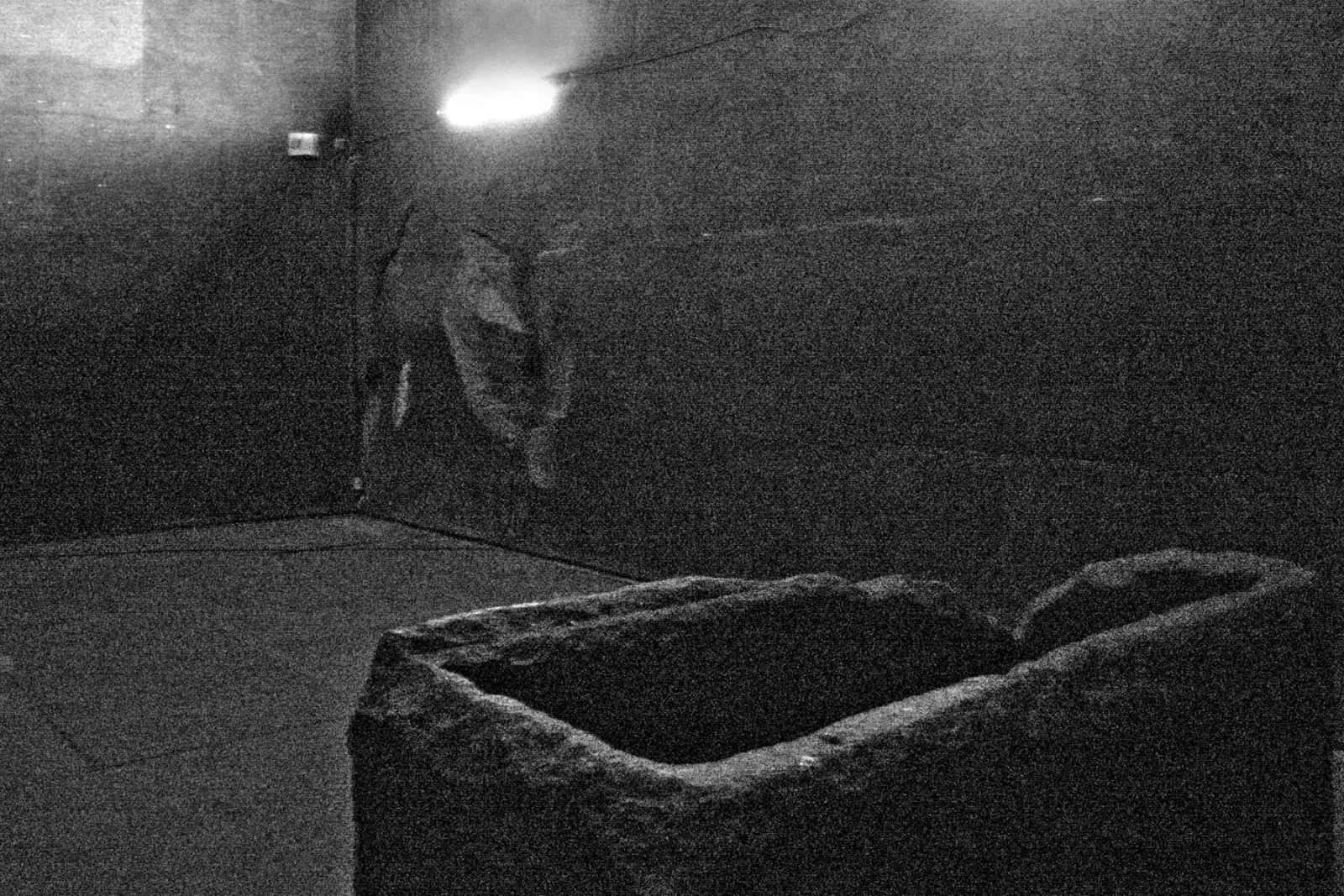
Engineers estimate that around 2.3 million blocks went into it. Inside, a narrow passage climbs through the Grand Gallery, a corbelled corridor almost 9 metres high, to the King’s Chamber, lined with red Aswan granite.
Khafre’s pyramid looks taller because it sits on higher bedrock and still keeps a cap of its original casing stones near the summit. Its valley temple, built of massive granite blocks, stands beside the Sphinx and is one of the best-preserved buildings of the Old Kingdom.
At about 65 metres, Menkaure’s pyramid is the smallest of the three. The lower courses were faced with red granite, and three small queens’ pyramids line up to its south.
Do not miss the Eastern and Western Cemeteries of mastaba tombs, the causeways and the Panorama viewpoint on the desert side, where all the pyramids line up in one frame.
A record that lasted millennia. The Great Pyramid was the tallest man-made structure on Earth for more than 3,800 years.
Precise orientation. The sides of Khufu’s pyramid are aligned to the four cardinal points with remarkable accuracy.
A boat for the afterlife. In 1954 archaeologists found a dismantled cedar boat buried beside the Great Pyramid. Reassembled, it is more than 40 metres long and is now displayed at the Grand Egyptian Museum.
Hidden spaces. Muon-scanning projects since 2017 have detected previously unknown voids inside the Great Pyramid, including a corridor above the original entrance confirmed in 2023.
Not just tombs. Each pyramid was part of a temple complex where priests maintained the king’s cult long after his burial.
Walk the plateau with a guide. An Egyptologist guide brings the cemeteries, quarry marks and temple remains to life.
Go inside a pyramid. Entering the Great Pyramid requires a separate ticket. The passages are steep and narrow, so skip it if you are uncomfortable in tight spaces.
Visit the Panorama viewpoint. This is the classic spot for photographs of all the pyramids together.
Ride a camel or horse. Agree the price, route and duration clearly before you mount, and use licensed operators.
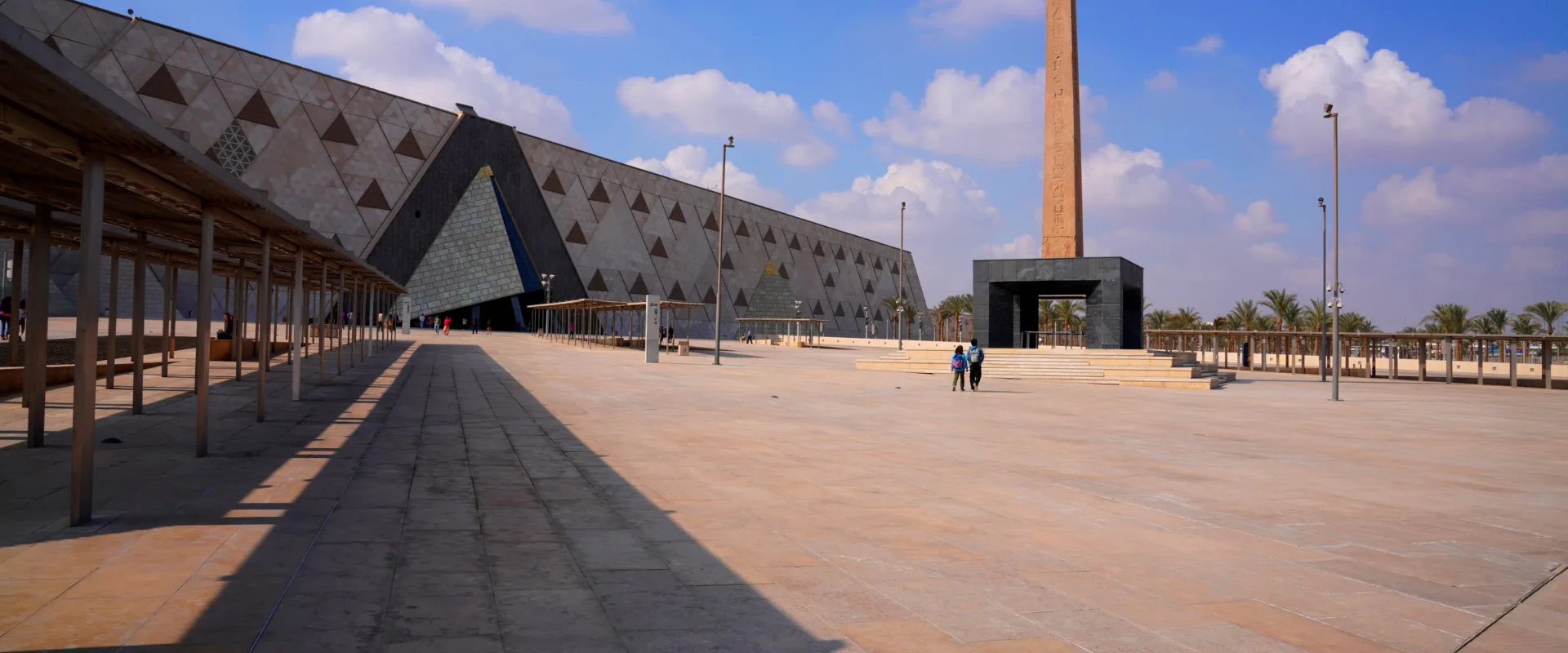
Combine with the GEM. The Grand Egyptian Museum is about 2 km away and makes a natural half-day pairing.
See the Sound and Light Show. The evening show at the Sphinx tells the story of the plateau with lights projected on the monuments.
Photo: Mike McBey / Wikimedia Commons, CC BY 2.0
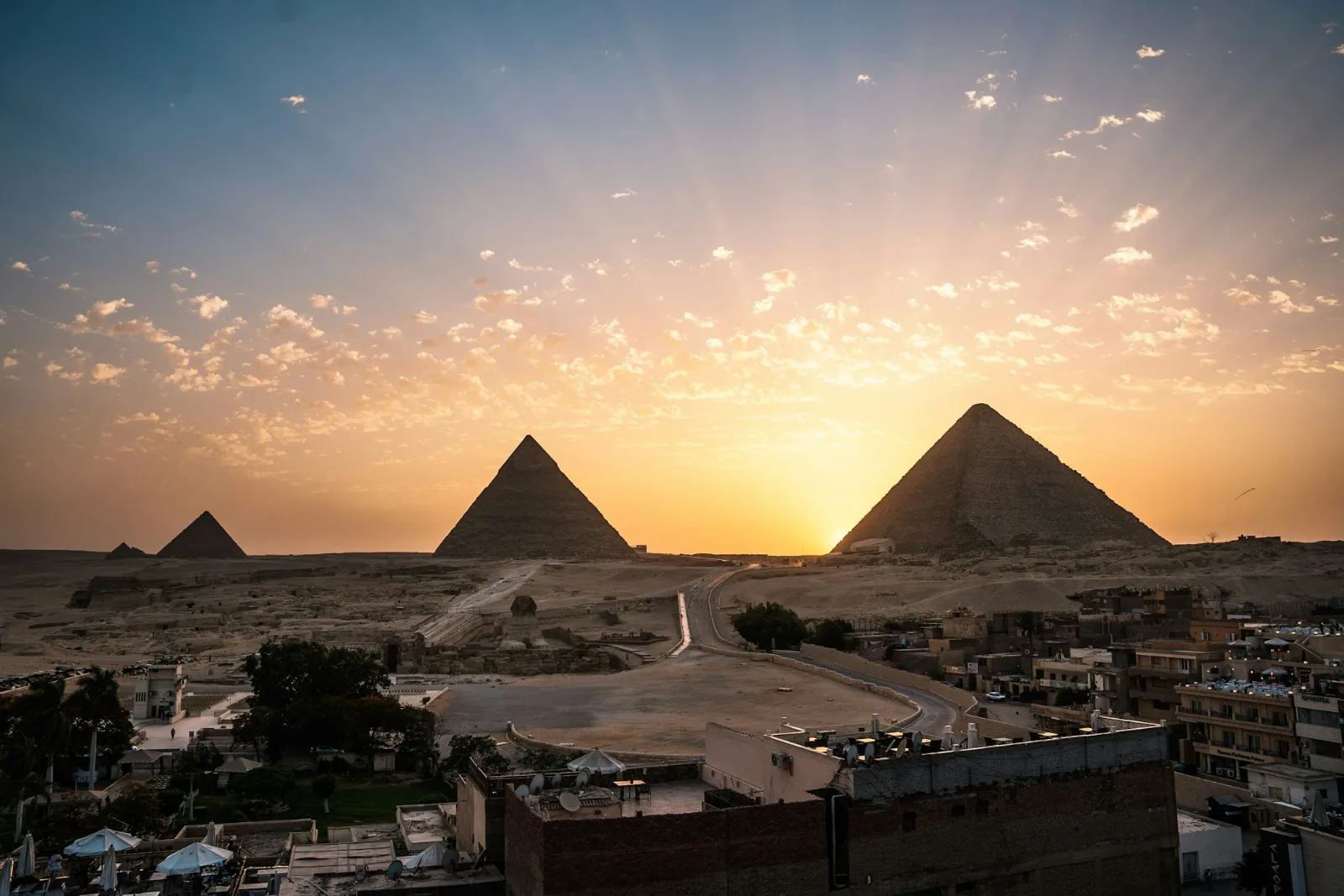
The most comfortable months are October to April, when daytime temperatures in Cairo are usually mild. From May to September the plateau can be very hot, with little shade.
Whatever the season, arrive at opening time. The light is softer, the air is cooler and the main viewpoints are quieter before tour coaches arrive mid-morning. Late afternoon, shortly before last entry, is the other good window for golden light.
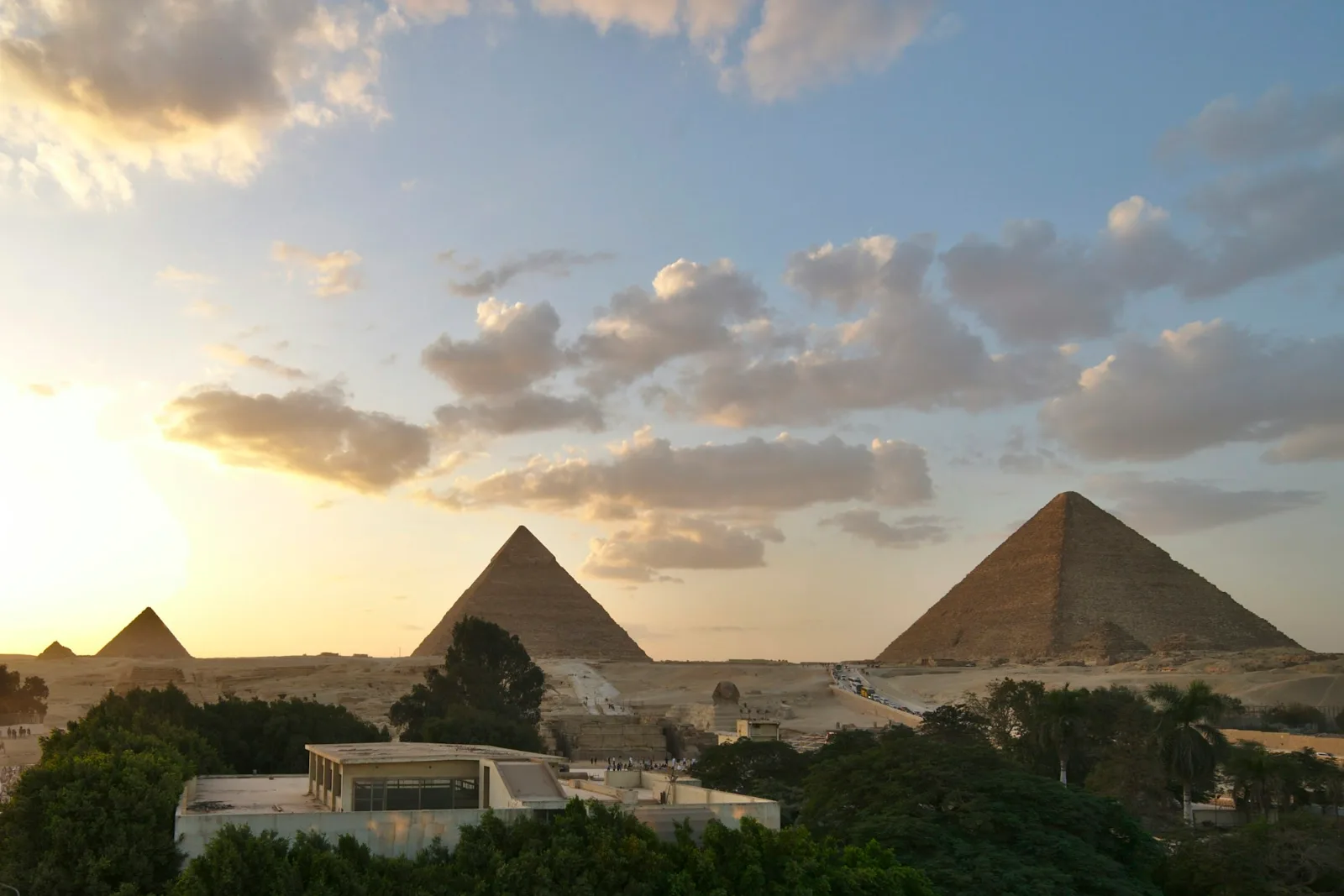
The pyramids stand on the Giza Plateau, about 15–20 km south-west of central Cairo, on the edge of the Western Desert.
By car or taxi: The easiest option. Ride-hailing apps work well across Cairo and Giza.
With a tour: Most travellers combine the pyramids with the Sphinx and the GEM on a private guided day, which removes the hassle of transport and tickets.
From the airports: Cairo International Airport is roughly an hour’s drive in normal traffic, and Sphinx International Airport, west of Giza, is closer.
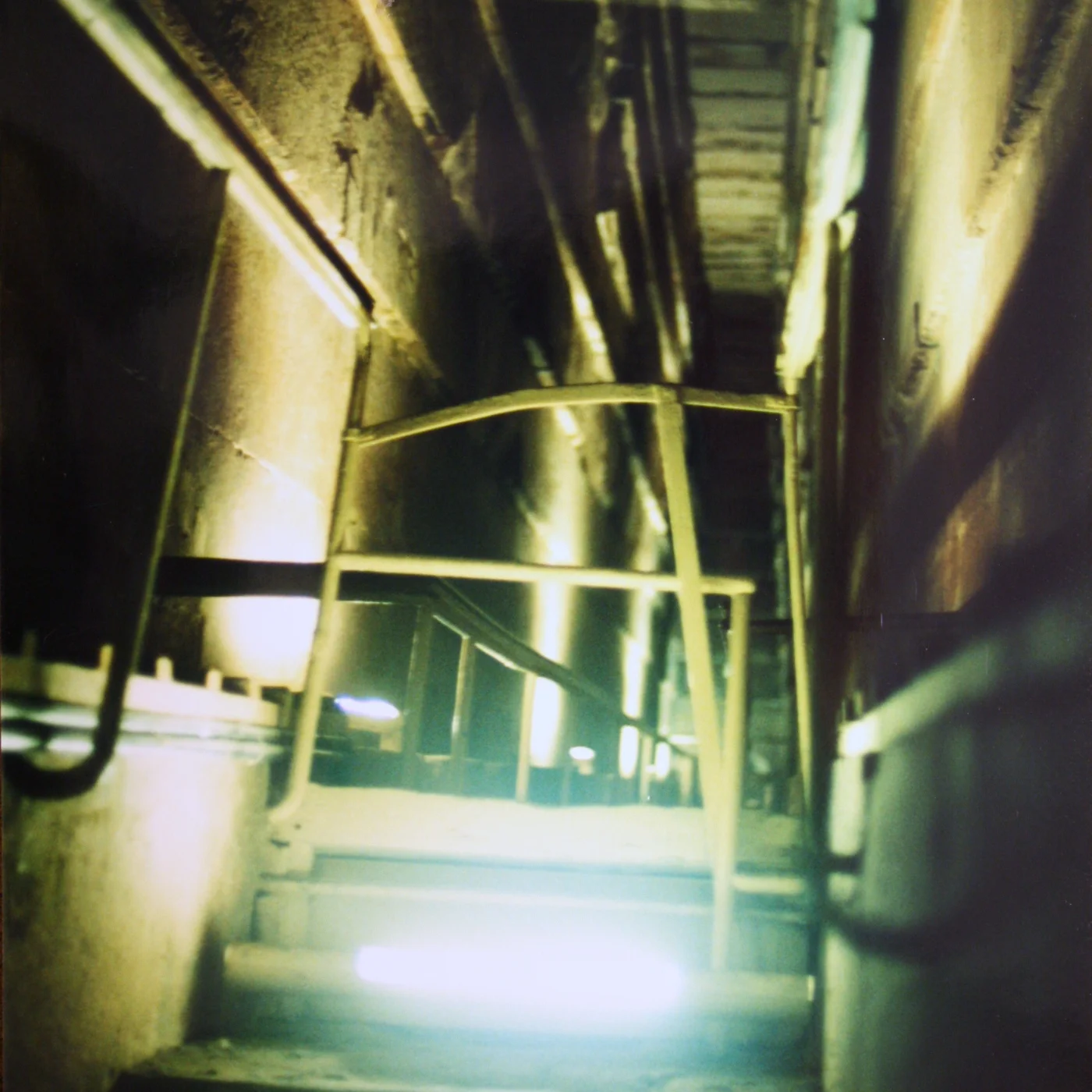
The Grand Gallery. Inside the Great Pyramid, a soaring corridor about 8.6 metres high and 47 metres long climbs towards the King’s Chamber. Its corbelled ceiling is one of the most impressive feats of ancient engineering.
The builders’ signatures. In the small relieving chambers above the King’s Chamber, explorers found painted marks left by work gangs, with names such as “Friends of Khufu”, proof of the skilled teams who built the pyramid.
The original casing. Look at the top of Khafre’s pyramid: it still keeps part of its smooth limestone casing, showing how all three pyramids once gleamed white in the sun.
The Queens’ Pyramids. Beside the Great Pyramid stand three small pyramids built for royal women, often overlooked by visitors.
The panoramic viewpoint. From the desert plateau to the southwest you can see all the main pyramids lined up together, the classic postcard view. Finish with the Great Sphinx just below.
Opening hours: Daily from 7:00 AM, last entry 4:00 PM. During Ramadan, 8:00 AM with last entry at 3:30 PM.
Plateau ticket (foreign visitors): EGP 700 for adults and EGP 350 for students with a valid ID.
Extra tickets: Entry inside the Great Pyramid and the other pyramids is sold separately, and the Sound and Light Show has its own ticket.
Where to buy: At the gates or online through the official EgyMonuments platform.
Prices and hours were checked on the official EgyMonuments website in November 2026. They change from time to time, so please confirm them before your visit.
Practical tips: Wear comfortable shoes and a hat, carry water, keep your ticket until you leave, and politely refuse unofficial “guides” who approach you at the entrance.
Photo: Andrew Currie / Wikimedia Commons, CC BY 2.0
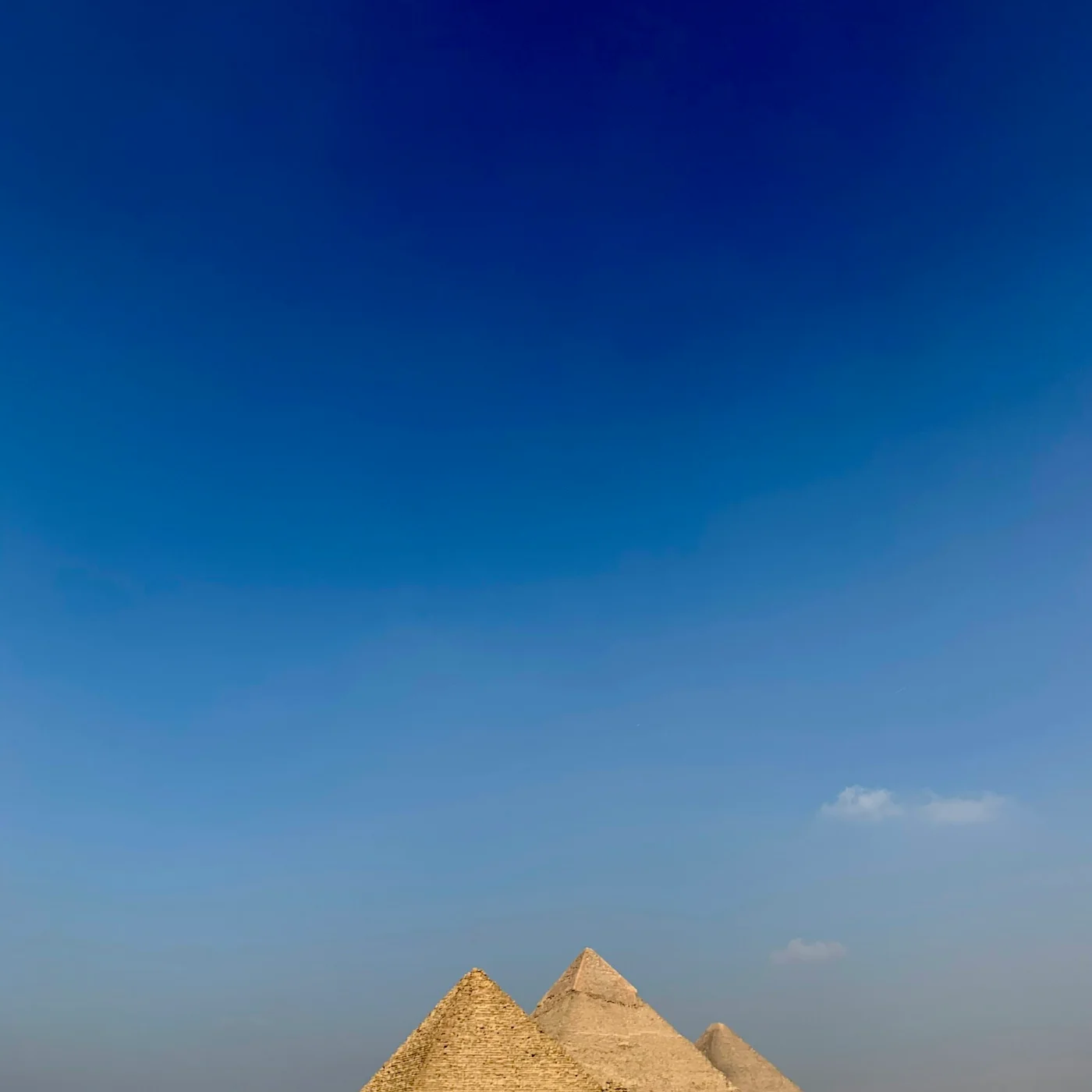
Arrive at opening time for soft light and fewer people around the pyramids.
Head to the panoramic viewpoint south-west of the plateau for the classic shot of all three pyramids together.
Include a camel or a person in your frame to show the incredible scale of the Great Pyramid.
In the late afternoon, the stones glow gold against the desert sky.
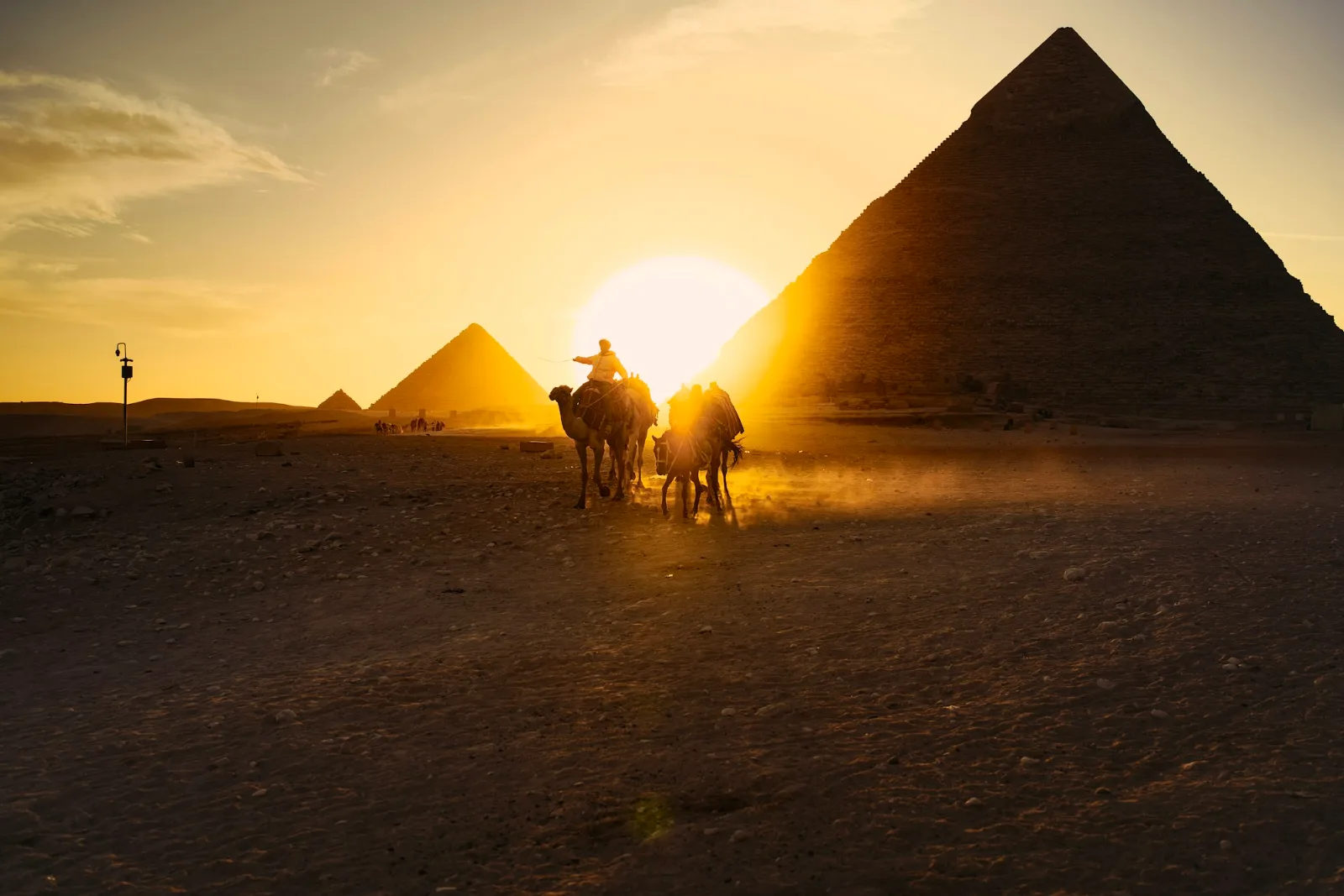
Few places let you stand this close to the origins of monumental architecture. The pyramids are a feat of planning, logistics and astronomy carried out with copper tools, ramps and human muscle.
They are also the starting point for understanding everything else you will see in Egypt, from the temples of Luxor to the treasures in the GEM. However many photographs you have seen, the scale only makes sense in person.
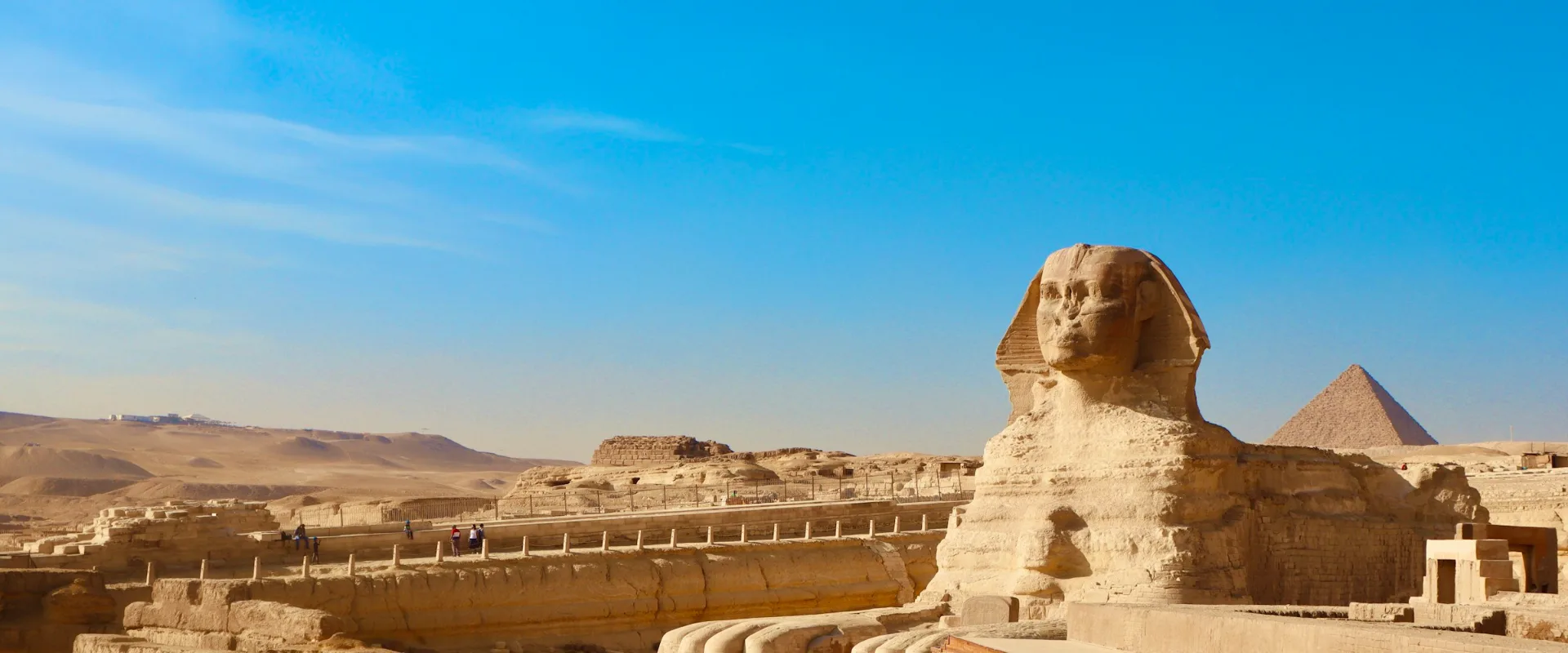
The Great Sphinx of Giza: the guardian of the plateau, a few minutes’ walk downhill.
The Grand Egyptian Museum: home to Khufu’s boat and the full Tutankhamun collection.
Khan el-Khalili Bazaar: end the day in medieval Cairo.
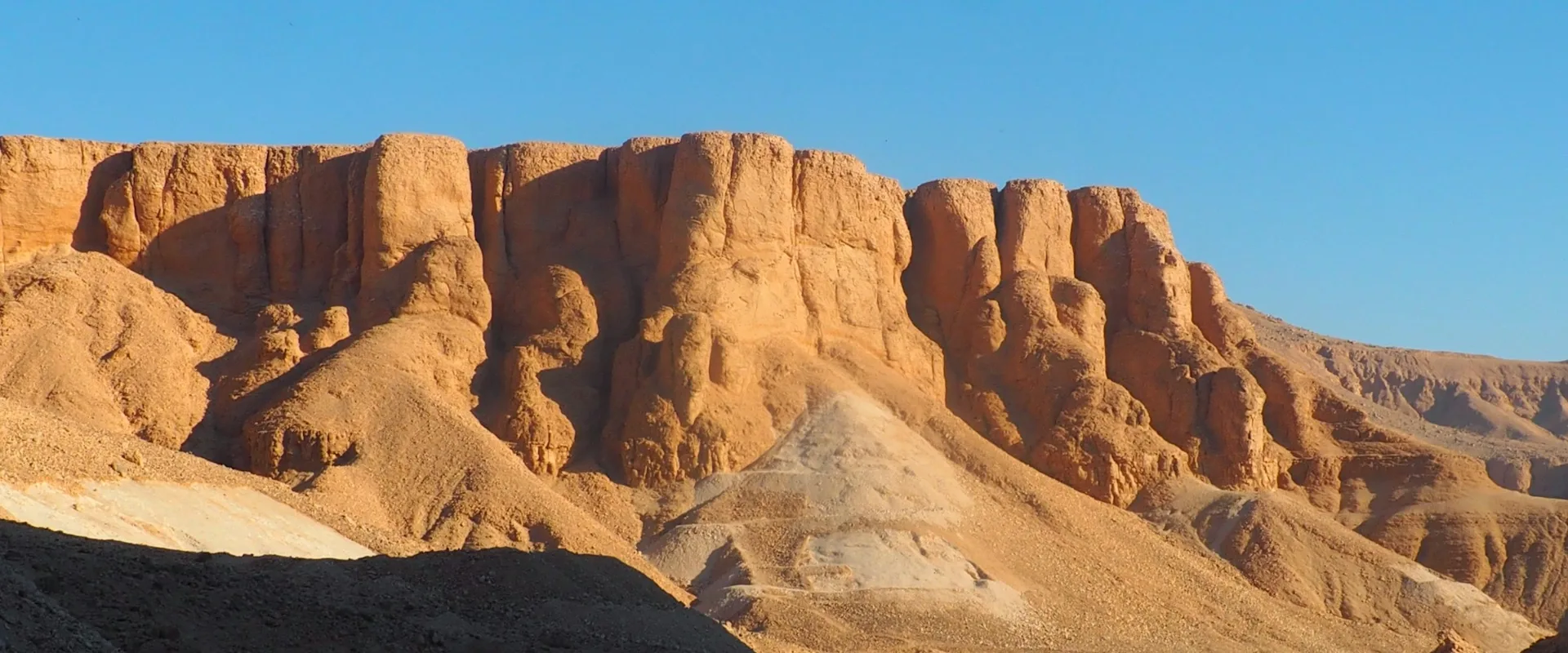
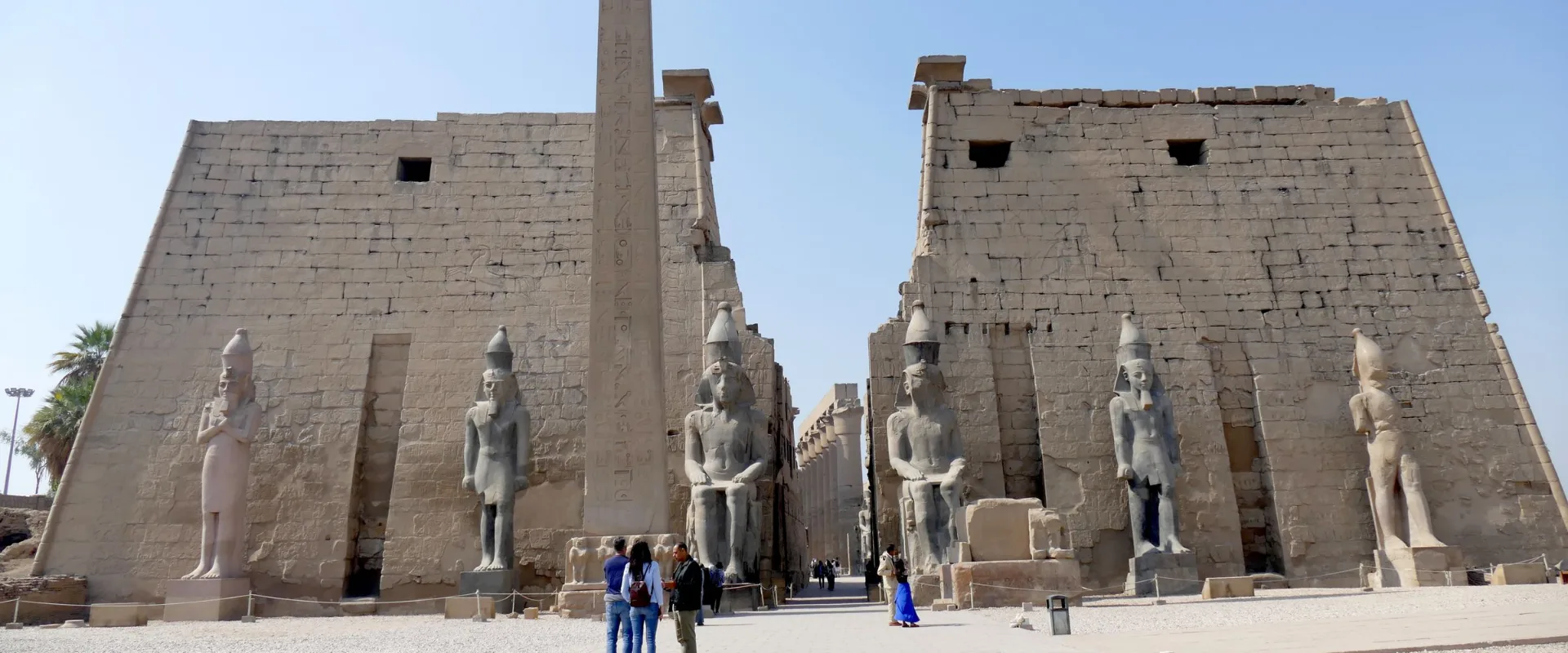
Valley of the Kings: see how royal burial changed a thousand years later in Luxor.

Round-the-clock 24/7 support from expert local guides and a professional customer care team, before and throughout your trip.


Copyright © 2026 Egyptista