Travellers sailing north on the Nile from Africa met an unforgettable sight at Abu Simbel. Four seated statues of Ramesses II, each about 20 metres tall, were carved into the cliff face. Their message was clear: this was the land of a mighty pharaoh.
More than 3,000 years later, these temples remain among the most spectacular in Egypt. They also tell a modern story. In the 1960s, the rising waters of Lake Nasser threatened to drown them, and the international community came together to cut them out of the rock and rebuild them on higher ground.
Abu Simbel is part of the UNESCO World Heritage Site “Nubian Monuments from Abu Simbel to Philae”. It is well worth the journey south of Aswan.
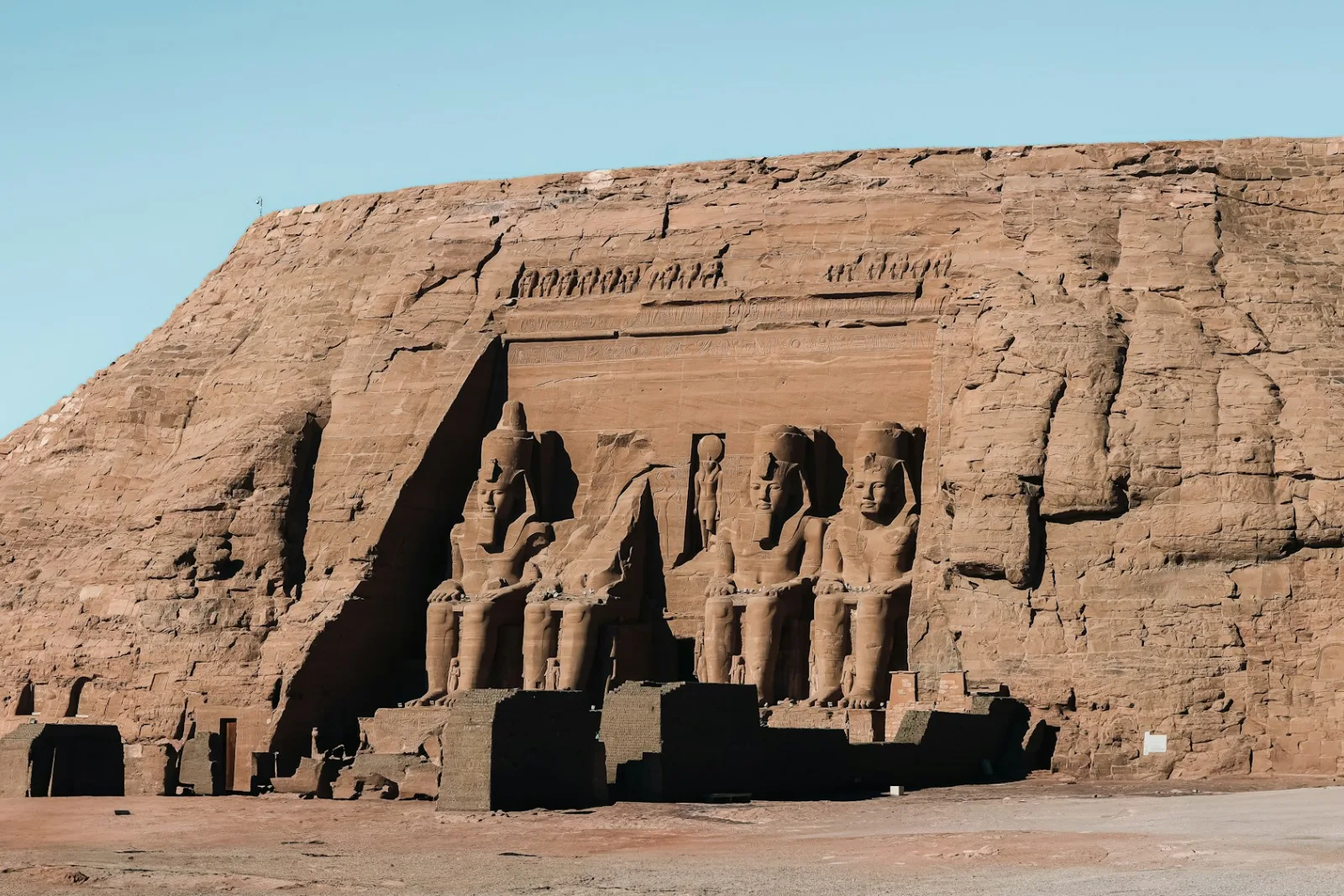
Ramesses II, who ruled from about 1279 to 1213 BC, ordered two temples to be cut into the sandstone hills at Abu Simbel. Work lasted around twenty years. The Great Temple honoured the gods Amun-Re, Ra-Horakhty and Ptah, and Ramesses himself as a god. The Small Temple was dedicated to the goddess Hathor and to his principal wife, Queen Nefertari.
The temples were a political statement as much as a religious one. They proclaimed Egyptian power in Nubia, a region rich in gold and trade routes.
Over the centuries, drifting sand buried much of the facade. The Swiss traveller Johann Ludwig Burckhardt saw the top of the great statues in 1813. Four years later, the Italian explorer Giovanni Belzoni dug his way into the temple.
The facade is about 30 metres high, with four seated colossi of Ramesses II. Smaller statues of royal family members stand between their legs, and a row of baboons greeting the sunrise runs along the top.
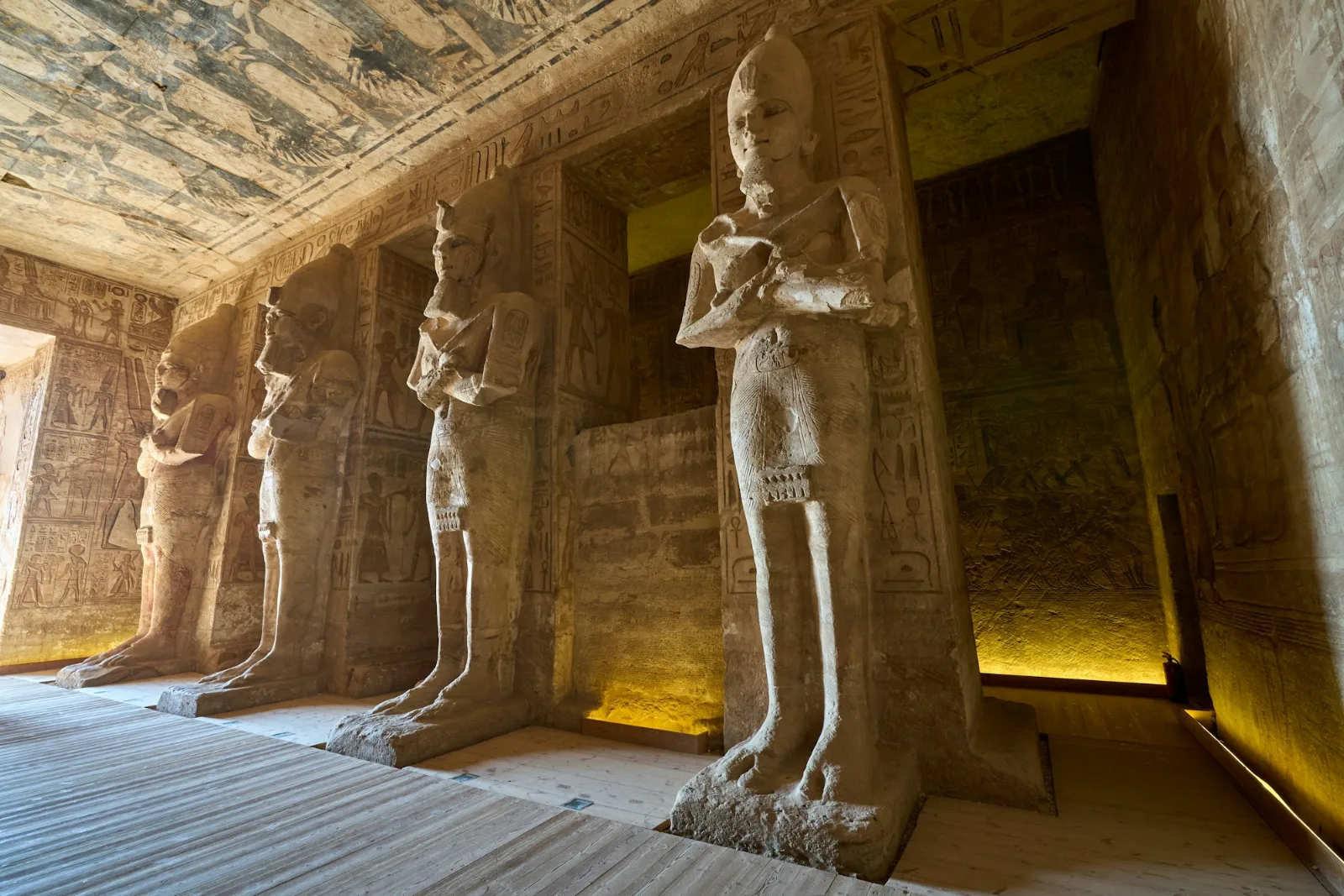
Inside, the great hall is lined with eight pillars fronted by statues of the king as Osiris. The walls show the Battle of Kadesh, fought against the Hittites in Syria. A sequence of smaller rooms leads deep into the mountain to the sanctuary, where four seated gods are carved from the rock.
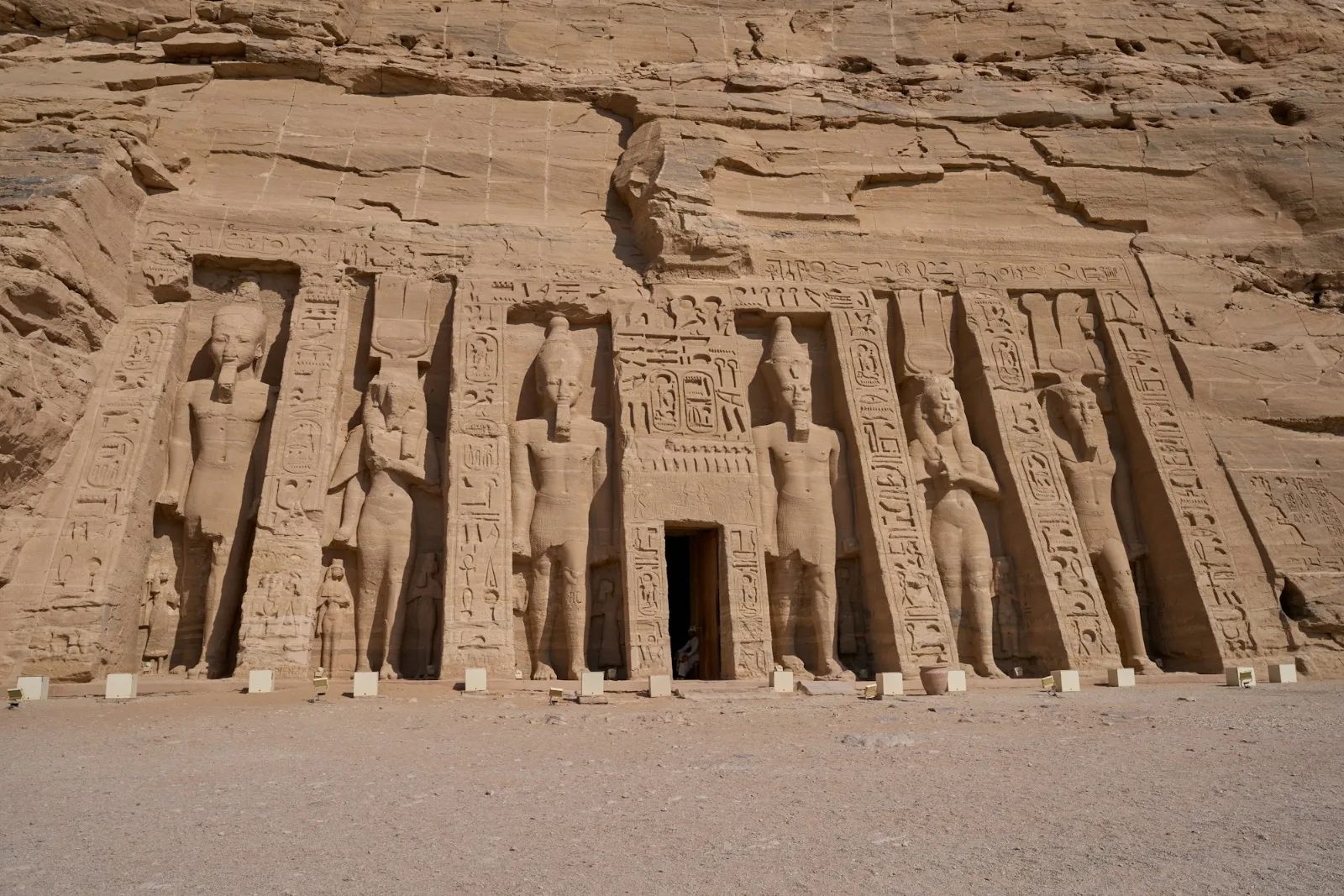
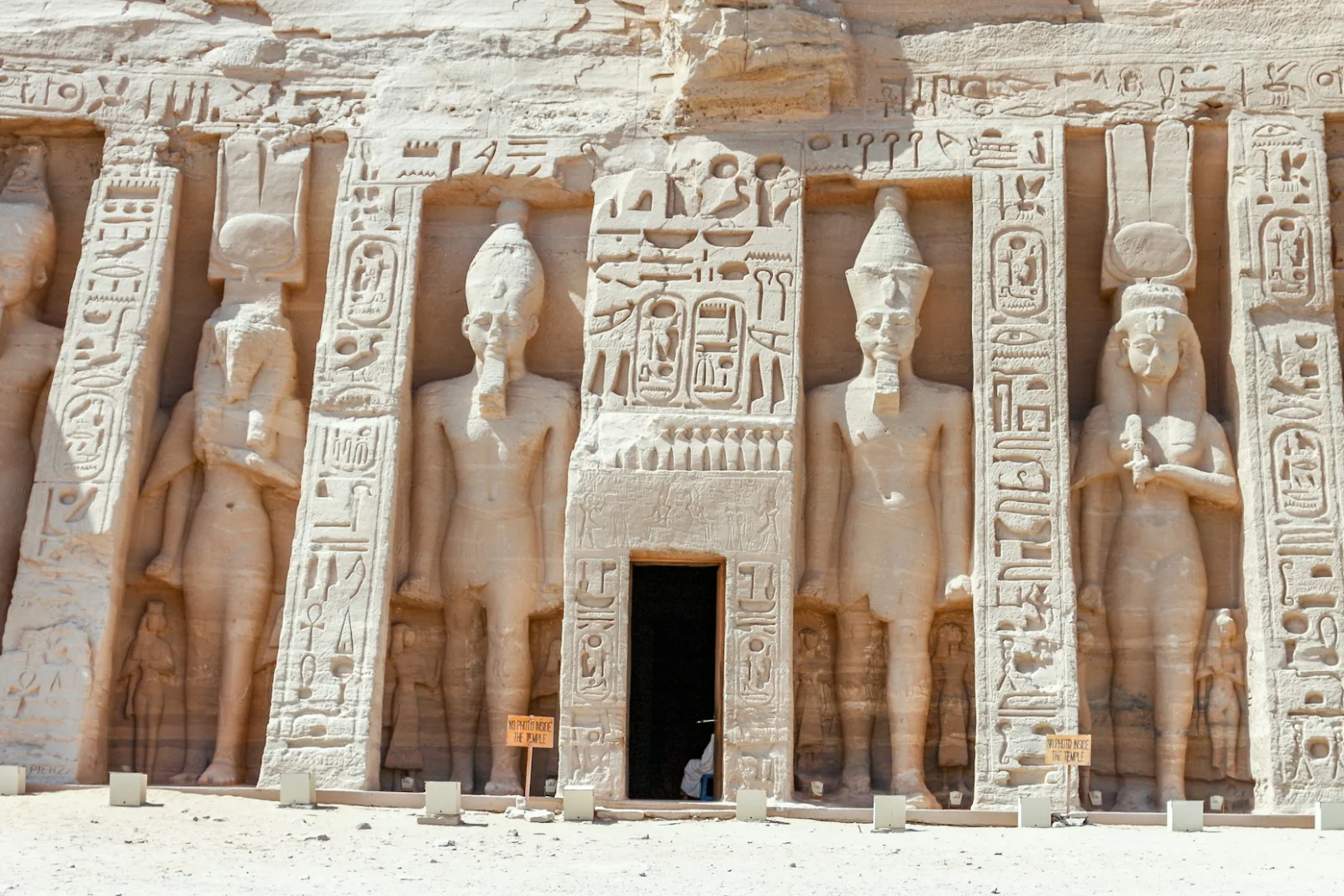
Six standing statues, around 10 metres tall, flank the entrance: four of Ramesses and two of Nefertari. Unusually, the queen is shown at the same size as the king, a rare honour. Inside, graceful reliefs show Nefertari making offerings to the gods.
The sun festival. Twice a year, around 22 February and 22 October, the rising sun shines straight through the entrance into the sanctuary. It lights up the statues of Amun-Re, Ra-Horakhty and Ramesses, while Ptah, a god linked to the underworld, stays in shadow.
A temple moved uphill. Between 1964 and 1968, an international UNESCO campaign cut both temples into more than 1,000 blocks. They were rebuilt about 65 metres higher and some 200 metres back from the original site.
A mountain made of concrete. The rebuilt temples sit inside an artificial hill, supported by a huge concrete dome.
Ancient graffiti. Greek mercenaries serving a 6th-century BC pharaoh carved their names on the leg of one colossus, among the oldest known Greek inscriptions.
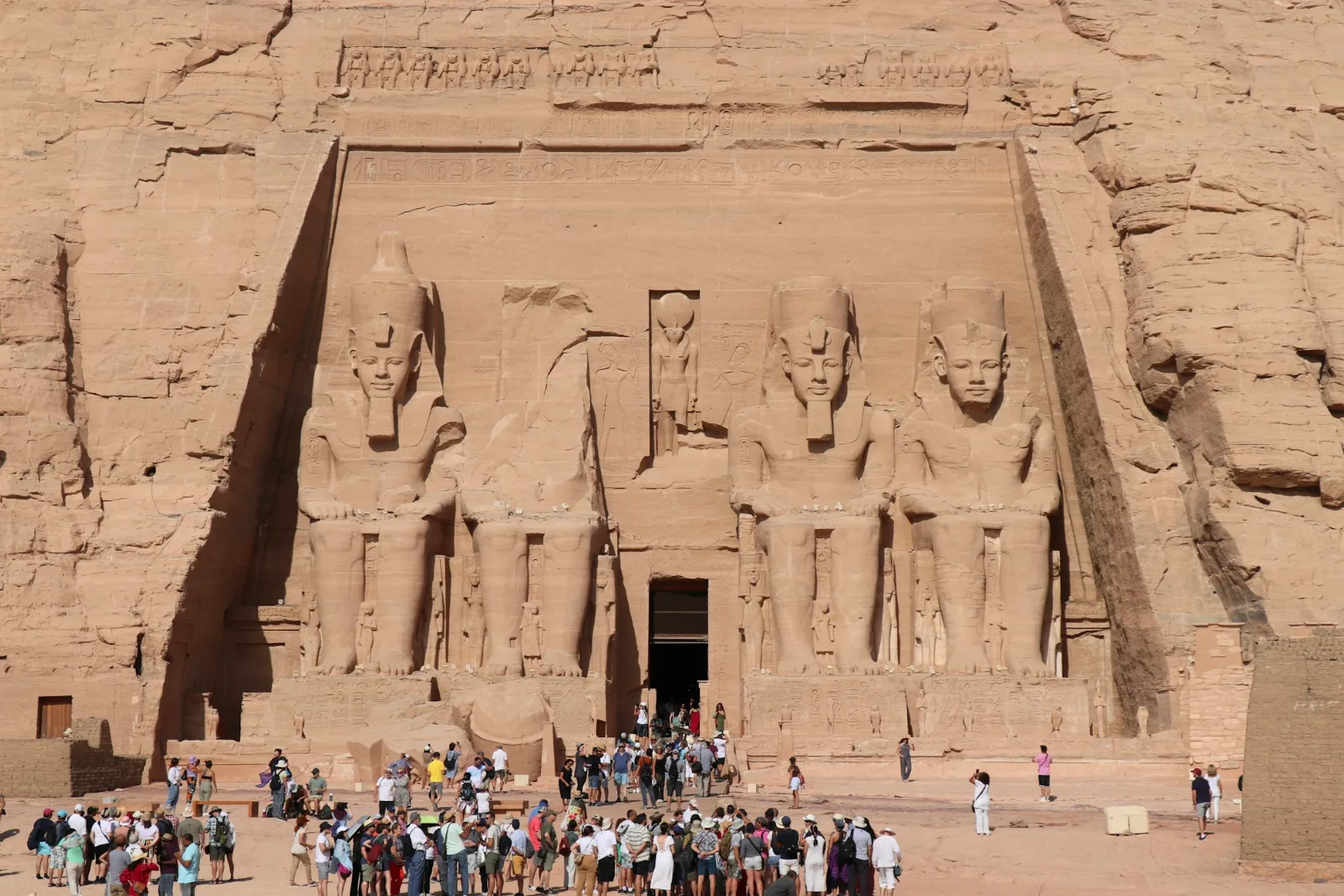
Explore both temples inside and out, starting with the Great Temple.
Attend the Sun Festival on 22 February or 22 October, arriving well before dawn to queue.
Watch the Sound and Light Show projected on the facades in the evening.
Stay overnight in Abu Simbel to see the temples at sunrise without the day-trip crowds.
Arrive by water on a Lake Nasser cruise, which visits other rescued Nubian temples on the way.
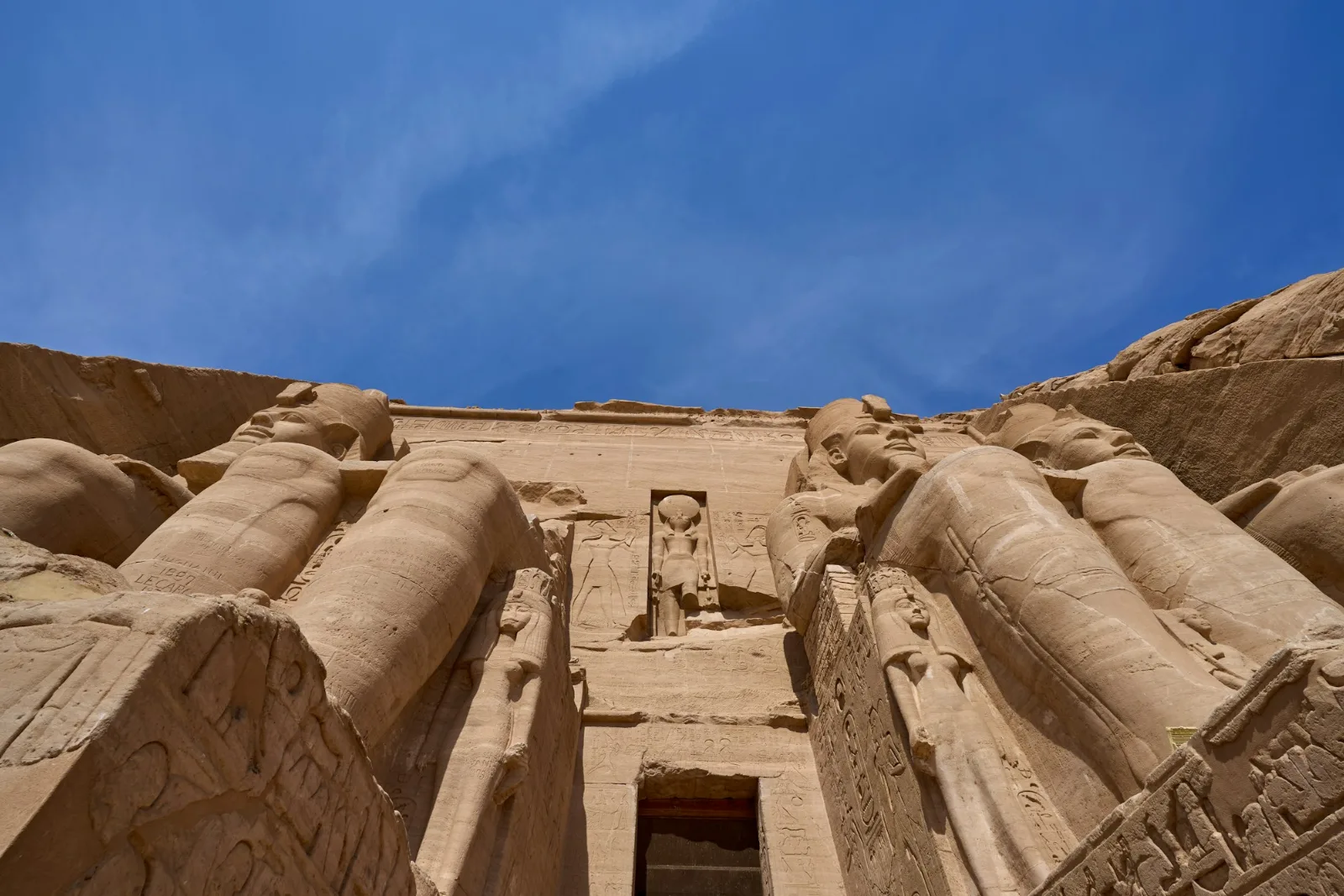
Abu Simbel is in one of the hottest and driest parts of Egypt. October to April is the most comfortable season. In summer, midday temperatures can be extreme.
The temples face east, so early morning is the best time for light and the coolest for walking. Visiting on the Sun Festival days is unforgettable, but expect large crowds and higher ticket prices.
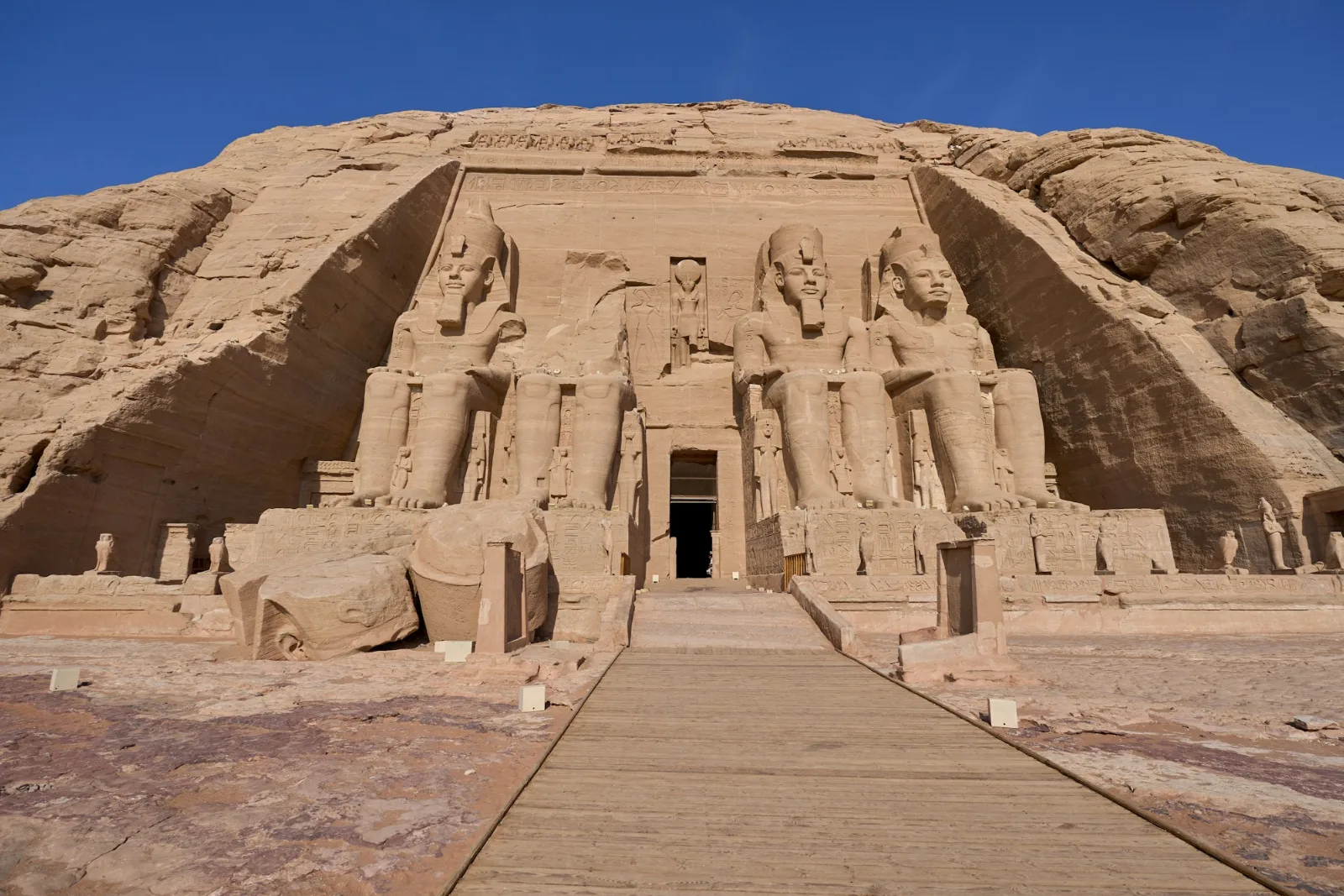
Abu Simbel lies on the western shore of Lake Nasser, about 280 km south-west of Aswan and close to the border with Sudan.
By road from Aswan: Most visitors join an early morning departure. The drive takes about three to four hours each way.
By air: Short flights connect Aswan, and seasonally Cairo, with Abu Simbel airport, followed by a short transfer.
By lake cruise: Multi-day Lake Nasser cruises sail between Aswan and Abu Simbel.
The Sun Festival. Twice a year, around 22 February and 22 October, the rising sun shines along the full length of the Great Temple and lights up the statues in the inner sanctuary. Only the statue of Ptah, god of the underworld, stays in shadow.
The Battle of Kadesh. Inside the great hall, a huge relief shows Ramesses II charging in his chariot at the Battle of Kadesh, full of soldiers, horses and camp scenes.
Nefertari’s temple. In the smaller temple, statues of Queen Nefertari stand as tall as those of the king, a rare honour in ancient Egypt.
A temple that moved. In the 1960s both temples were cut into more than 1,000 blocks and rebuilt about 65 metres higher, in one of UNESCO’s greatest rescue projects.
Ancient graffiti. On the legs of the colossi you can spot inscriptions left by Greek soldiers in the 6th century BC, some of the oldest Greek writing in Egypt. Combine it with Philae Temple.
Opening hours: Daily from 6:00 AM, last entry at 4:00 PM.
Ticket (foreign visitors): EGP 822 for adults and EGP 445.50 for students.
Sun Festival days (22 February and 22 October): EGP 1,272 for adults and EGP 670.50 for students.
Where to buy: At the site or online through EgyMonuments.
Prices and hours were checked on the official EgyMonuments website in November 2026. They change from time to time, so please confirm them before your visit.
Tips: Bring sun protection and water. If you travel by road, pack breakfast for the early start.
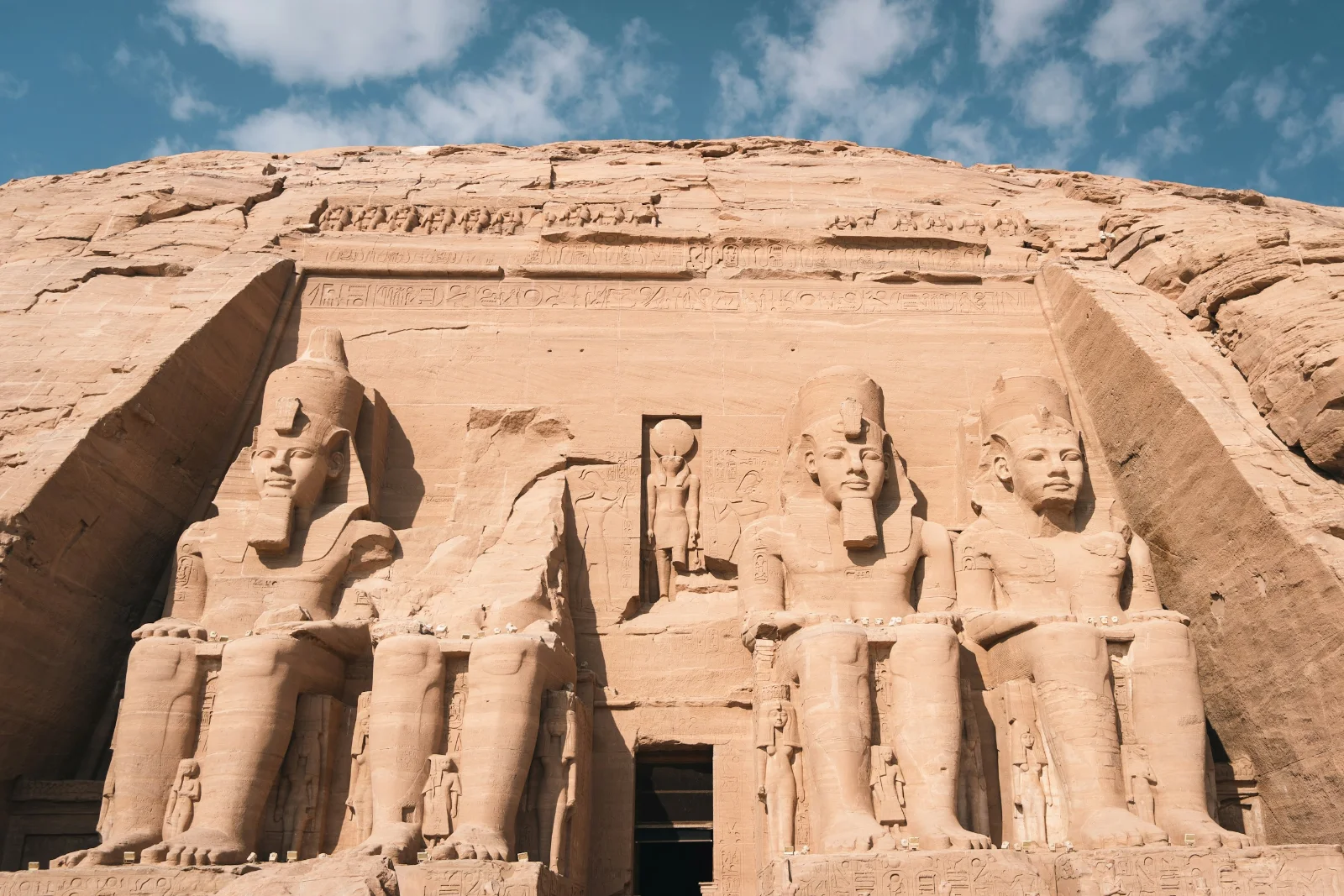
The facade of the Great Temple is lit by the morning sun, the best time for photographs of the four colossi.
Step back to the shore of Lake Nasser to frame both temples together.
The smaller Temple of Hathor and Nefertari is beautiful in the softer light of late morning.
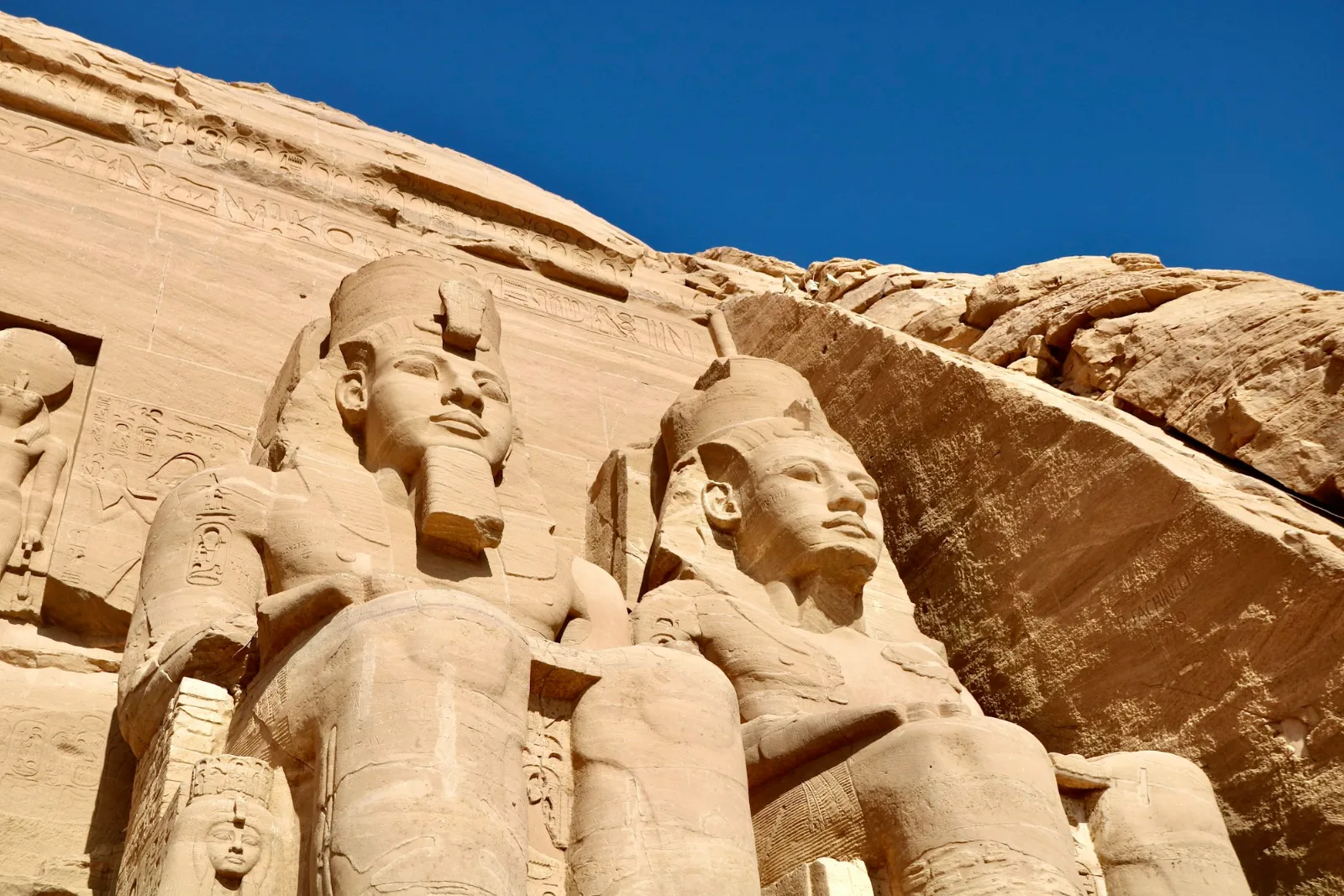
Abu Simbel combines two great achievements: the ancient one of carving temples out of a mountain, and the modern one of saving them. Standing beneath the colossi, you feel the power Ramesses wanted every traveller to feel. Inside, the alignment of the sanctuary with the sun shows the astronomical skill of his builders.
Philae Temple: another rescued temple, on an island near Aswan.
Karnak Temple Complex: see Ramesses II’s work in the Great Hypostyle Hall.
Luxor Temple: his great pylon, colossi and obelisk in Luxor.
Edfu Temple: a stop on the Nile cruise route between Aswan and Luxor.

Round-the-clock 24/7 support from expert local guides and a professional customer care team, before and throughout your trip.


Copyright © 2026 Egyptista