The ancient Egyptians called Karnak Ipet-isut, “the most select of places”. For about two thousand years it was the earthly home of Amun-Re, king of the gods. It was also one of the richest institutions in Egypt, with its own priests, workshops, farmland and treasuries.
Rather than a single temple, Karnak is a sprawling city of sanctuaries. Some 30 pharaohs added pylons, courts, chapels and obelisks, each trying to outdo the last. The result is one of the largest religious complexes ever built and part of the UNESCO World Heritage Site of Ancient Thebes.
Walking through Karnak is like turning the pages of Egyptian history. This guide will help you read them.
Karnak’s story begins in the Middle Kingdom, around 2000 BC, when Senusret I built a temple to Amun here. Its elegant limestone White Chapel survives and has been rebuilt in the site’s Open Air Museum.
The complex grew dramatically in the New Kingdom, when Thebes was the religious capital of an empire. Thutmose I, Hatshepsut, Thutmose III, Amenhotep III, Seti I and Ramesses II all left monumental additions. Gold, prisoners and tribute from military campaigns flowed into Amun’s treasury.
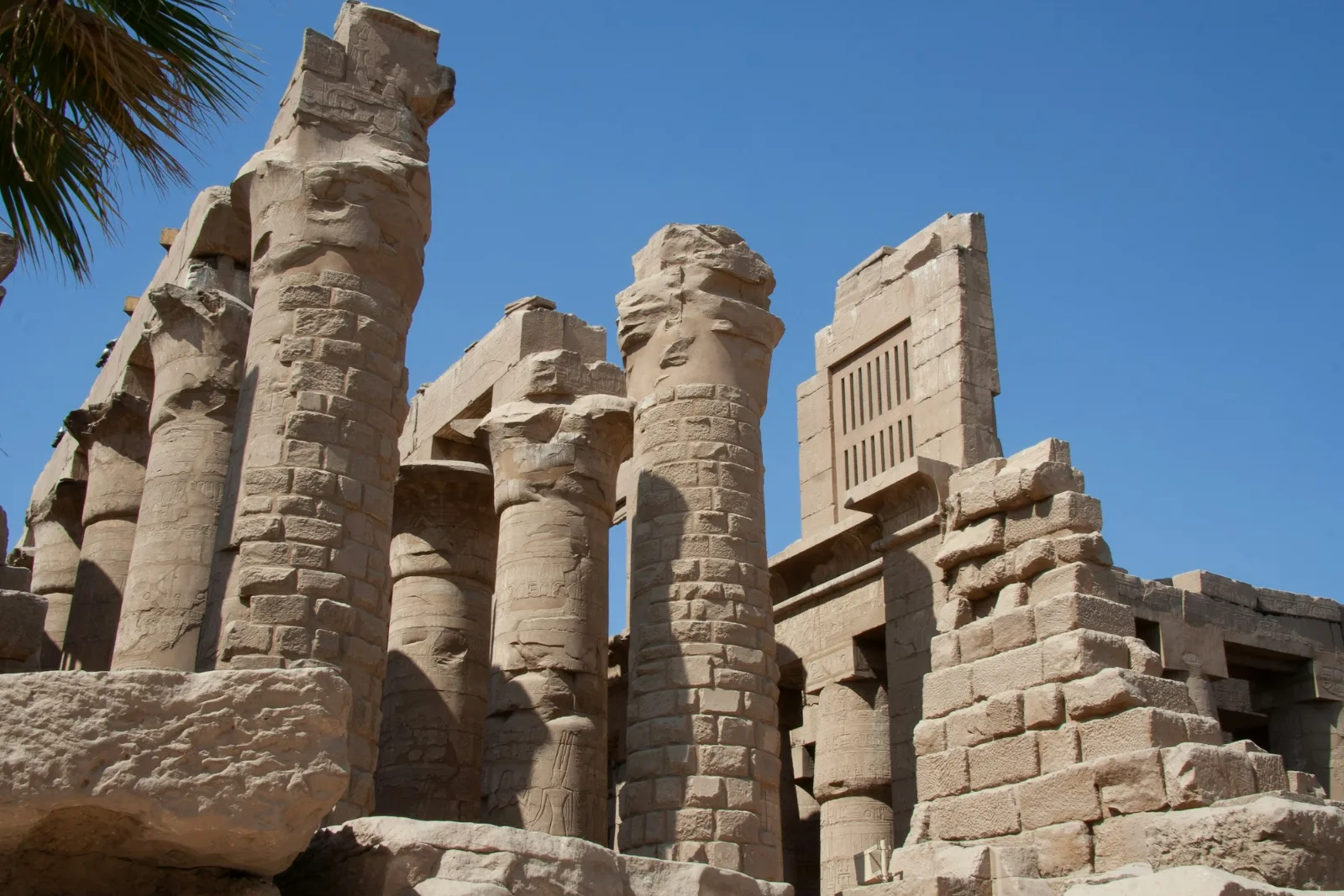
Building continued under the later dynasties and the Ptolemies. The huge, unfinished First Pylon dates from the Thirtieth Dynasty, Egypt’s last native royal house. Its mud-brick construction ramps can still be seen behind it.
The complex has three main walled areas: the Precinct of Amun-Re, which is the largest and most visited, the Precinct of Mut to the south and the Precinct of Montu to the north.
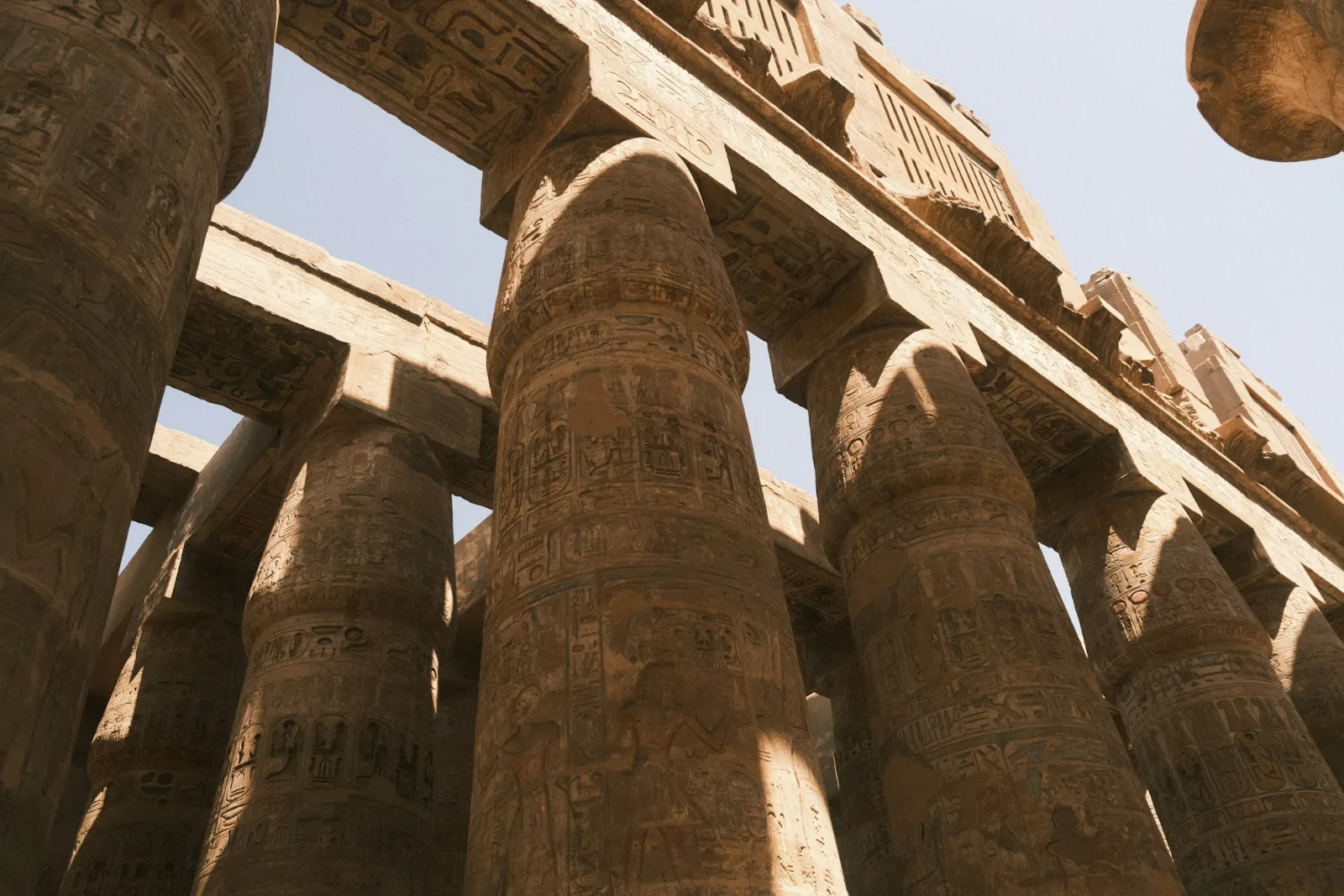
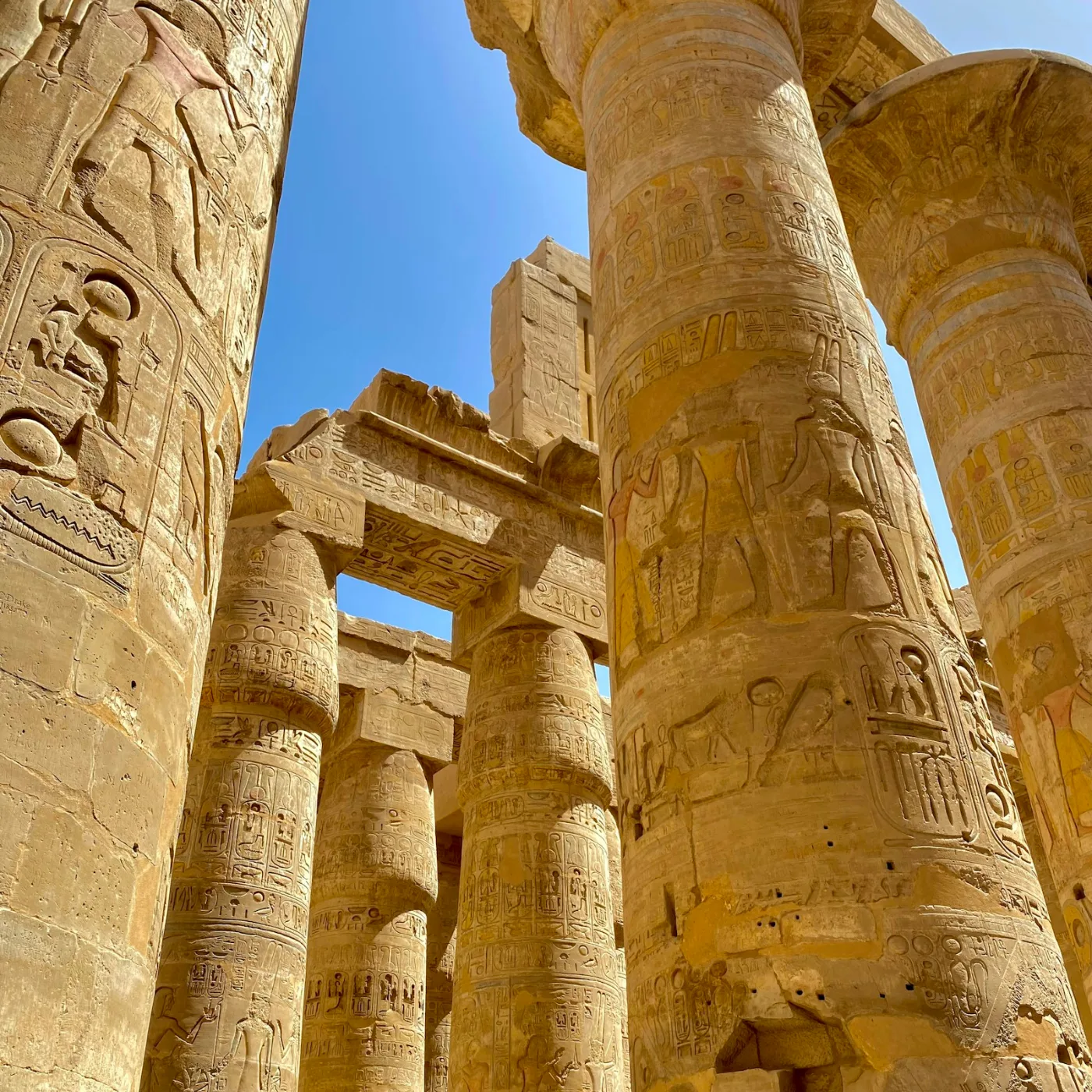
Karnak’s highlight is a forest of 134 giant sandstone columns arranged in 16 rows. The 12 central columns rise about 21 metres and carry open papyrus capitals.
Built mainly under Seti I and Ramesses II, the hall covers about 5,000 square metres. Its columns are carved with scenes of kings and gods, and traces of the original paint survive high up.
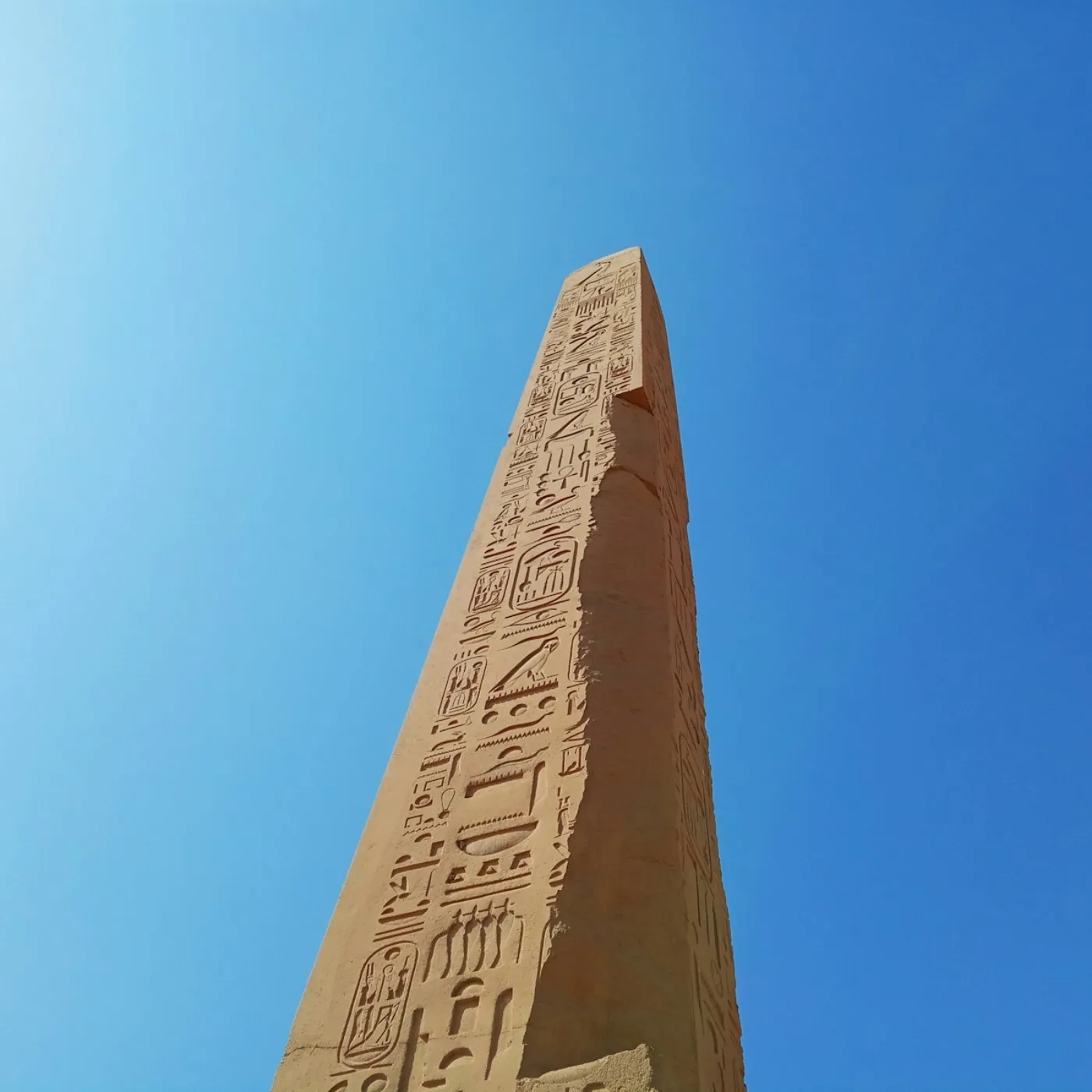
The obelisk of Hatshepsut, almost 30 metres of pink Aswan granite, is the tallest standing obelisk in Egypt. Nearby stands the obelisk of her father, Thutmose I.
Its unusual columns imitate tent poles. Inside, a chamber known as the “Botanical Garden” is carved with plants and animals the king saw on campaign in Syria.
The rectangular lake was used by priests for purification. The Open Air Museum displays rebuilt chapels, including the White Chapel of Senusret I and the Red Chapel of Hatshepsut.
So big it could hold cathedrals. The Precinct of Amun-Re alone is large enough to contain several European cathedrals.
A temple of temples. Inside the complex are smaller temples to other gods, including the well-preserved Temple of Khonsu.
Ram guardians. The approach to the First Pylon is lined with criosphinxes, lions with rams’ heads. The ram was a sacred animal of Amun.
The scarab of luck. A giant granite scarab dedicated by Amenhotep III stands by the sacred lake. Local tradition says walking around it brings good fortune.
A road to Luxor. The Avenue of Sphinxes once linked Karnak to Luxor Temple for the Opet Festival.
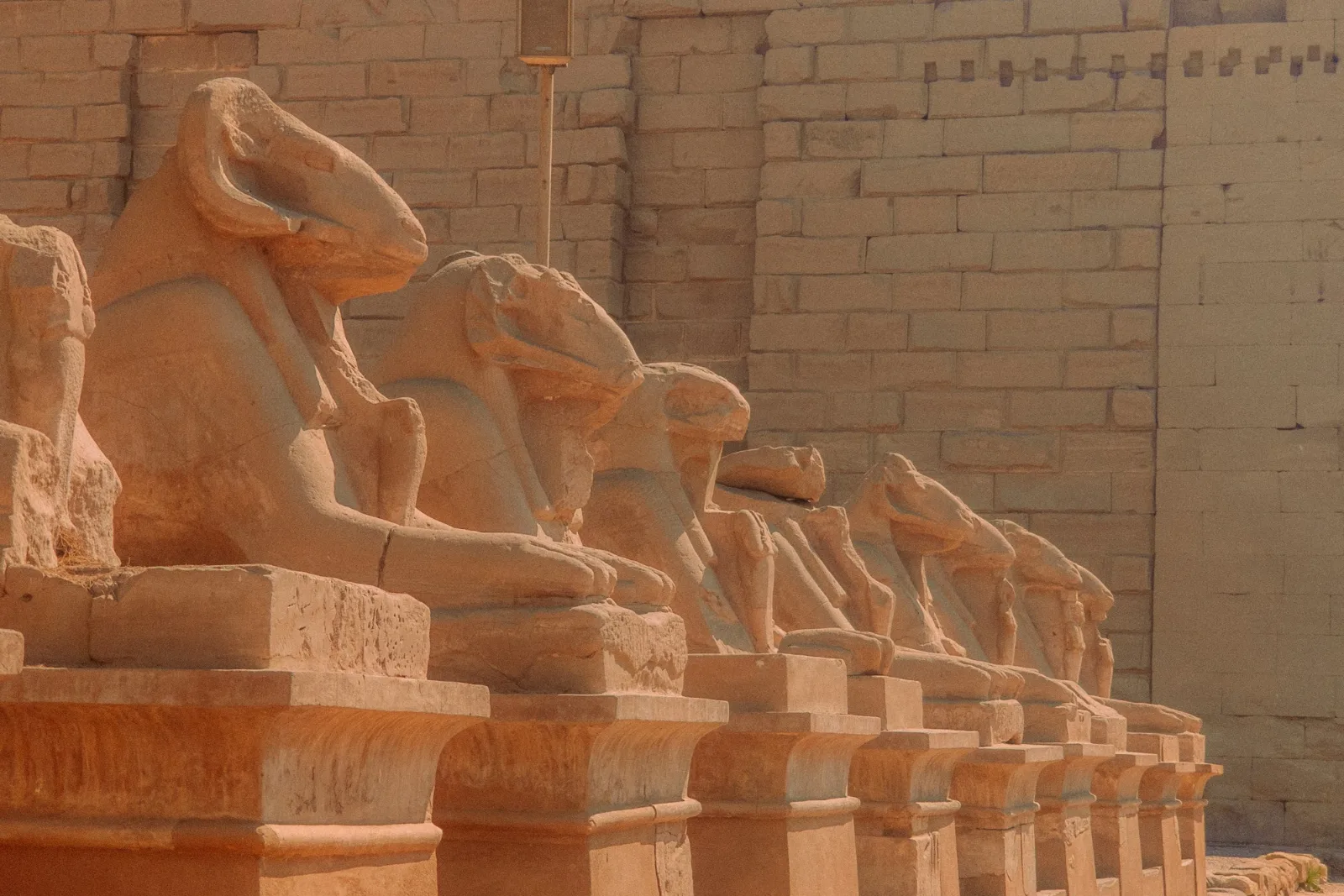
Walk through the Hypostyle Hall slowly and look up: the scale is best felt from the central aisle.
Find the obelisks of Hatshepsut and Thutmose I.
Visit the Open Air Museum to see some of the finest relief carving in Egypt.
Watch the Sound and Light Show, which leads visitors through the temple after dark.
Hire a licensed guide. The site is huge and a guide helps you follow its chronology.
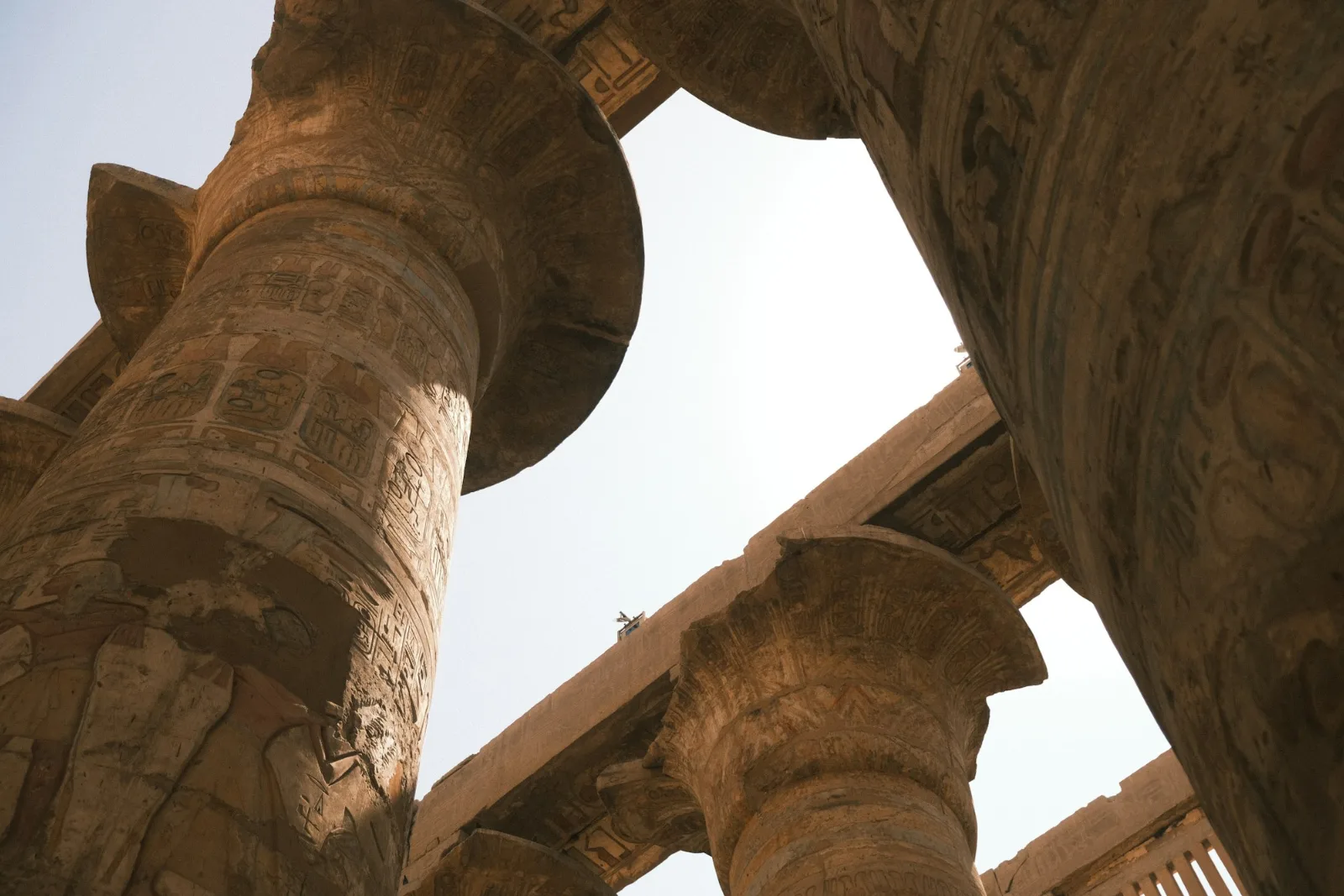
October to April is the most comfortable season. Karnak opens early, and the first two hours of the morning are the coolest and the least crowded. They also bring beautiful light into the Hypostyle Hall.
Allow at least 2–3 hours. In summer, avoid the middle of the day, as much of the complex is open to the sun.
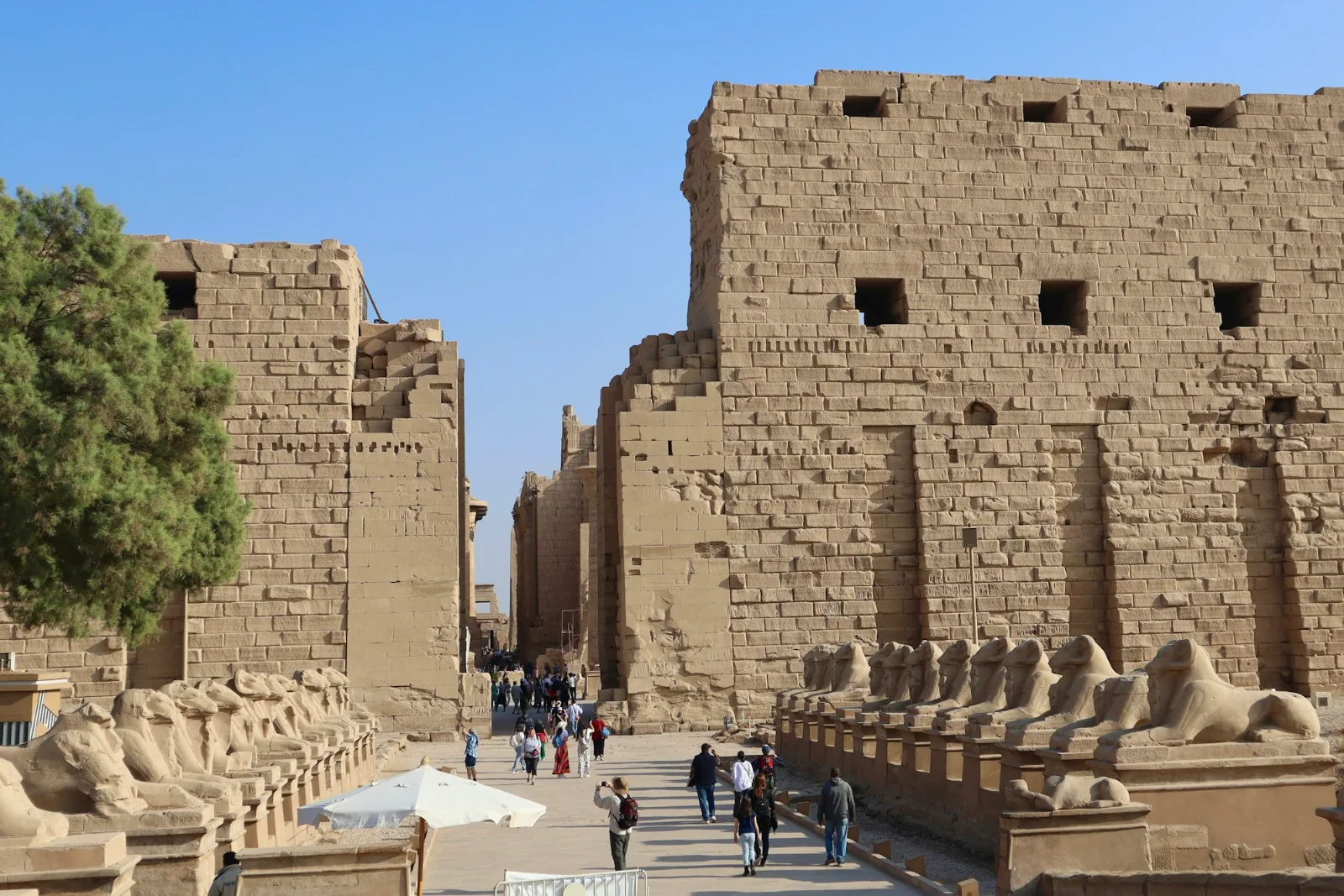
Karnak lies on the East Bank of the Nile, about 3 km north of Luxor Temple in the Karnak district of Luxor.
By taxi or horse carriage: About 10 minutes from central Luxor.
On foot: Walk part of the Avenue of Sphinxes from Luxor Temple.
From Nile cruises: Most cruises include Karnak on their Luxor sightseeing day.
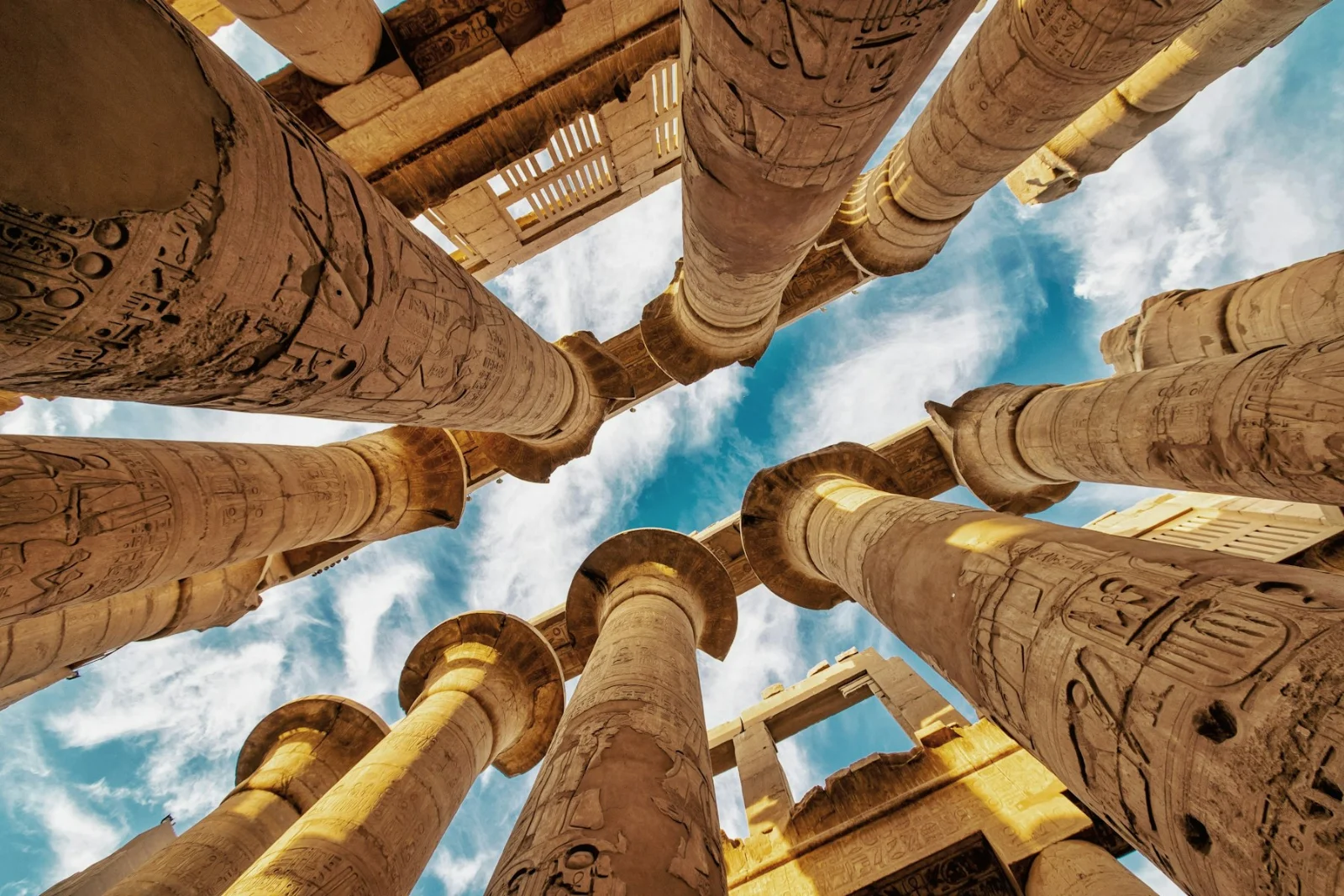
The forest of columns. The Great Hypostyle Hall holds 134 columns, the tallest about 21 metres high. Their capitals are wide enough for dozens of people to stand on.
Hatshepsut’s obelisk. Rising about 30 metres, it is the tallest ancient obelisk still standing in Egypt, carved from a single block of pink granite from Aswan.
The giant scarab. Near the Sacred Lake sits a large stone scarab dedicated by Amenhotep III. Local tradition says that walking around it brings good luck.
The Sacred Lake. Priests purified themselves in this rectangular lake before entering the temple, and sacred geese once lived on its waters.
Thutmose III’s “botanical garden”. In his Festival Hall, a small room is carved with exotic plants and animals that the king brought back from his campaigns in Syria. The temple is linked by the Avenue of Sphinxes to Luxor Temple.
Opening hours: Daily from 6:00 AM, last entry at 4:00 PM.
Ticket (foreign visitors): EGP 600 for adults and EGP 300 for students.
Extras: The Open Air Museum and the Sound and Light Show may have separate tickets.
Where to buy: At the entrance or online through EgyMonuments.
Prices and hours were checked on the official EgyMonuments website in November 2026. They can change, so please confirm them before your visit.
Tips: Wear a hat and comfortable shoes, carry water, and arrange a meeting point if you are travelling in a group. The complex is large and easy to get lost in.
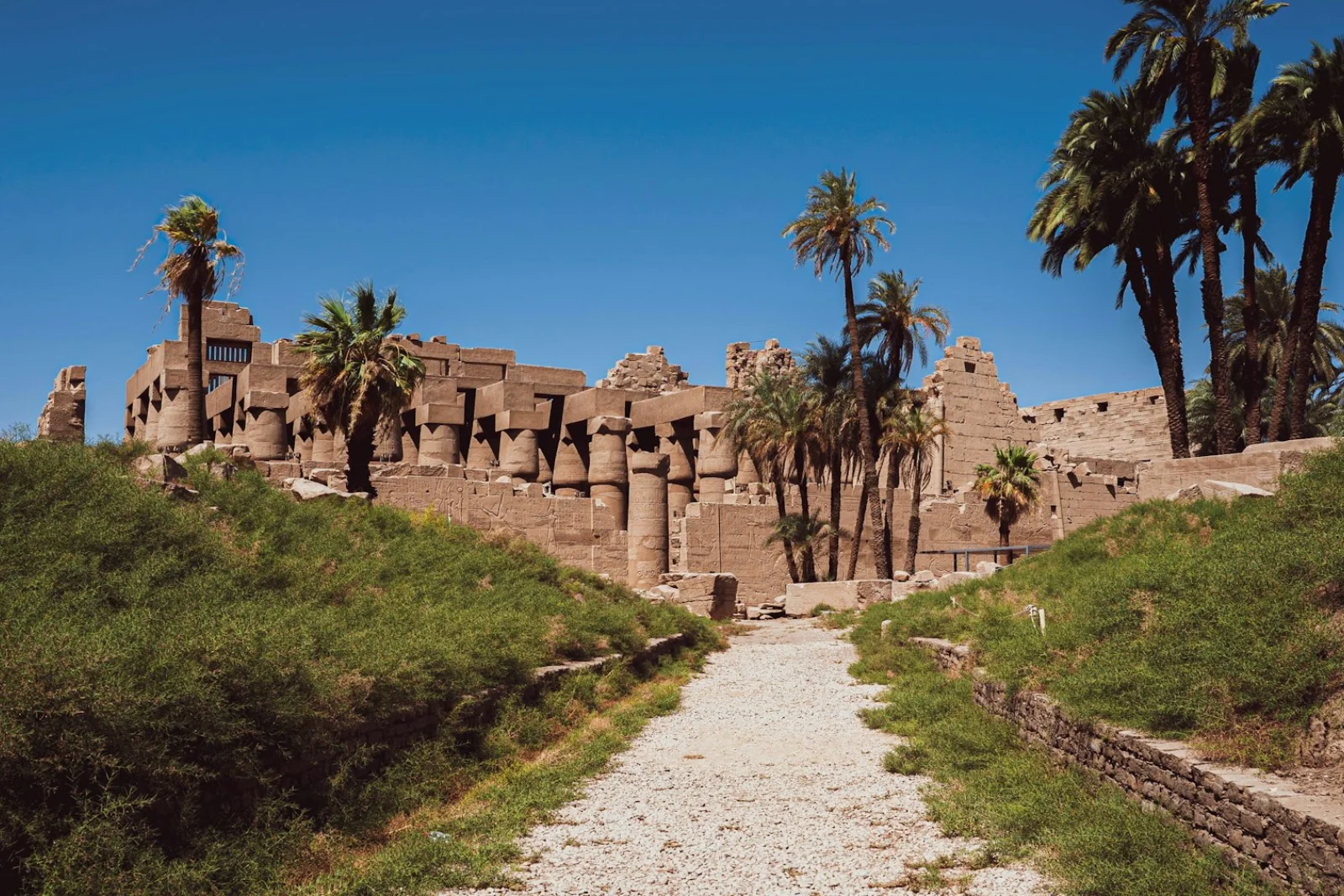
In the Great Hypostyle Hall, look up to capture the giant columns and the light falling between them.
The sacred lake and the obelisks make wonderful compositions in the morning.
The Sound and Light show offers a different view of the temple after dark.
Karnak is the place where ancient Egypt’s ambition is most visible. No single visit can take in everything, and that is part of the thrill: every corner hides a relief, an inscription or a statue left by a different king. If you only see one temple in Luxor, make it Karnak.
Luxor Temple: Karnak’s partner at the other end of the Avenue of Sphinxes.
Temple of Hatshepsut: the queen whose obelisk dominates Karnak.
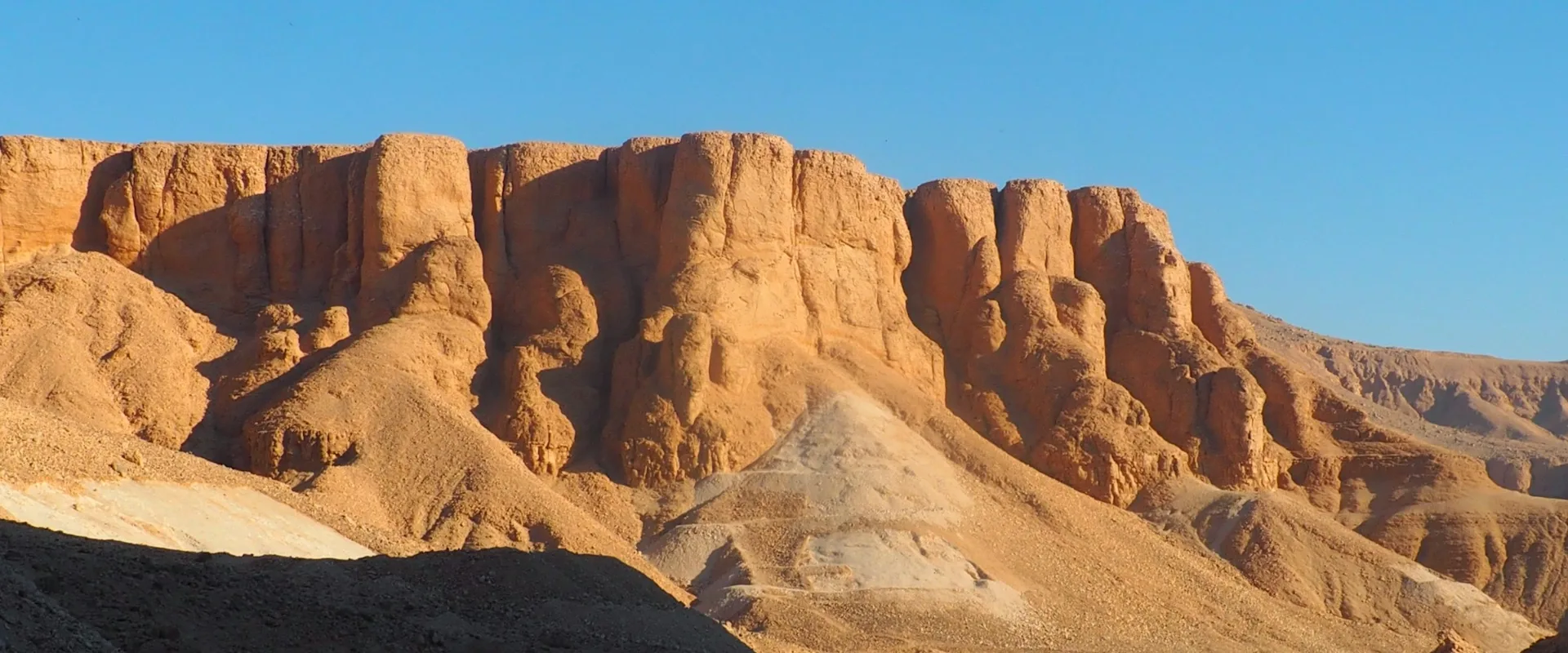
Valley of the Kings: the tombs of the kings who built Karnak.
Abu Simbel Temples: Ramesses II’s other great statement in stone.

Round-the-clock 24/7 support from expert local guides and a professional customer care team, before and throughout your trip.


Copyright © 2026 Egyptista