Ancient Egypt had queens of great influence, but very few women ruled in their own right as pharaoh. Hatshepsut was the most successful of them. For around two decades in the 15th century BC she reigned in peace and prosperity. She sponsored trading expeditions, building projects and a temple that still makes architects stop and stare.
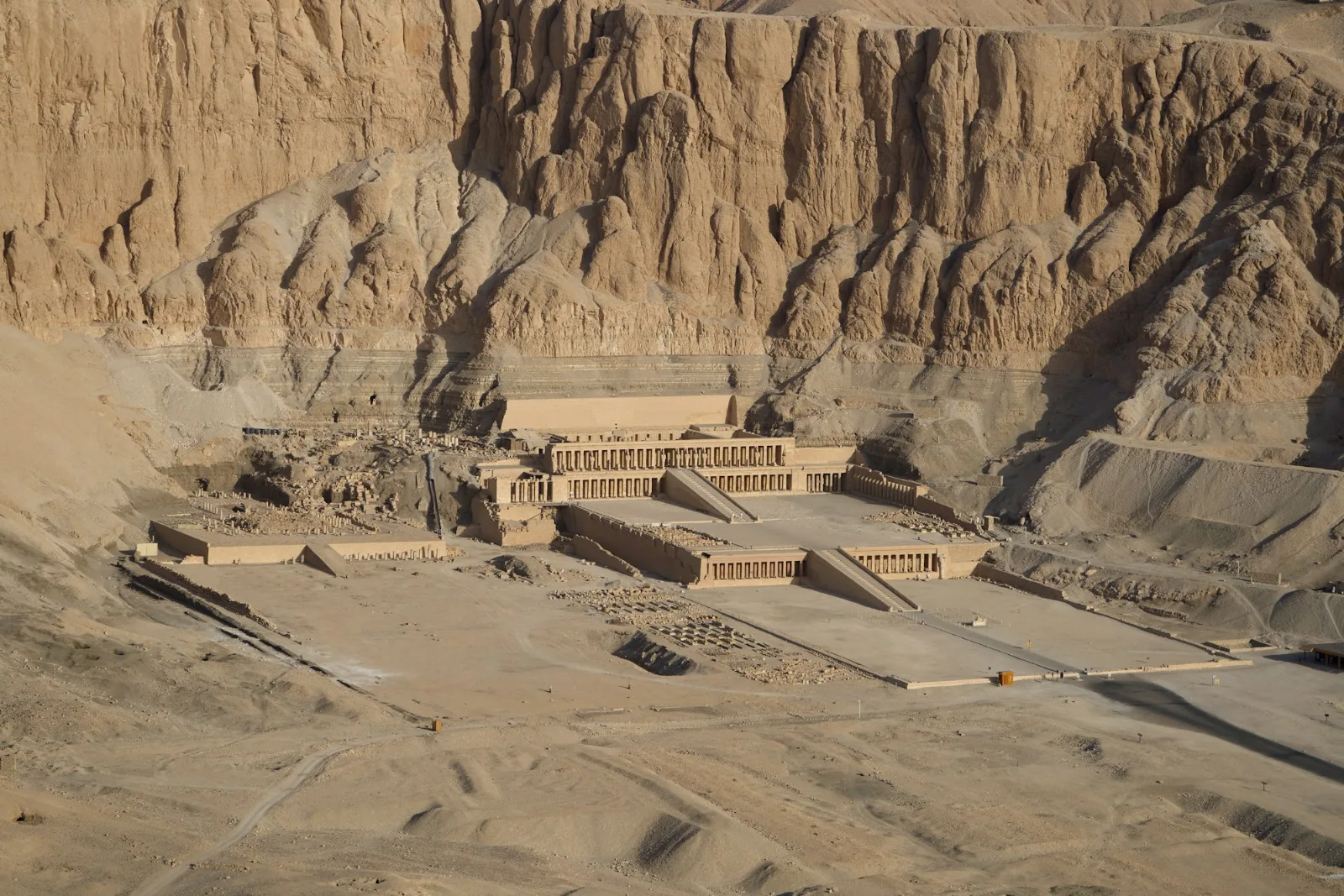
Her mortuary temple at Deir el-Bahari, on Luxor’s West Bank, rises in three great terraces against a curved wall of limestone cliffs. The Egyptians called it Djeser-Djeseru, the “Holy of Holies”. Its clean lines and colonnades look surprisingly modern, yet it was built about 3,500 years ago.
This guide tells Hatshepsut’s story and helps you read the temple’s highlights.
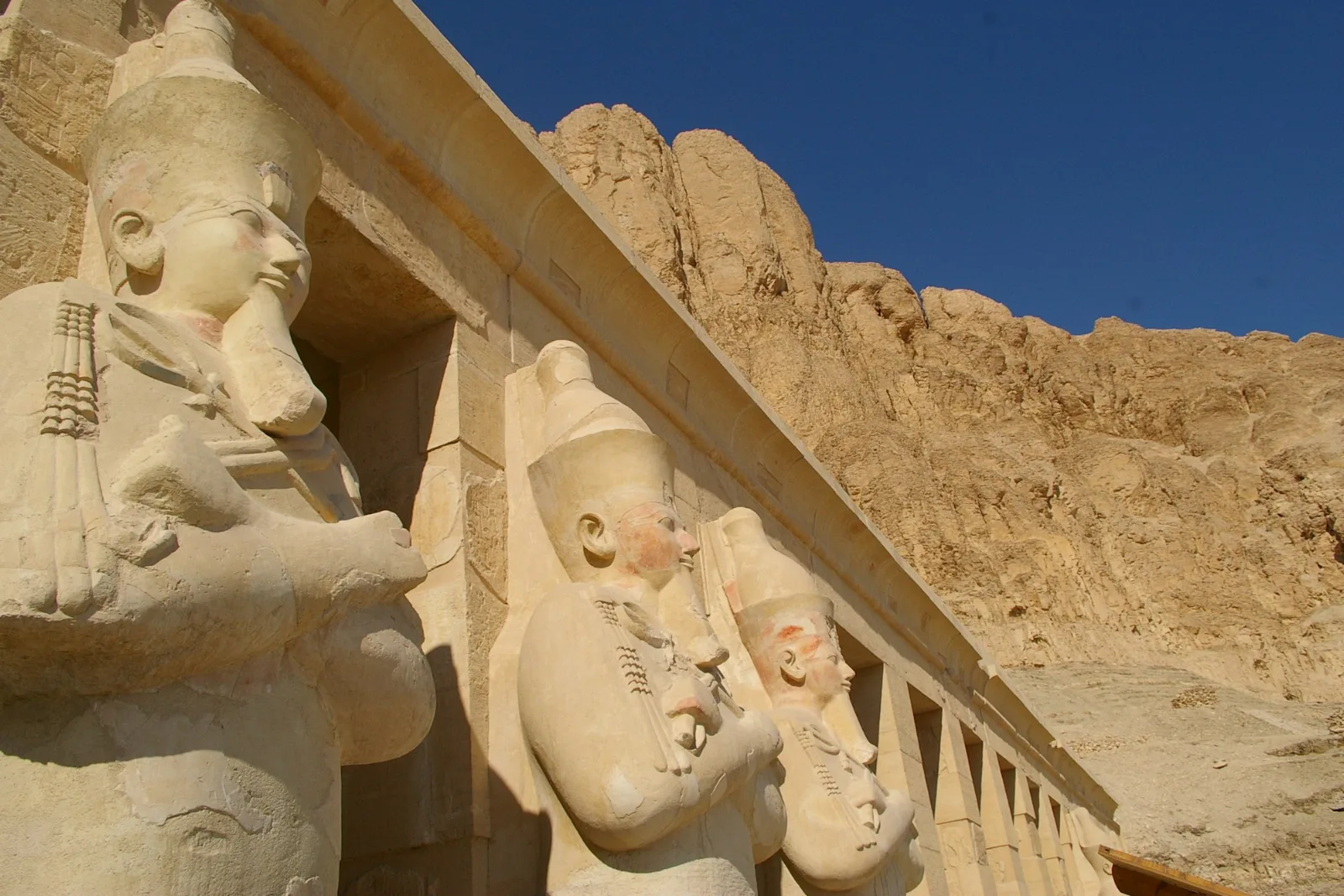
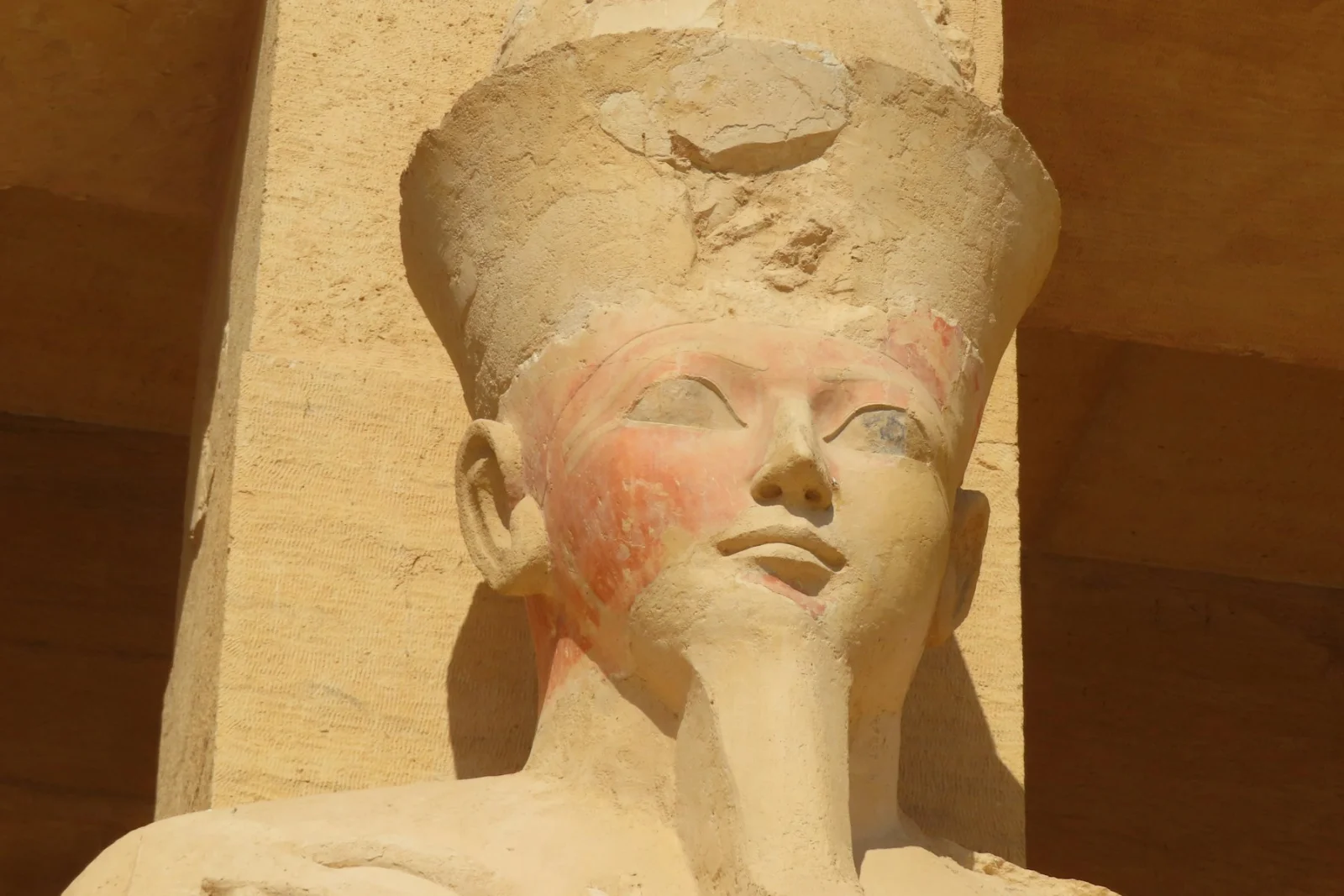
Hatshepsut was the daughter of Thutmose I and the wife of her half-brother Thutmose II. When he died, around 1479 BC, the heir, Thutmose III, was a small child. Hatshepsut first ruled as his regent. Within a few years she took the full titles of a king, appearing in statues with the royal headcloth and false beard.
Her reign, which lasted until about 1458 BC, is remembered for stability and trade. The temple at Deir el-Bahari was dedicated to the god Amun and to her own memory. It was built under the direction of her steward Senenmut, one of the most powerful officials of the age.
Late in the reign of Thutmose III, many of Hatshepsut’s statues were smashed and her images and names chiselled from monuments. The reasons are still debated. Since 1961 a Polish–Egyptian mission has worked to restore the temple, reassembling thousands of fragments. In 2007, a mummy from tomb KV60 was identified as Hatshepsut’s.
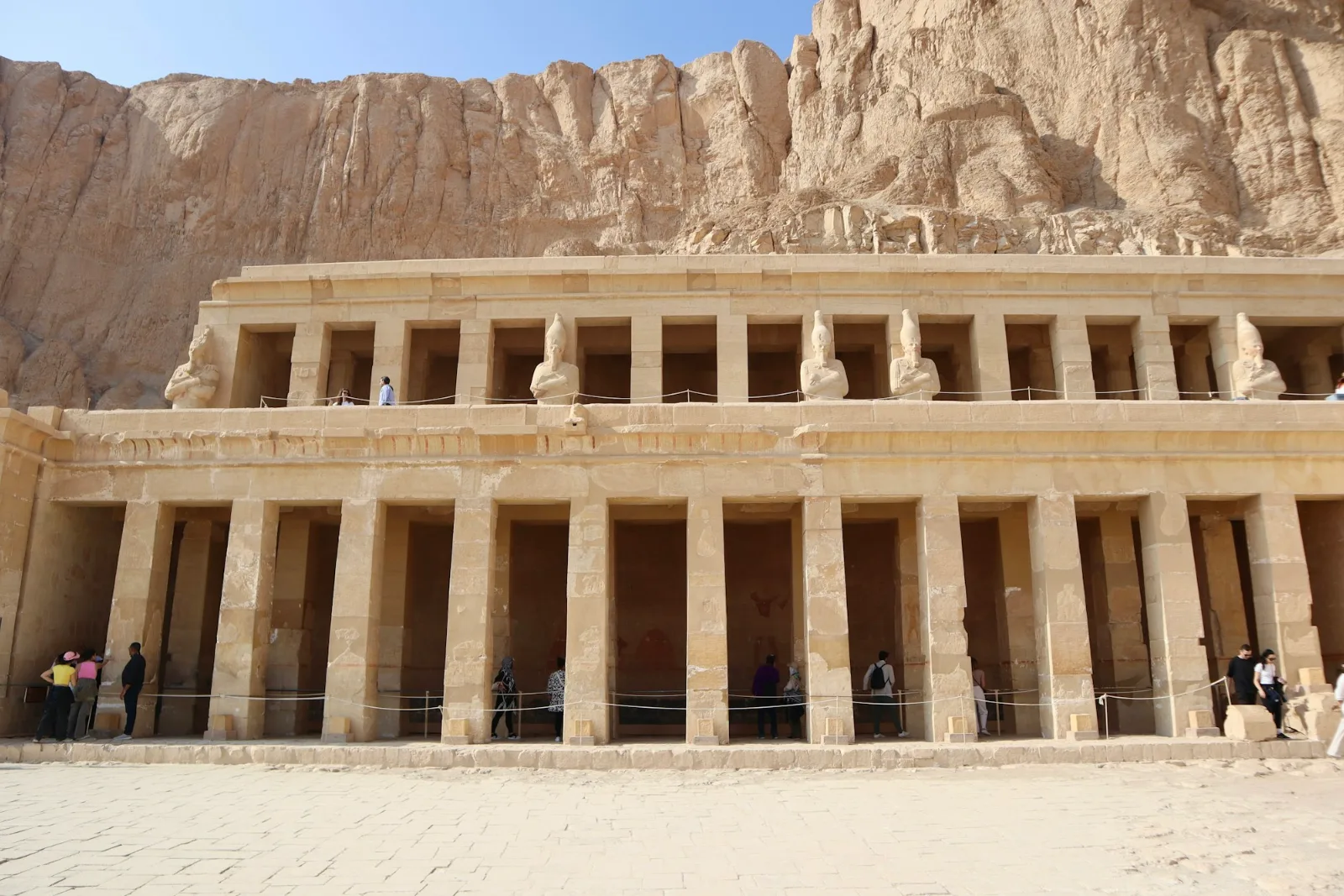
The temple was inspired by the older terraced temple of King Mentuhotep II, whose ruins lie right beside it. Hatshepsut’s architects turned that idea into something larger and more elegant. Three terraces are linked by long central ramps and fronted by colonnades.
The Punt Colonnade (south side): Delicate reliefs record an expedition to the land of Punt, probably on the Red Sea coast of Africa. Ships return loaded with incense trees, ebony and exotic animals.
The Birth Colonnade (north side): Here Hatshepsut is shown as the daughter of the god Amun, strengthening her right to rule.
The Chapel of Hathor has columns topped with the cow-eared face of the goddess. The Chapel of Anubis keeps vivid original colours.
A row of tall Osiride statues of Hatshepsut lines the upper portico. Behind them, the sanctuary of Amun is cut directly into the cliff.
A king in a woman’s name. Inscriptions often mix grammar, using feminine endings with royal titles, a sign of how unusual her position was.
Trees from Punt. The reliefs show incense trees carried in baskets to be planted at Thebes. The remains of ancient tree pits have been found in front of the temple.
A festival in the valley. Each year the statue of Amun crossed the Nile from Karnak to visit the West Bank temples during the Beautiful Festival of the Valley.
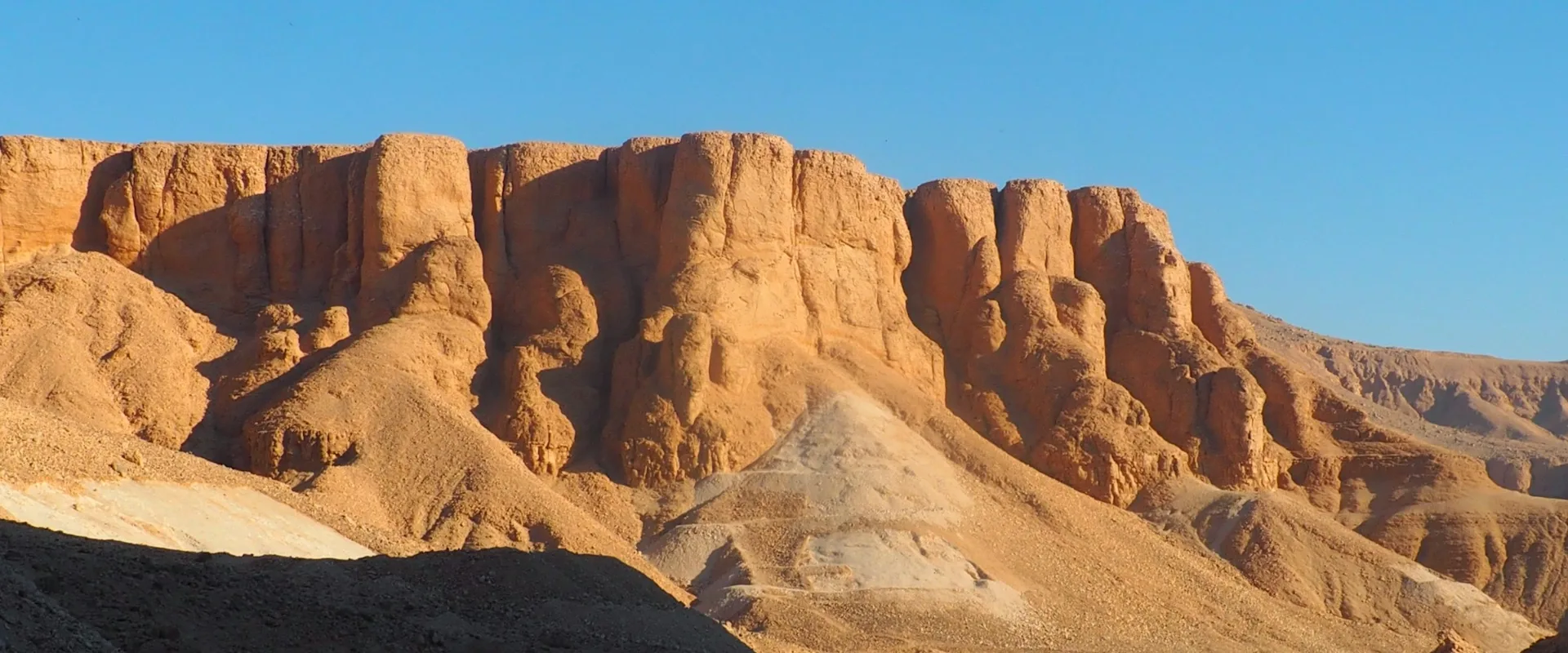
A backdoor to the kings. The Valley of the Kings lies just on the other side of the cliff behind the temple.
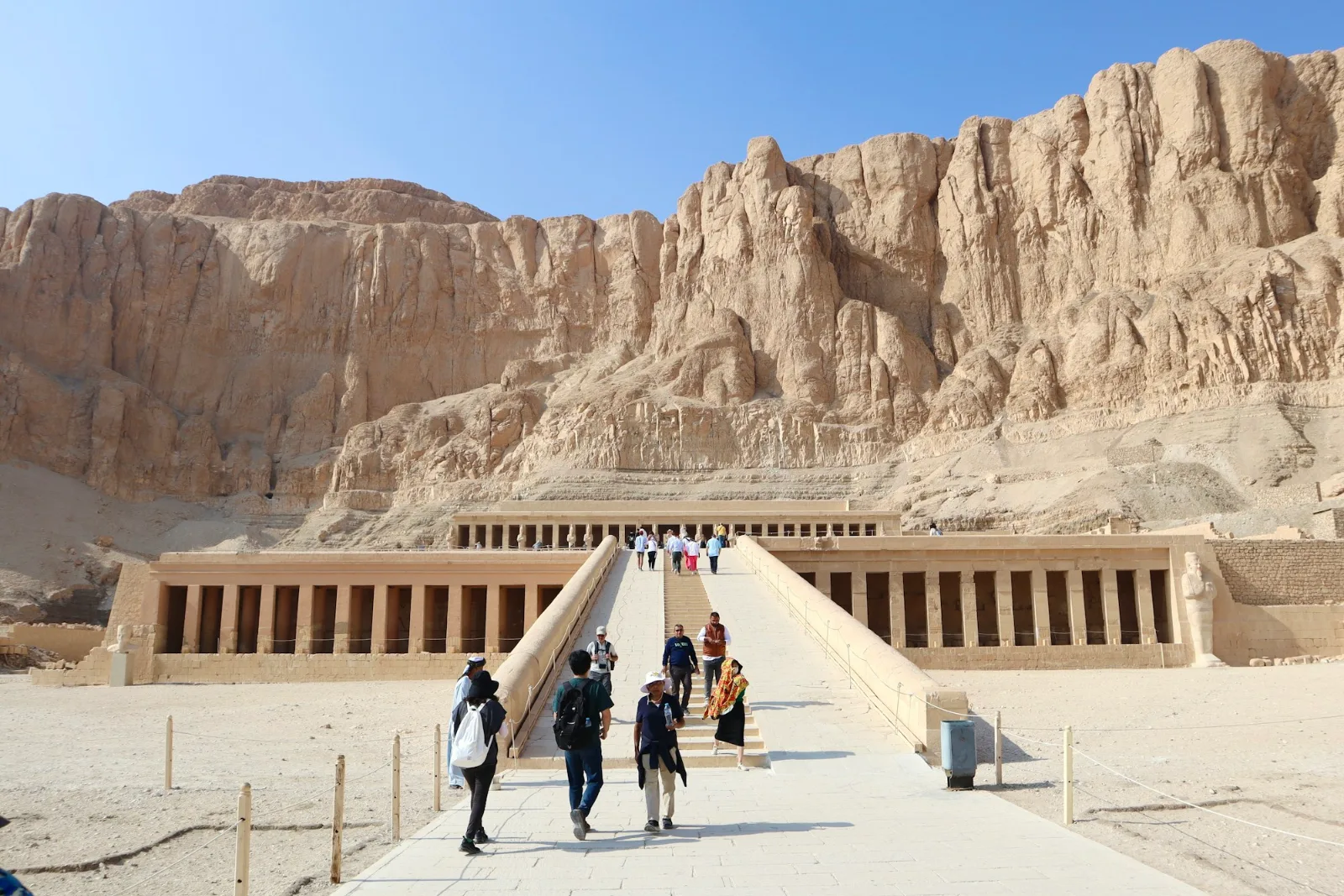
Walk the ramps slowly and look back over the West Bank as you climb.
Hunt for the Punt reliefs, including the famous figure of the Queen of Punt.
Compare the two chapels of Hathor and Anubis for their columns and colour.
See the temple from the sky on a sunrise hot air balloon flight over the West Bank.
Combine your visit with the Valley of the Kings, the Colossi of Memnon and Medinet Habu.
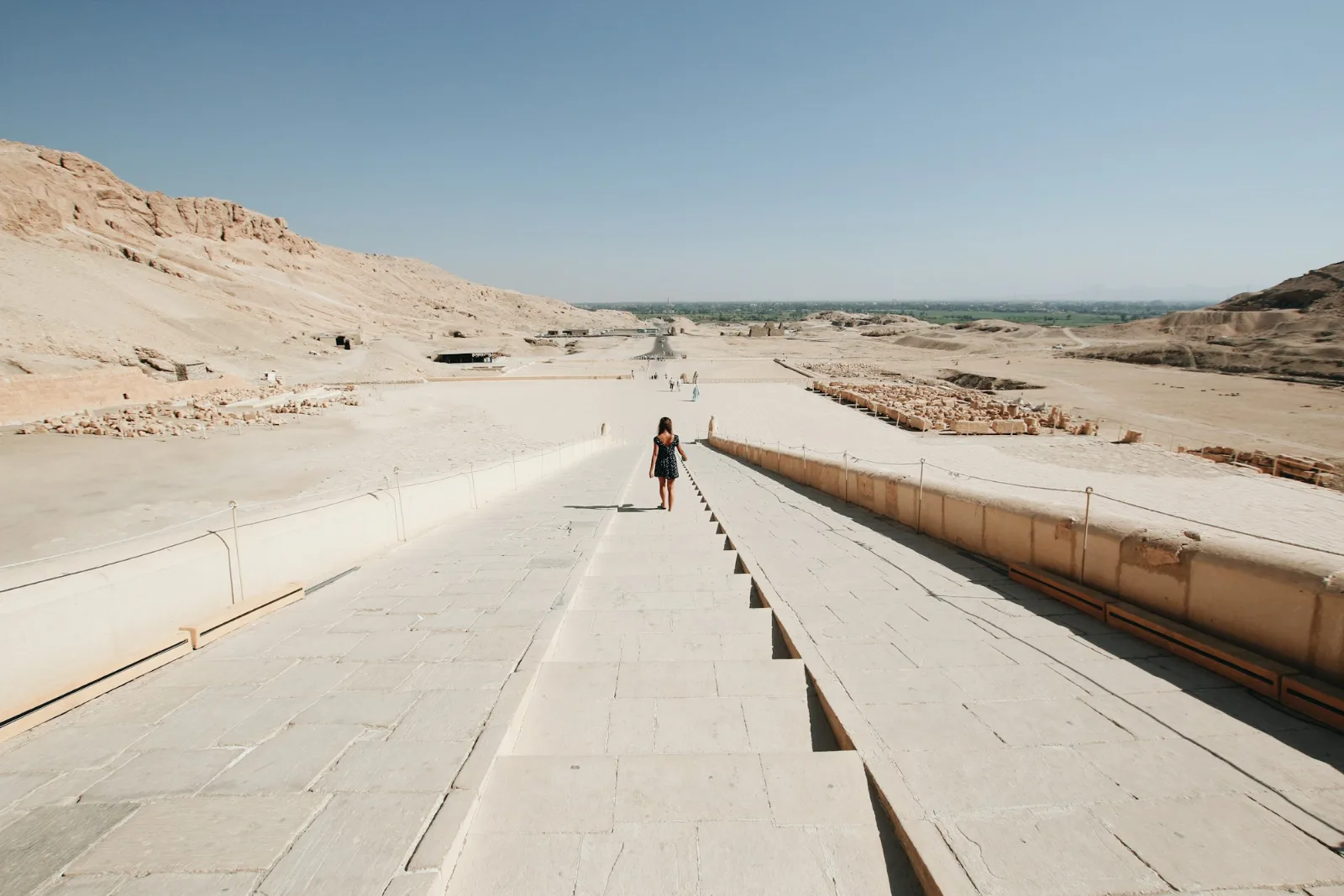
The temple faces east, so morning light shows the colonnades and cliffs at their best. Early visits are also cooler. There is little shade on the long approach and terraces.
The most comfortable season is October to April. In summer, arrive at opening time and carry plenty of water.
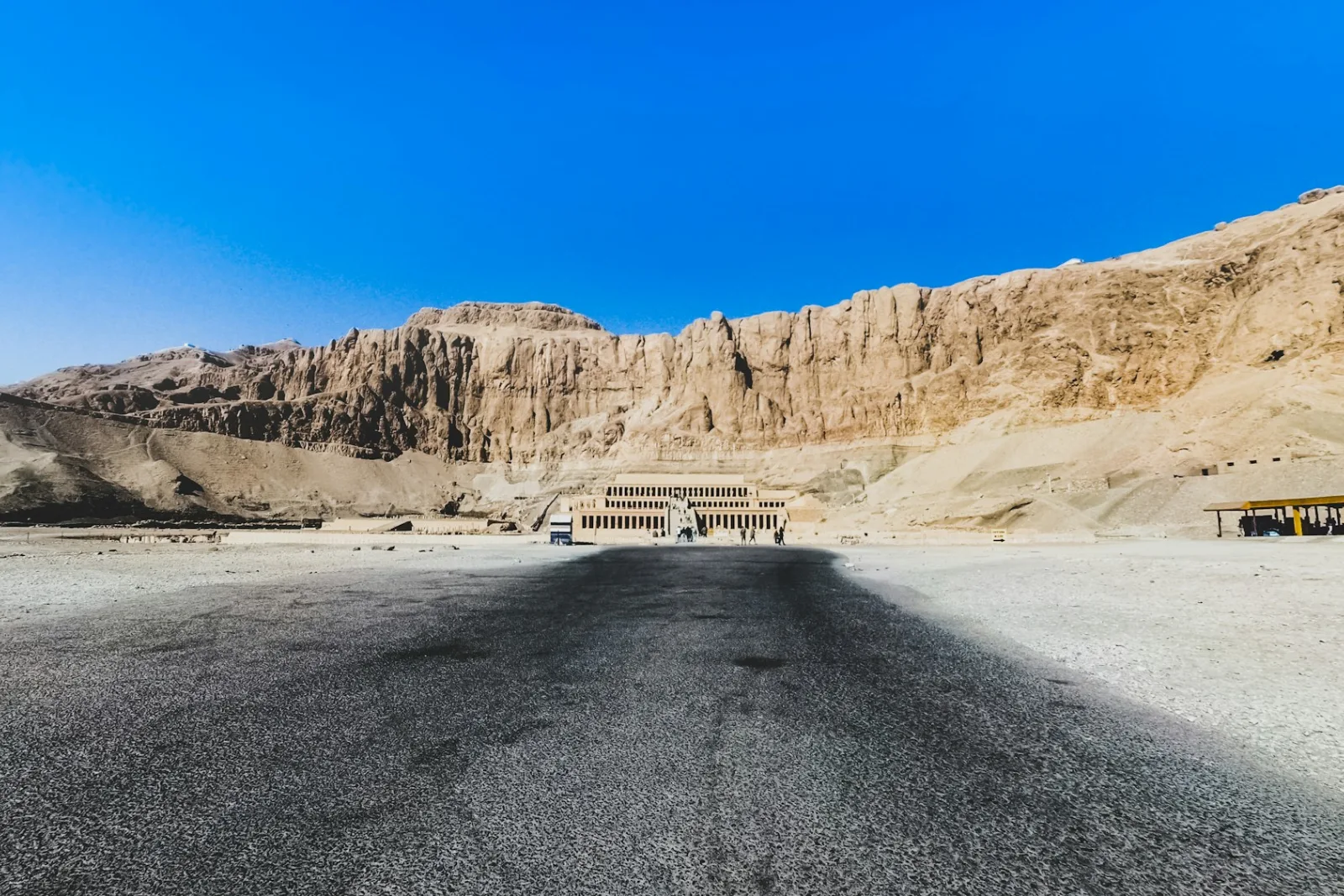
The temple stands at Deir el-Bahari on the West Bank of the Nile, opposite central Luxor.
By car: Cross the Luxor Bridge or take the ferry to the West Bank. From East Bank hotels the drive takes about 30–45 minutes.
With a guided tour: It is usually combined with the Valley of the Kings in a half-day West Bank tour.
At the site: A small electric train runs from the visitor centre to the temple forecourt.
The expedition to Punt. On the middle terrace, reliefs record Hatshepsut’s trading voyage to the land of Punt: ships loaded with incense trees, exotic animals and a famous portrait of the Queen of Punt.
The divine birth. Another colonnade tells how Hatshepsut was born as the daughter of the god Amun, a story she used to support her right to rule.
The Hathor chapel. Columns topped with the face of the goddess Hathor, with cow ears, decorate this chapel dedicated to the protector of the Theban hills.
The Anubis chapel. Here the colours are remarkably fresh, with deep blues and reds still glowing after 3,500 years.
Senenmut’s secret portraits. The queen’s architect, Senenmut, carved small images of himself behind the doors of chapels, where they would be hidden when the doors were open. Continue to the nearby Valley of the Kings.
Opening hours: Daily from 6:00 AM. Last entry is at 5:00 PM in summer and 4:00 PM in winter and Ramadan.
Ticket (foreign visitors): EGP 440 for adults and EGP 220 for students.
Where to buy: At the site’s ticket office or online through EgyMonuments.
Prices and hours were checked on the official EgyMonuments website in November 2026 and may change, so please confirm them before your visit.
Tips: Allow 1 to 1.5 hours. Hats, sunscreen and water are essential.
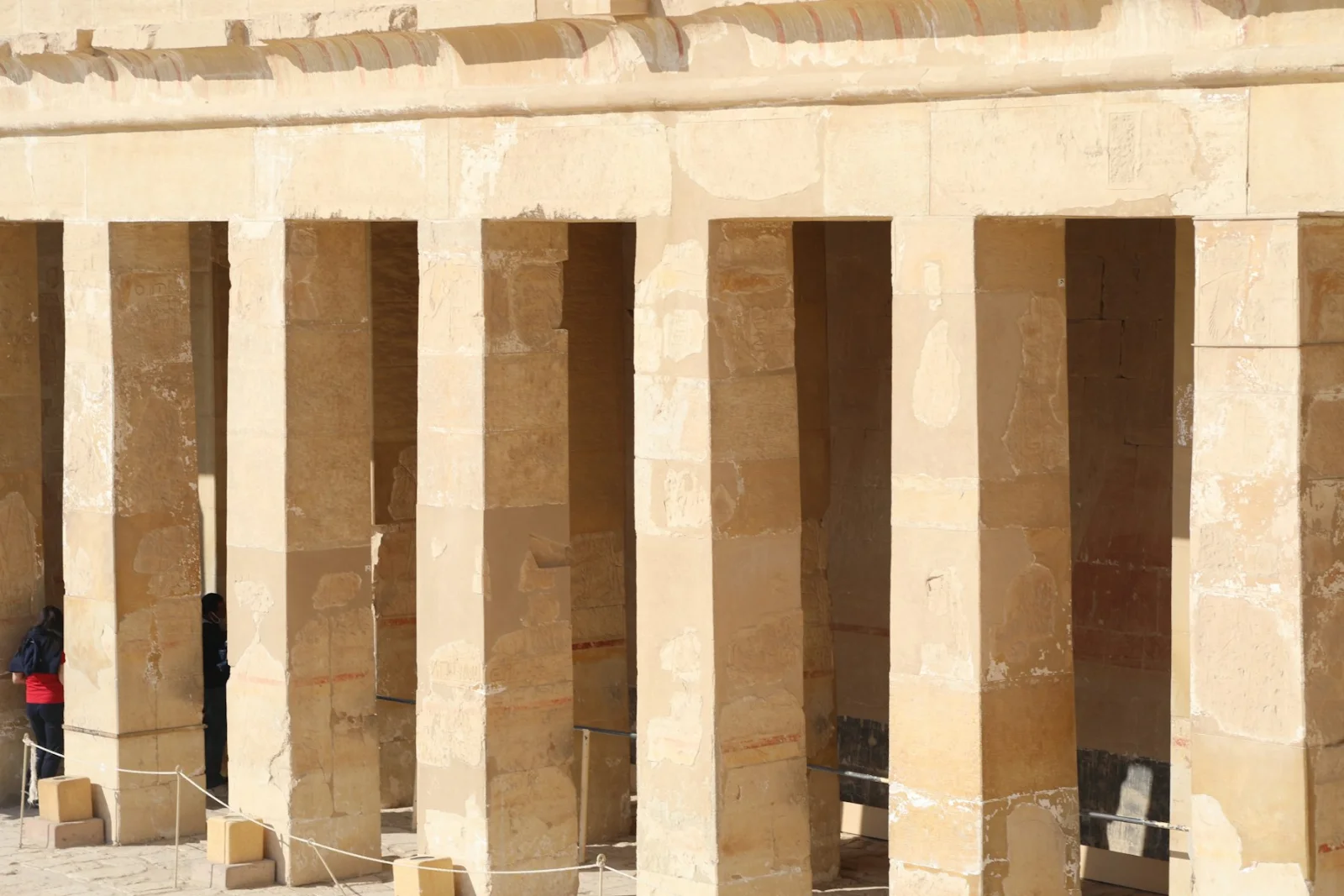
Photograph the temple from the approach path, where its three terraces line up against the golden cliffs.
Morning light illuminates the colonnades and the painted reliefs of the upper terrace.
Look for the scenes of the expedition to the Land of Punt on the middle terrace.
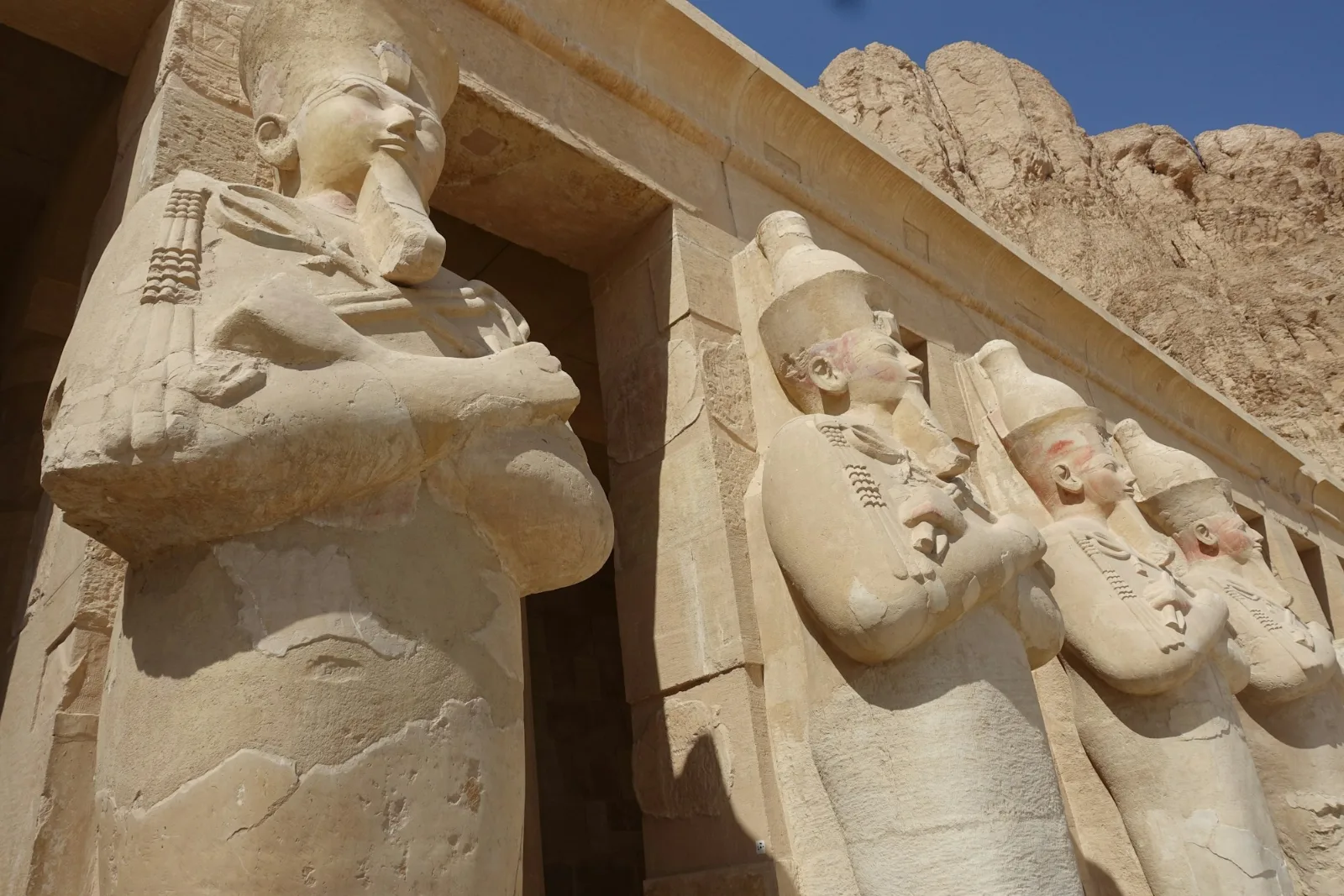
The Temple of Hatshepsut is a monument to an extraordinary woman and to a rare moment when Egyptian architecture blended perfectly with its landscape. Its story of ambition, power and erasure feels very human. Standing on the upper terrace with the cliffs above and the green valley below, it is easy to see why she chose this spot.
Valley of the Kings: the royal tombs behind the cliff.
Karnak Temple Complex: see Hatshepsut’s soaring granite obelisk.
Luxor Temple: a beautiful evening visit on the East Bank.
Philae Temple: the island temple of Isis in Aswan.

Round-the-clock 24/7 support from expert local guides and a professional customer care team, before and throughout your trip.


Copyright © 2026 Egyptista