Most Egyptian temples sit behind walls or desert. Luxor Temple stands in the middle of a living city, a few steps from the Nile Corniche, with cafés, horse carriages and a mosque minaret around its columns. Few places show so clearly how layers of history pile up in Egypt.
Built mainly in the 14th and 13th centuries BC, the temple was the setting for one of the most joyful events of the Theban year, the Opet Festival. Each year the sacred statue of the god Amun was carried here in procession from the Karnak Temple Complex, a couple of kilometres to the north.
Visit by day for the details, or after sunset when floodlights turn the sandstone to gold.
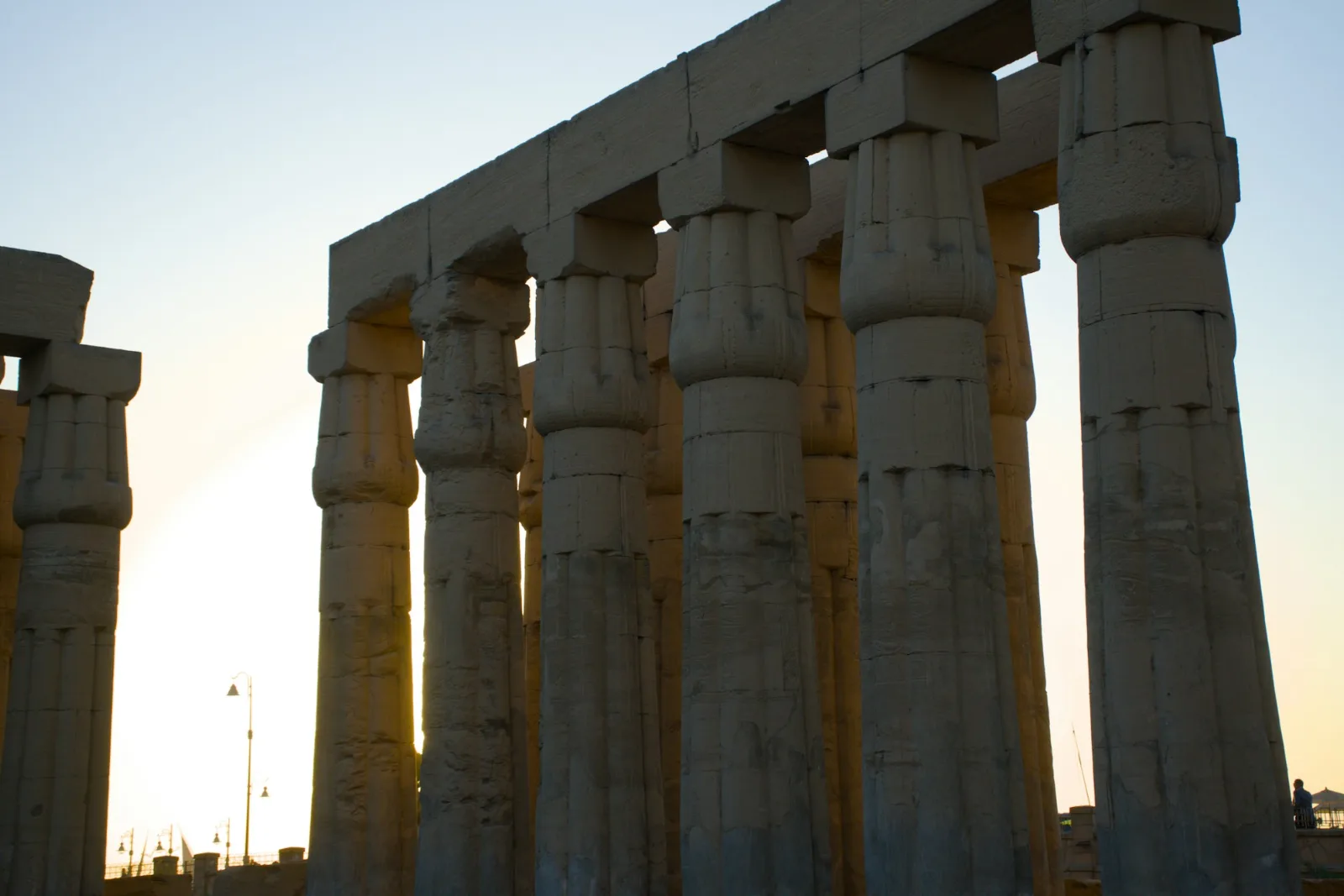
The temple was founded by Amenhotep III, who built its inner sanctuaries, a vast sun court and the processional colonnade of 14 giant papyrus columns. Under Tutankhamun and Horemheb, the colonnade walls were carved with reliefs of the Opet Festival, showing priests, musicians, dancers and sacred boats moving along the Nile.
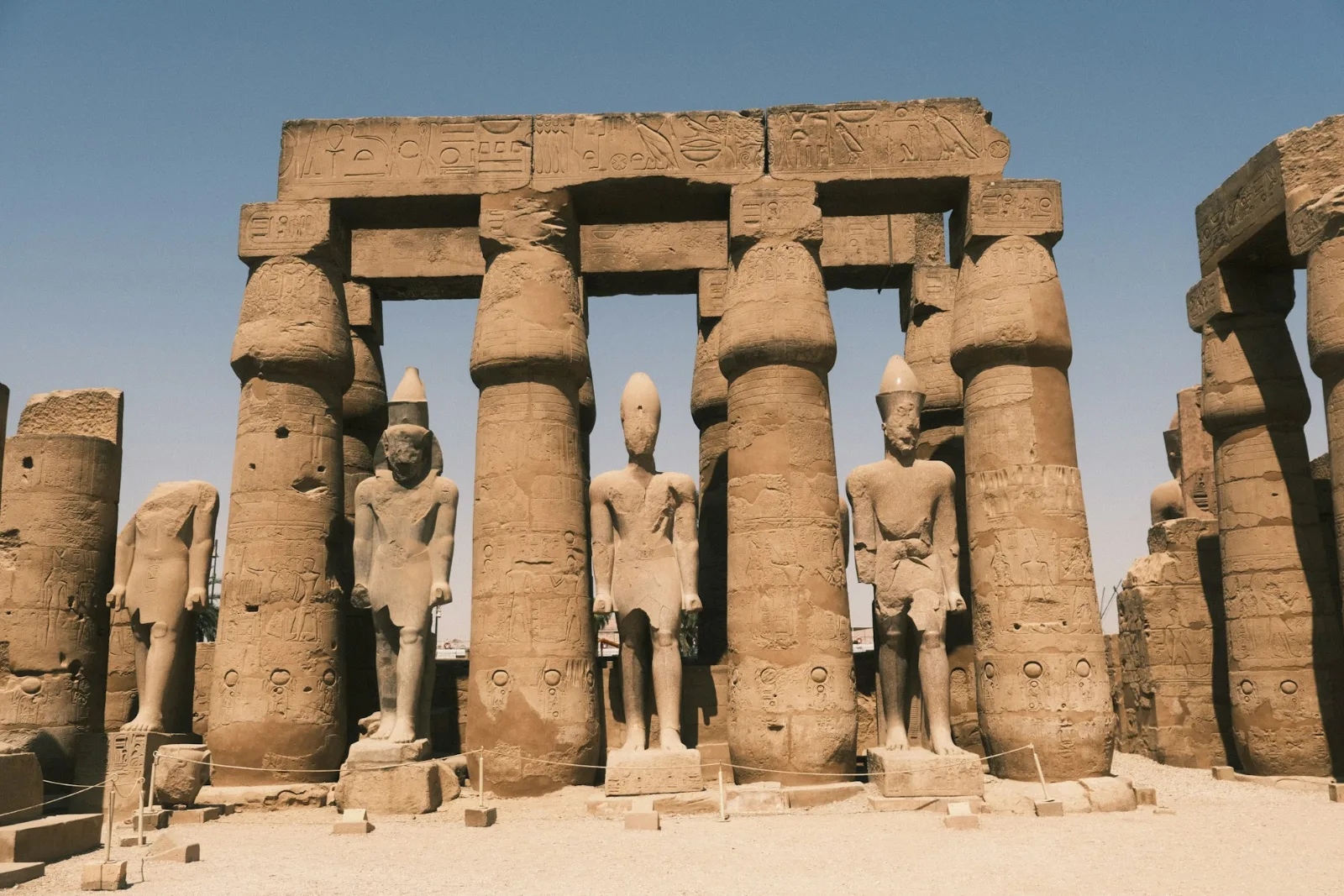
About a century later, Ramesses II extended the temple northwards with a great entrance pylon, a peristyle court and colossal statues of himself. He also set up two granite obelisks at the gate.
Alexander the Great rebuilt the barque shrine, where he appears in pharaonic dress. The Romans turned the temple into part of a military camp and painted an imperial cult chamber over earlier reliefs.
In the 13th century the Abu el-Haggag Mosque was built on top of the sand-filled court. The mosque is still in use today, its door now suspended high above the excavated ancient floor.
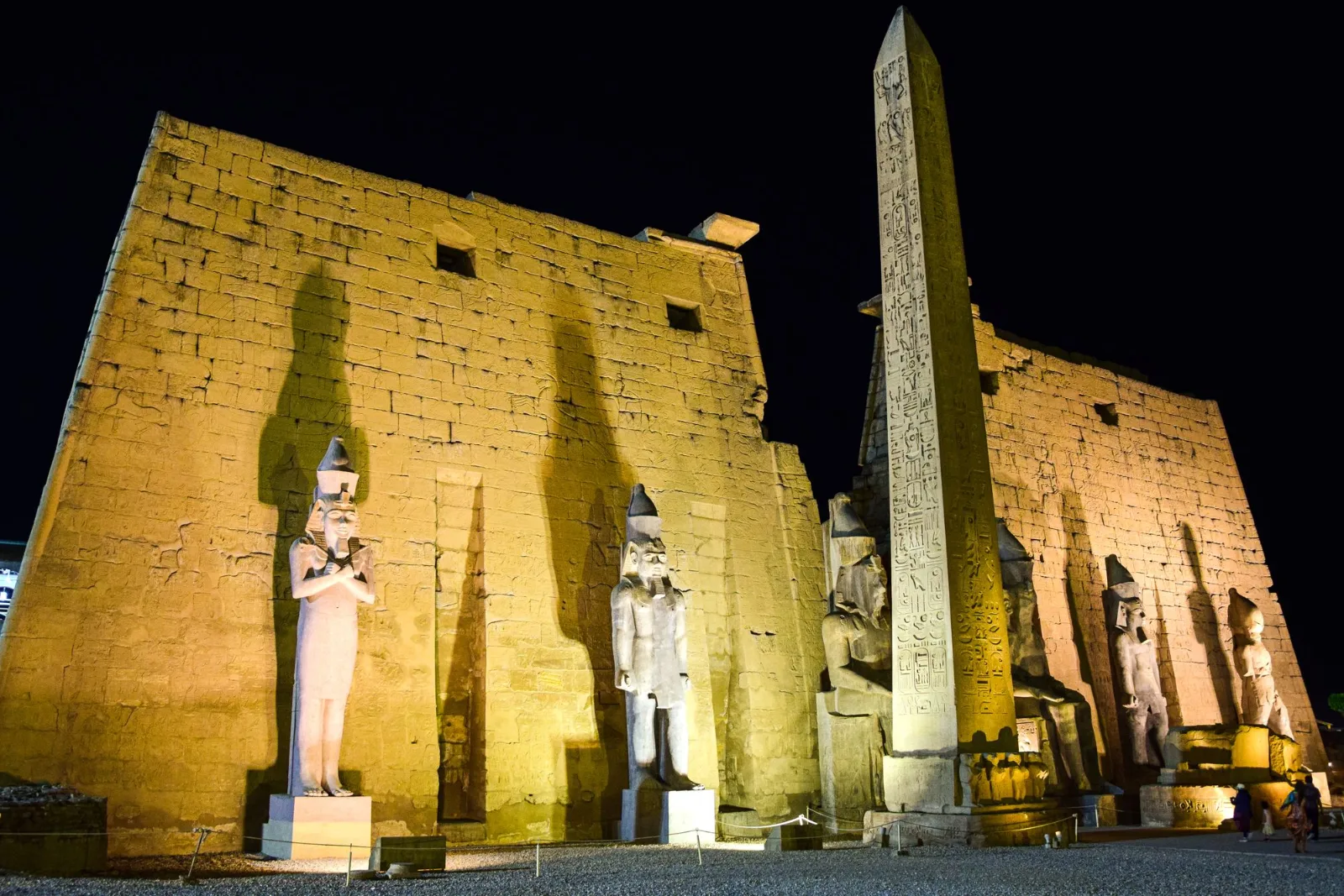
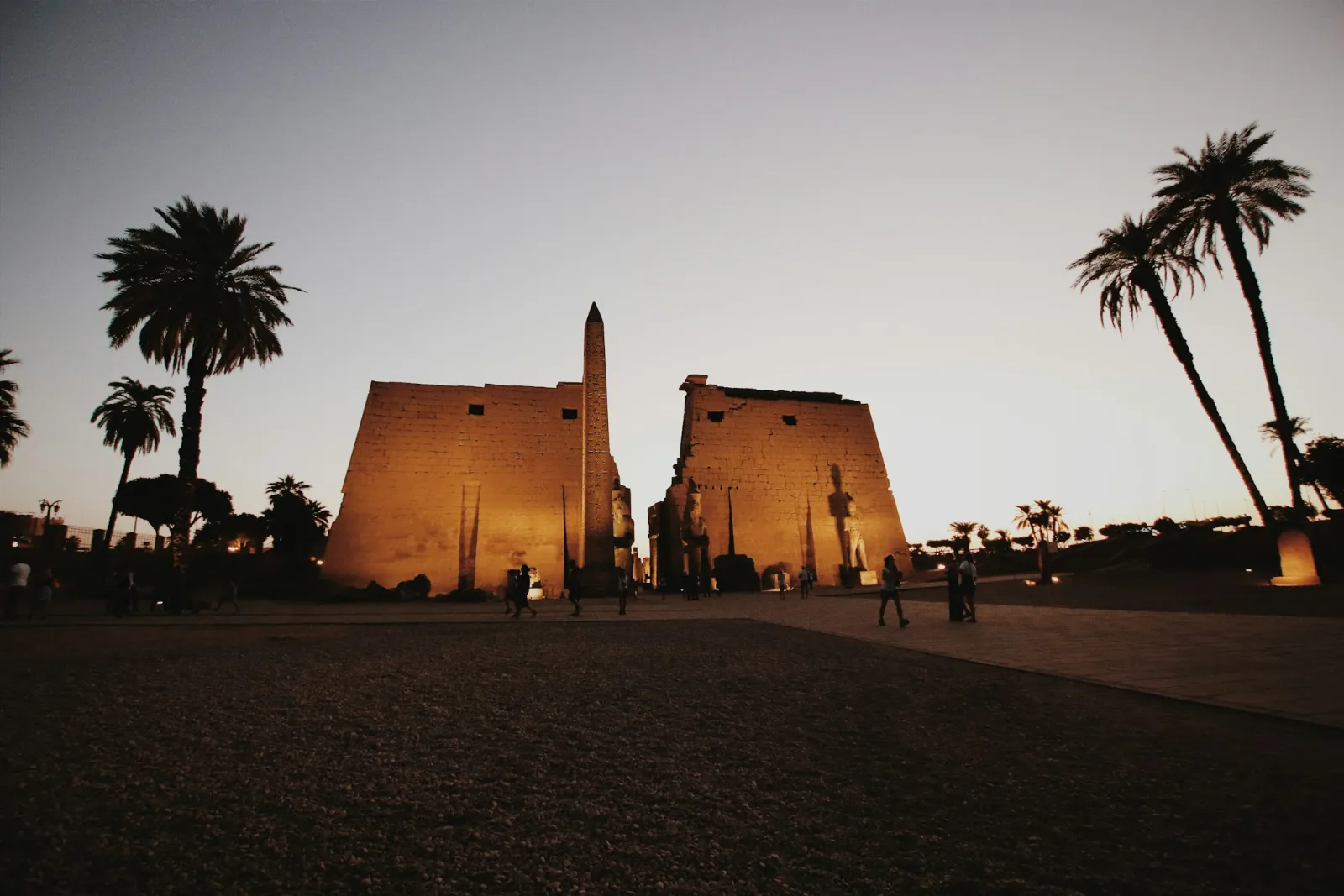
The 24-metre-high gateway of Ramesses II is carved with scenes of the Battle of Kadesh. In front of it stand seated colossi of the king and a single obelisk about 25 metres tall. Its twin was given to France in the 1830s and now stands in the Place de la Concorde in Paris.
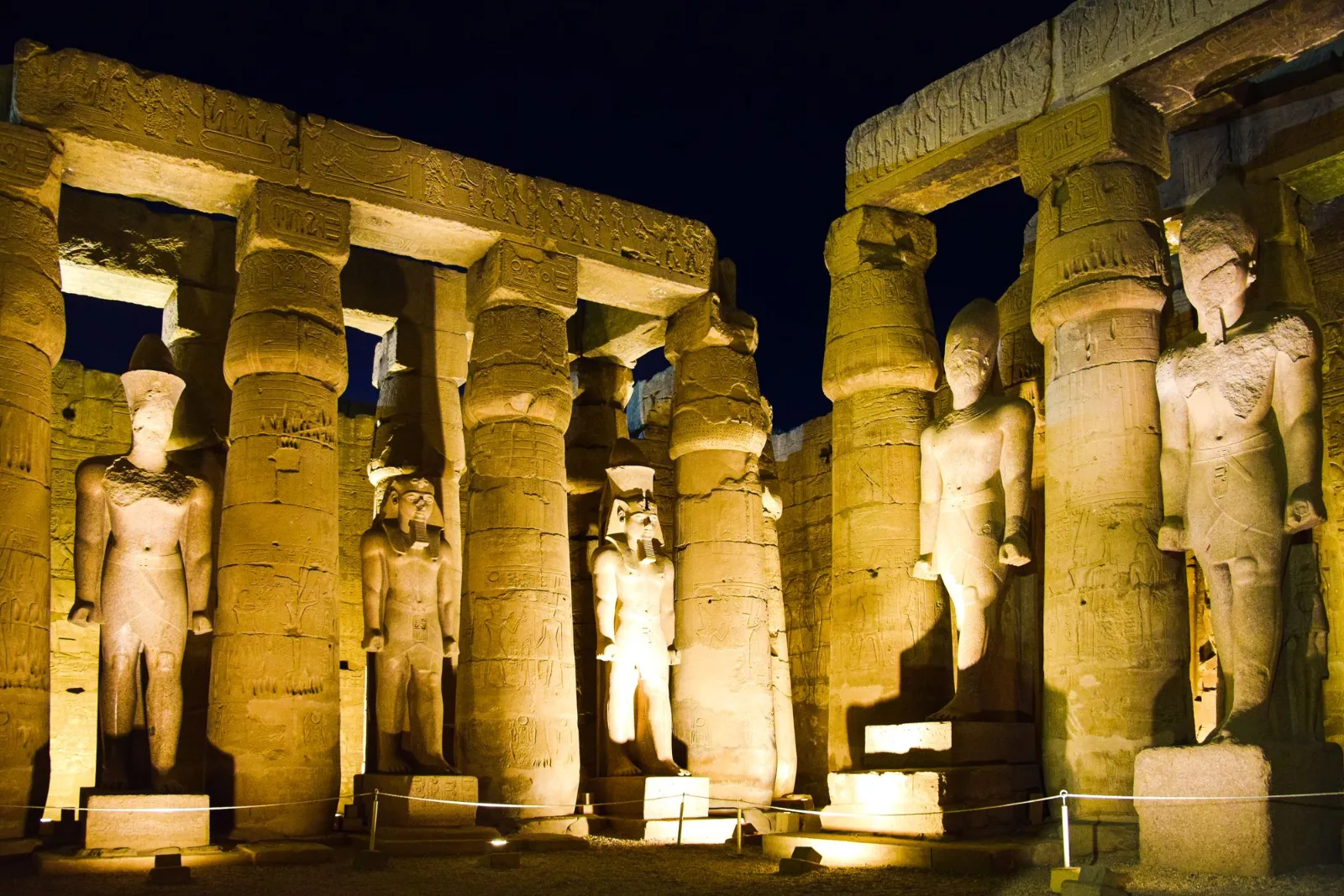
This double row of papyrus columns is lined with standing statues of the king. Look up to see the Abu el-Haggag Mosque perched on the eastern side.
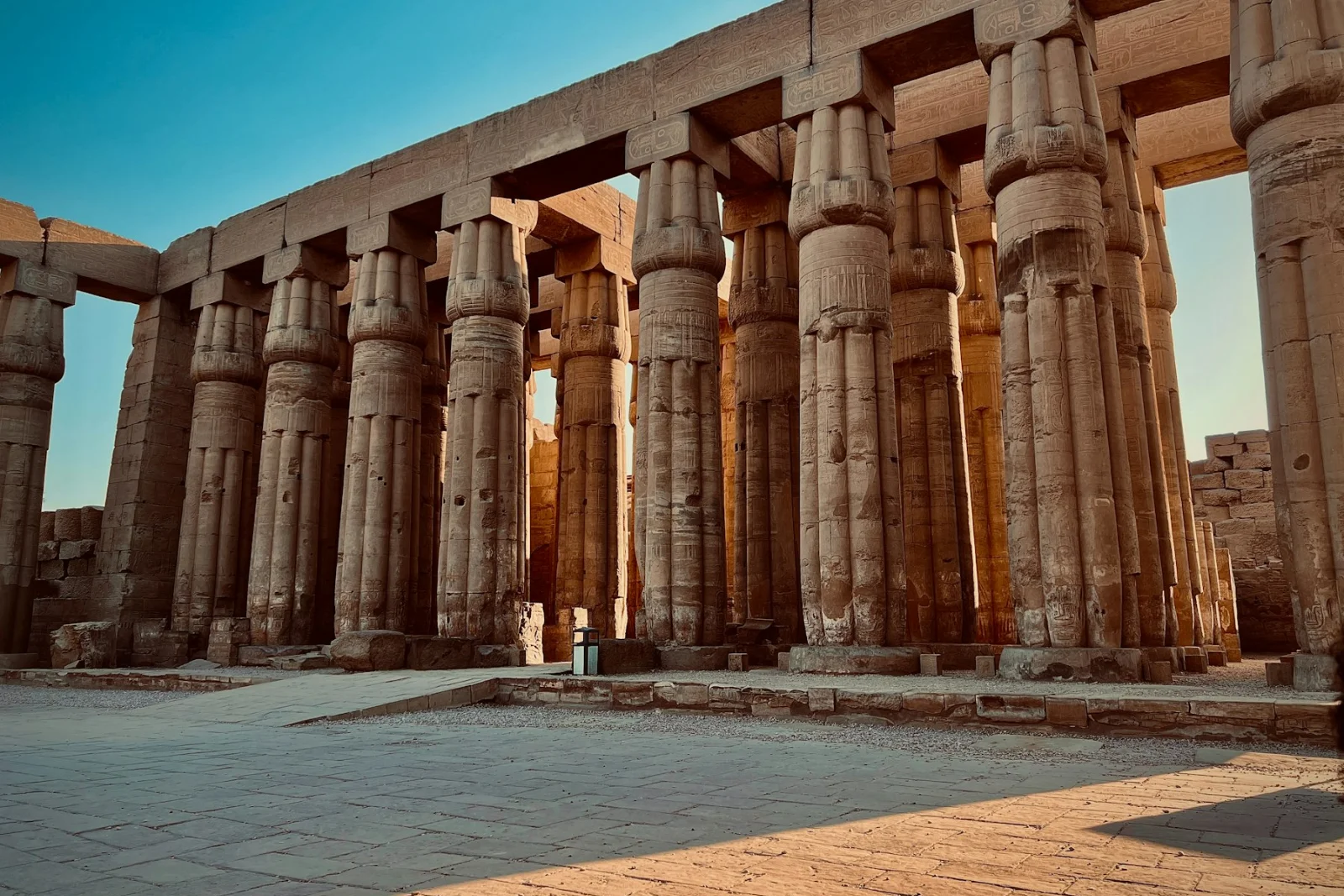
Seven pairs of columns, each almost 16 metres high, form a grand processional hall. Their open papyrus capitals once supported a roof.
Beyond the colonnade lies Amenhotep III’s elegant court, then the hypostyle hall, the Roman chamber and the sanctuary of Alexander the Great.
A temple for a festival. Luxor Temple was not a funerary temple. It was the stage for the Opet Festival, which renewed the divine power of the king each year.
Buried for centuries. Until the 1880s, a village covered much of the temple. Excavations led by Gaston Maspero cleared it, and only the mosque was left in place.
Half a pair in Paris. The obelisk that stands in Paris was shipped down the Nile and across the Mediterranean and erected in 1836.
Two thousand years of worship. Ancient Egyptian, Christian and Muslim worshippers have all used the site, and traces of early Christian churches have been found in and around the temple.
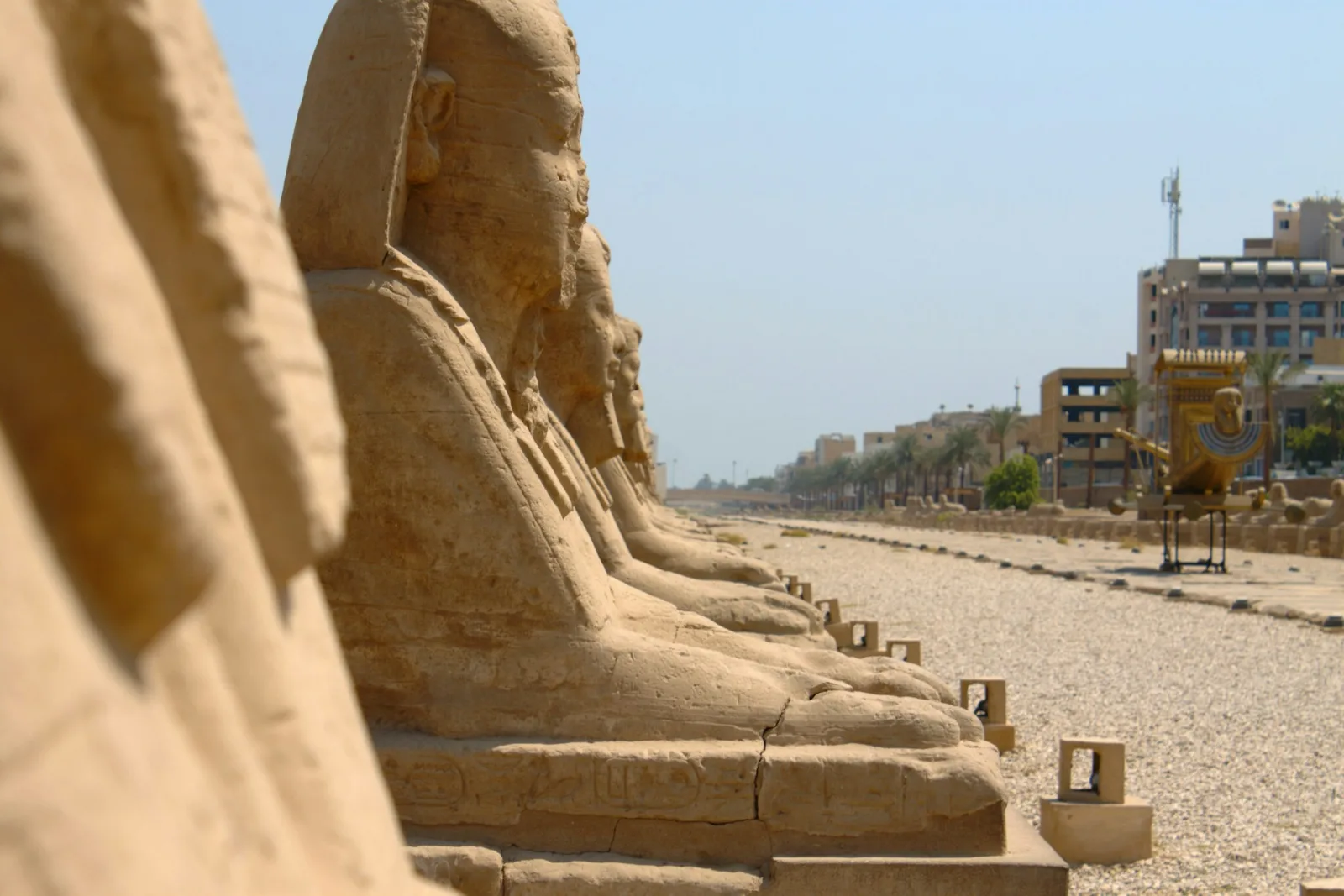
Walk a stretch of the Avenue of Sphinxes. The 2.7 km processional road between Luxor Temple and Karnak was reopened in 2021 after decades of excavation.
Read the Opet reliefs on the colonnade walls to follow the festival procession.
Find Alexander the Great in the barque shrine near the sanctuary.
Visit at night when the temple is beautifully lit.
Continue to the Luxor Museum along the Corniche for superb statues found in Thebes.
October to April brings the most comfortable weather in Luxor. In summer, temperatures often exceed 40°C, so plan an early morning or evening visit.
Luxor Temple keeps unusually late opening hours, which makes it the perfect evening activity after a day on the West Bank. Arrive about 30 minutes before sunset to see the temple in daylight, at golden hour and floodlit.
Luxor Temple is in the centre of modern Luxor on the East Bank of the Nile, between the Corniche and the city’s main streets.
On foot: Many hotels and Nile cruise moorings are within walking distance.
By horse carriage or taxi: Agree the fare before you set off.
From Karnak: Follow the Avenue of Sphinxes, or take a short taxi ride of about 10 minutes.
The Avenue of Sphinxes. A processional road of about 2.7 km, once lined with hundreds of sphinxes, links Luxor Temple to Karnak Temple. It was used for the great Opet Festival and today you can walk part of it.
One obelisk, two cities. At the entrance stands a single granite obelisk of Ramesses II. Its twin has stood in Place de la Concorde in Paris since the 1830s.
A mosque above the columns. The Mosque of Abu el-Haggag sits high on the temple’s ancient walls, its door hanging above the courtyard, a striking image of Luxor’s many layers of history.
Alexander the Great. Deep inside, a shrine shows Alexander dressed as a pharaoh making offerings to the god Amun.
The colonnade of Amenhotep III. Fourteen giant papyrus columns form one of the most elegant corridors in Egypt, especially beautiful when lit up after sunset.
Opening hours: Daily from 6:00 AM, with last entry at 7:00 PM.
Ticket (foreign visitors): EGP 500 for adults and EGP 250 for students.
Where to buy: At the entrance or online through EgyMonuments.
Prices and hours were checked on the official EgyMonuments website in November 2026. They can change, so please confirm them before your visit.
Tips: The temple has little shade at midday. Wear comfortable shoes and allow 1.5 to 2 hours.
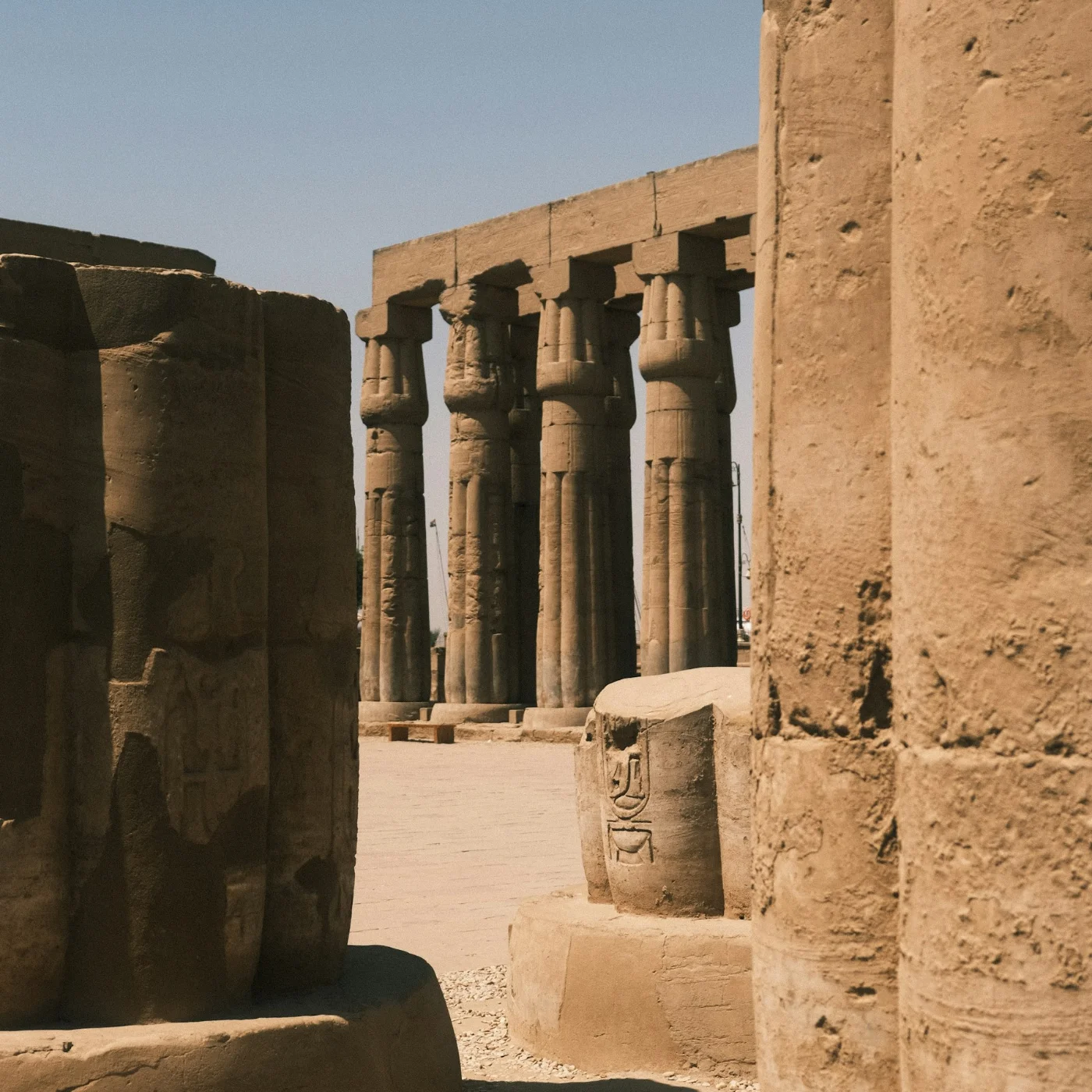
Visit after sunset, when the temple is illuminated and the statues and columns glow against the night sky.
The Avenue of Sphinxes leading towards Karnak makes a beautiful perspective shot.
The colonnade of Amenhotep III is especially photogenic in the late afternoon.
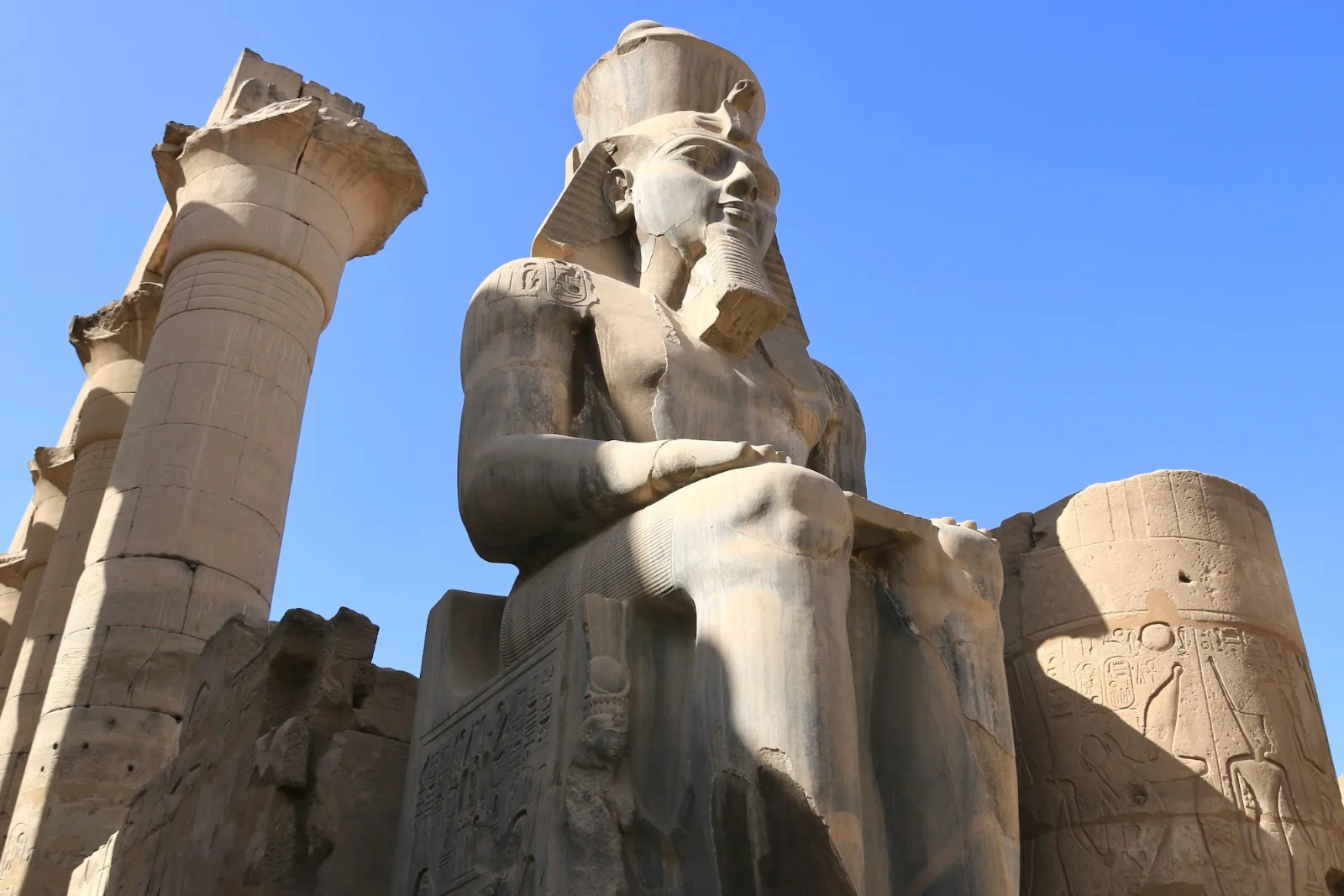
Luxor Temple is ancient Egypt at its most theatrical: columns as tall as trees, colossal kings and the story of a festival still told on its walls.
It is also the easiest great temple to visit, right in the city centre and open into the evening. Its many layers, Pharaonic, Greek, Roman, Christian and Islamic, make it a living timeline of Egyptian history.
Karnak Temple Complex: the other end of the Avenue of Sphinxes.
Valley of the Kings: royal tombs across the river on the West Bank.
Temple of Hatshepsut: the queen’s terraced masterpiece at Deir el-Bahari.
Edfu Temple: a perfectly preserved temple of Horus on the way to Aswan.

Round-the-clock 24/7 support from expert local guides and a professional customer care team, before and throughout your trip.


Copyright © 2026 Egyptista