
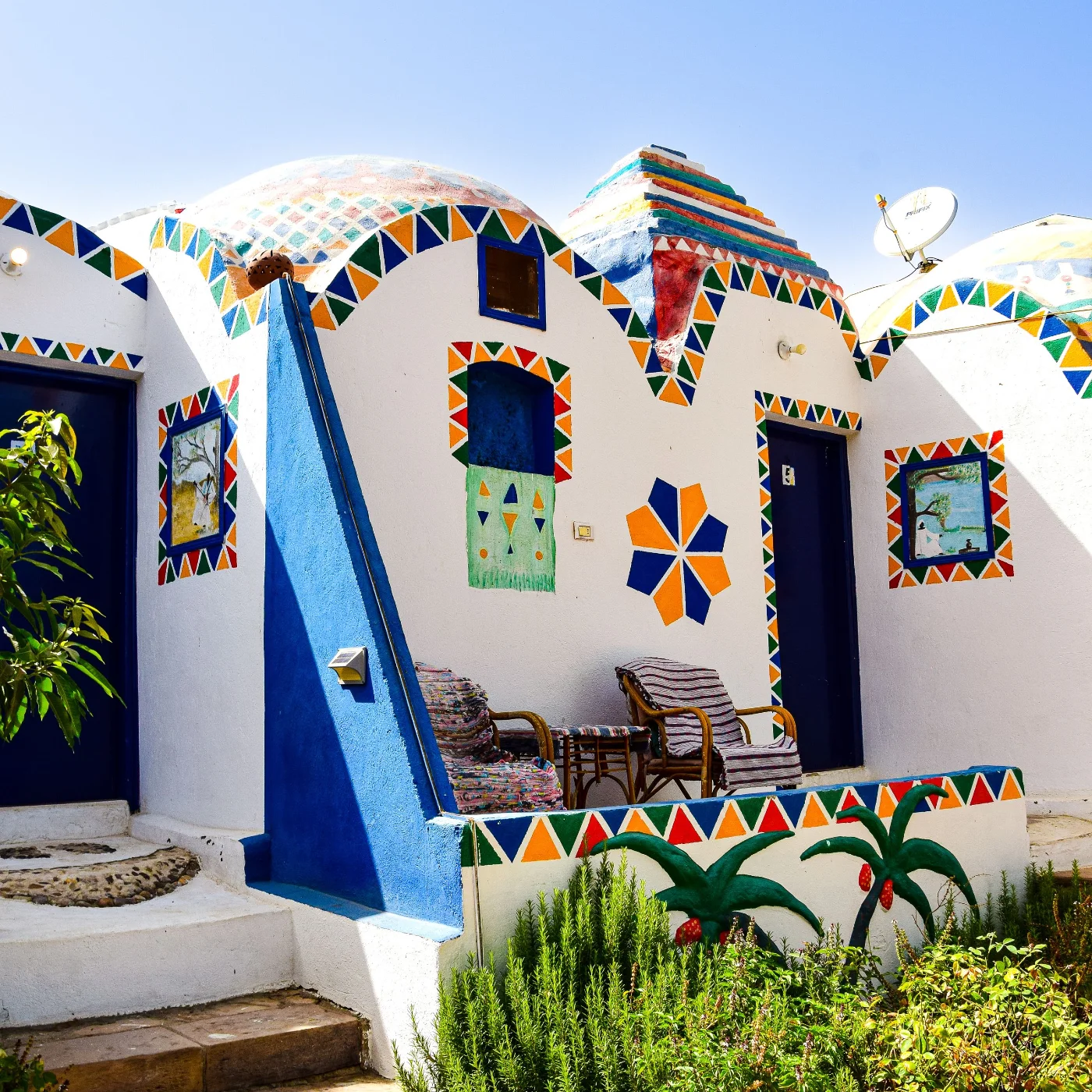
South of Aswan, the Nile once flowed through Nubia, the land of a people with their own languages, music and traditions going back thousands of years. A short boat ride from Aswan brings you to Nubian villages on the West Bank, such as Gharb Soheil, where houses painted in blue, yellow and pink climb the sand dunes along the river.
A visit here is less about monuments and more about people: a chance to drink tea in a Nubian home and see how this culture lives on today.
Ancient Nubia was a powerful neighbour of Egypt, sometimes a rival and sometimes a partner; at one point Nubian kings even ruled Egypt as the 25th Dynasty.
In the 1960s, the building of the Aswan High Dam created Lake Nasser, which flooded much of Nubia’s historic homeland. Many Nubian families were resettled, and villages near Aswan became important places for keeping Nubian traditions, language and crafts alive.
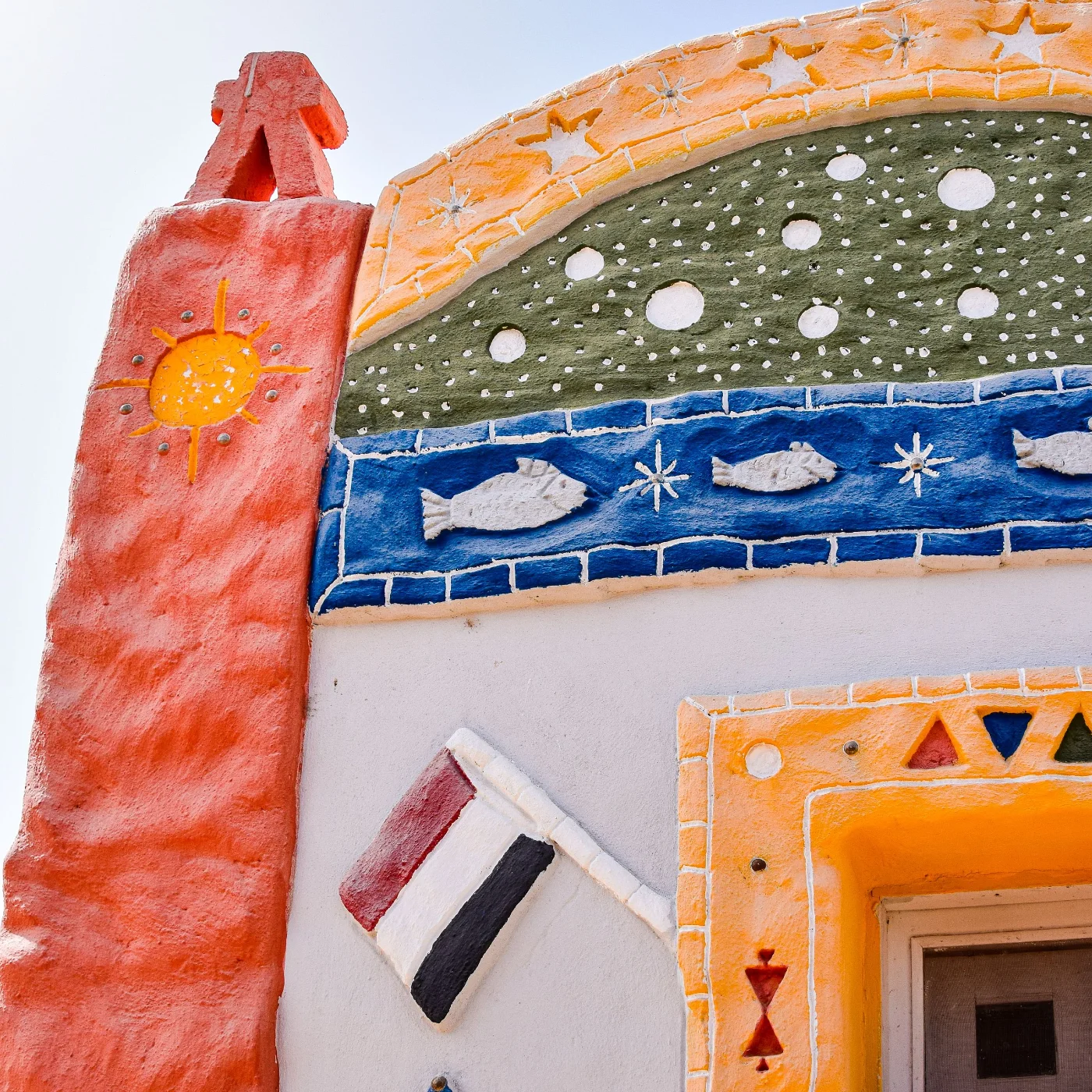
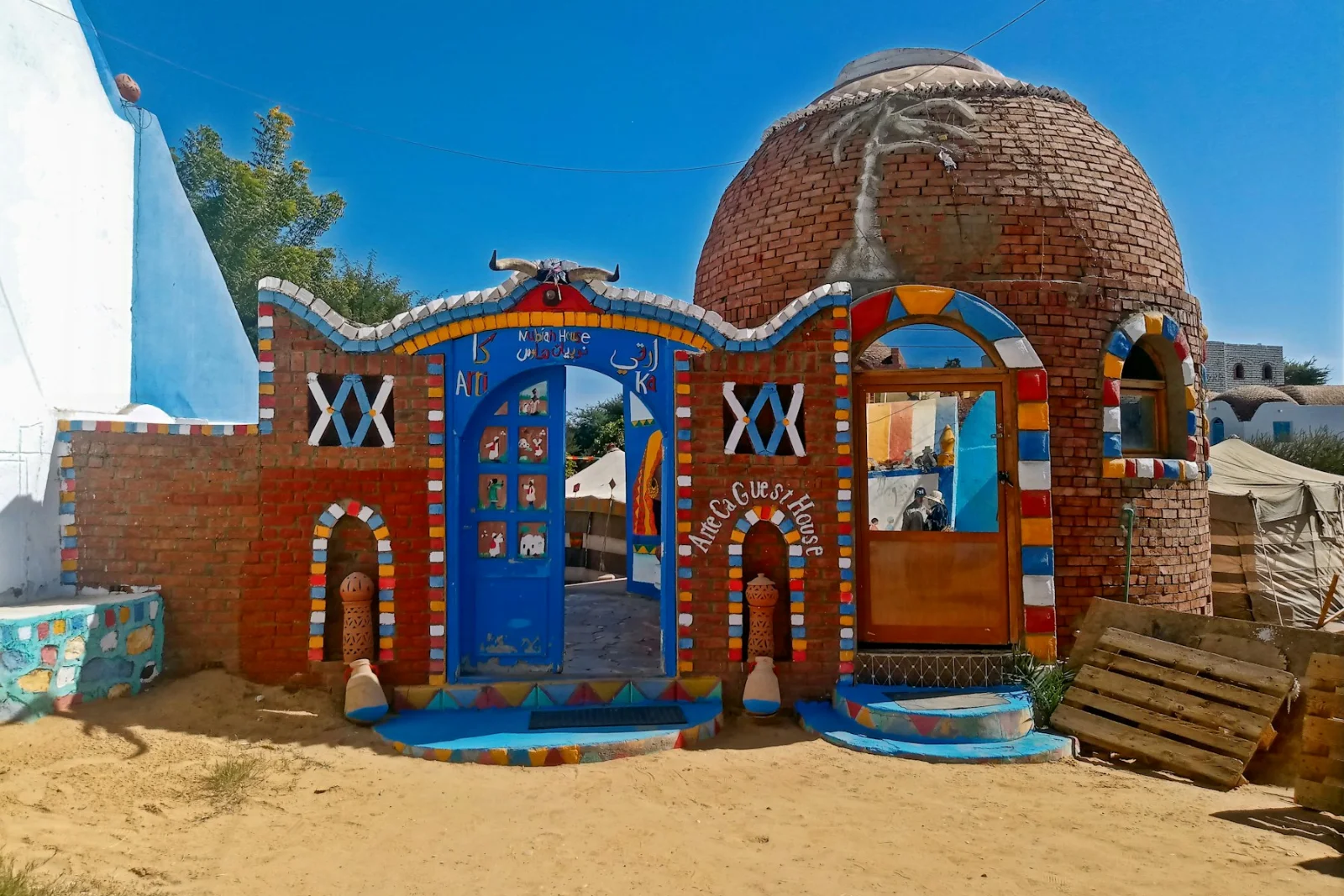
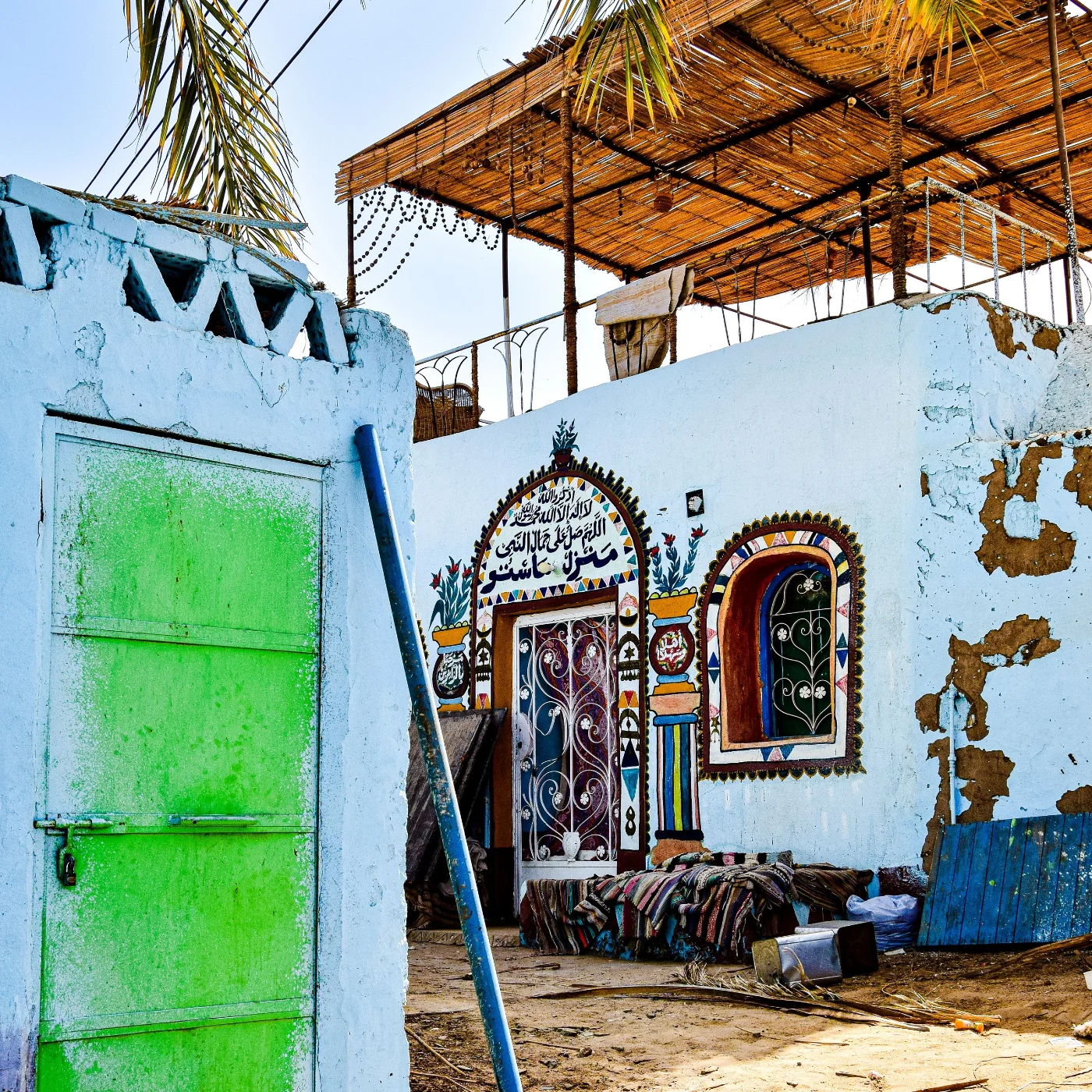
Nubian houses are built around open courtyards and topped with domes and vaults that keep the interiors cool. Their walls are decorated with geometric patterns, flowers, animals and symbols painted in bright colours.
In some homes, families keep small crocodiles as a traditional symbol of protection, and visitors are often welcomed with karkadeh (hibiscus tea), home-made bread and the chance to try henna designs.
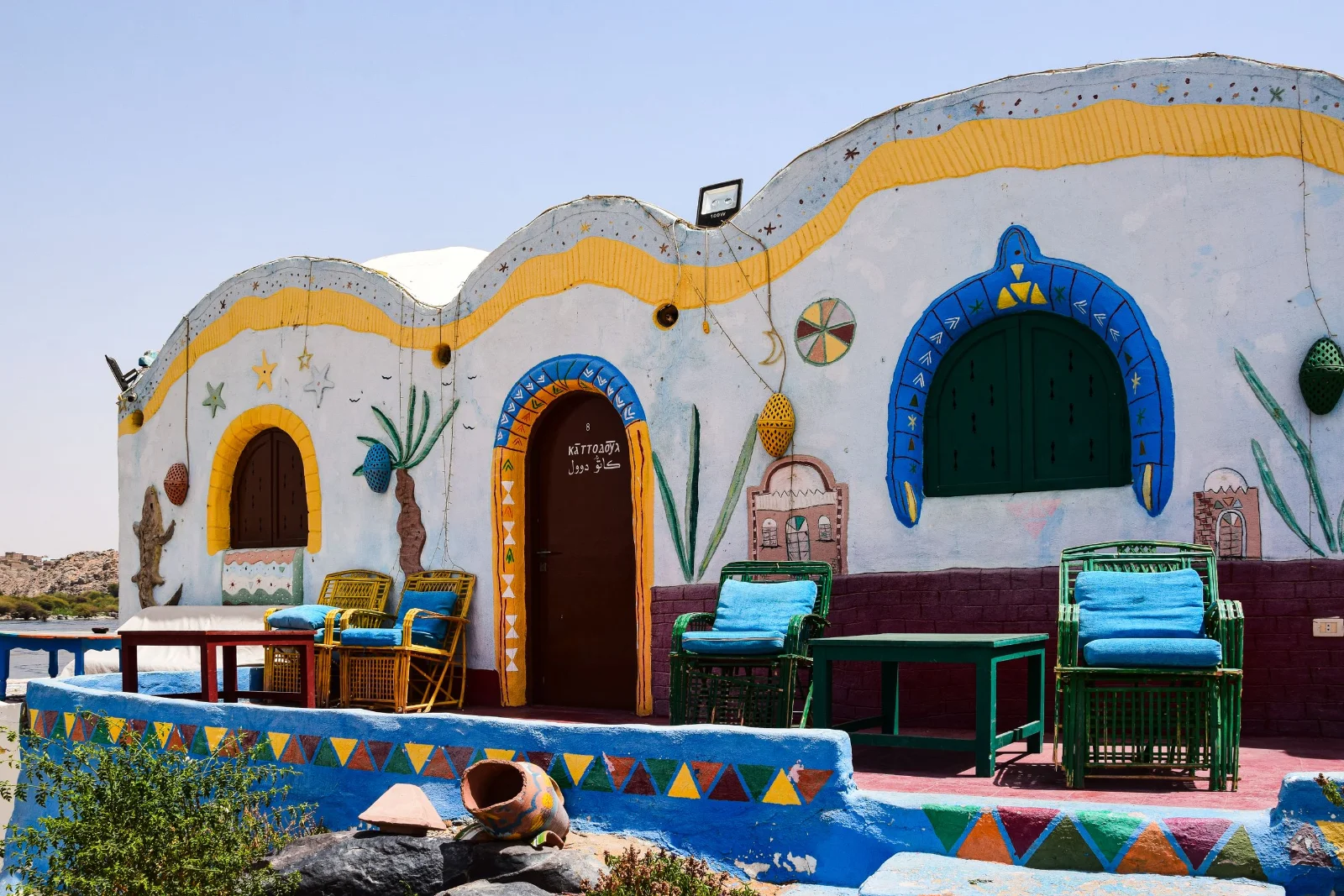
The journey itself is part of the experience. Motorboats leave from Aswan’s Corniche and pass Elephantine Island, granite rocks polished by the river and the desert dunes of the West Bank. Along the way you may see herons, kingfishers and children swimming near the shore.
Many visitors combine the village with a stop at the botanical gardens on Kitchener’s Island or a felucca sail at sunset.
Nubians speak their own languages, such as Nobiin and Kenzi, which have been passed down mostly by word of mouth for generations.
Traditional Nubian architecture, with its mud-brick domes and vaults, inspired the famous Egyptian architect Hassan Fathy.
Nubian music, with its drums, clapping and joyful rhythms, is loved all over Egypt, and some of the country’s best-known singers have Nubian roots.
Many houses are painted again every year, so the colours always look fresh and bright.
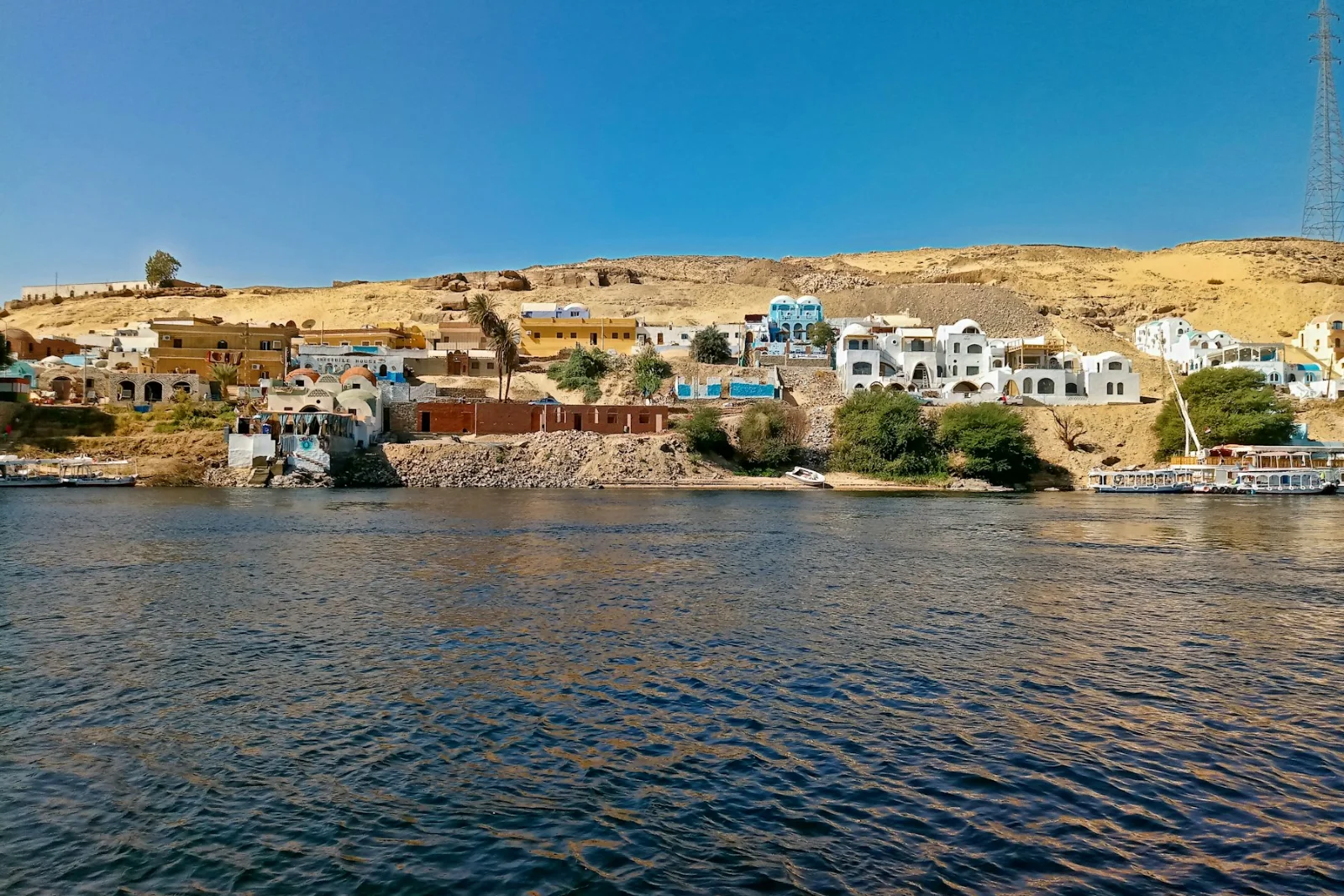
The afternoon is ideal: enjoy the boat ride, spend time in the village, and sail back towards Aswan as the sun sets over the dunes. The months from October to April offer the most pleasant temperatures.
The Nubian villages lie on the West Bank of the Nile, south and north of Aswan. The most popular, such as Gharb Soheil, are reached by motorboat from the Aswan Corniche, a beautiful ride past Aswan’s islands and granite rocks.
The Nubian Museum. In Aswan, this award-winning museum tells the story of Nubia from prehistory to today, with statues, jewellery and a full-size model of a traditional Nubian house. Its garden includes a recreated stream and Nubian dwellings.
Elephantine’s Nubian villages. On Elephantine Island, the villages of Siou and Koti keep colourful houses and narrow lanes, a peaceful place to walk among palm trees.
Nubian flavours. Try a home-cooked Nubian meal of fresh bread, stews, fish and karkadeh, the ruby-red hibiscus drink, often served with live drumming and songs.
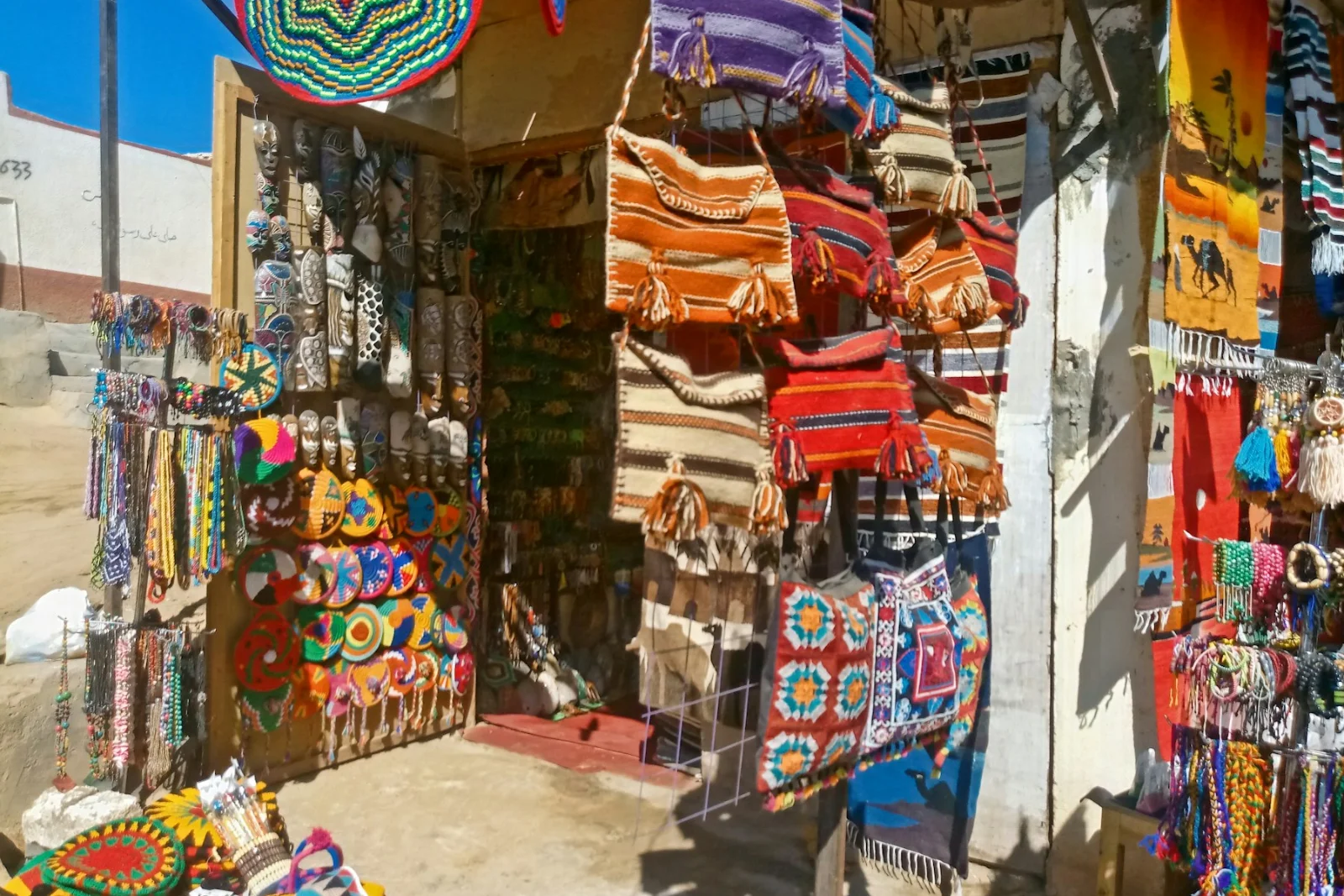
Henna and handicrafts. Many visitors enjoy a henna design, and the colourful beaded jewellery, woven baskets and spices make lovely souvenirs.
A camel ride to St Simeon. From the West Bank, camels carry visitors up to the desert Monastery of St Simeon, with wonderful views over the river. Discover more in our guide to Aswan.
Ask before photographing people, especially women and children.
Buying local crafts such as baskets, beaded jewellery and spices supports the community.
Modest clothing is appreciated.
Learn more at the Nubian Museum in Aswan, which tells the story of Nubia from prehistory to today.
Nearby, don’t miss the Philae Temple and the Abu Simbel temples, which were saved from the waters of Lake Nasser.
Aswan is a highlight of every Nile cruise. Explore our Nile cruises to plan your visit to Aswan and its Nubian heritage.

Round-the-clock 24/7 support from expert local guides and a professional customer care team, before and throughout your trip.


Copyright © 2026 Egyptista