
Rising above downtown Amman, the hill of Jabal al-Qal’a, the Citadel, has been inhabited for thousands of years. Bronze Age settlers, the Ammonites, Romans, Byzantines and Umayyads all left their mark here.
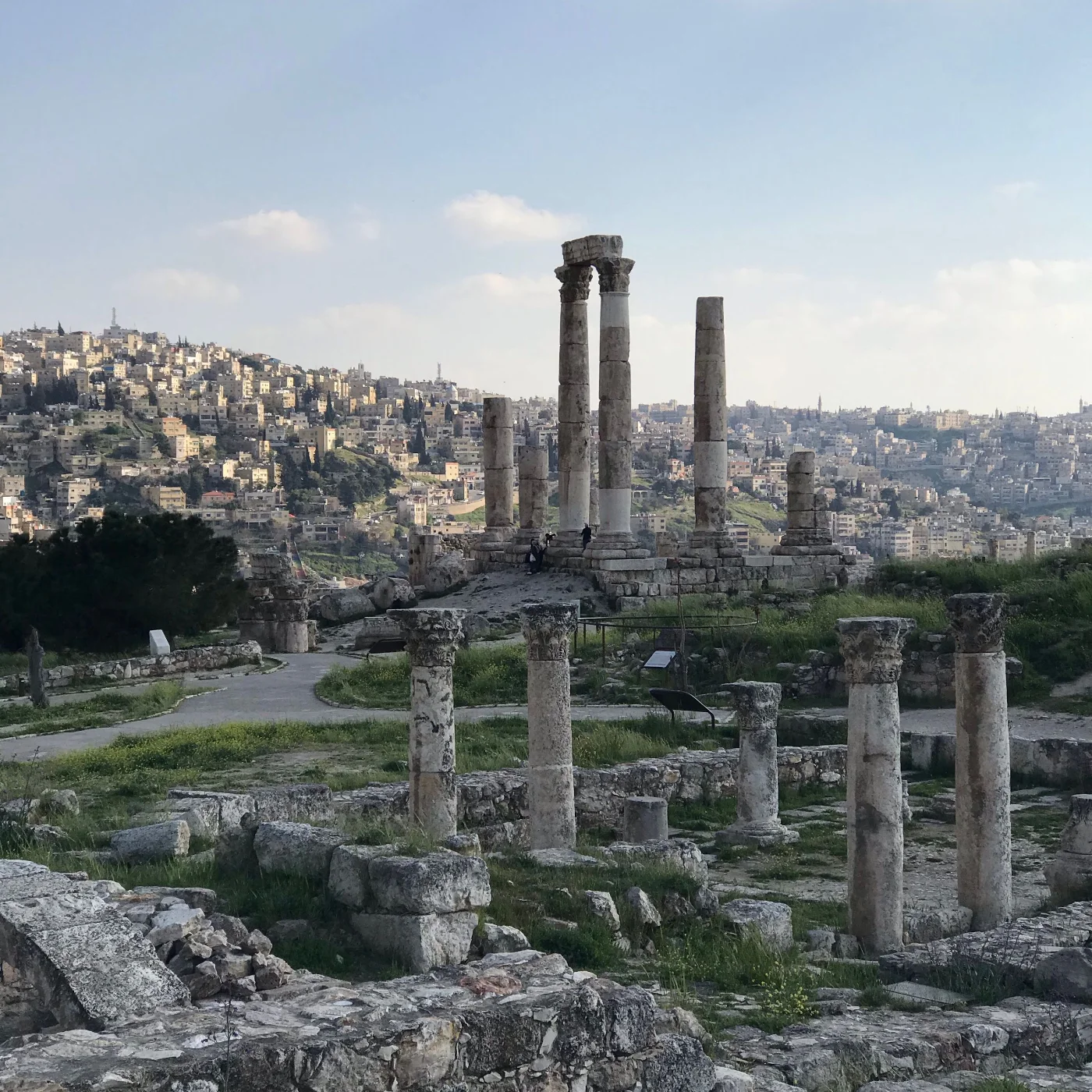
Today it is an open-air museum with some of Amman’s most important monuments and the best views over the city.
The hill was fortified as early as the Bronze Age, and in the Iron Age it was the stronghold of Rabbath Ammon, capital of the Ammonites. Under the Greeks and Romans the city was renamed Philadelphia and became one of the cities of the Decapolis.
Later, Byzantine Christians built a church on the hill, and in the 8th century the Umayyad caliphs built a palace complex here.
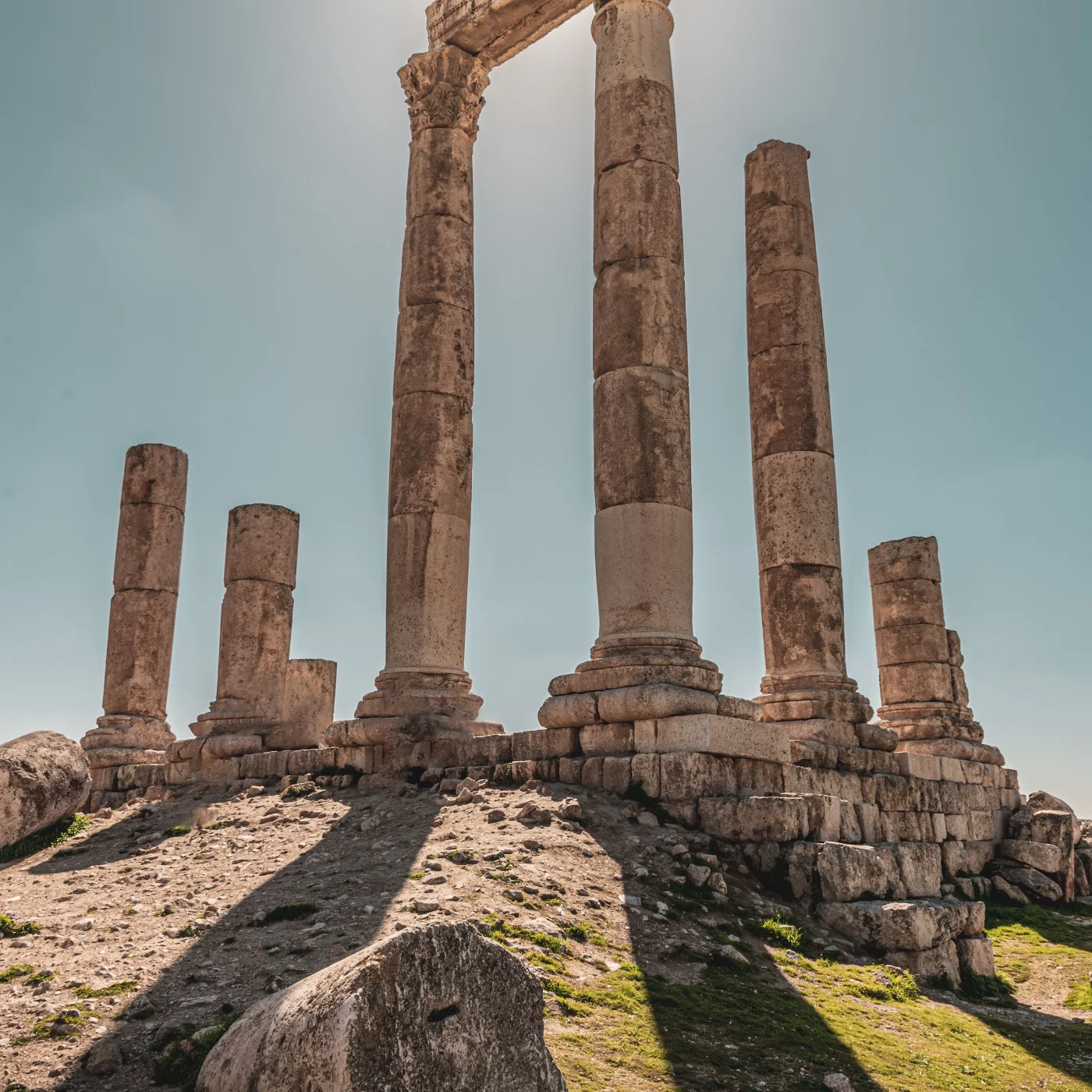
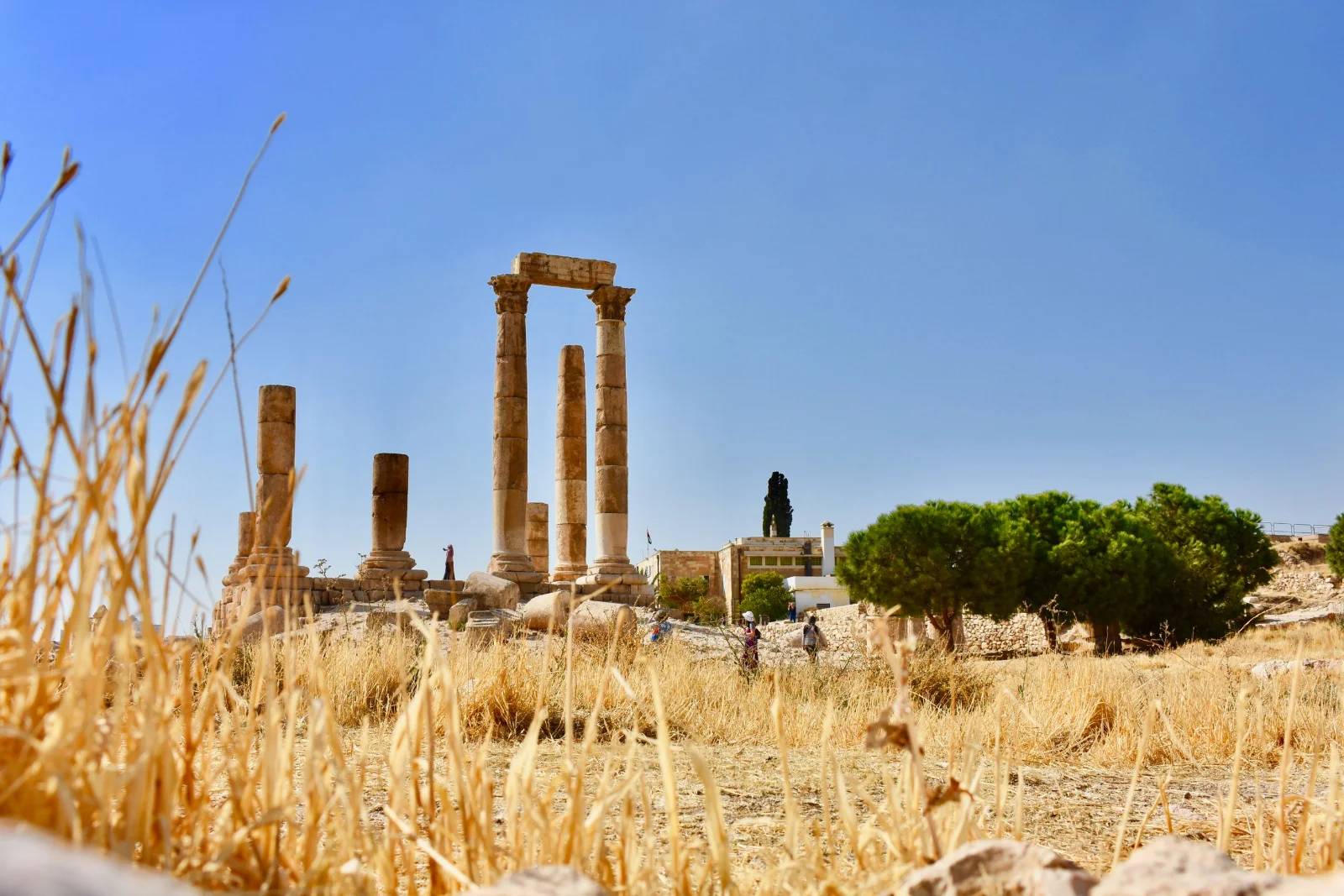
The most striking ruin is the Temple of Hercules, built by the Romans in the 2nd century AD. Only a few of its massive columns still stand, but they give an idea of its original size.
Nearby lie fragments of a colossal statue, including a giant hand and elbow, which suggest the statue was about 12 metres tall.
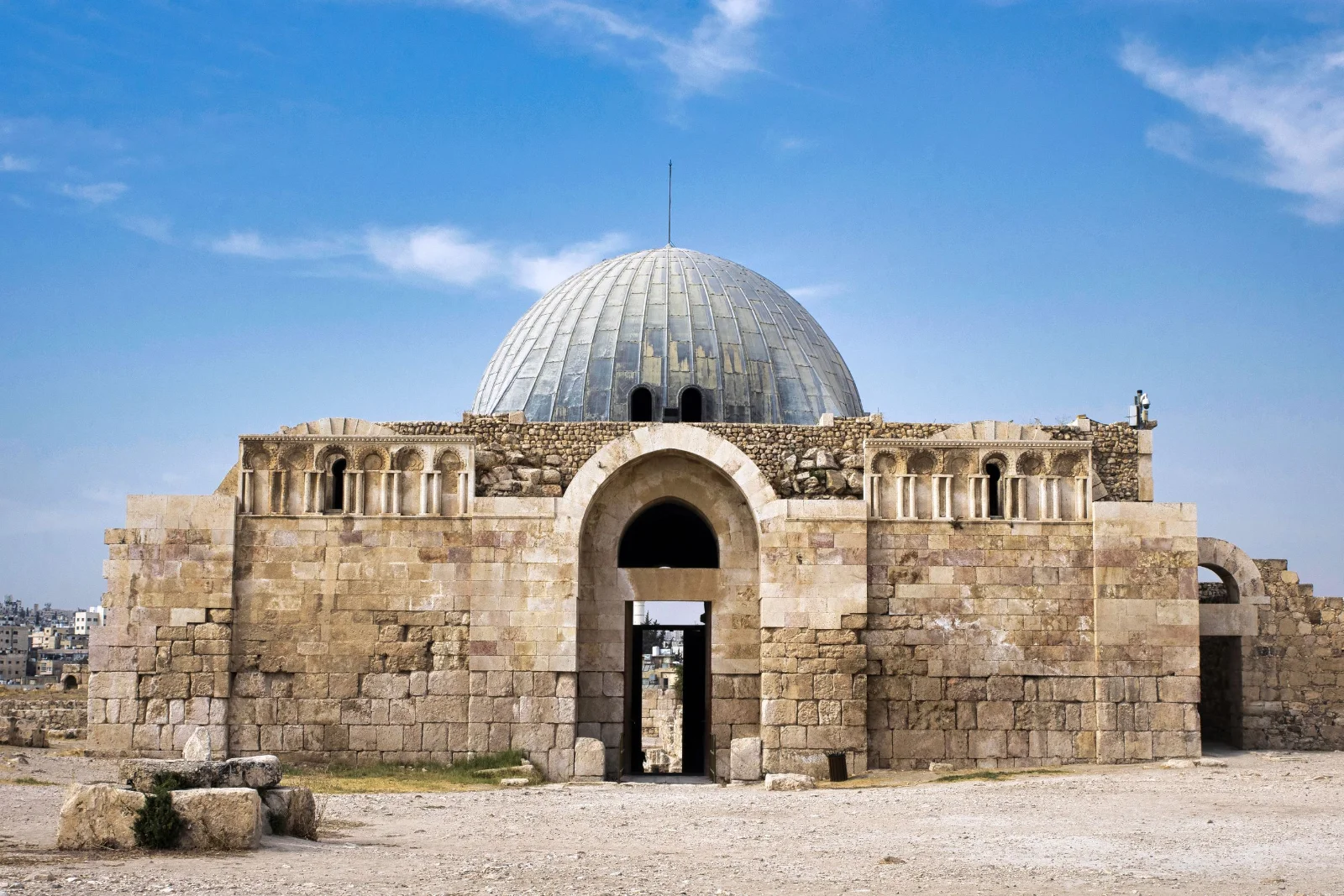
At the northern end of the hill, the Umayyad Palace complex includes a monumental entrance hall whose dome has been reconstructed, along with a colonnaded street, residential buildings and a large water cistern.
Between the Roman and Umayyad remains you will also find the ruins of a small Byzantine church.
From the edge of the hill you can look down on the city’s white houses and the Roman Theatre, built in the 2nd century AD and still used for performances. A short walk downtown leads to the theatre, the Nymphaeum and the busy souks.
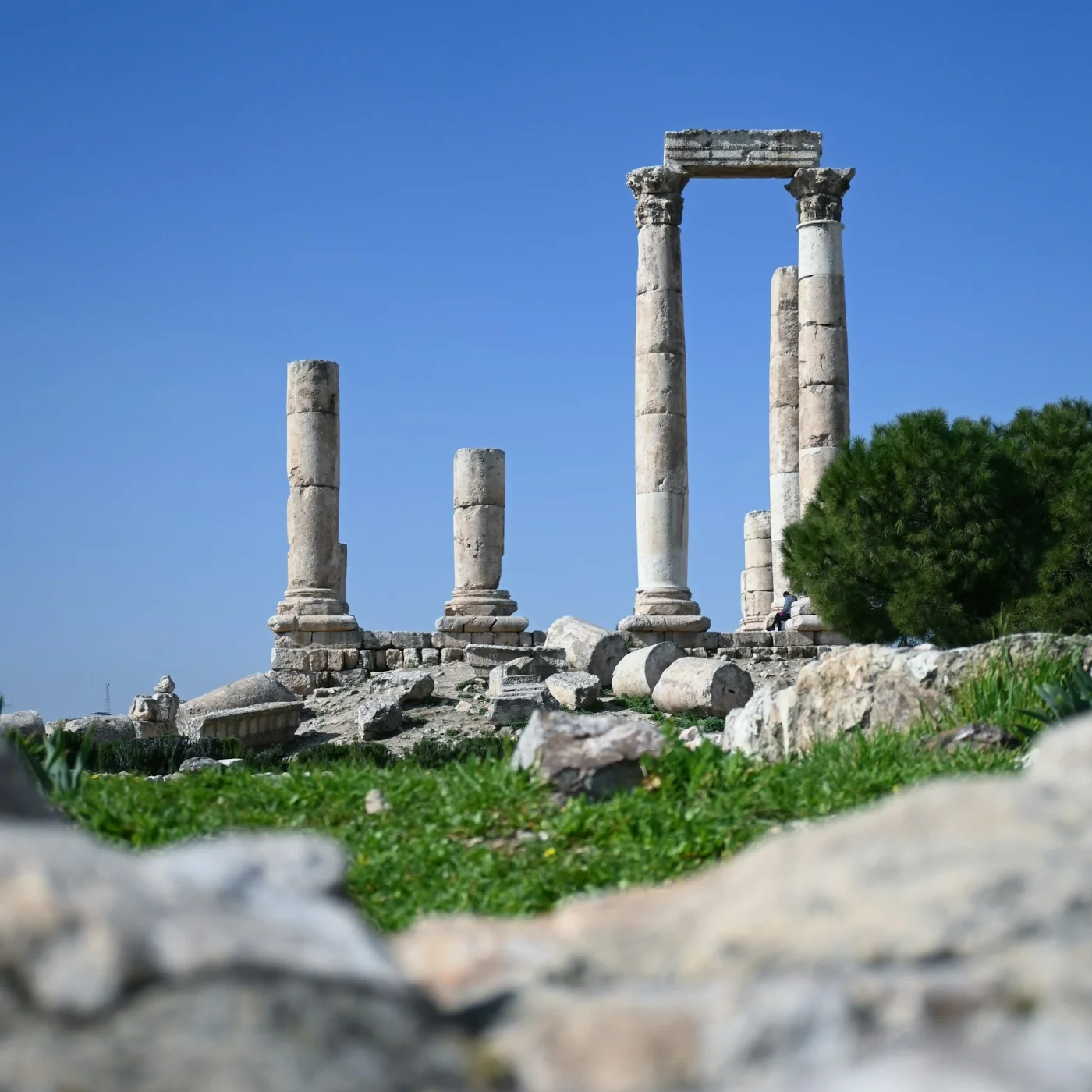
Amman was known in Greek and Roman times as Philadelphia, and the Citadel was its acropolis.
The giant marble hand near the Temple of Hercules suggests the original statue was about 12 metres tall.
Downtown, the Roman Theatre was built in the 2nd century AD and seats around 6,000 people.
Some of the world’s oldest human statues, from the prehistoric site of Ain Ghazal, are displayed at the Jordan Museum in Amman.
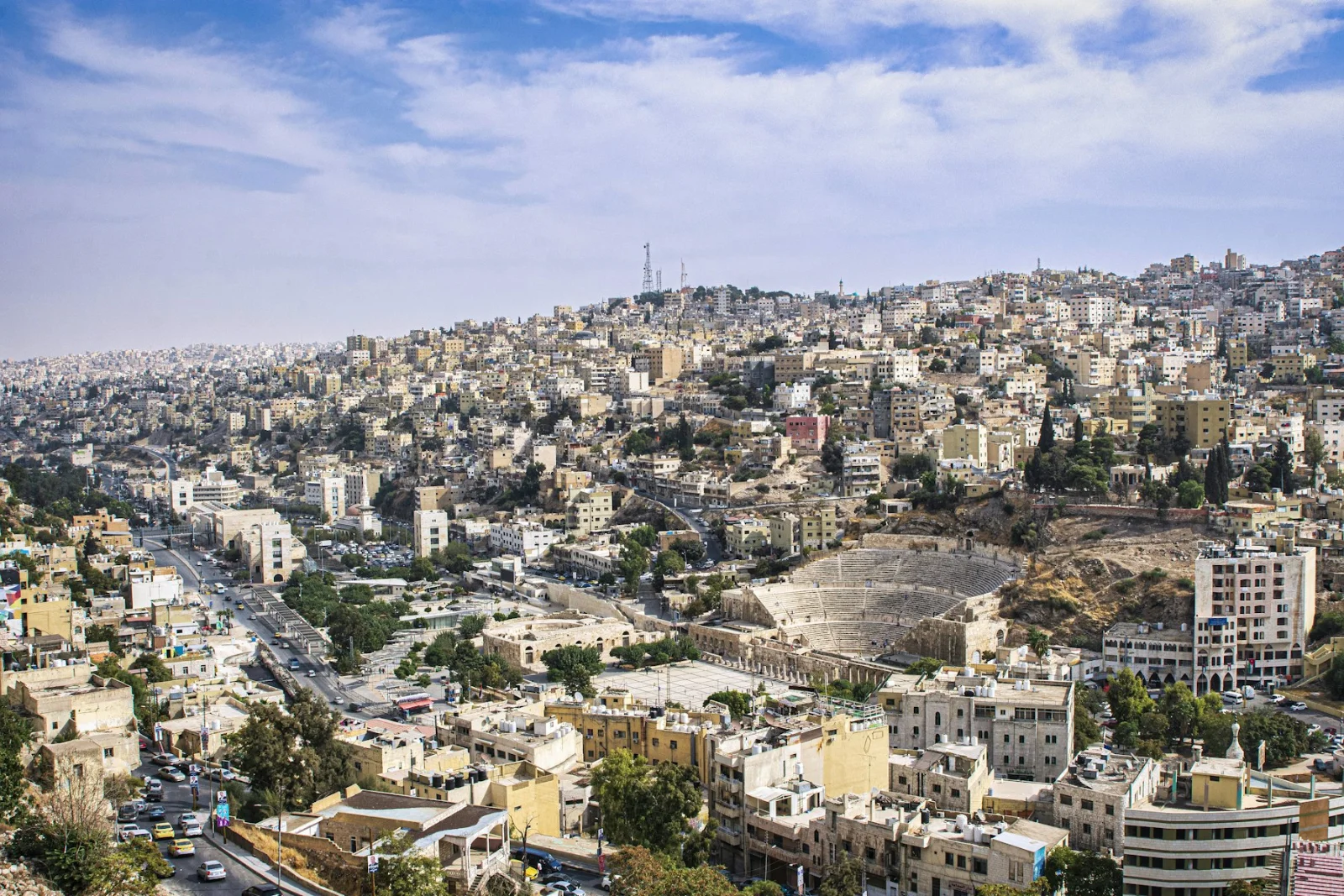
The late afternoon is the most beautiful time to visit, when the low sun warms the stone and the city lights begin to appear below. Spring and autumn bring the most pleasant weather.
The Citadel crowns Jabal al-Qal’a, the highest hill in central Amman, just above the downtown area. It is a short drive from most hotels, and a walk down the hill leads to the Roman Theatre and the souks. Many visitors combine it with a day trip to Jerash.
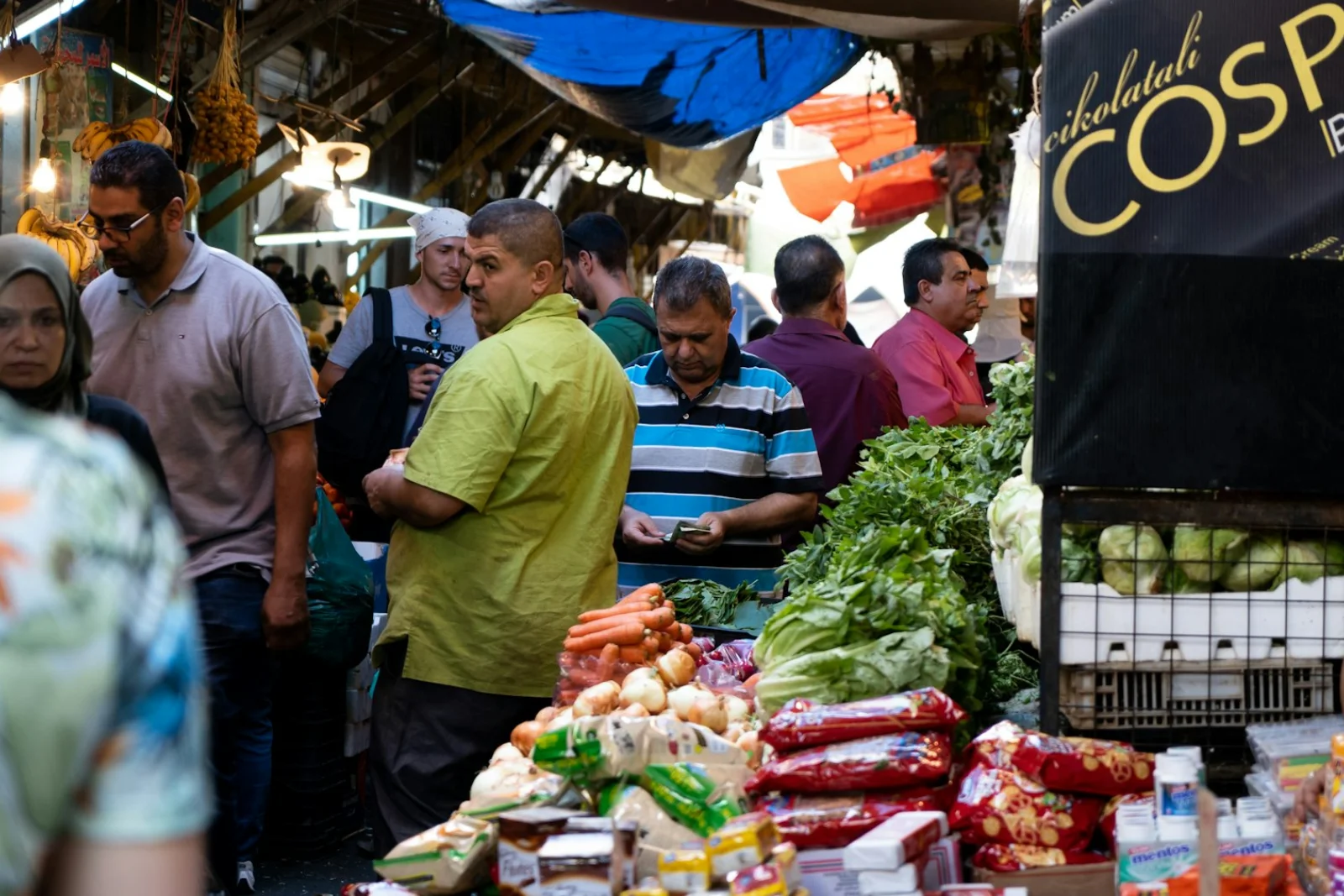
The Jordan Museum. In downtown Amman, the national museum displays the ’Ain Ghazal statues, around 9,000 years old and among the oldest large human figures ever made, as well as the famous Copper Scroll from the Dead Sea Scrolls.
Rainbow Street. A lively street of cafés, rooftop terraces and craft shops in the historic Jabal Amman district, especially pleasant in the evening.
Downtown souks. Wander through the gold souk, spice shops and fruit markets of the old centre, near the King Hussein Mosque.
Amman’s famous flavours. Try falafel and hummus at a classic downtown eatery and finish with warm kunafa, the beloved cheese pastry soaked in syrup.
Sunset on the hills. Amman is built on many hills, and the Citadel at golden hour, with the call to prayer echoing across the city, is a moment to remember. Day trips lead easily to Jerash and madaba-mount-nebo.
Allow 1–2 hours for the Citadel.
Late afternoon brings soft light and beautiful views as the city lights come on.
Comfortable shoes are a must on the uneven paths.
Combine Amman with a day trip to Jerash.
The Amman Citadel is included in these tours:
Classic Jordan – 7 Days Amman, Jerash, Petra & Wadi Rum — 7 Days / 6 Nights
Essential Jordan – 5 Days Amman, Madaba, Petra & Wadi Rum — 5 Days / 4 Nights

Round-the-clock 24/7 support from expert local guides and a professional customer care team, before and throughout your trip.


Copyright © 2026 Egyptista