
About 48 km north of Amman, in a green valley of the Gilead hills, lies Jerash, the ancient city of Gerasa. It is often described as one of the best-preserved Roman provincial cities in the world, with paved streets, temples, theatres and arches still standing.
Walking through Jerash gives you a vivid idea of daily life in a prosperous Roman city of the 2nd century AD.
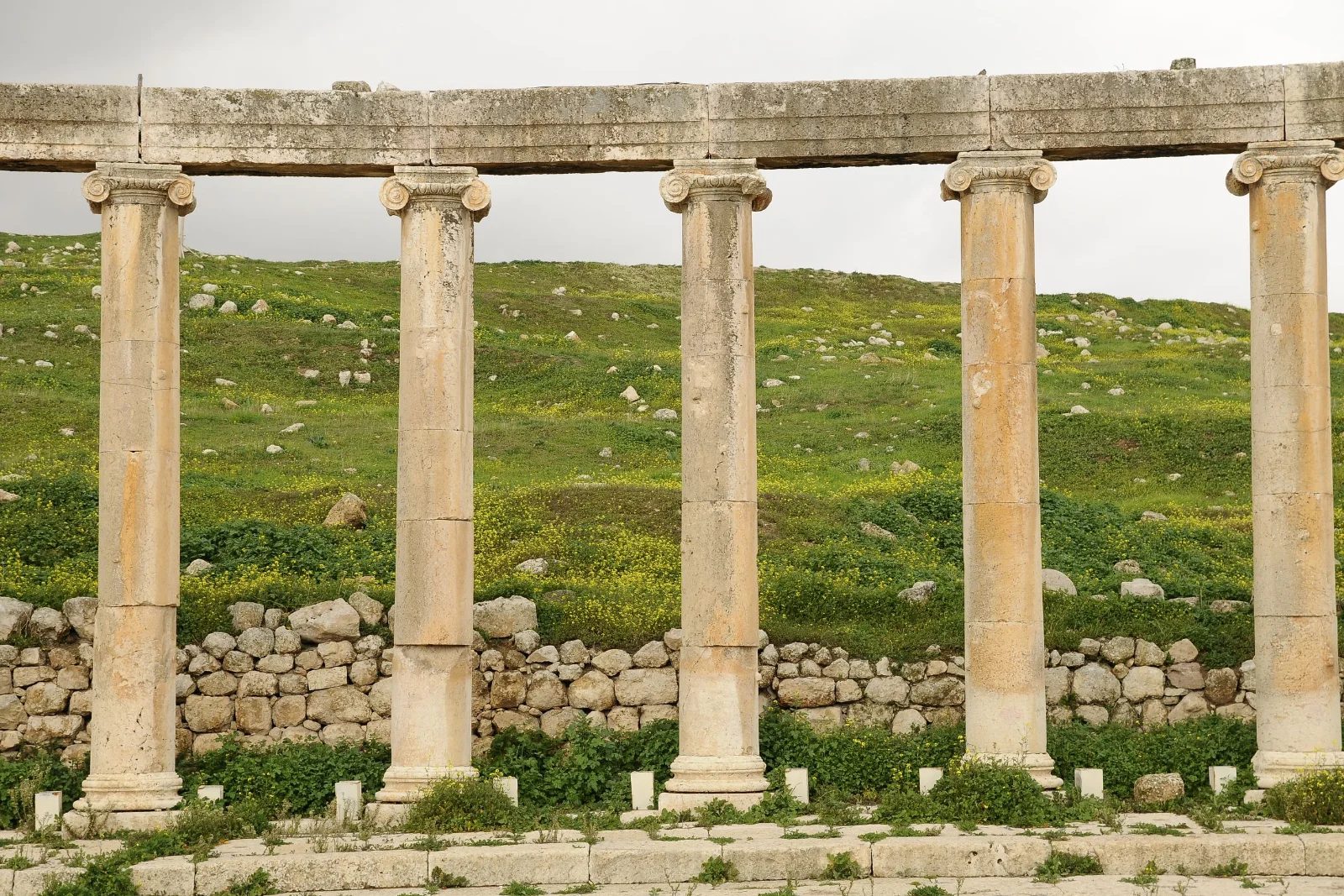
People lived at Jerash long before the Romans, but the city flourished after the region came under Roman rule in 63 BC. It became one of the cities of the Decapolis, a league of Greco-Roman cities in the area, and grew rich from trade and farming.
Jerash continued into the Byzantine period, when many churches were built. A powerful earthquake in 749 AD destroyed much of the city, and sand and soil later buried and protected its ruins until excavations began in the 20th century.
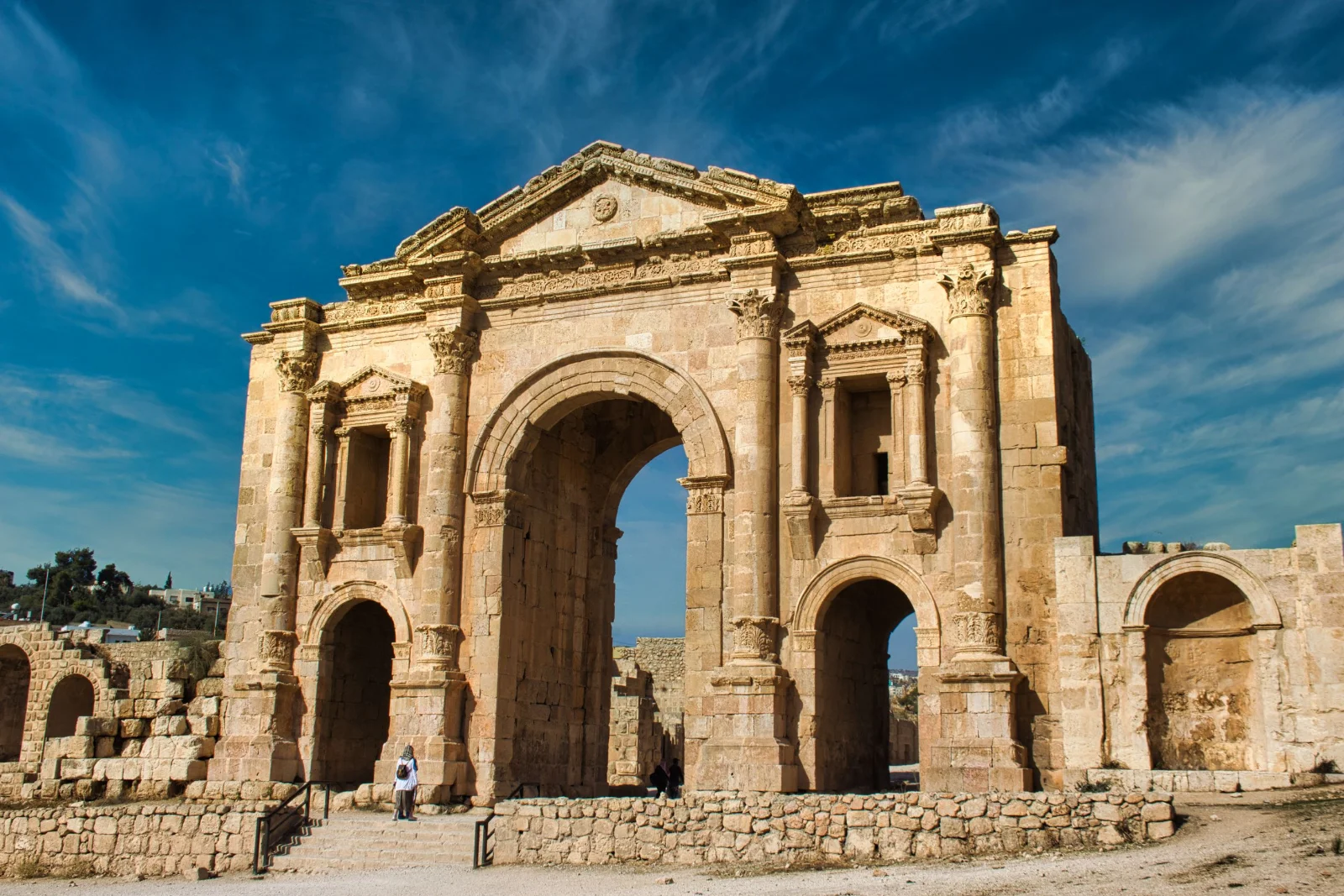
Visitors enter through Hadrian’s Arch, built to celebrate the visit of Emperor Hadrian in 129 AD. Just beyond it is the Hippodrome, an arena where chariot races and games once entertained thousands of spectators.
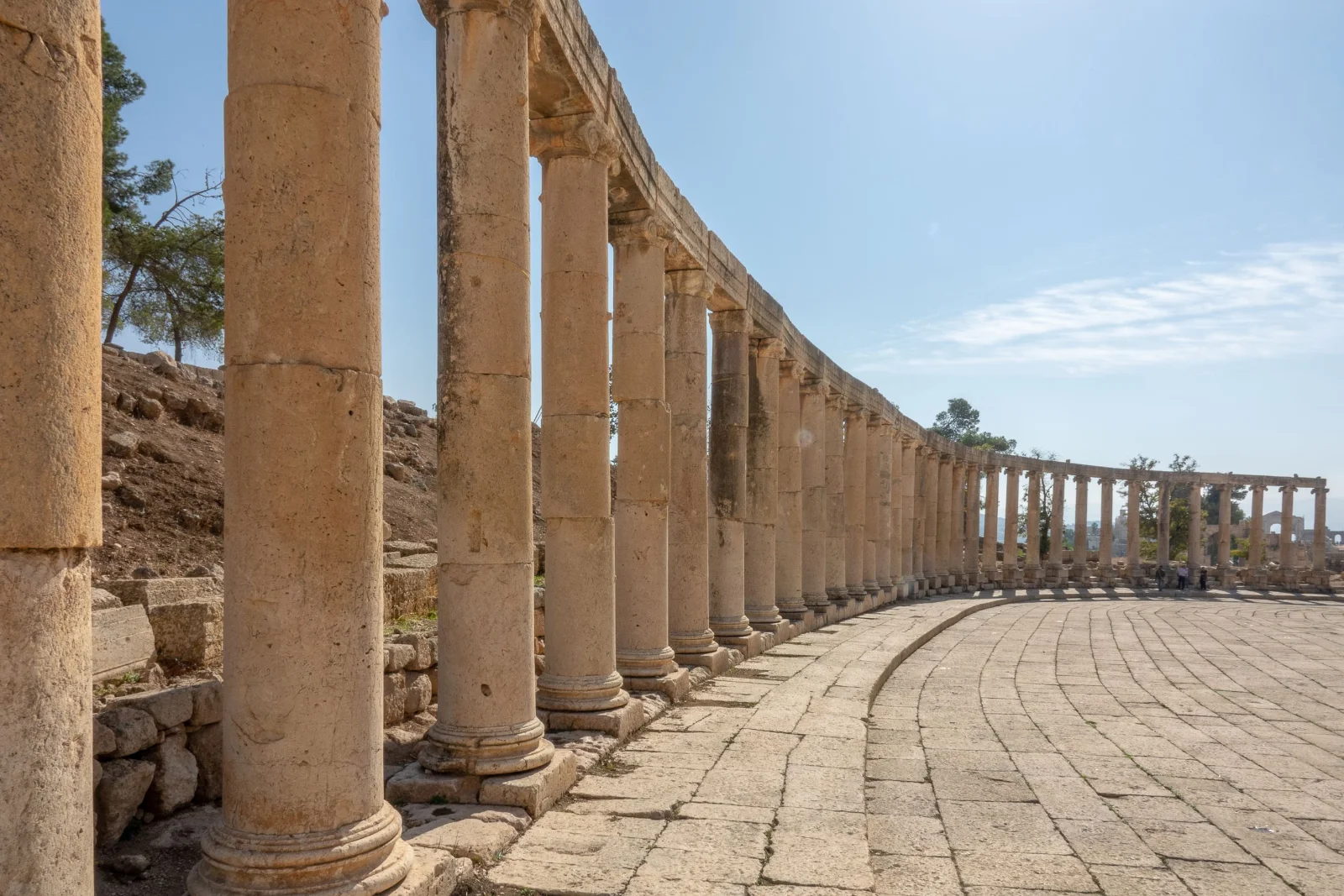
The unusual Oval Plaza, surrounded by Ionic columns, is the most photographed spot in Jerash. From here the Cardo, the main street, runs north for about 800 metres, still paved with its original stones; look for the grooves worn by chariot wheels.
Along the Cardo you will pass shops, a beautifully carved public fountain called the Nymphaeum, and crossroads marked by four-sided monuments.
Temple of Artemis: dedicated to the city’s patron goddess, its tall Corinthian columns still dominate the skyline.
Temple of Zeus: on a hill overlooking the Oval Plaza.
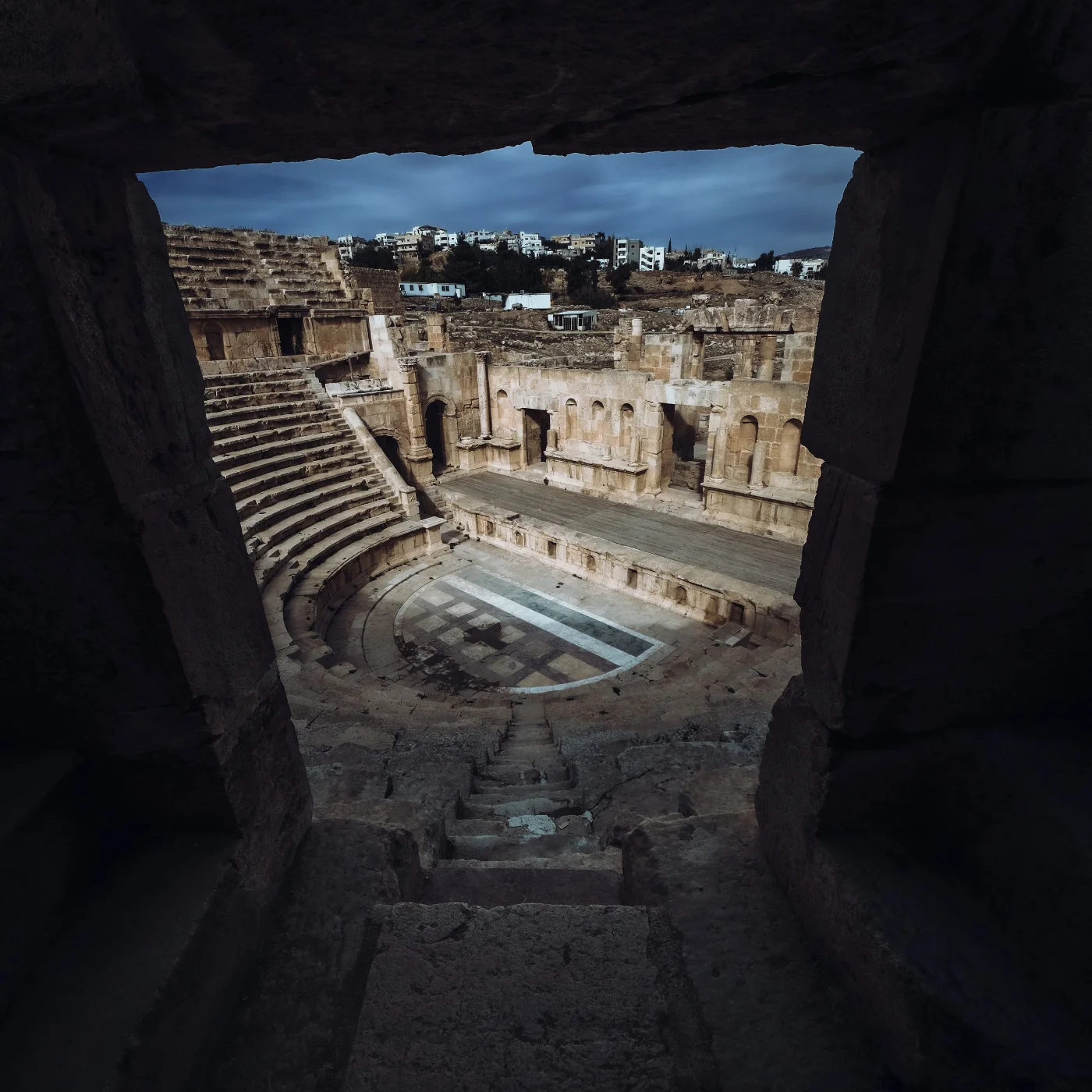
South Theatre: a large theatre with excellent acoustics; stand in the centre of the stage and speak to hear the effect.
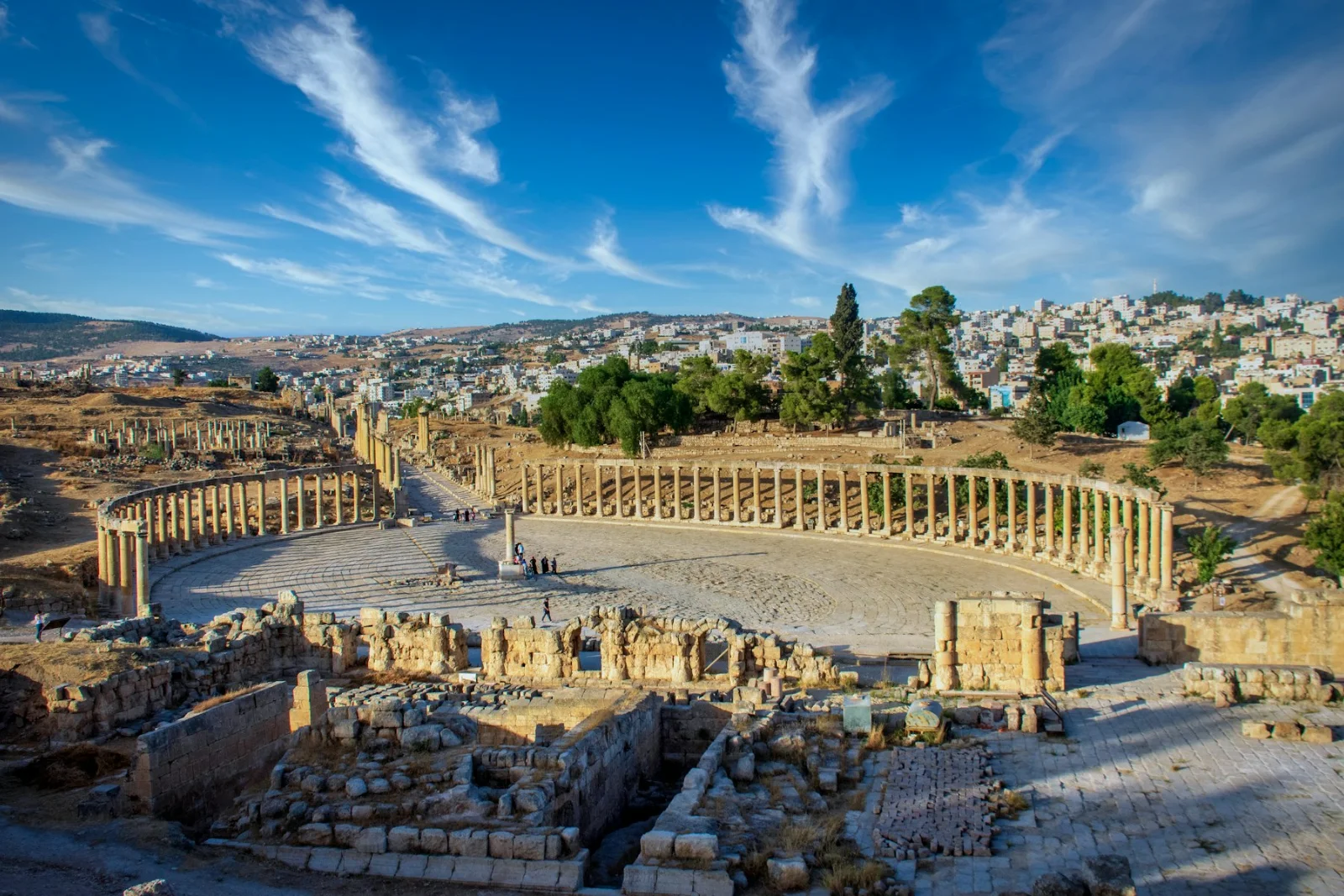
The Oval Plaza is surrounded by 56 Ionic columns, and its unusual shape makes it one of the most recognisable sights in the Roman world.
In the Temple of Artemis, guides like to show how a spoon placed at the base of a column gently moves as the column sways in the wind.
The Hippodrome once seated thousands of spectators for chariot races.
The Jerash Festival, held since 1981, brings music, dance and theatre back to the ancient stages.
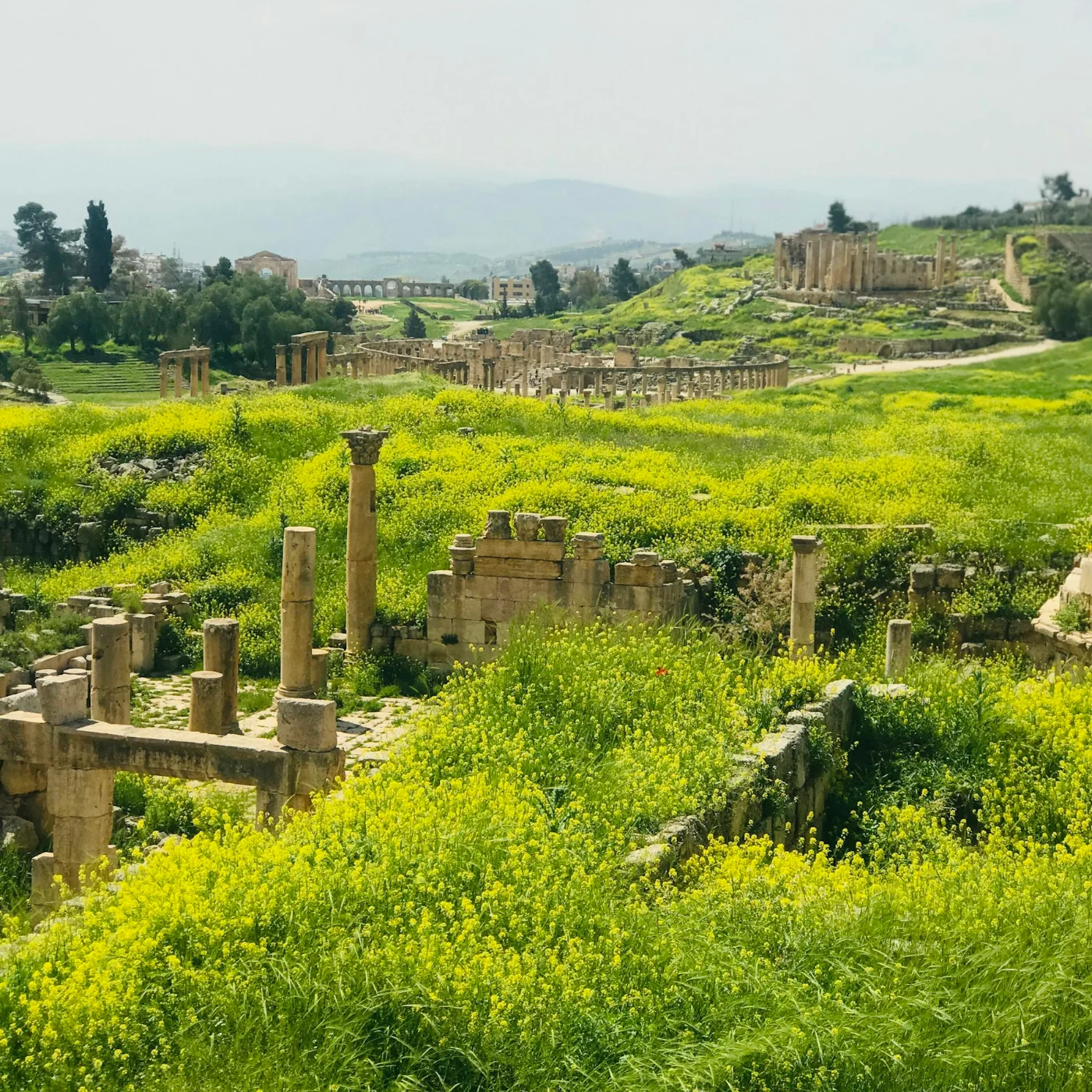
Spring is especially beautiful, when wildflowers bloom among the ruins, and autumn offers mild, sunny days. Arrive in the morning to enjoy the site in soft light and comfortable temperatures.
Jerash lies about 48 km north of Amman, around an hour’s drive through green hills. It is often combined with Ajloun Castle and Umm Qais on a day trip to northern Jordan, or with a visit to the Amman Citadel.
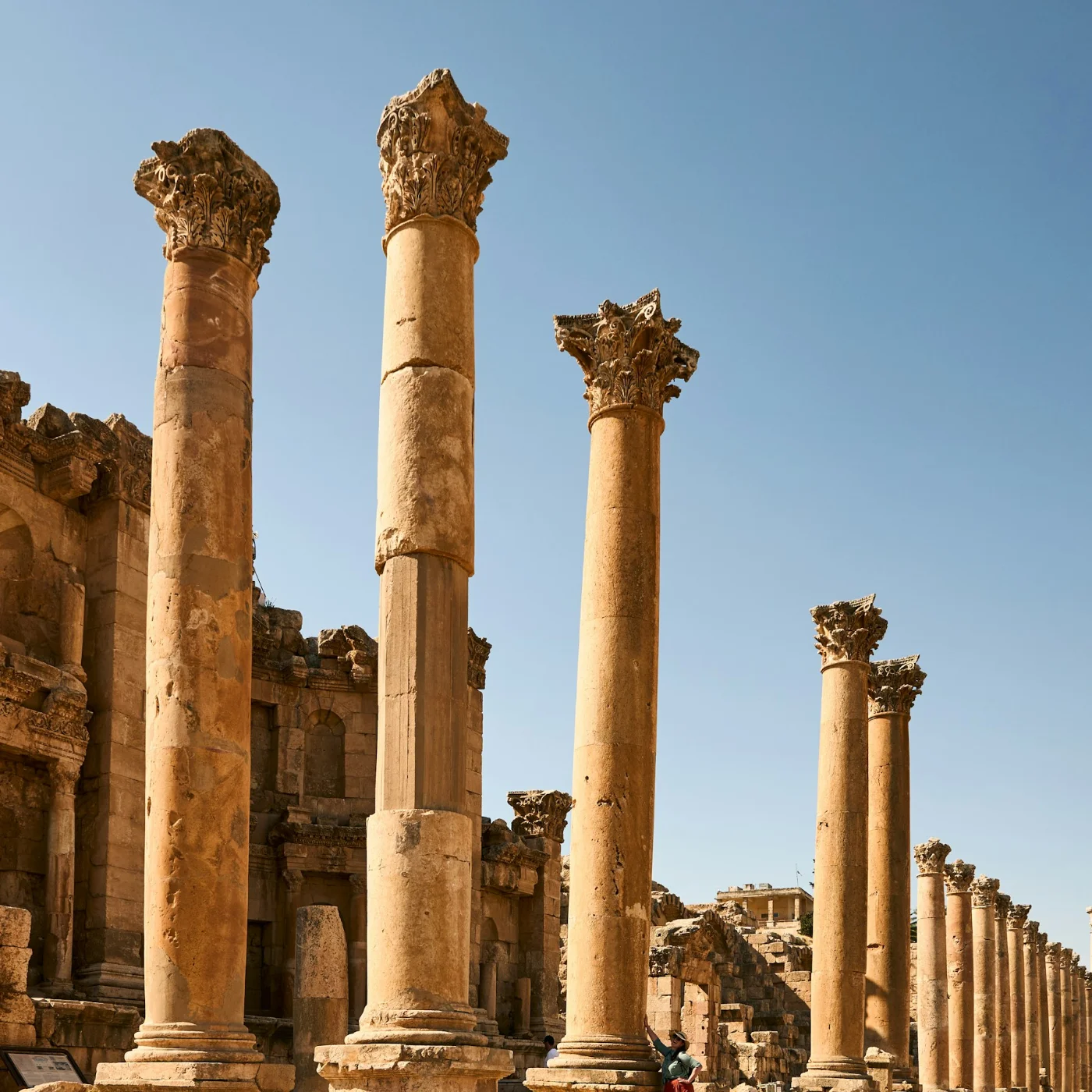
The Temple of Artemis. The goddess was the patron of ancient Gerasa. Her temple’s tall Corinthian columns still stand, and one is said to sway slightly in the wind: place a spoon at its base and watch it move.
The South Theatre’s acoustic spot. Stand on the marked stone at the centre of the stage and speak normally: your voice carries clearly to the top rows. Musicians in traditional dress often play bagpipes here.
The Nymphaeum. This ornate public fountain was decorated with marble and lion-head spouts that once poured water into a large basin.
Chariot ruts. Look down as you walk the Cardo Maximus: the paving stones still show grooves cut by Roman chariot wheels.
The Jerash Festival. Every summer, the ancient theatres come alive with music, dance and poetry during the famous Jerash Festival of Culture and Arts. From here it is easy to continue to the the Amman Citadel.
Allow 2–3 hours; the site is large and best explored on foot.
Spring and autumn are the most pleasant seasons; in summer, visit early in the morning.
In summer the Jerash Festival brings music and performances to the ancient theatres.
Jerash combines well with the Amman Citadel in Amman.
Jerash is included in these tours:
Classic Jordan – 7 Days Amman, Jerash, Petra & Wadi Rum — 7 Days / 6 Nights
Pharaohs & Petra – 10 Days Egypt & Jordan with Nile Cruise — 10 Days / 9 Nights
Nile & Jordan Grand Journey – 12 Days Cairo, Nile Cruise, Petra & Dead Sea — 12 Days / 11 Nights
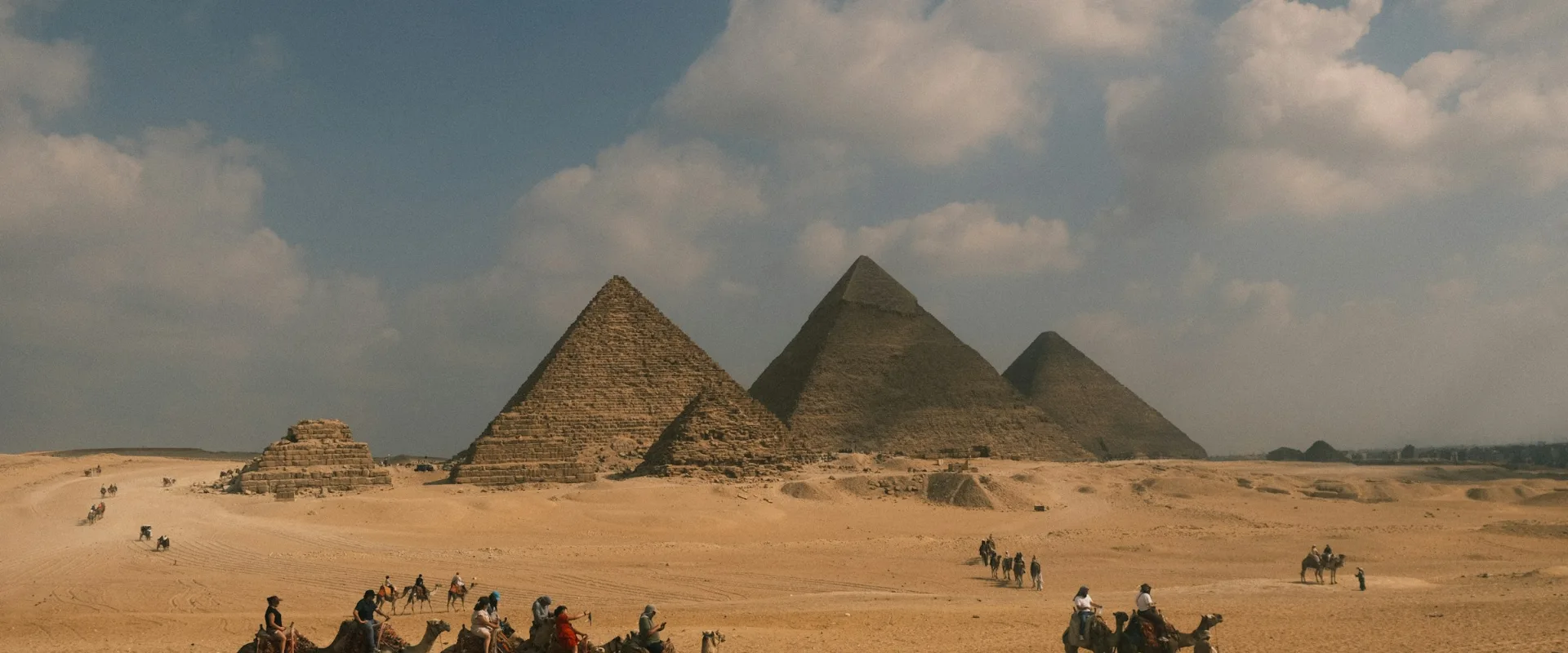

Round-the-clock 24/7 support from expert local guides and a professional customer care team, before and throughout your trip.


Copyright © 2026 Egyptista