South-west of Amman, on the ancient King’s Highway, the town of Madaba is known as the City of Mosaics. Just 10 km away rises Mount Nebo, one of the most important sites in the Bible, where Moses is said to have viewed the Promised Land before his death.
The two sites are usually visited together and make a perfect stop on the way from Amman to the Dead Sea or Petra.
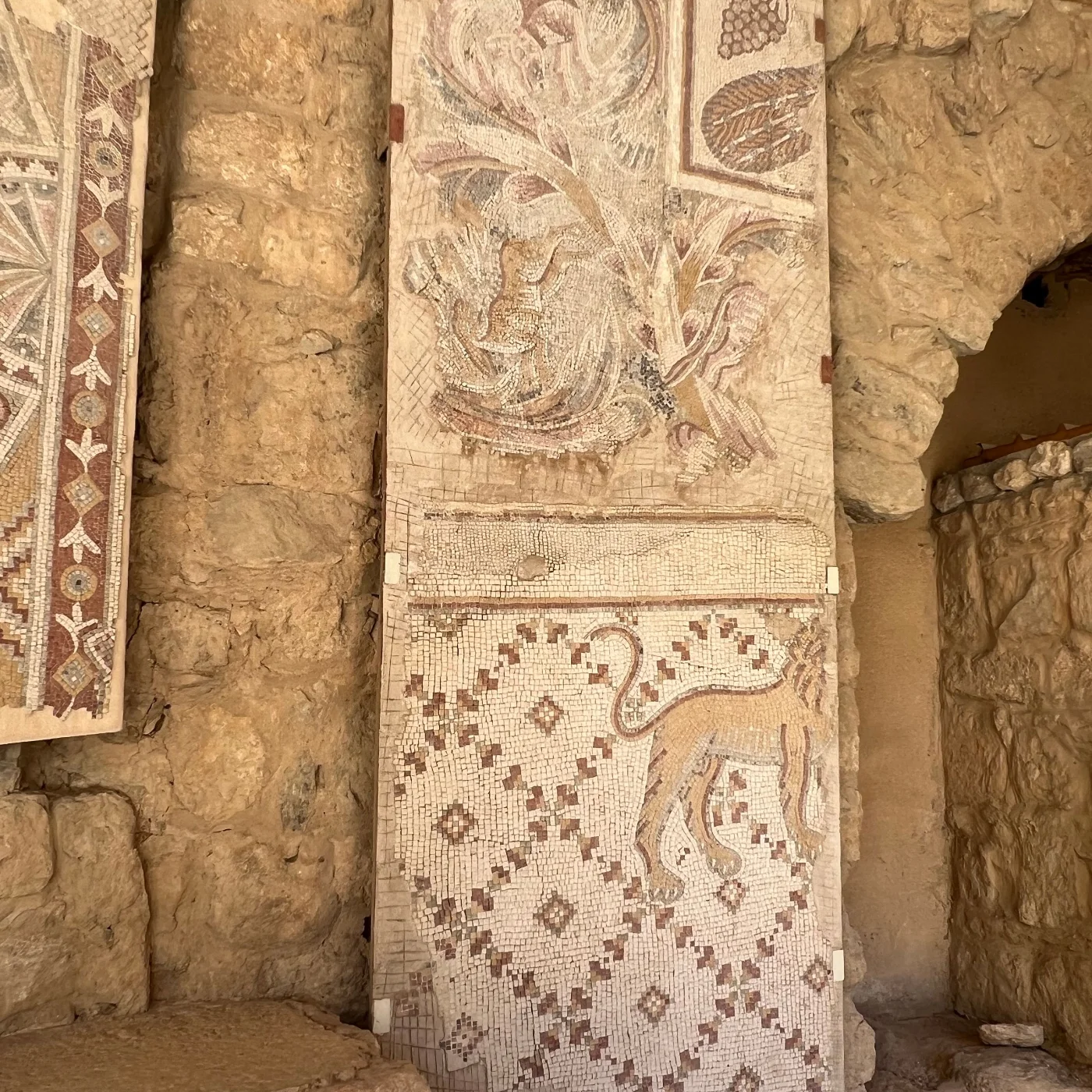
Madaba was an important town in Roman and Byzantine times, when its churches and houses were decorated with richly detailed mosaic floors. Many of these mosaics were rediscovered from the late 19th century, when Christian families resettled the town and began building on its ancient ruins.
Today Madaba is still a centre of mosaic craftsmanship, and workshops around town keep the tradition alive.
The town’s greatest treasure lies on the floor of the Greek Orthodox Church of St George. The Madaba Map, made in the 6th century AD, is the oldest surviving map of the Holy Land.
Although only part of it survives, it shows the Jordan River, the Dead Sea with fishing boats, Nile Delta towns and a detailed plan of Jerusalem with its walls, gates and churches.
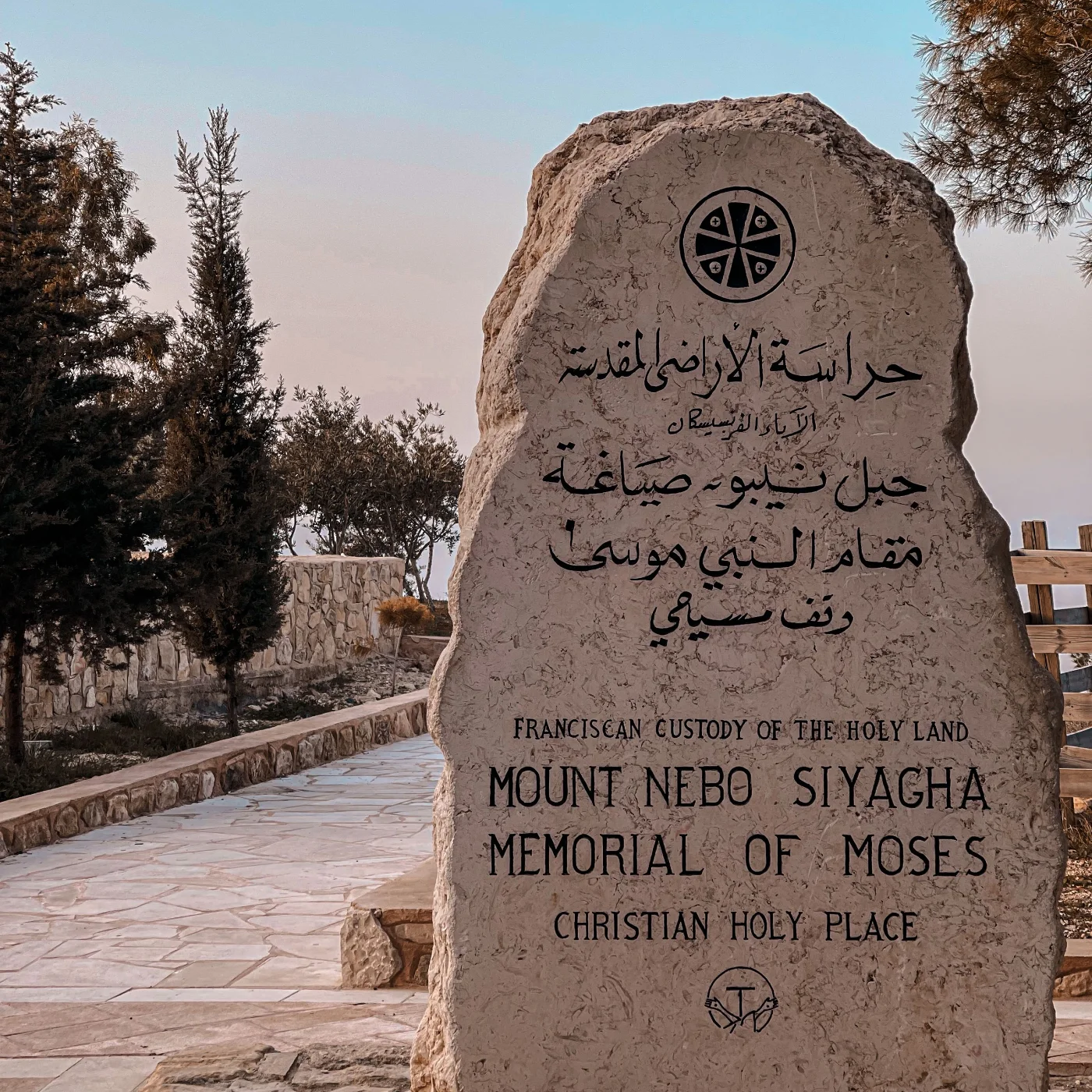
According to the Book of Deuteronomy, Moses climbed Mount Nebo to see the land he would not enter, and tradition places his death here. Early Christians built a church on the summit, and today the Memorial Church of Moses protects beautiful Byzantine mosaics of hunting scenes and animals.
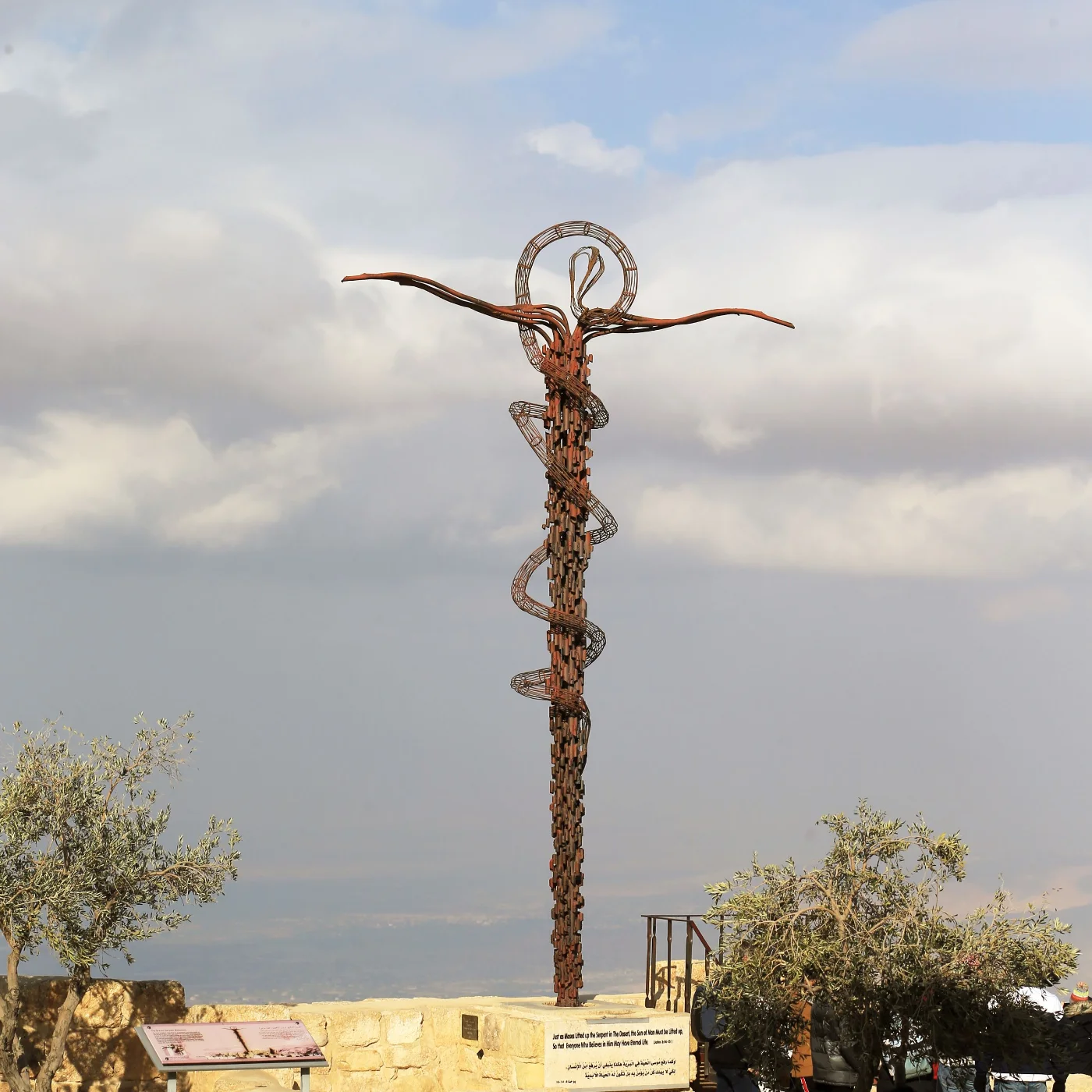
Outside, the Brazen Serpent sculpture recalls the bronze serpent that Moses raised in the desert and the cross of Jesus.
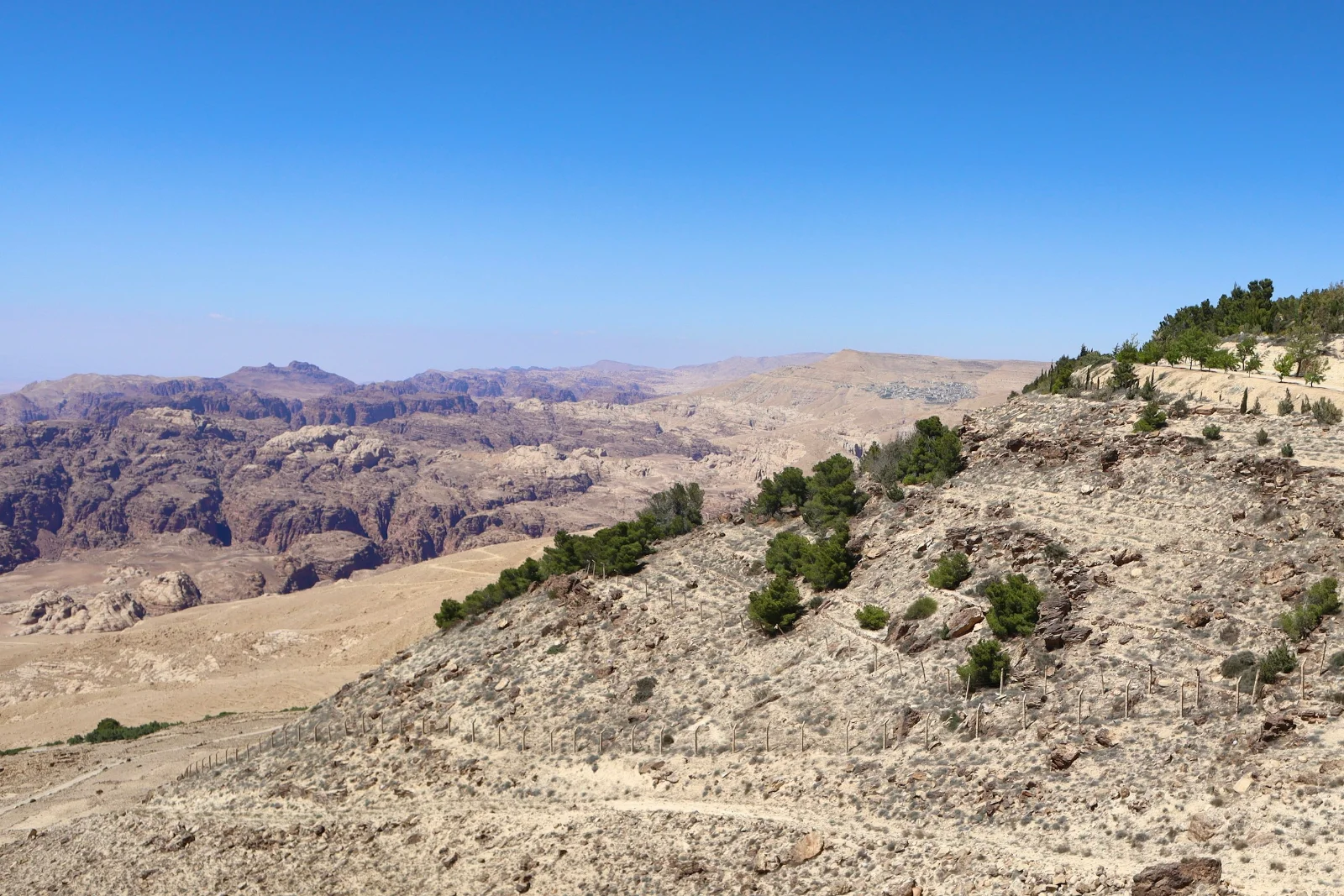
From the viewing terrace, the land falls away towards the Jordan Valley and the Dead Sea. On a clear day you can see Jericho and even the outline of Jerusalem on the horizon. Signs on the terrace point out distances to places in the Holy Land.
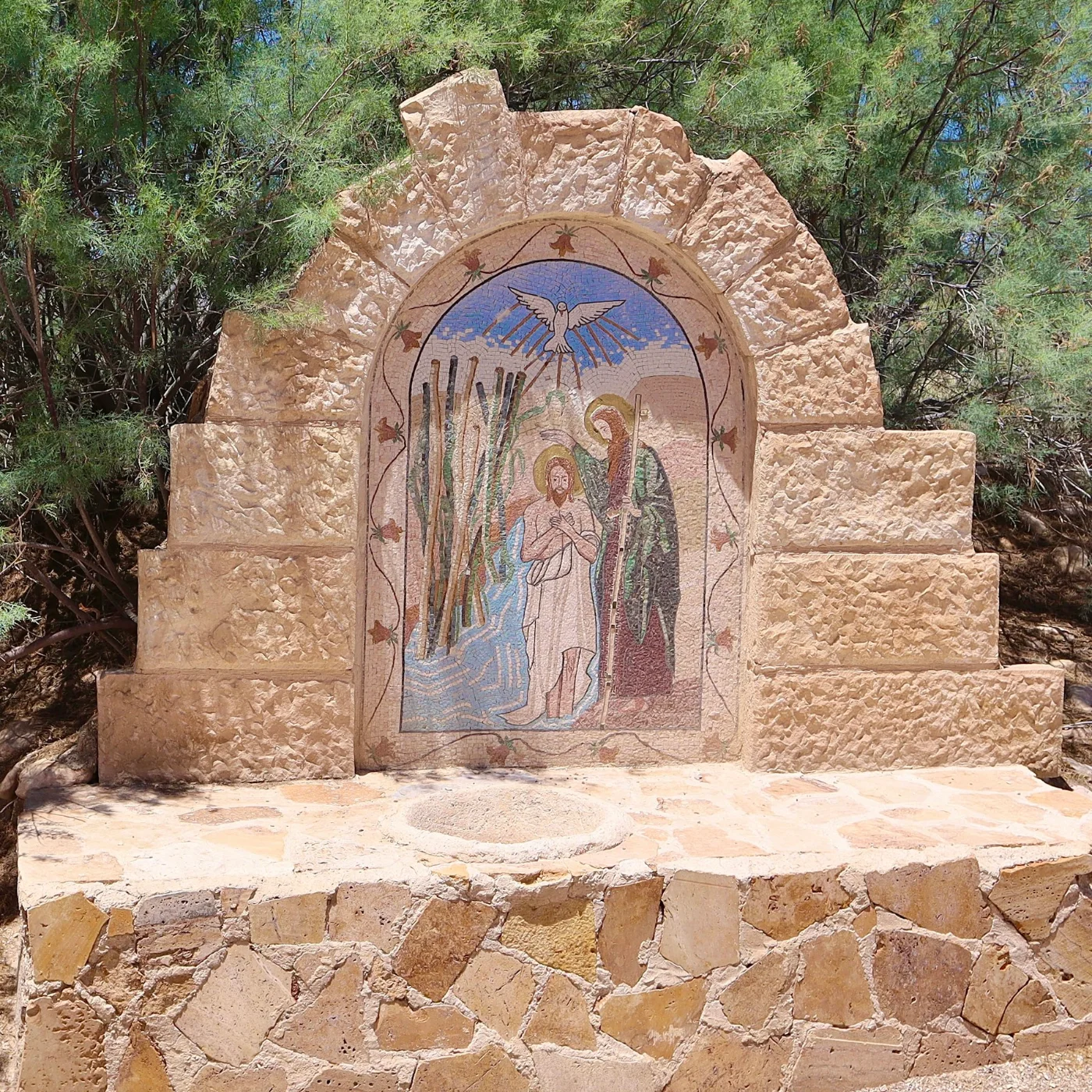
The Madaba Map was rediscovered in 1884, during the construction of a new church on the site of an older Byzantine one.
It was originally made of around two million tiny stone tesserae.
Pope John Paul II visited Mount Nebo in 2000, and Pope Benedict XVI in 2009.
Mount Nebo has been cared for by the Franciscans since the 1930s, who excavated and restored its mosaics.
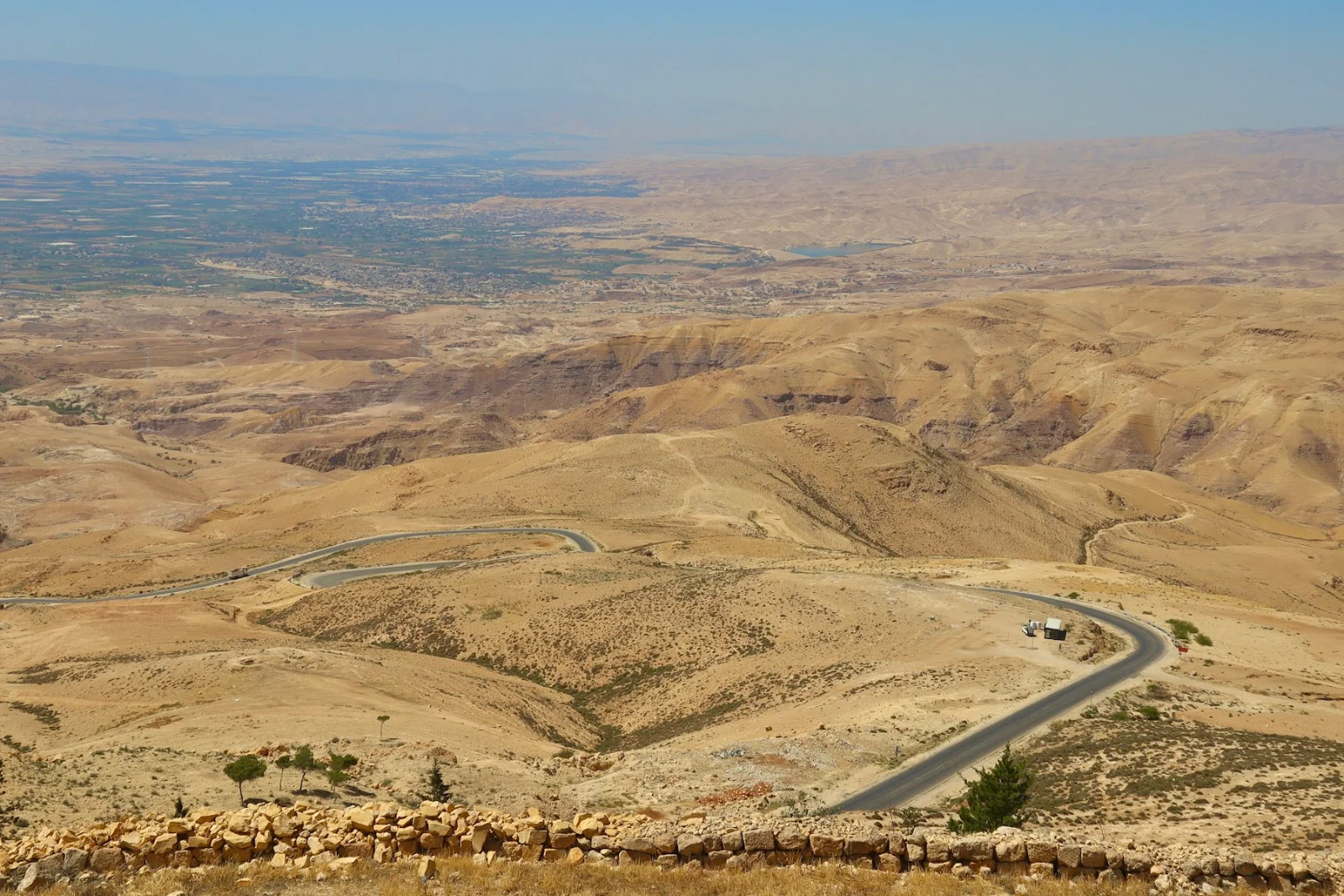
The morning usually offers the clearest views from Mount Nebo over the Jordan Valley and the Dead Sea. Spring and autumn are the most pleasant seasons for visiting both Madaba and the mountain.
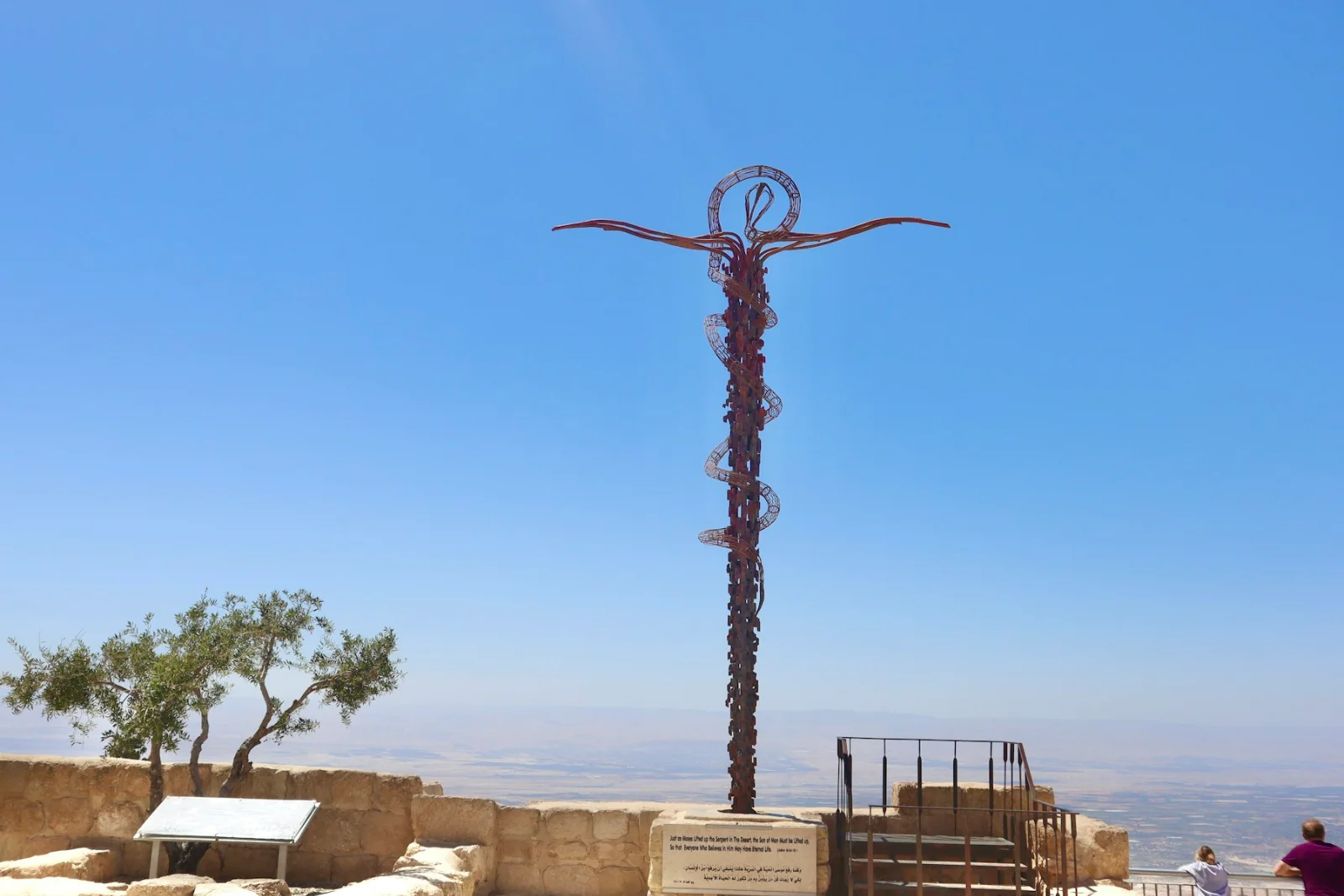
The Serpentine Cross. On the summit of Mount Nebo stands a bronze sculpture by Italian artist Giovanni Fantoni, combining the bronze serpent raised by Moses with the cross of Jesus.
The Memorial Church mosaics. Inside the church, beautifully restored Byzantine mosaics show hunters, shepherds, animals and vines in rich detail.
A papal visit. Pope John Paul II visited Mount Nebo in 2000, and a stone monument recalls his pilgrimage.
Madaba Archaeological Park. In the town, this open-air park protects more Byzantine mosaics and a Roman road, just a short walk from St George’s Church.
The mosaic workshops. Madaba keeps the mosaic tradition alive. In local workshops you can watch artisans set tiny stones by hand and take home a piece of this ancient art. Continue down to the Dead Sea.
Madaba and Mount Nebo are included in these tours:
Classic Jordan – 7 Days Amman, Jerash, Petra & Wadi Rum — 7 Days / 6 Nights
Essential Jordan – 5 Days Amman, Madaba, Petra & Wadi Rum — 5 Days / 4 Nights
Egypt & Jordan Highlights – 7 Days Cairo, Petra & the Dead Sea — 7 Days / 6 Nights

Round-the-clock 24/7 support from expert local guides and a professional customer care team, before and throughout your trip.


Copyright © 2026 Egyptista