
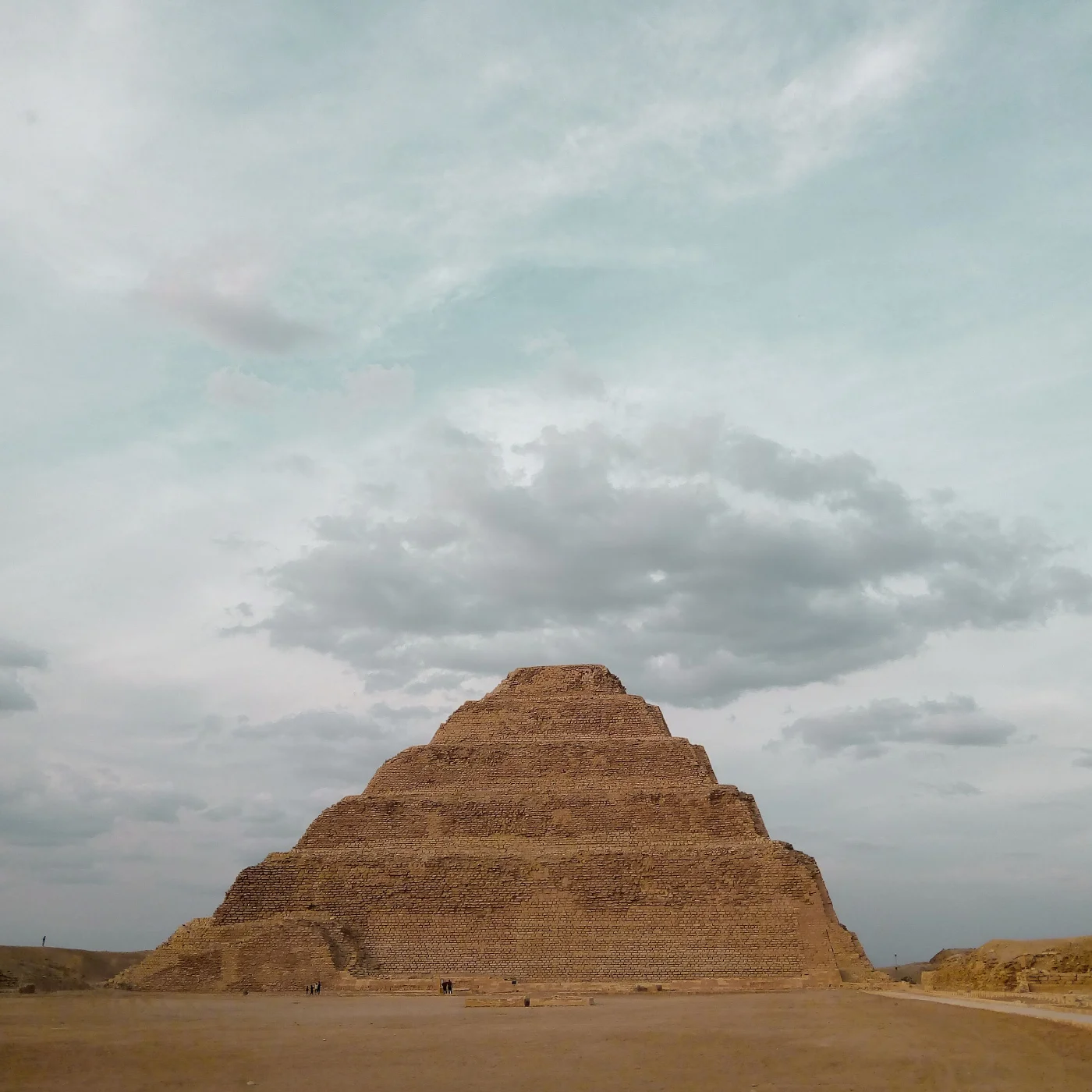
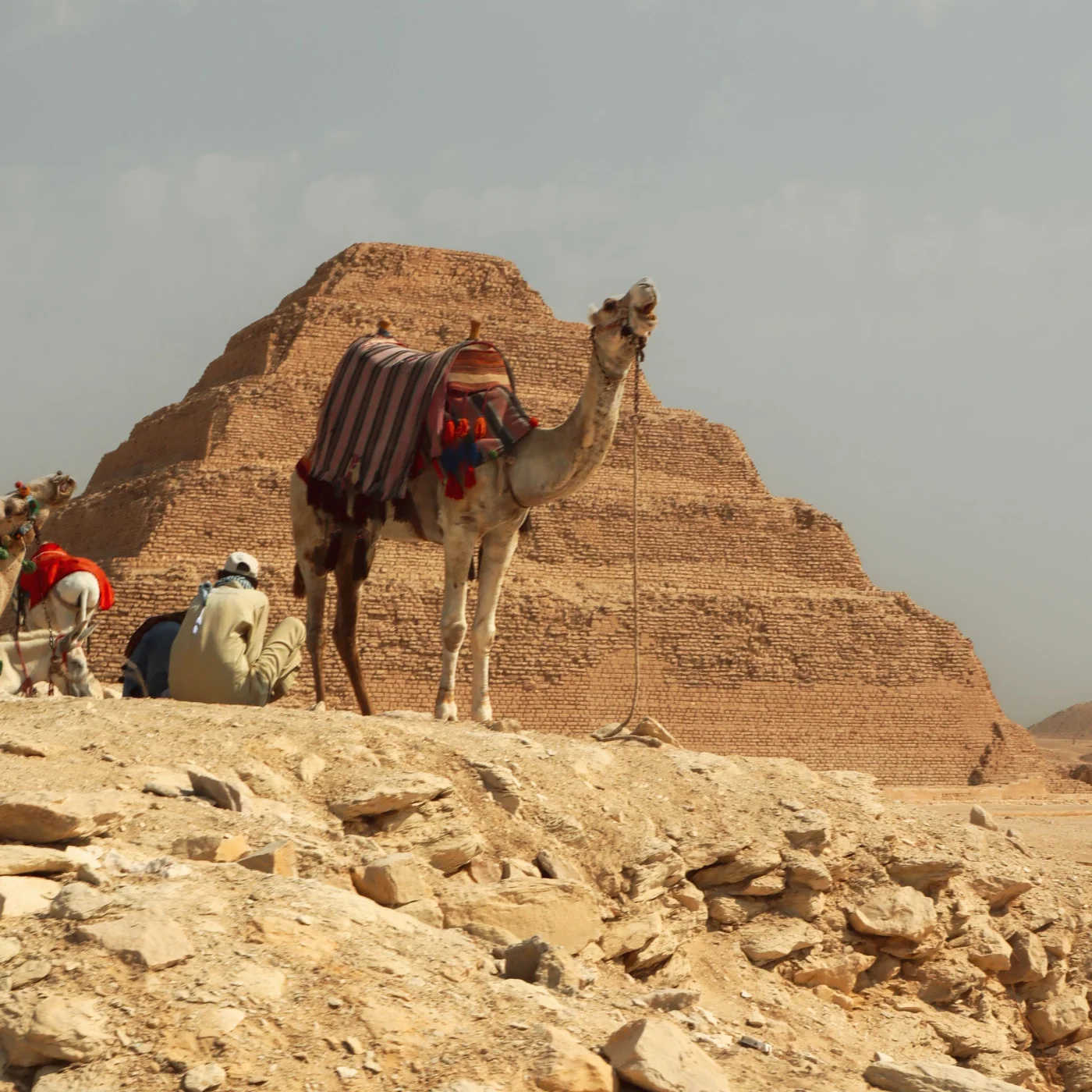
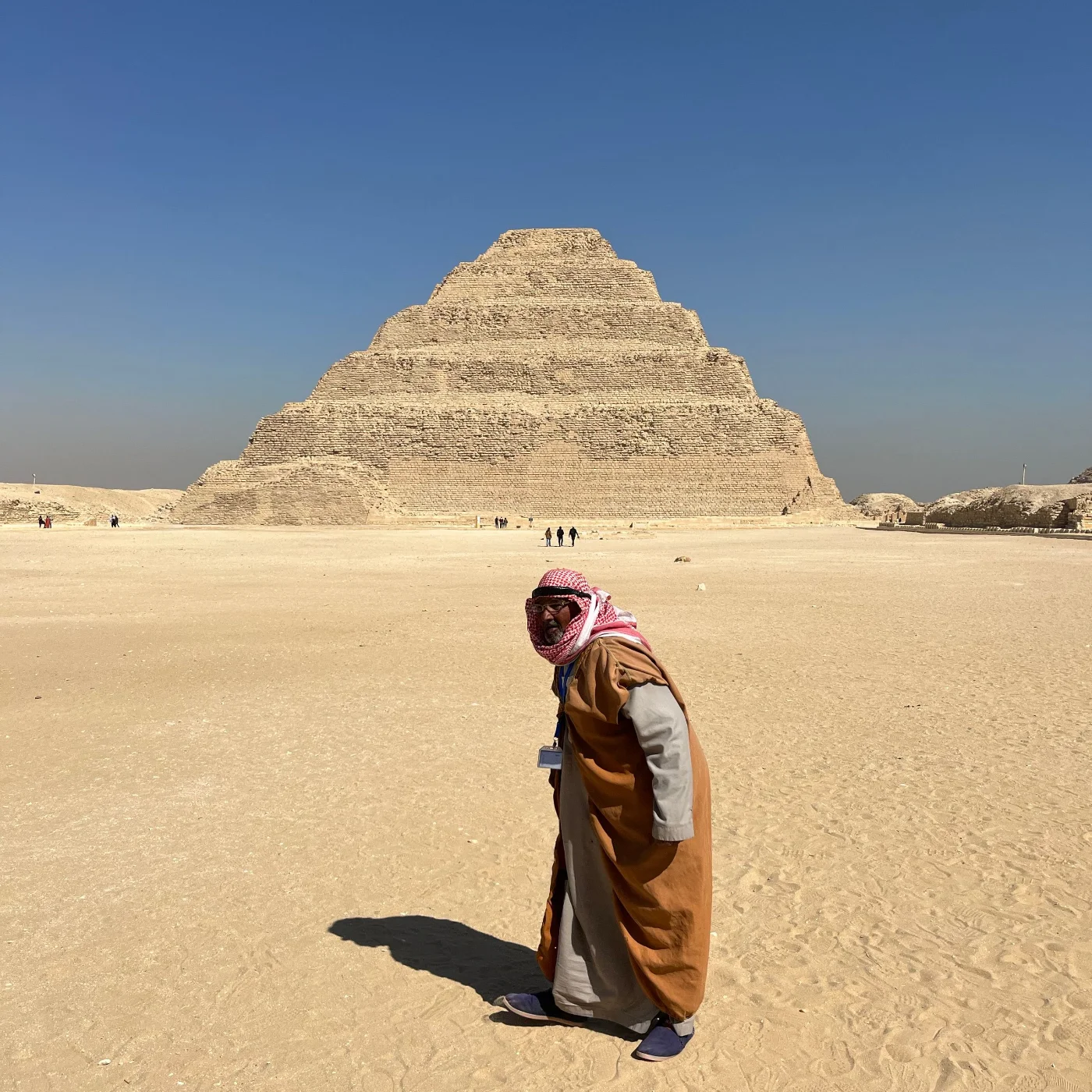
About 30 km south of central Cairo, the desert plateau of Saqqara served as the main burial ground of Memphis, Egypt’s first capital, for more than 3,000 years. Its most famous monument is the Step Pyramid of Djoser, built around 2650 BC, which is considered the oldest large-scale stone building in the world.
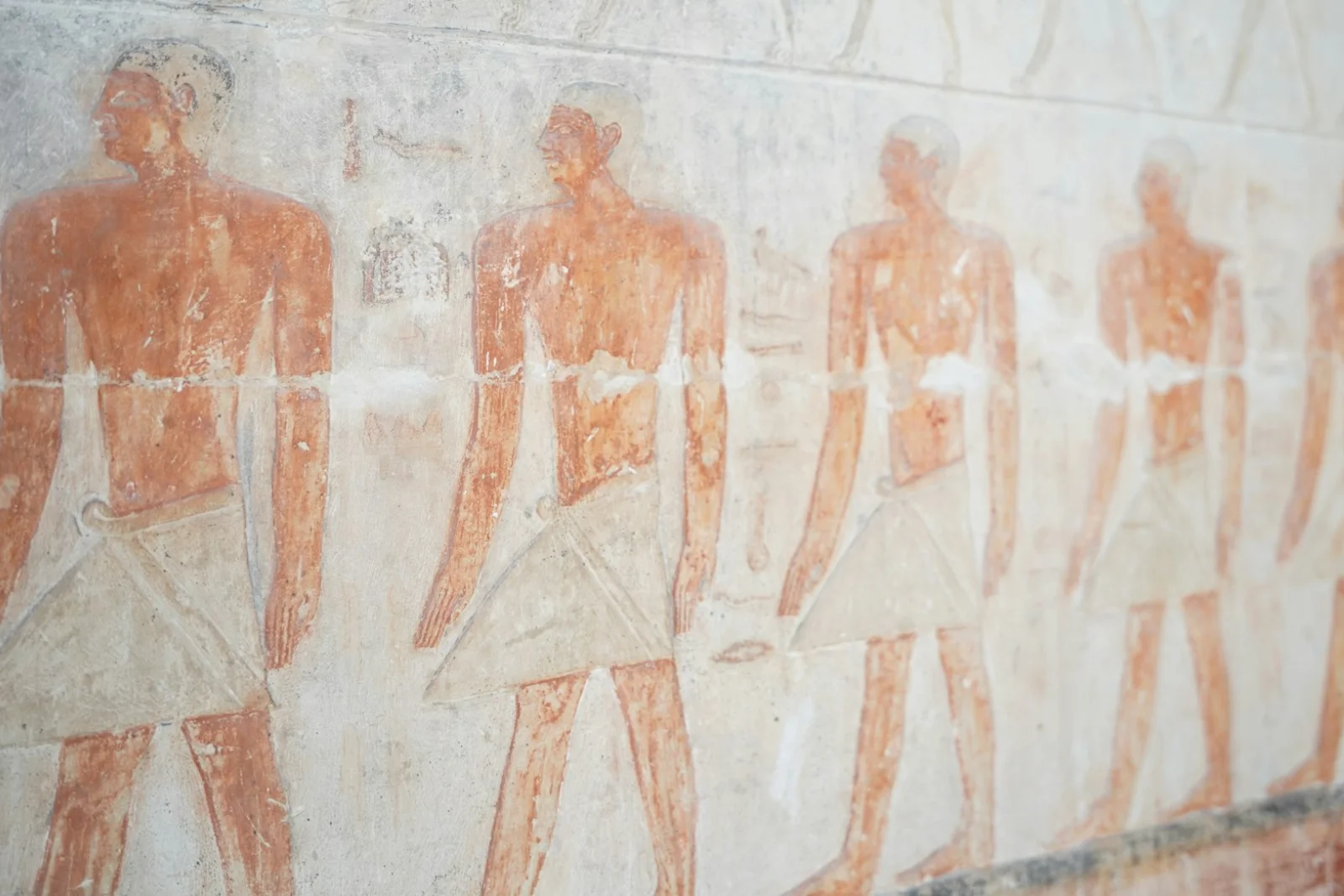
Saqqara is quieter than Giza, and its tombs contain some of the finest reliefs of daily life in ancient Egypt.
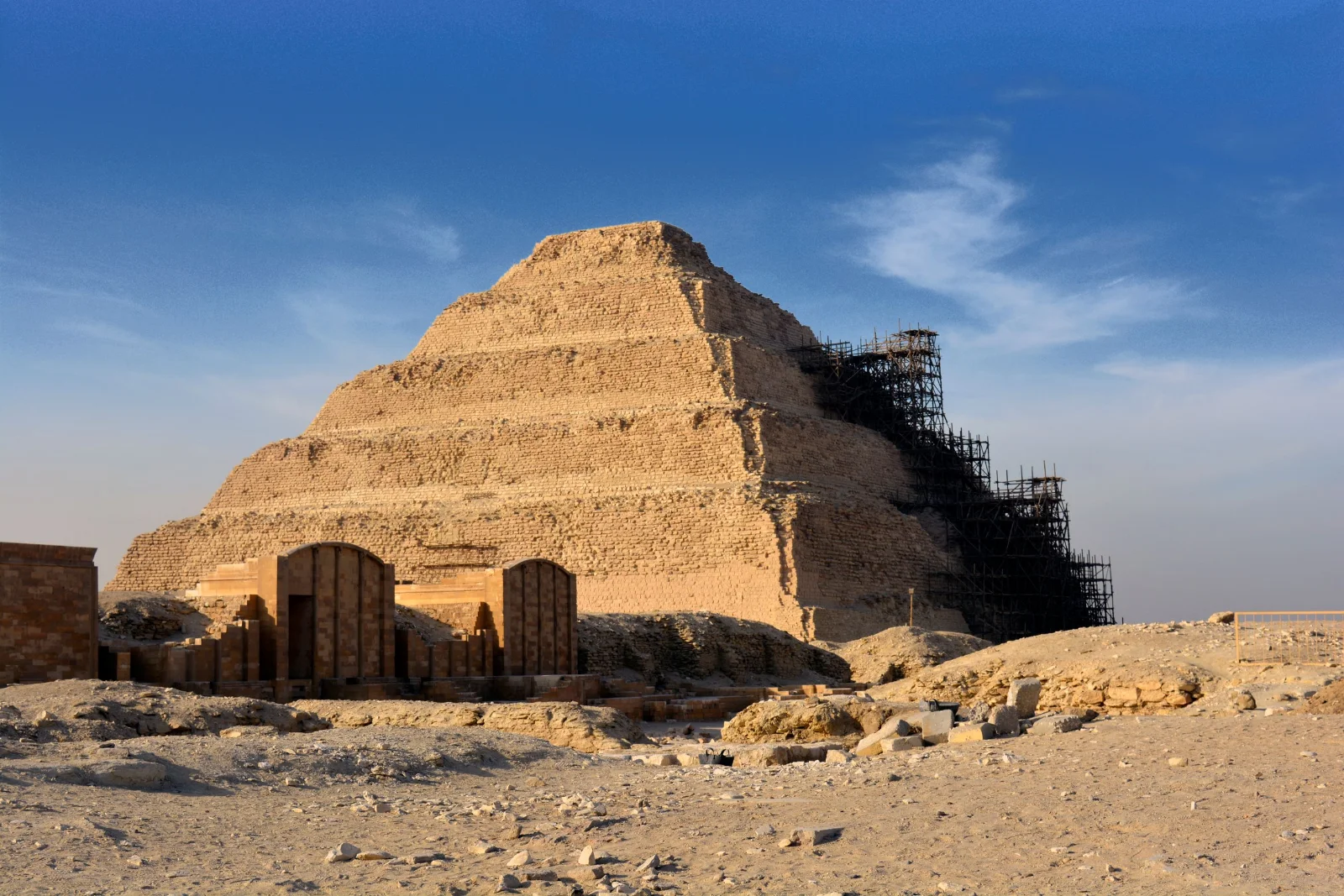
King Djoser of the 3rd Dynasty entrusted his tomb to his architect Imhotep, who was later honoured as a god of wisdom and medicine. Instead of a single flat mastaba tomb, Imhotep stacked six layers on top of each other, creating a stepped pyramid about 60 metres high.
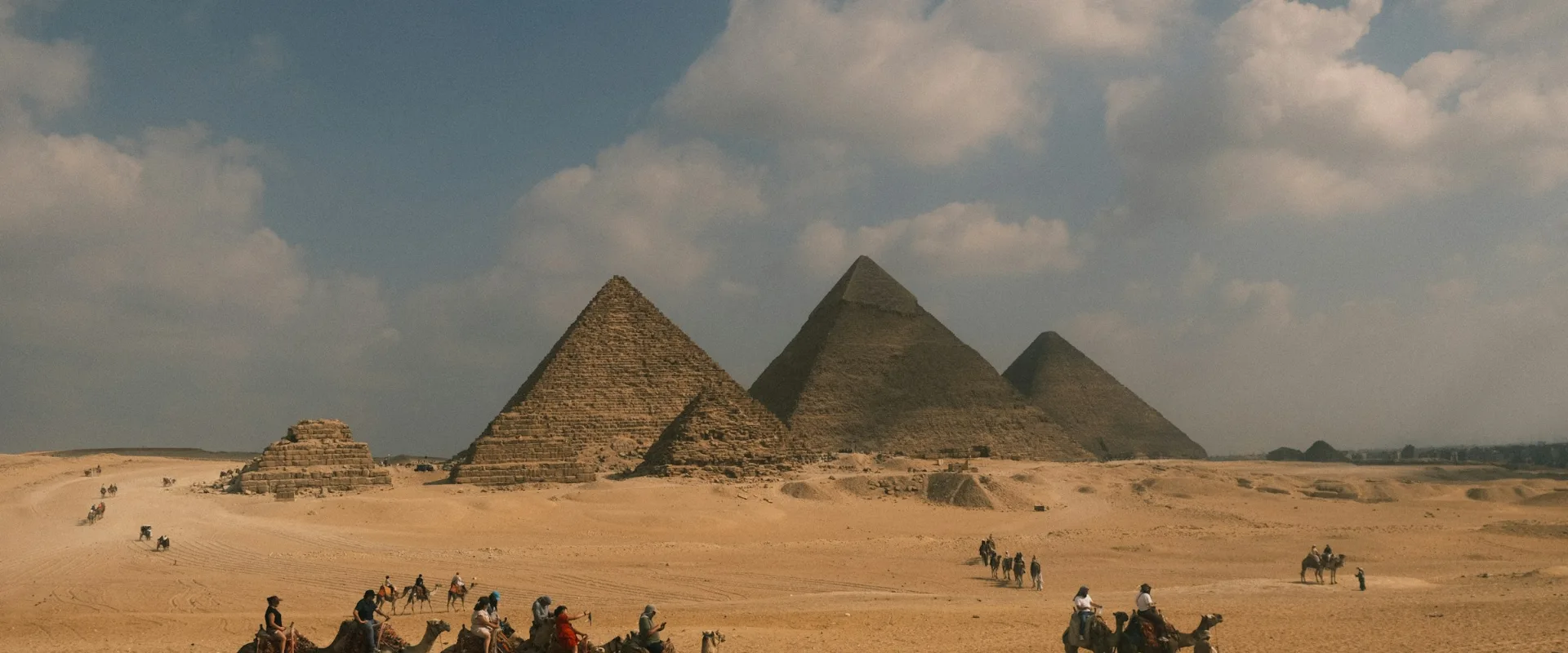
This bold idea led, within a century, to the smooth-sided pyramids of Dahshur and finally to the Great Pyramids of Giza. After a long restoration project, the pyramid’s inner chambers reopened to visitors in 2020.
The pyramid stands inside a huge walled enclosure. You enter through a colonnaded hall with stone columns carved to imitate bundles of reeds, a reminder that earlier buildings were made of plants and mud brick.
Inside the enclosure is the Heb-Sed court, where the king’s jubilee festival was celebrated in the afterlife, along with chapels and a statue chamber with a copy of Djoser’s seated statue looking out through small holes in the wall.
Pyramid of Unas: its burial chamber is covered with the Pyramid Texts, the oldest known religious writings from ancient Egypt.
Mastabas of Ti and Mereruka: tombs of high officials decorated with lively scenes of farming, fishing, crafts and animals.
The Serapeum: underground galleries holding enormous stone boxes made for the burials of the sacred Apis bulls.
Nearby, the village of Mit Rahina marks the site of ancient Memphis, founded around 3100 BC as the capital of a united Egypt. Little of the city survives, but an open-air museum displays a colossal limestone statue of Ramesses II lying on its back, an alabaster sphinx and other sculptures.
Together, Memphis and the pyramid fields from Giza to Dahshur are listed as a UNESCO World Heritage Site.
Imhotep, the architect of the Step Pyramid, was so admired that later Egyptians worshipped him as a god of wisdom and medicine.
The Pyramid Texts in the Pyramid of Unas, carved around 2350 BC, are the oldest known collection of religious writings in the world.
The Serapeum was rediscovered in 1850 by the French archaeologist Auguste Mariette.
Saqqara is still revealing its secrets: in recent years archaeologists have announced the discovery of beautifully decorated tombs and sealed wooden coffins.
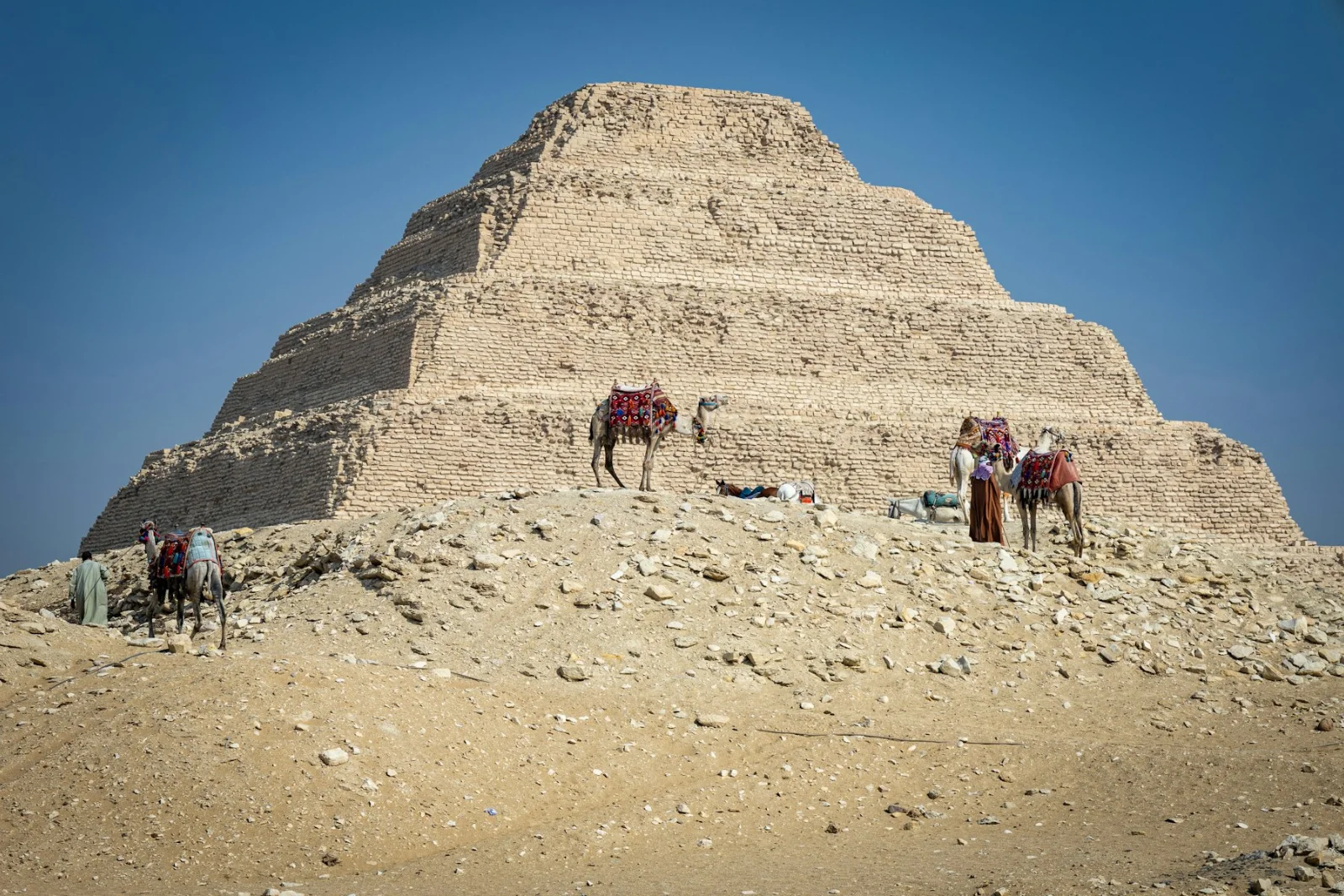
Morning is the best time to explore Saqqara, before the desert heat builds. From October to April the temperatures are comfortable for walking between the pyramids and tombs.
Saqqara lies about 30 km south of central Cairo, on the edge of the Western Desert. It is usually visited by car on a half-day or full-day tour together with Memphis and the pyramids of Dahshur, and can easily be combined with the Great Pyramids of Giza.
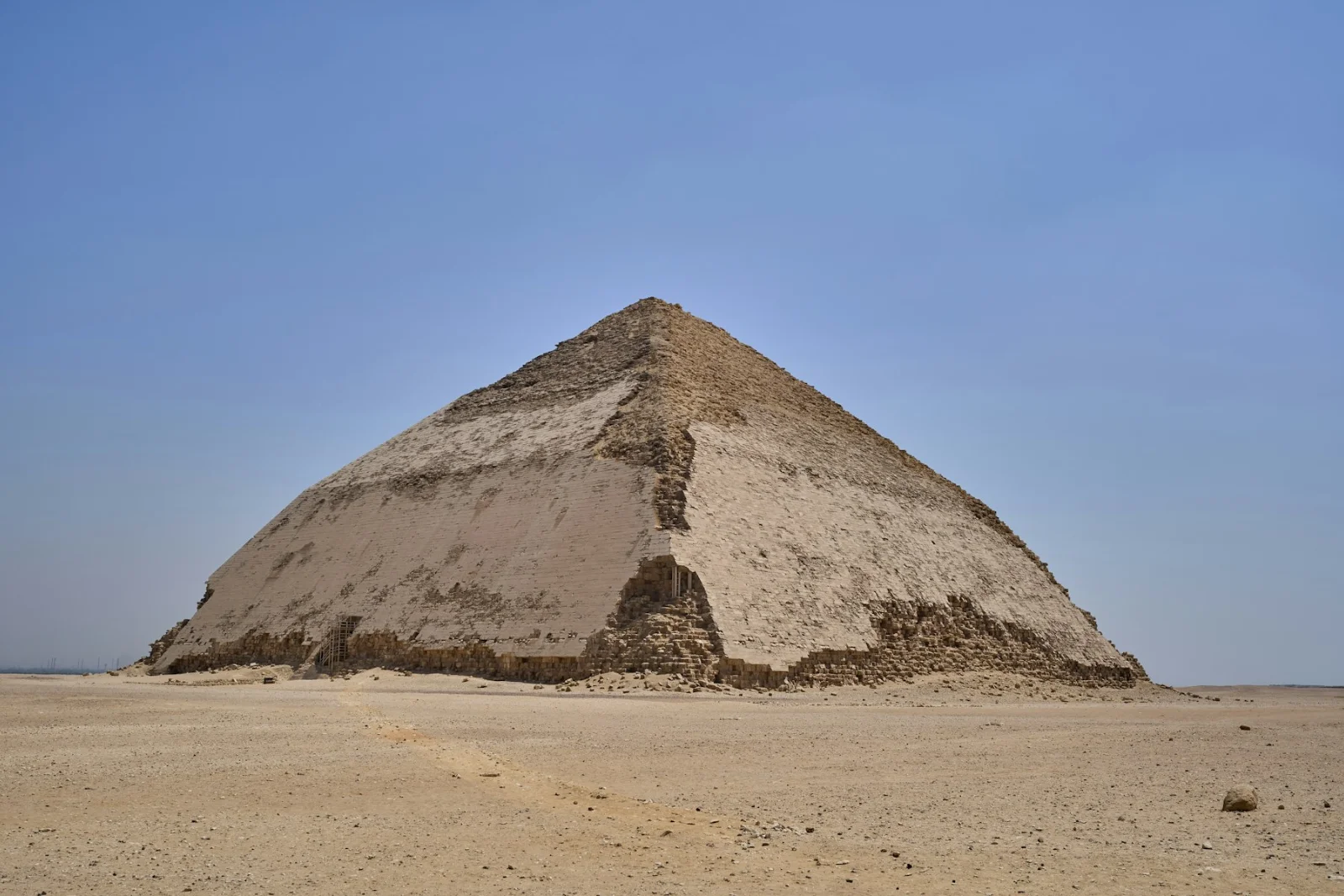
Dahshur’s pyramids. A short drive south, King Sneferu, father of Khufu, built the Bent Pyramid, whose angle changes halfway up, and the Red Pyramid, the first true smooth-sided pyramid. You can even go inside the Red Pyramid.
Abusir. Between Giza and Saqqara, the pyramids and sun temples of the Fifth Dynasty kings rise above the desert in a quiet, atmospheric setting.
The Imhotep Museum. At the entrance to Saqqara, this museum honours Imhotep, the architect of the Step Pyramid, and displays finds from the site, including beautifully painted coffins.
The Pyramid Texts. Inside the Pyramid of Unas, the walls are covered with the oldest known religious texts in the world, spells meant to help the king reach the stars.
The Mastaba of Mereruka. This vizier’s tomb has more than 30 rooms, with lively scenes of hunting, fishing, music and daily life. Compare it all with the Great Pyramids of Giza.
Allow at least 2–3 hours for Saqqara; it is spread out across the desert.
There is very little shade, so bring a hat, sunscreen and water.
Saqqara pairs well with Memphis and Dahshur on the same day.
Saqqara is included in these tours:
Egypt Discovery & Red Sea Escape – 10 Days Cairo, Nile Cruise & Hurghada — 10 Days / 9 Nights
Luxury Egypt & Nile Cruise – 10 Days Cairo, Luxor & Aswan — 10 Days / 9 Nights
Egypt & Jordan Highlights – 7 Days Cairo, Petra & the Dead Sea — 7 Days / 6 Nights

Round-the-clock 24/7 support from expert local guides and a professional customer care team, before and throughout your trip.


Copyright © 2026 Egyptista