Long before the Islamic city of Cairo was founded, a Roman fortress called Babylon guarded the Nile at this spot. Within and around its walls grew a community that became the heart of Coptic Christianity in Egypt. Today this compact quarter, known as Coptic Cairo or Old Cairo, is one of the most peaceful and atmospheric corners of the capital.
In a single walk you can visit centuries-old churches, a historic synagogue, an excellent museum and, just outside the walls, the first mosque built in Egypt.
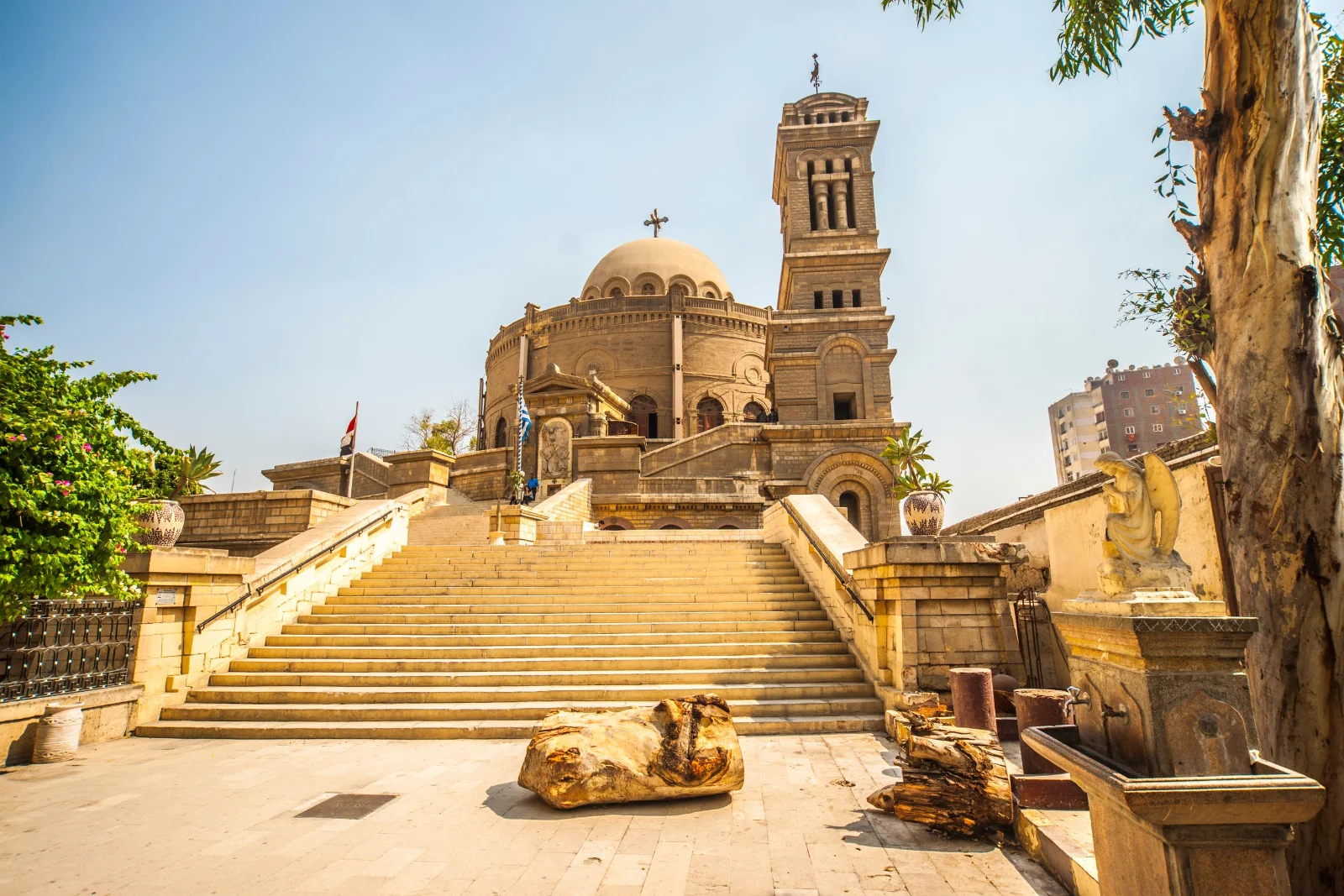
The Babylon fortress was strengthened by the Romans, and parts of its towers and walls still stand near the Coptic Museum. Christianity spread in Egypt from the 1st century AD, and the Copts, Egypt’s Christians, built churches here over many centuries.
After the Arab conquest in 641 AD, the Muslim commander Amr ibn al-As founded the city of Fustat next to the fortress. Old Cairo has remained a meeting point of faiths ever since.
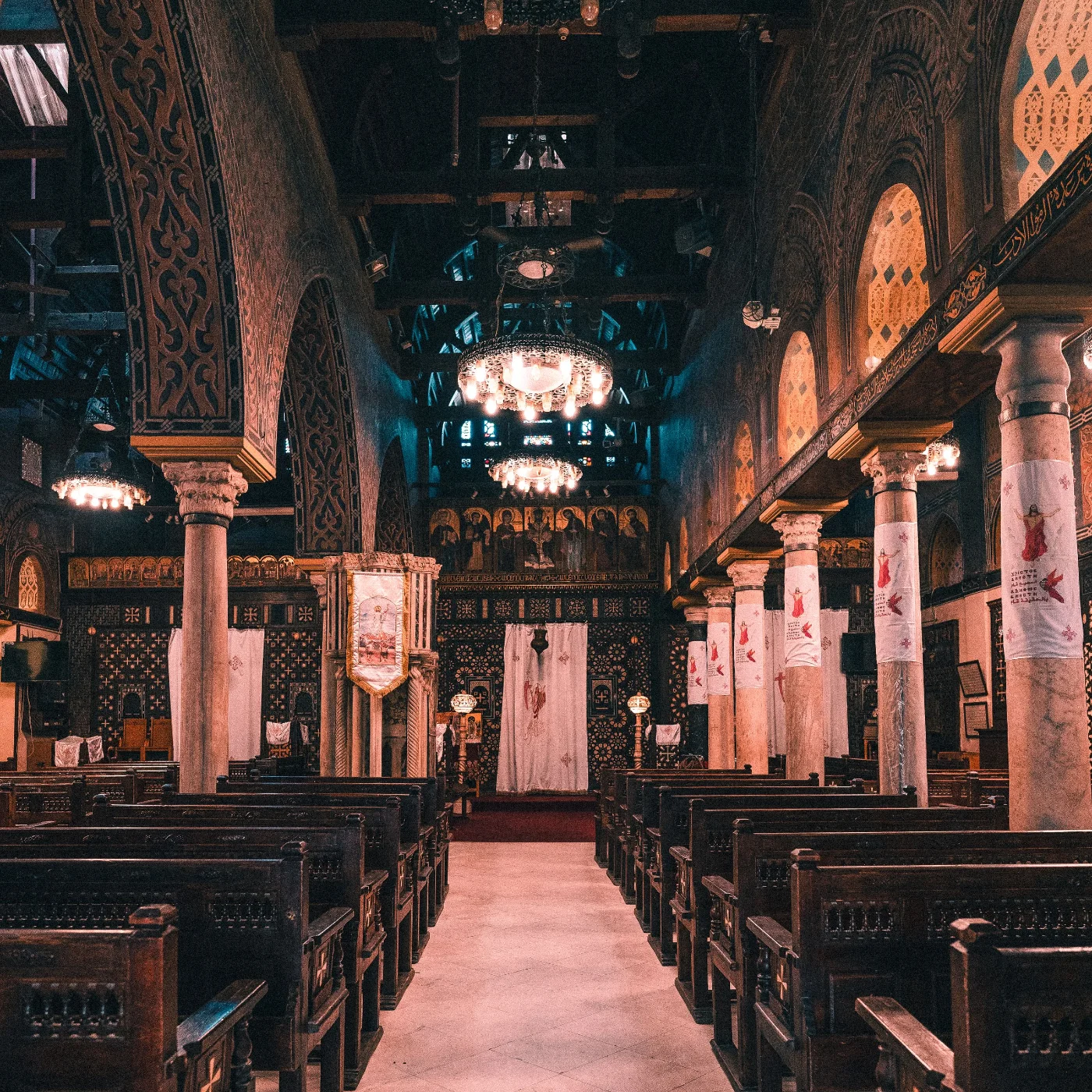
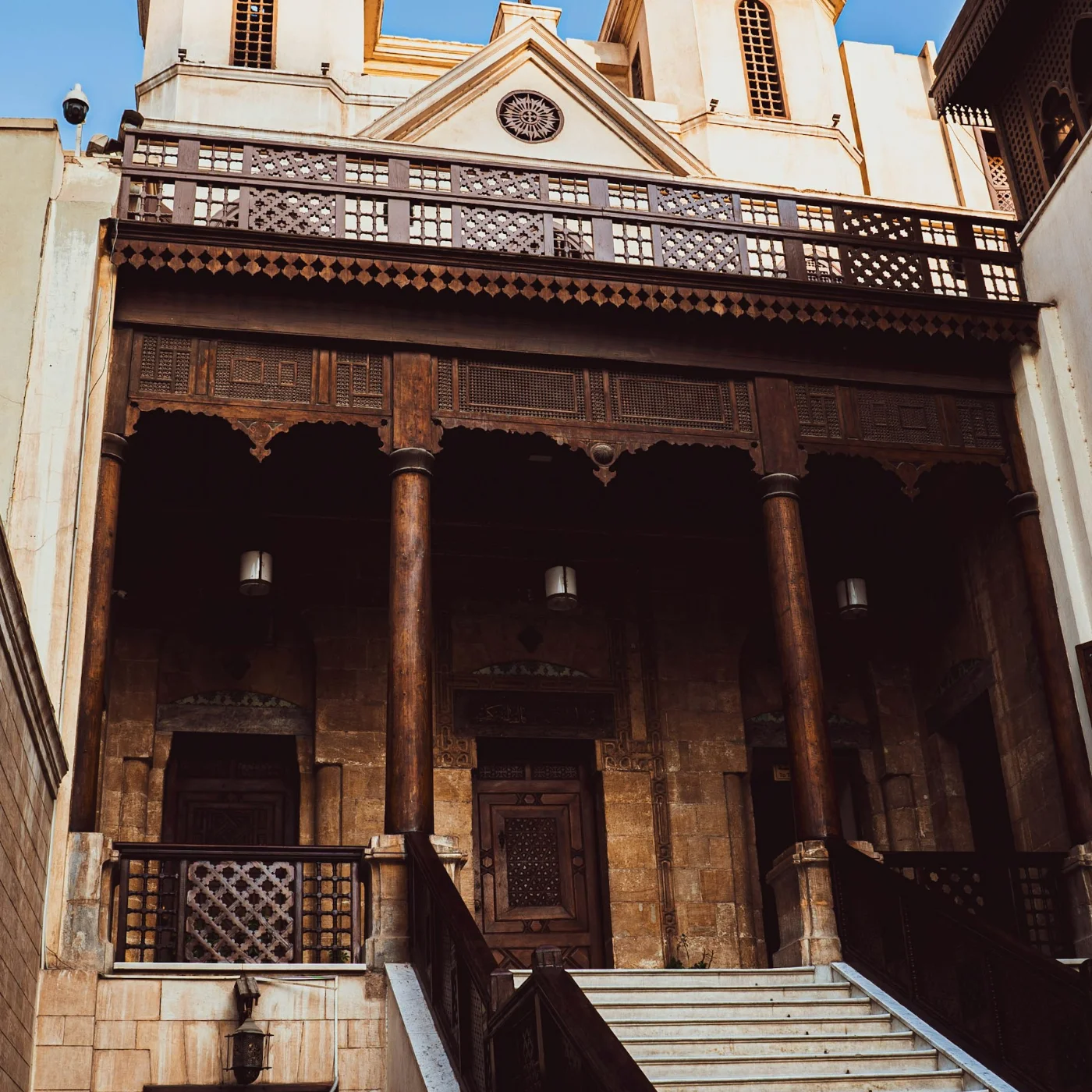
The Church of the Virgin Mary, known as the Hanging Church (al-Muallaqa), is the most famous church in Cairo. It gets its name because it was built on top of the gatehouse of the Babylon fortress, so its nave seems to "hang" above the passage below.
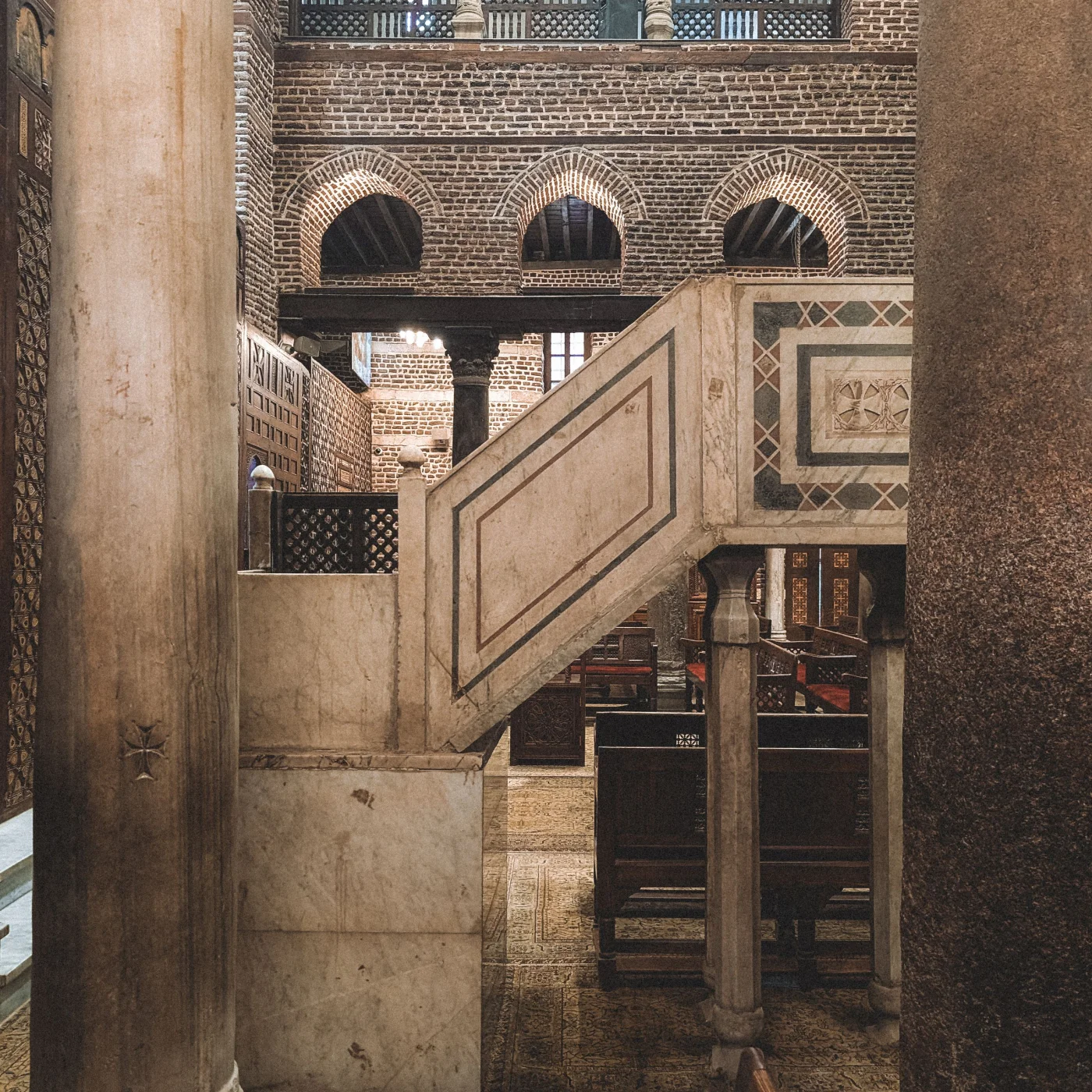
Inside, look for the wooden roof shaped like Noah’s Ark, the marble pulpit resting on slender columns and the screens inlaid with ebony and ivory. A flight of steps leads up from the street into a courtyard decorated with modern mosaics.
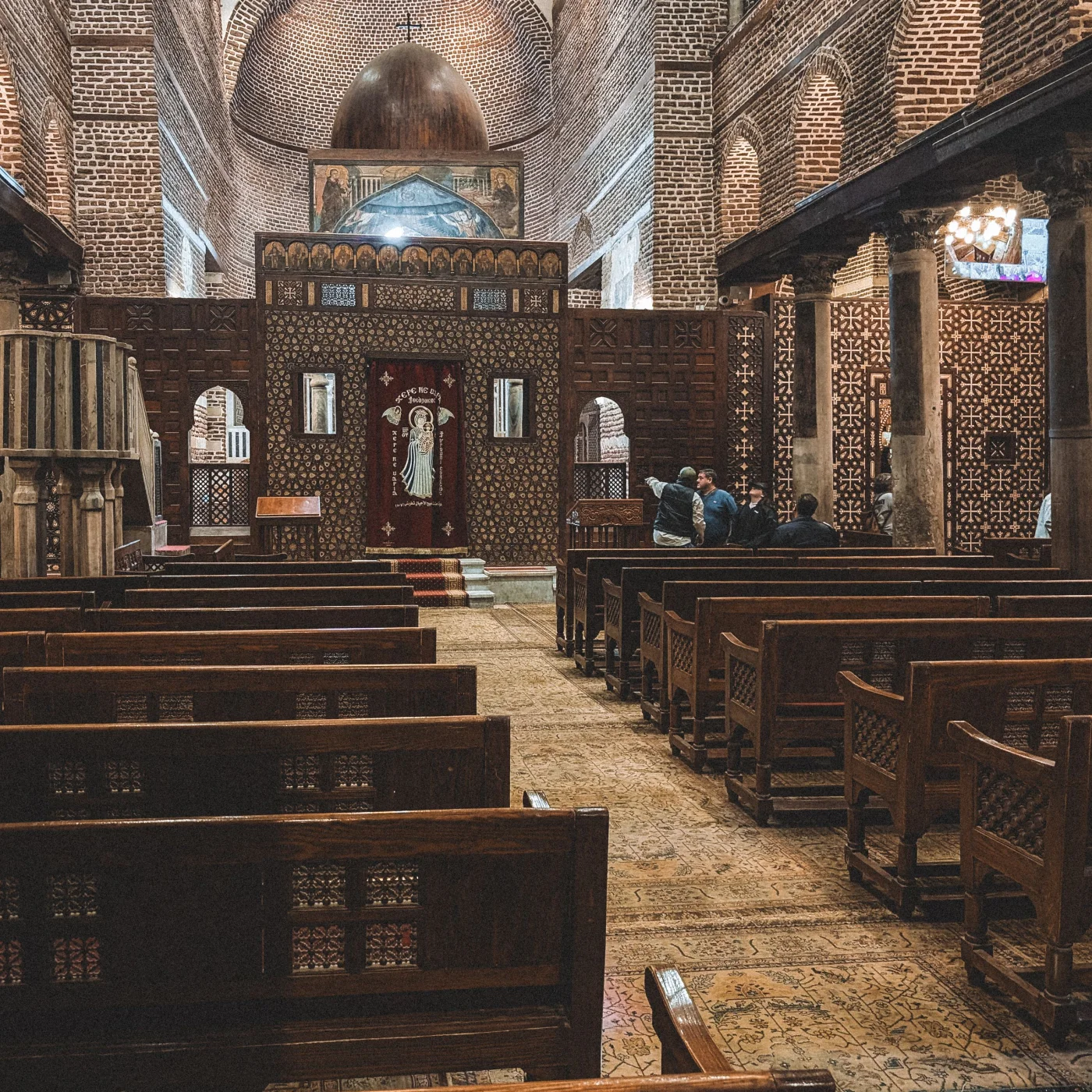
Church of Saints Sergius and Bacchus (Abu Serga): tradition holds that the Holy Family rested in the crypt beneath this church during their flight into Egypt.
Ben Ezra Synagogue: a beautifully restored synagogue where the famous Cairo Geniza, a huge collection of medieval documents, was discovered in the 19th century.
The Coptic Museum: one of the world’s finest collections of Coptic art, with textiles, icons, manuscripts and carved wood.
Mosque of Amr ibn al-As: founded in 642 AD, it was the first mosque built in Egypt.
The Coptic language, still used in church services, is the last stage of the ancient Egyptian language, written with the Greek alphabet and a few extra letters.
The Coptic Museum was founded in 1910 and holds one of the richest collections of early Christian art in the world.
The Cairo Geniza found at the Ben Ezra Synagogue contained hundreds of thousands of documents, giving scholars a unique window into medieval life around the Mediterranean.
The area is part of the UNESCO World Heritage Site of Historic Cairo.
Weekday mornings are the most peaceful time to explore the churches and museum. Sundays and religious feast days are full of life, with services, hymns and families gathering, and offer a wonderful glimpse of Coptic traditions.
Coptic Cairo lies in the south of the city, close to the Nile. The Mar Girgis metro station is right outside the old Roman fortress, and the area is a short drive from downtown Cairo. It combines perfectly with the Cairo Citadel and the Khan el-Khalili bazaar on a day exploring historic Cairo.
The Mosque of Amr ibn al-As. Founded in 642 AD, it was the first mosque built in Egypt and in Africa. Its vast courtyard and forest of columns sit just a short walk from the churches.
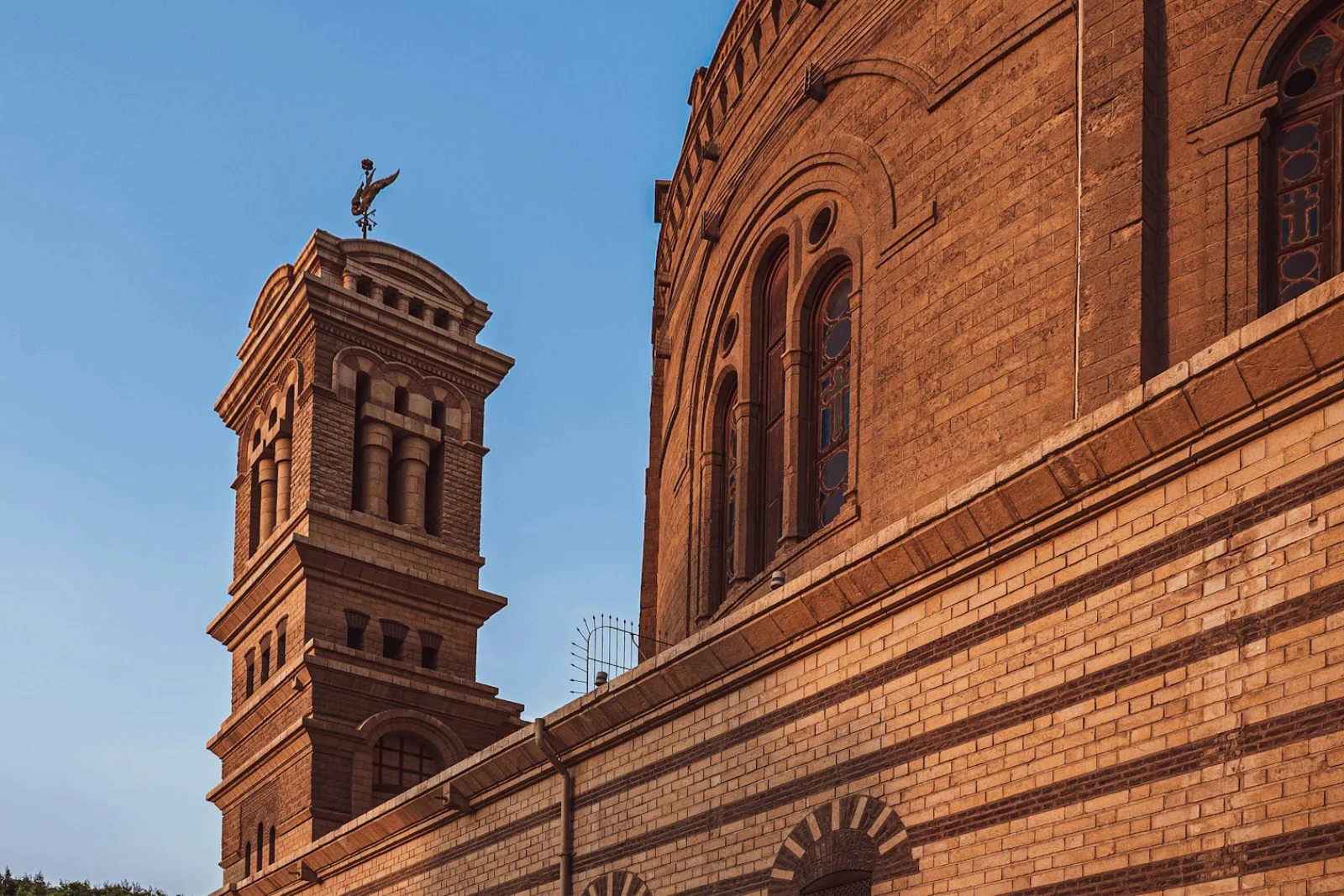
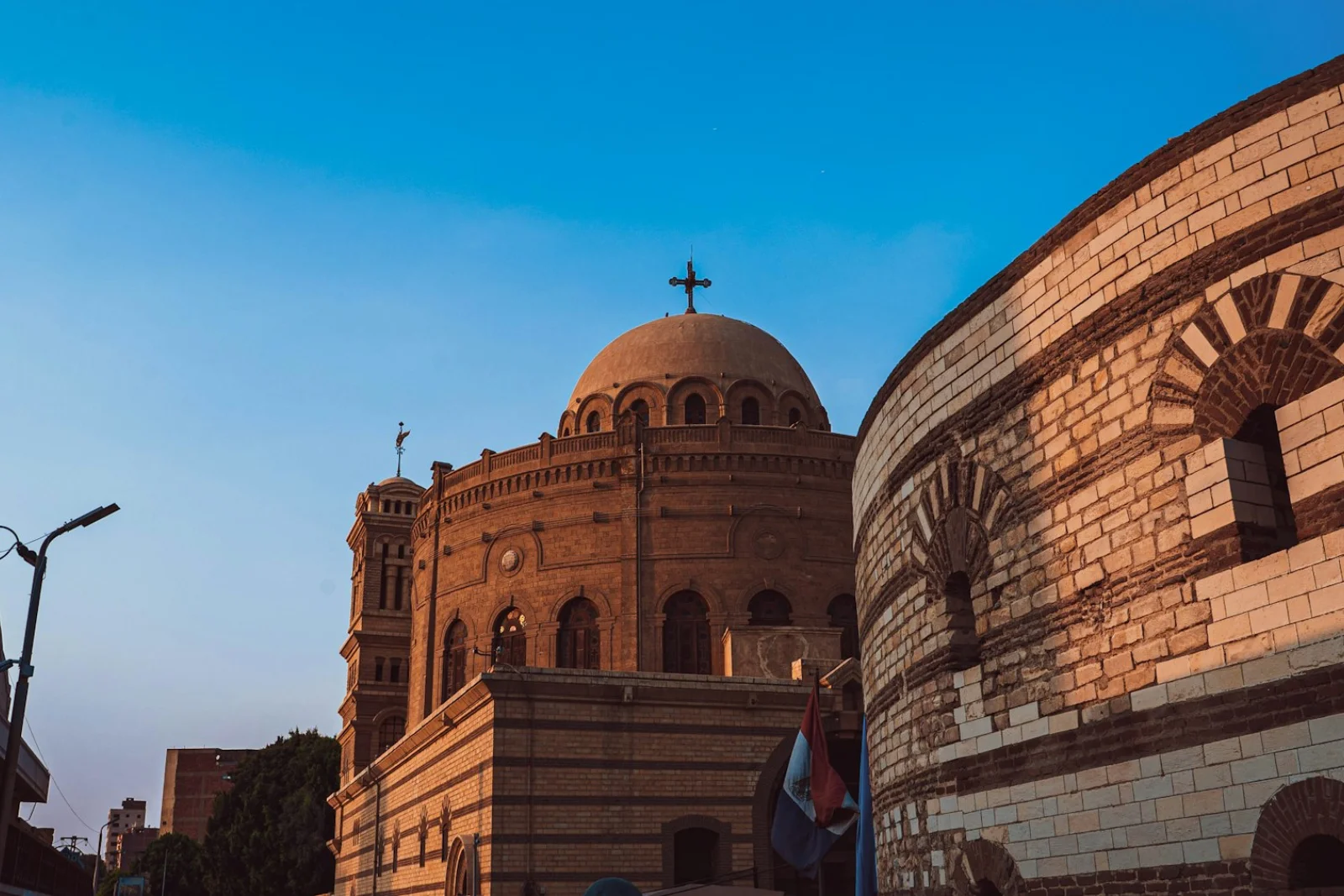
The Church of St George. A round church built over one of the towers of the Roman fortress of Babylon, with a calm courtyard and beautiful icons.
The Nilometer on Roda Island. Built in 861 AD, this elegant stone well with a graduated column measured the Nile flood for centuries and is one of the oldest Islamic monuments in Cairo.
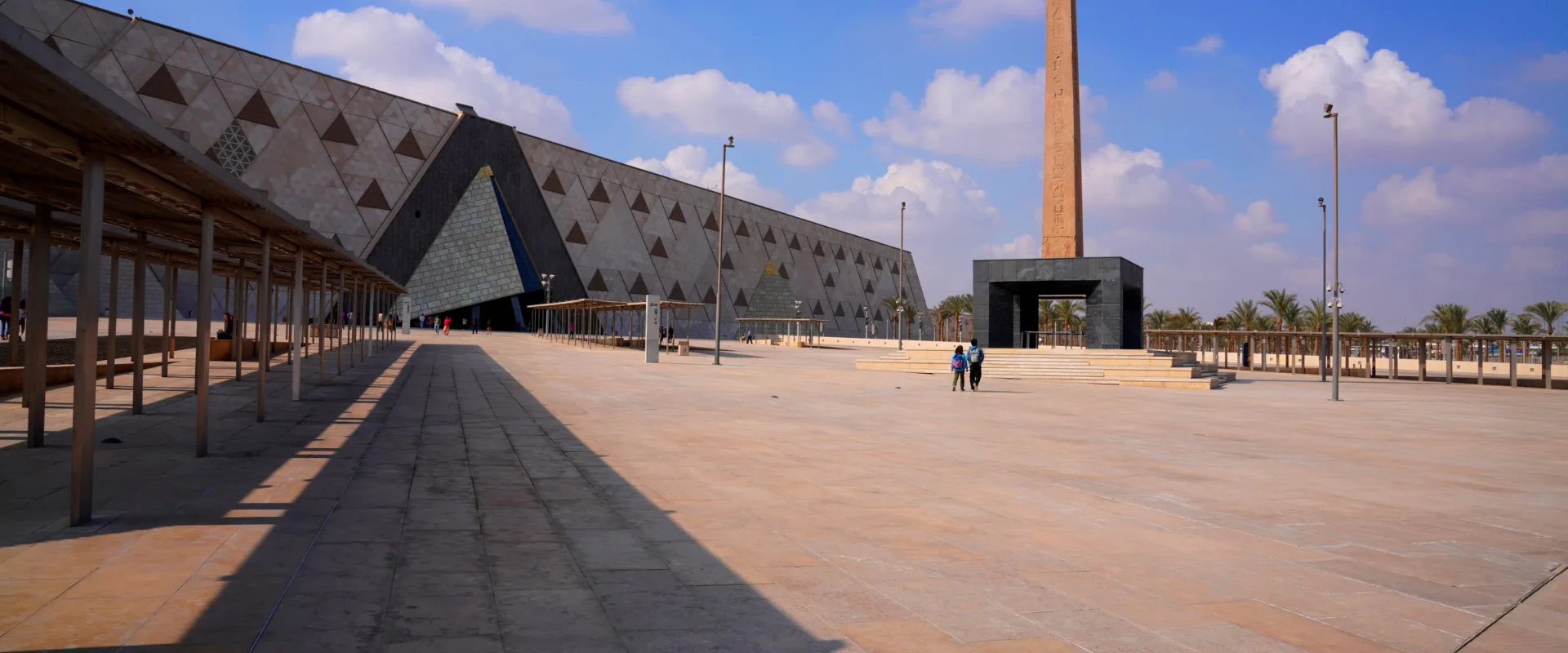
The National Museum of Egyptian Civilization. Nearby in Fustat, the museum tells the story of Egypt from prehistory to today, and its Royal Mummies Hall is a moving experience.
Souq al-Fustat. A small, peaceful crafts market where you can find handmade pottery, textiles, jewellery and Egyptian souvenirs. Round off the day at Khan el-Khalili.
These are active places of worship, so dress modestly with shoulders and knees covered.
Services take place on Sundays and feast days; visit quietly if a mass is underway.
The lanes are narrow and best explored on foot.
Combine Coptic Cairo with the Khan el-Khalili bazaar and the Cairo Citadel for a full day in historic Cairo.
Old Cairo and its Coptic churches are included in these tours:
Cairo Highlights Short Break – 3 Days Pyramids, GEM & Old Cairo — 3 Days / 2 Nights
Cairo Stopover – 2 Days Pyramids, GEM & Khan El Khalili — 2 Days / 1 Night
Luxury Egypt & Nile Cruise – 10 Days Cairo, Luxor & Aswan — 10 Days / 9 Nights

Round-the-clock 24/7 support from expert local guides and a professional customer care team, before and throughout your trip.


Copyright © 2026 Egyptista