
Few landmarks shape Cairo’s skyline like the Citadel, a medieval fortress perched on a spur of the Muqattam Hills. Built by the sultan Salah al-Din (Saladin) in the 12th century, it was the seat of Egypt’s rulers for about 700 years.
Today visitors come for the elegant Mosque of Muhammad Ali, the museums inside the walls and some of the best views over historic Cairo.
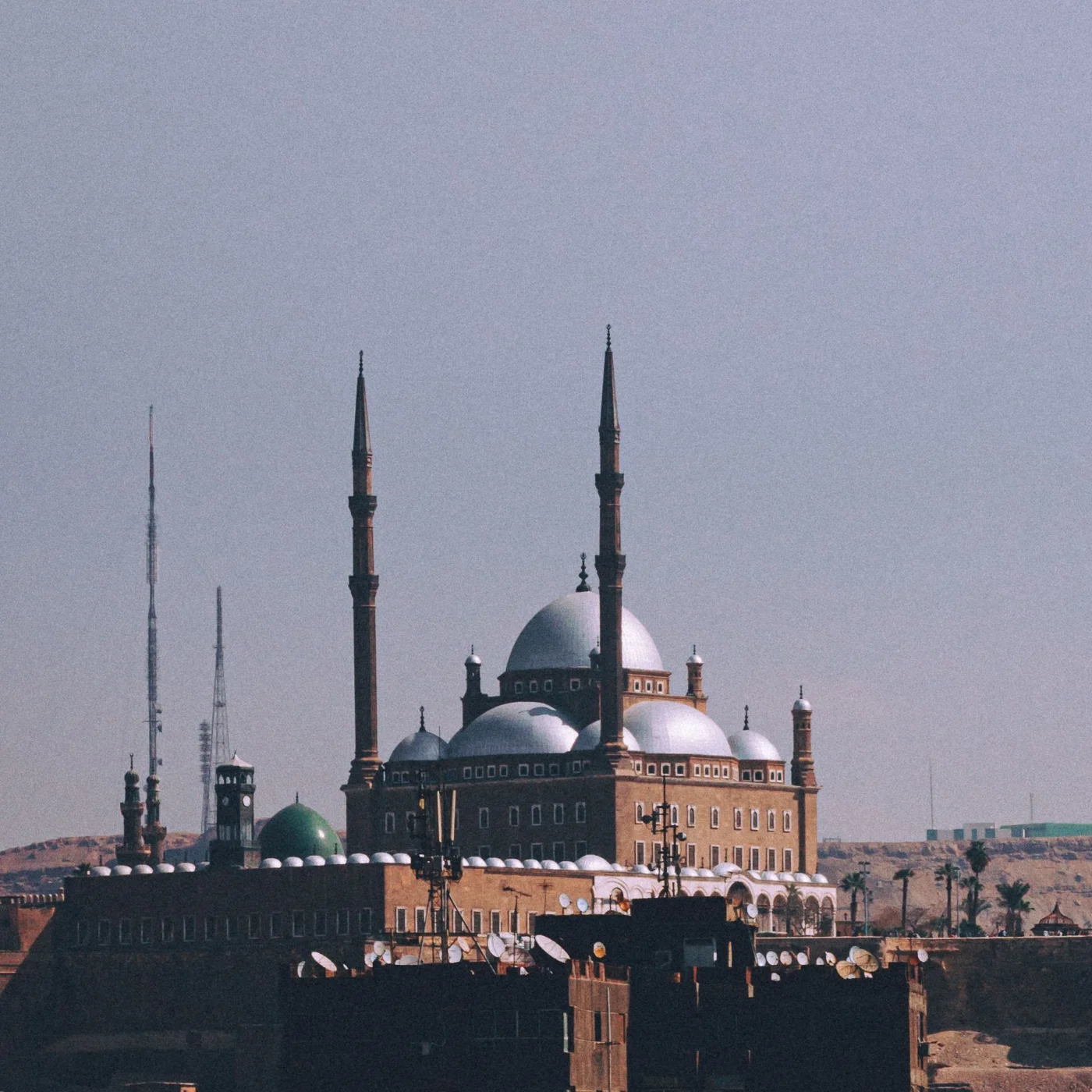
Saladin began the Citadel in 1176 to protect Cairo against the Crusaders and to give the city a secure seat of government. Later sultans, especially the Mamluks, added palaces, mosques and towers.
In the 19th century, Muhammad Ali, the founder of modern Egypt, rebuilt much of the fortress. The Citadel remained the centre of power until the rulers moved to new palaces in the city later in that century.
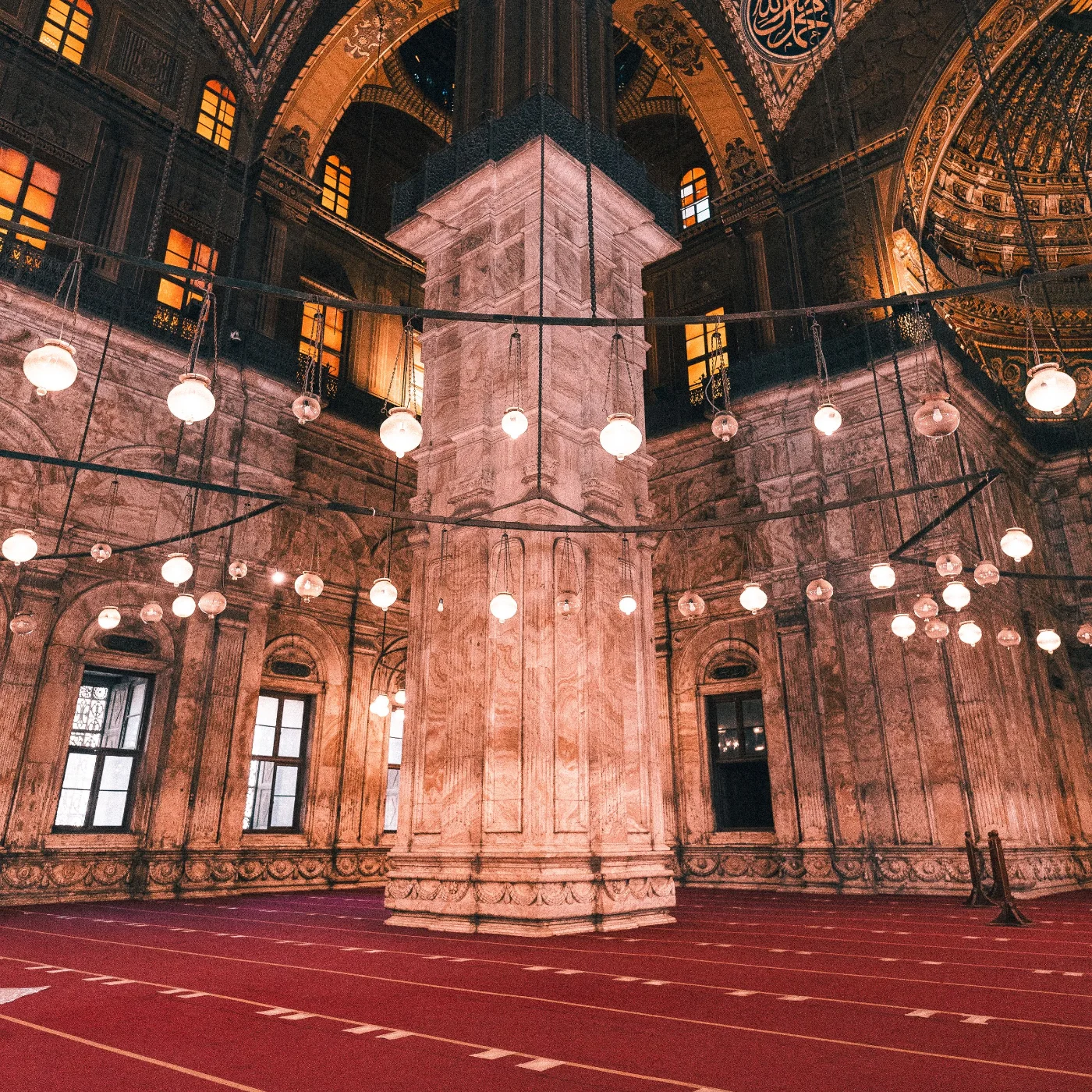
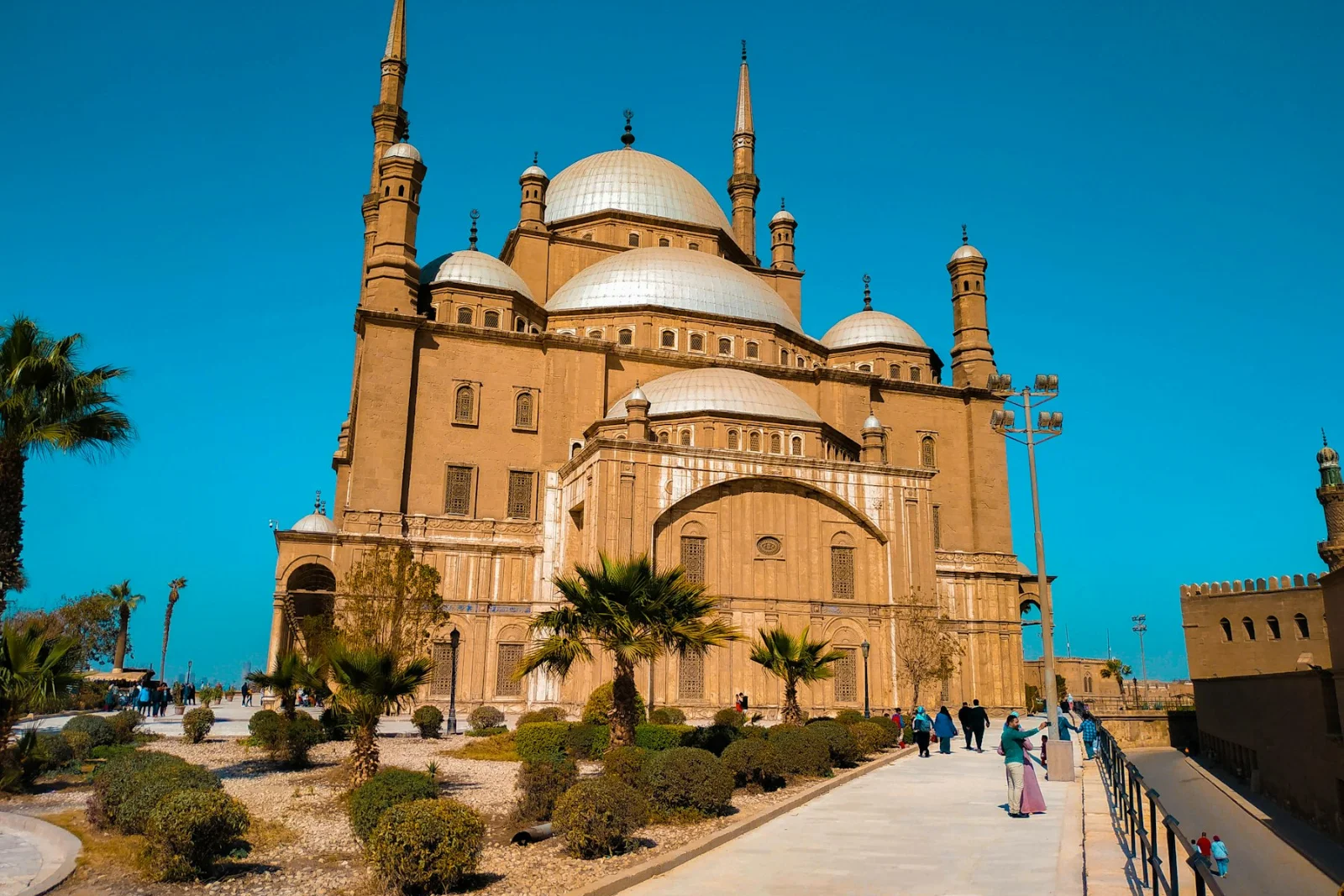
Built between 1830 and 1848, the mosque follows the style of the great Ottoman mosques of Istanbul, with a large central dome, smaller half domes and two slender minarets. Its lower walls are faced with alabaster, which is why it is often called the Alabaster Mosque.
Inside, the prayer hall is lit by hundreds of small lamps hanging from the dome. Muhammad Ali himself is buried in a marble tomb near the entrance.
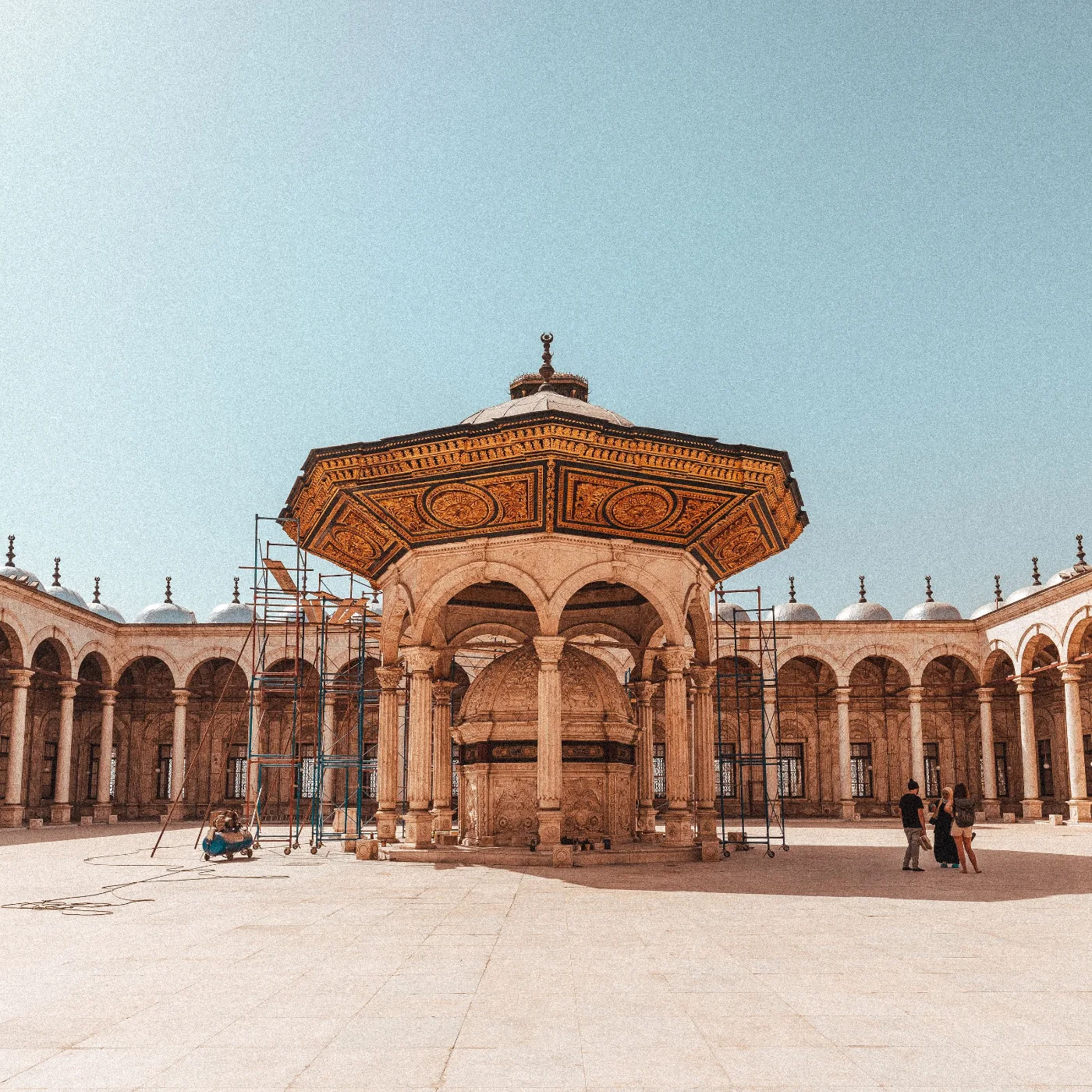
The open courtyard is surrounded by arcades and centred on an ornate ablution fountain. Above one side rises a clock tower given to Muhammad Ali by King Louis-Philippe of France, in exchange for the obelisk of Luxor Temple that now stands in Paris.
Nearby are the older Mosque of al-Nasir Muhammad from the 14th century and the military museum.
Joseph’s Well, cut into the rock in Saladin’s time, descends around 87 metres to reach water, an amazing feat of medieval engineering.
The Mosque of Muhammad Ali was built in the style of the great Ottoman mosques of Istanbul, which is why its silhouette looks so different from Cairo’s older Mamluk mosques.
The Citadel also houses the elegant Gawhara Palace and several museums.
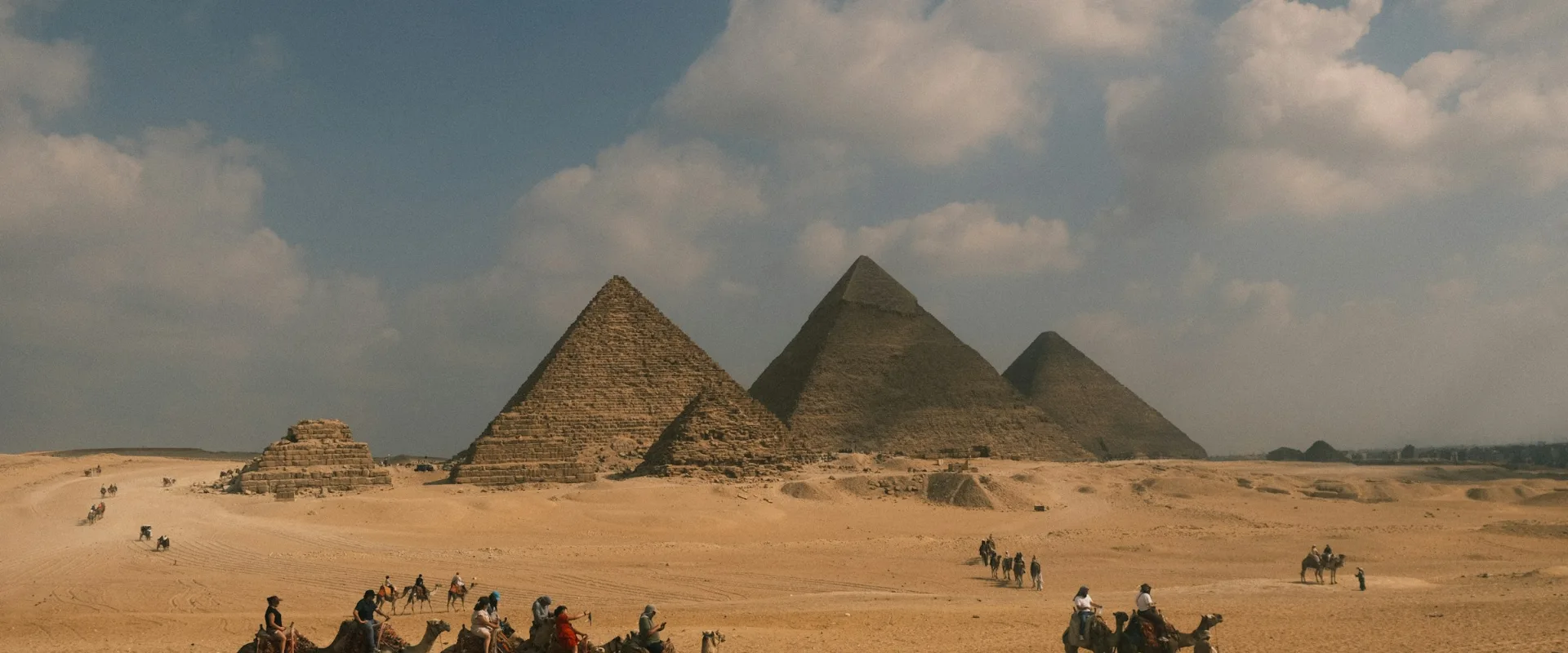
From the terrace you can see the minarets of historic Cairo and, on clear days, the pyramids of Giza.
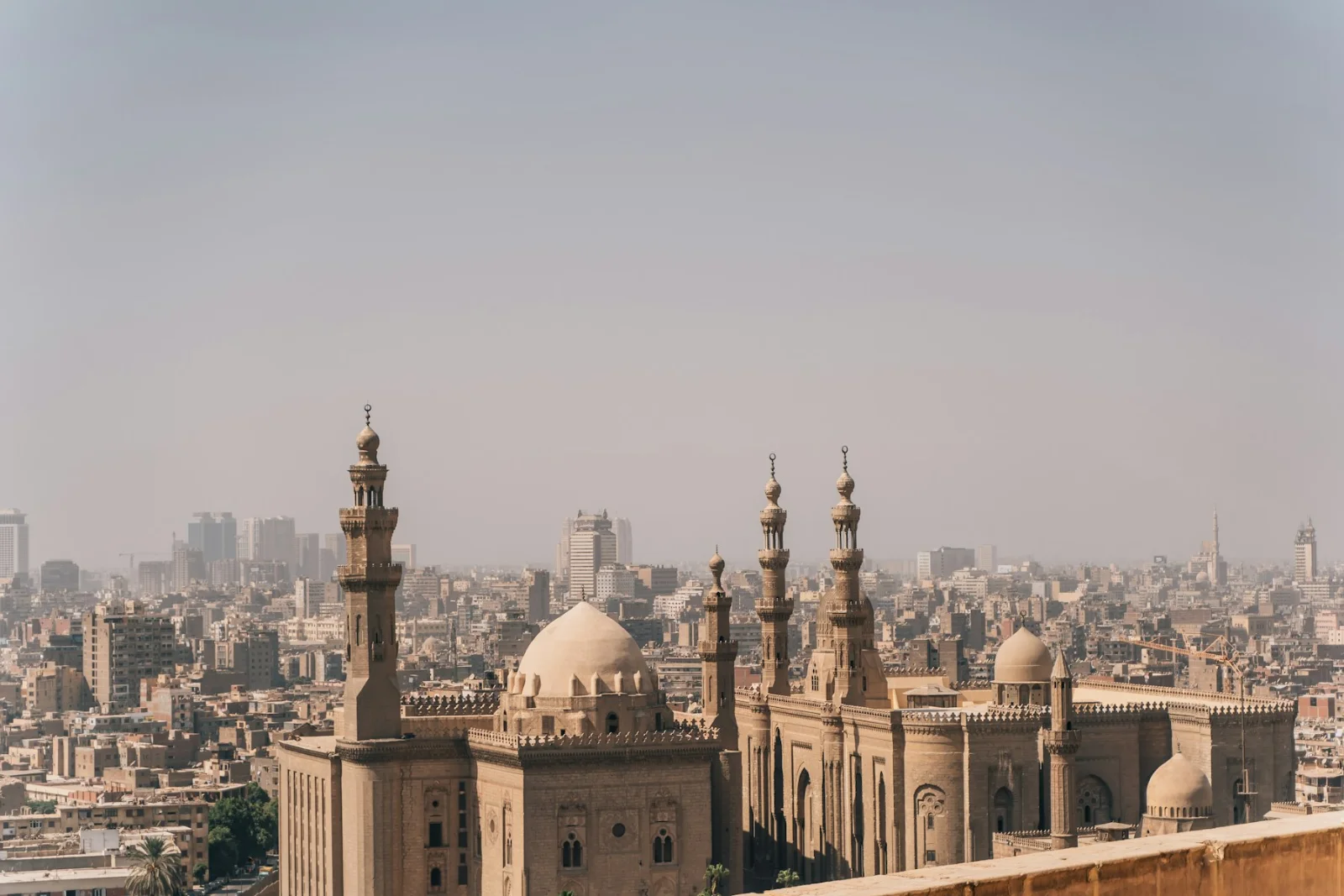
Visit in the morning or late afternoon for soft light on the domes and clear views over the city. The mosque is a place of worship, so visits are best planned outside Friday midday prayers.
The Citadel stands on a spur of the Muqattam Hills, in the heart of historic Cairo. It is a short drive from downtown and close to the great Mamluk mosques of Sultan Hassan and Al-Rifai, which can be visited on the same day. Combine it with Coptic Cairo and the Khan el-Khalili bazaar.
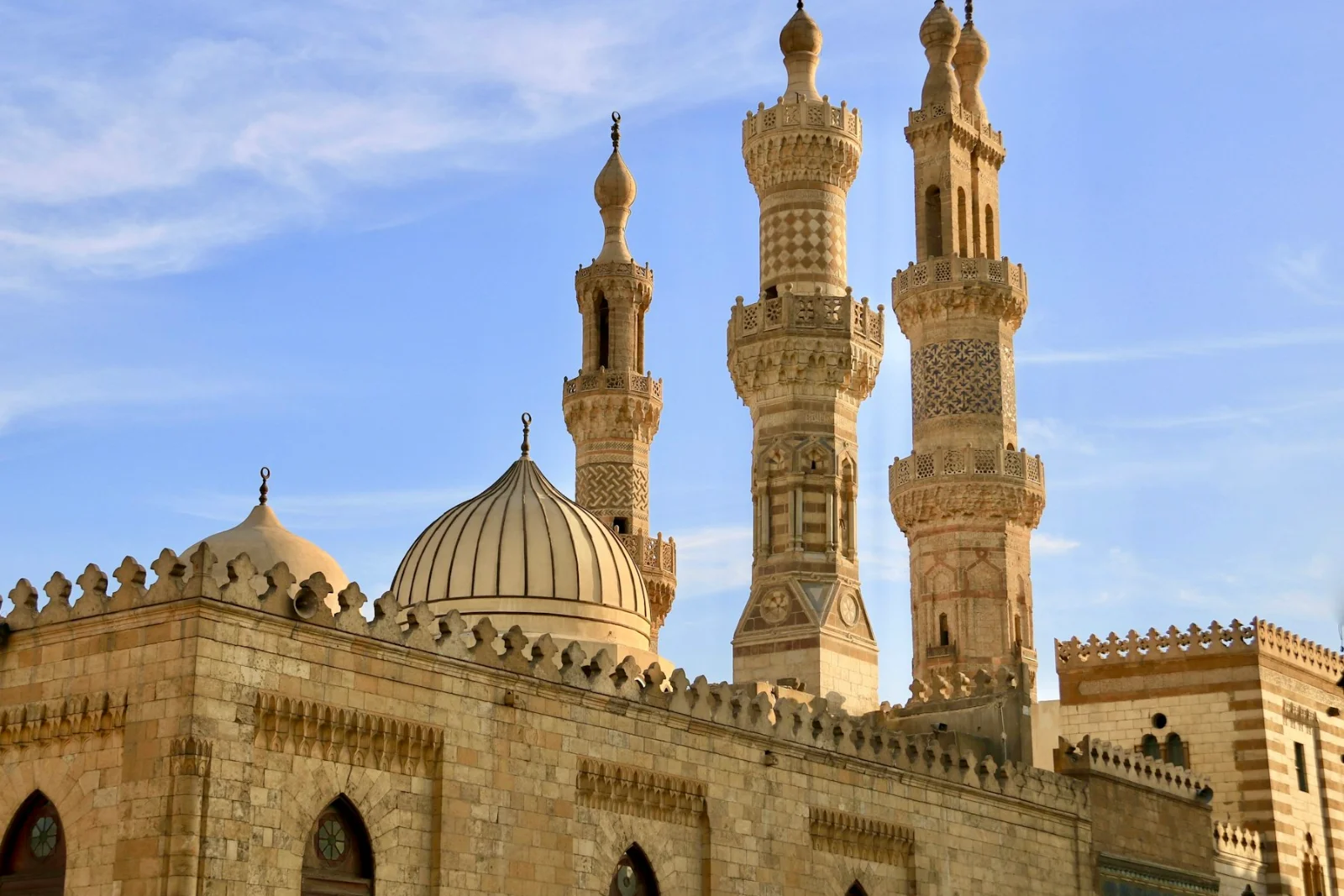
Sultan Hassan and Al-Rifai. At the foot of the Citadel stand two giant mosques side by side. The 14th-century Mosque-Madrasa of Sultan Hassan is a masterpiece of Mamluk architecture, while Al-Rifai is the resting place of Egyptian royalty.
The Mosque of Ibn Tulun. One of the oldest and largest mosques in Cairo, famous for its vast courtyard and its unusual spiral minaret that you can climb for views over the city.
The Gayer-Anderson Museum. Beside Ibn Tulun, two linked Ottoman-era houses are filled with antiques, carpets and mashrabiya, and appeared in the James Bond film The Spy Who Loved Me.
Al-Azhar Park. A green hilltop park with gardens, fountains and cafés, offering one of the best sunset views of the Citadel and the minarets of Islamic Cairo.
Bab Zuweila. A medieval city gate whose twin minarets you can climb for a bird’s-eye view of the old city, near Khan el-Khalili.
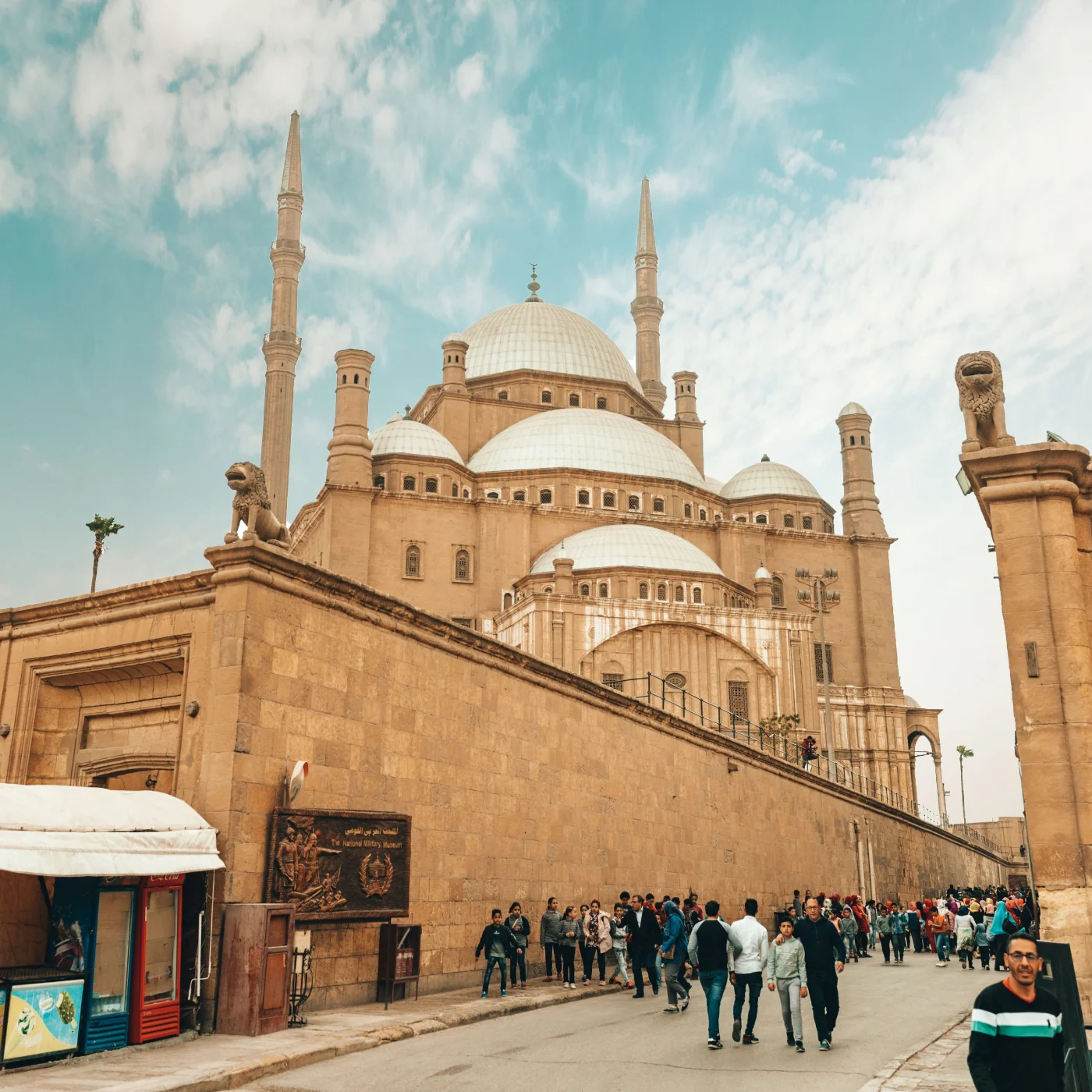
Dress modestly; women should bring a scarf for the mosque, and shoes are removed before entering.
The terrace beside the mosque offers wide views of Cairo, and on clear days you can see the pyramids on the horizon.
Combine the Citadel with Coptic Cairo and the Khan el-Khalili bazaar.
The Citadel is included in these tours:
Egypt Discovery & Red Sea Escape – 10 Days Cairo, Nile Cruise & Hurghada — 10 Days / 9 Nights
Egypt & Jordan Highlights – 7 Days Cairo, Petra & the Dead Sea — 7 Days / 6 Nights
Nile & Jordan Grand Journey – 12 Days Cairo, Nile Cruise, Petra & Dead Sea — 12 Days / 11 Nights

Round-the-clock 24/7 support from expert local guides and a professional customer care team, before and throughout your trip.


Copyright © 2026 Egyptista