
Some places are best understood with all five senses. Khan el-Khalili is one of them. Here you smell cumin and incense, hear the call to prayer and the tapping of coppersmiths, catch the glint of hundreds of brass lanterns and taste sweet mint tea in a crowded café.
It has been one of Cairo’s busiest marketplaces since the Middle Ages, and it still belongs as much to Cairenes as to visitors.
The bazaar sits in Historic Cairo, a UNESCO World Heritage Site, surrounded by medieval mosques, gates and caravanserais. Shopping is part of the experience, but so is getting a little lost in the lanes.
This guide covers the bazaar’s story, what to see and buy, and how to make the most of an evening there.
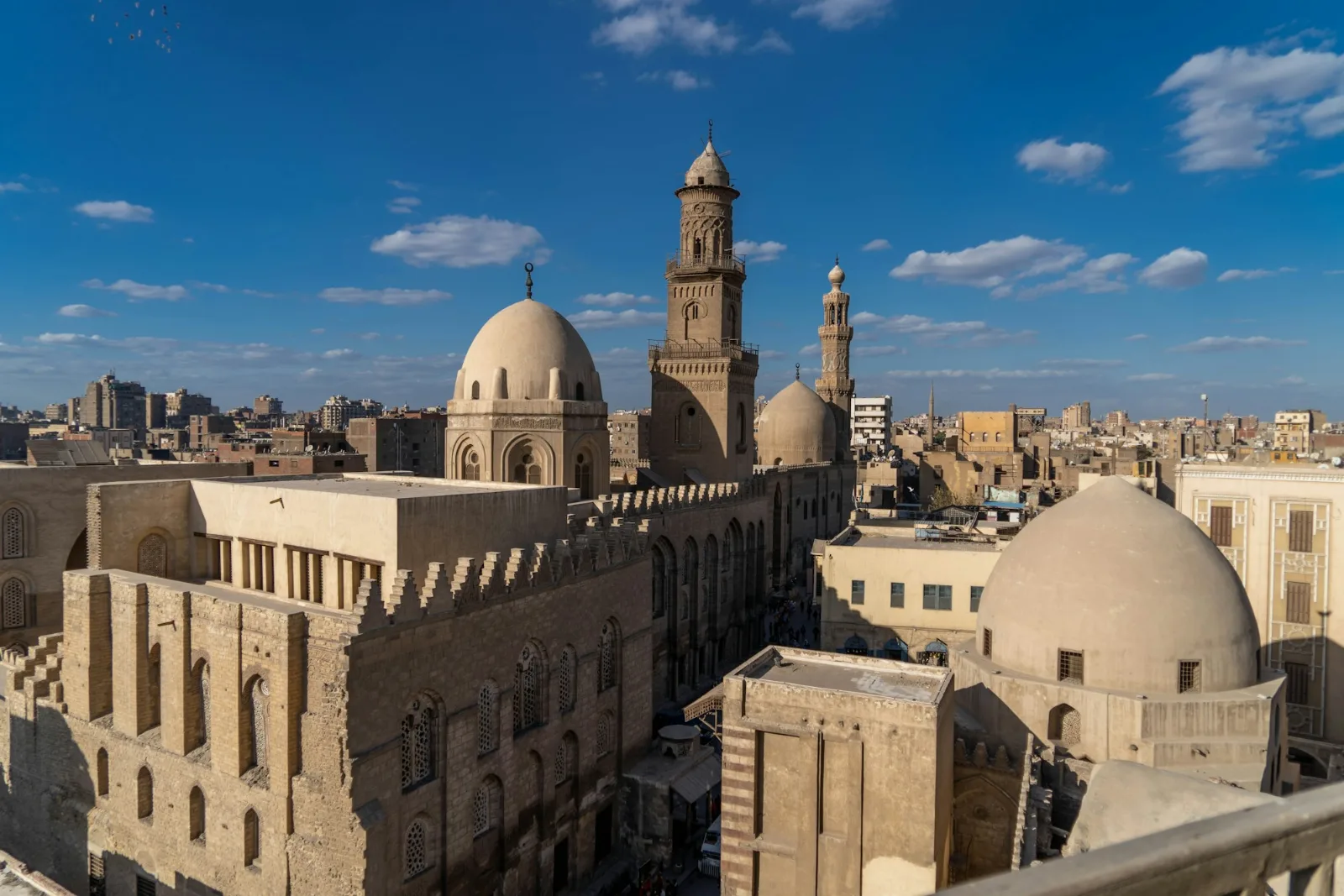
The district grew up inside the walls of al-Qahira, the city founded by the Fatimid dynasty in 969 AD. The area around today’s bazaar once held the Fatimid royal palaces and the burial place of their caliphs.
In 1382, the Mamluk emir Jaharkas al-Khalili, master of horse to Sultan Barquq, built a large *khan* here. A khan was a caravanserai where merchants could store goods and lodge. It gave the bazaar its name. Over the following centuries, markets for spices, textiles, jewellery and metalwork crowded into the surrounding streets.
In the early 16th century, Sultan al-Ghuri rebuilt parts of the commercial quarter, and some of his monumental stone gateways still stand. Through the Ottoman era and into modern times, the Khan remained the city’s best-known market.
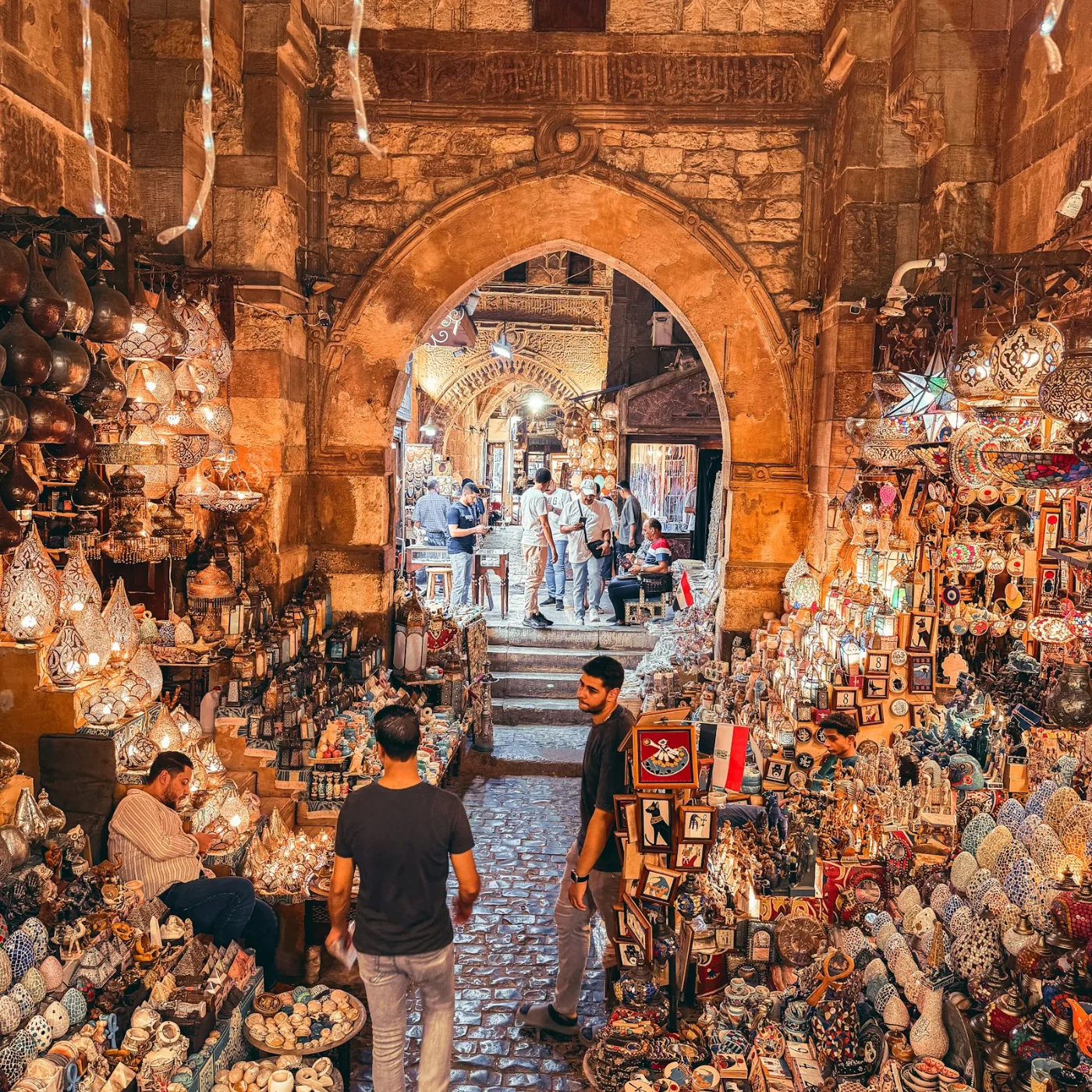
The bazaar is a maze of narrow alleys, covered passages and small squares. Look up to see carved wooden balconies, Mamluk stonework and the old gates that once closed the markets at night.
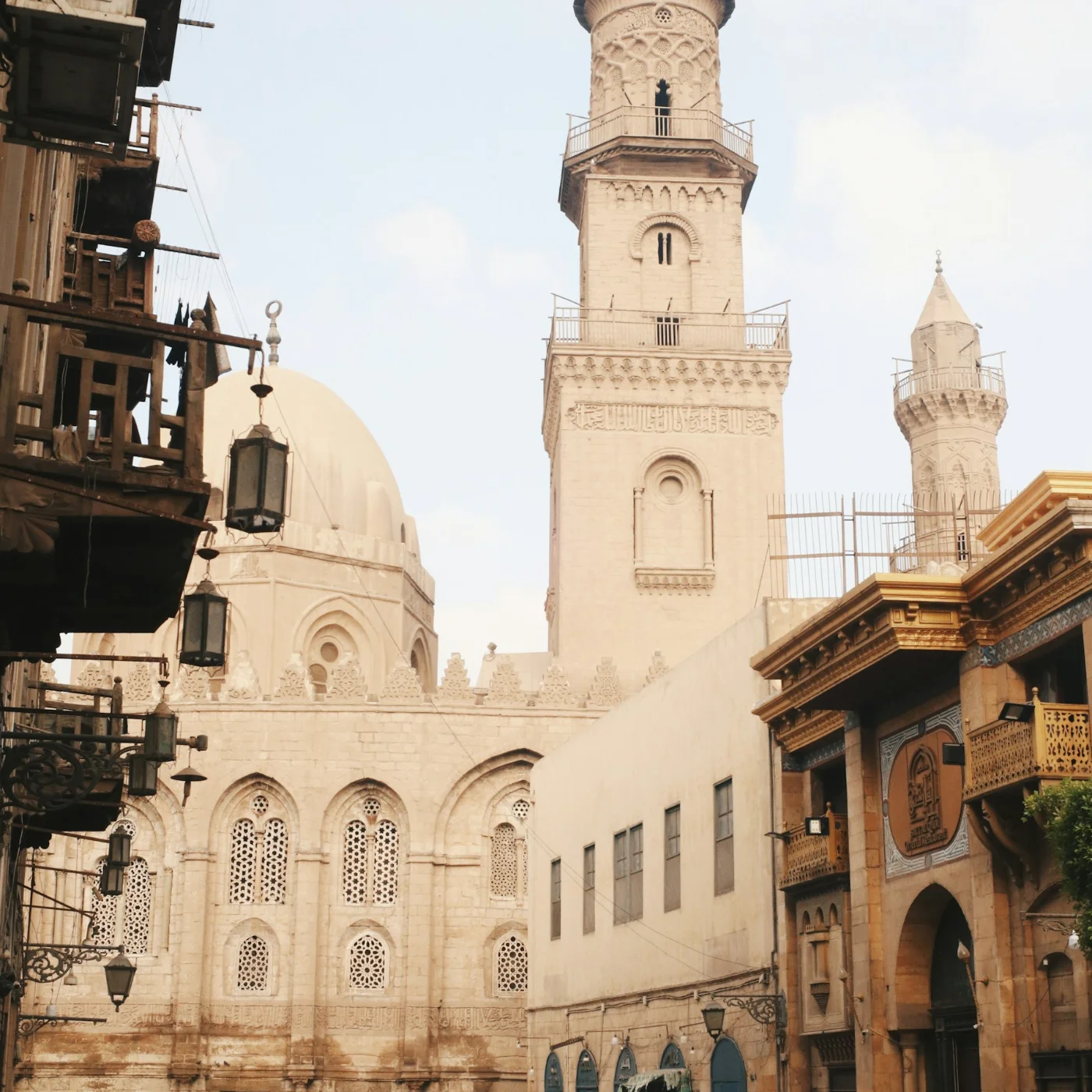
Running along the western edge of the bazaar, al-Muizz Street is one of the richest concentrations of medieval Islamic architecture in the world. It is lined with mosques, madrasas, mausoleums and fountains from the Fatimid, Ayyubid and Mamluk eras.
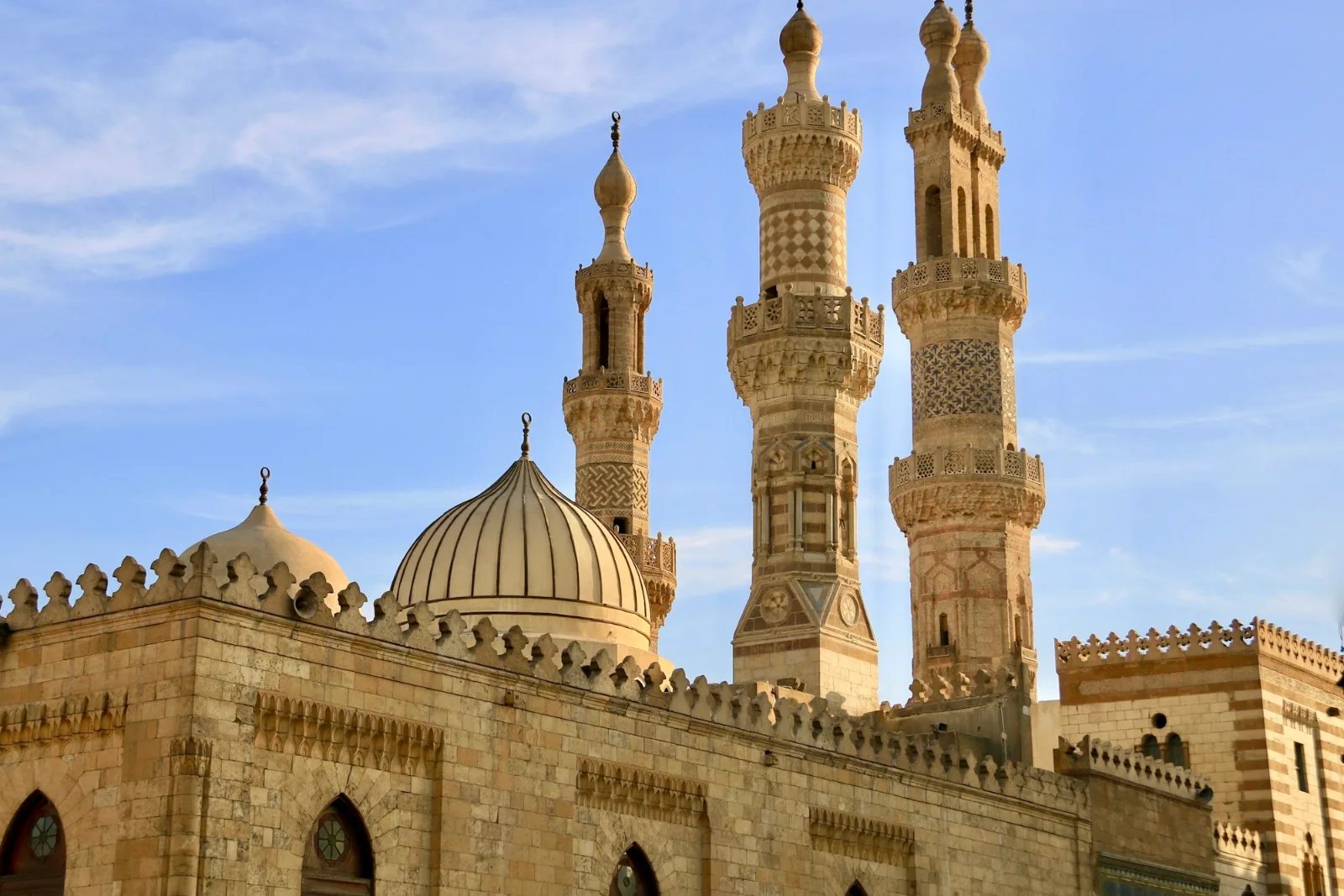
The Al-Hussein Mosque stands on the busy square at the bazaar’s entrance. Across the road is Al-Azhar Mosque, founded in 970–972 and one of the oldest continuously operating centres of learning in the world.
Tucked into an alley near Al-Hussein Square, this mirrored café has served tea and coffee for generations. It was a favourite of the Nobel Prize-winning novelist Naguib Mahfouz.
A writer’s neighbourhood. Naguib Mahfouz, winner of the 1988 Nobel Prize in Literature, set some of his best-known novels in these streets, including *Midaq Alley* and the *Cairo Trilogy*.
Named after a man. “Khalili” comes from the bazaar’s 14th-century founder, Jaharkas al-Khalili.
Trades in their own quarters. Traditionally each craft had its own street. Nearby you will still find the spice sellers, the coppersmiths and, by Bab Zuwayla, the tentmakers’ market famous for colourful appliqué textiles.
Built on a royal past. The bazaar stands on ground once occupied by the palaces of the Fatimid caliphs.
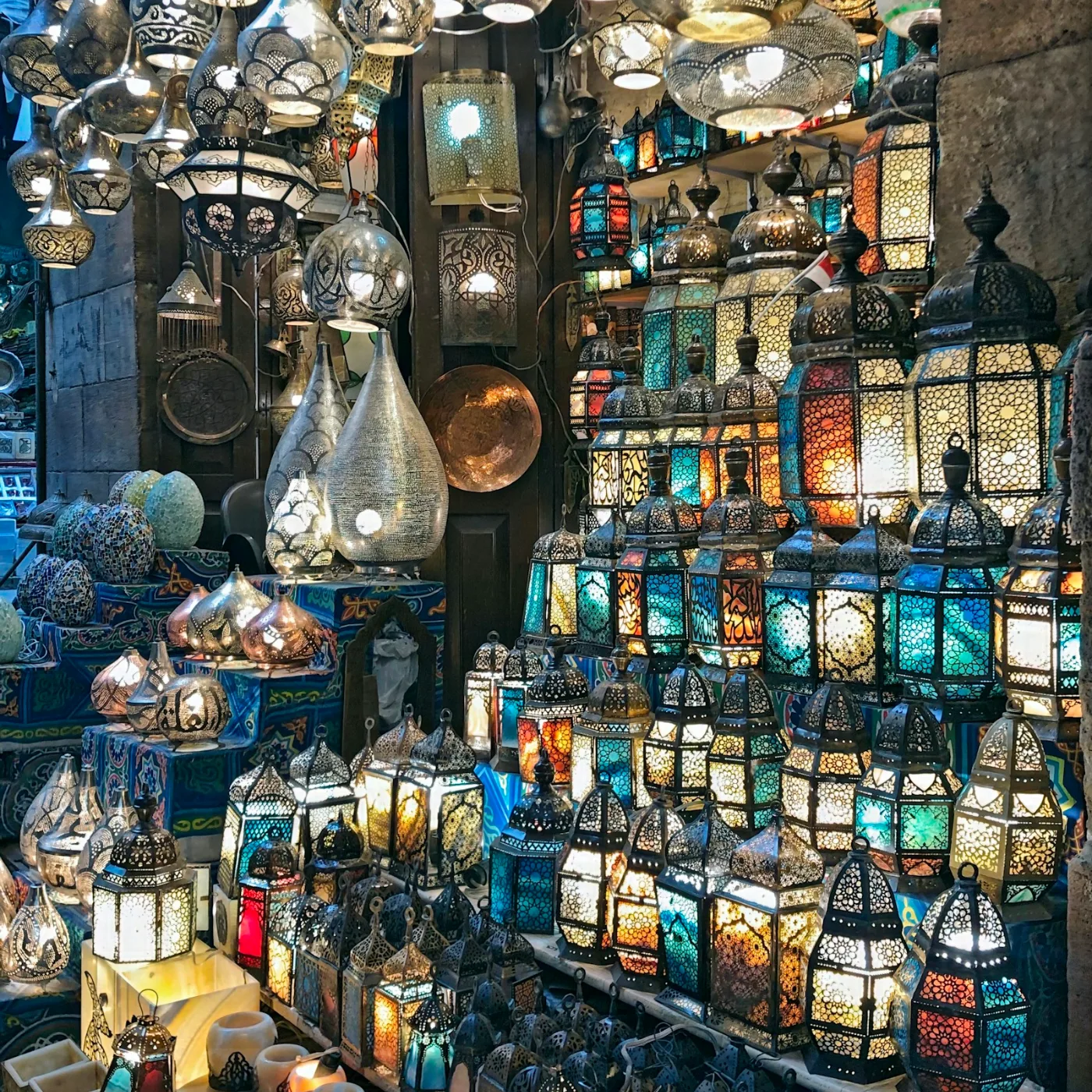
Shop for crafts: brass lanterns, hand-beaten copper, silver jewellery and cartouches, mother-of-pearl inlaid boxes, alabaster, scarves and perfume bottles.
Visit the spice stalls for cumin, hibiscus, saffron and dried rose buds.
Stop for tea at El Fishawy or another traditional café and watch the evening crowds.
Walk al-Muizz Street at sunset, when its historic buildings are lit up.
Climb a minaret or visit the mosques of Al-Azhar and Sultan al-Ghuri, dressing modestly and following local rules.
Watch a Tanoura performance of whirling dance at the nearby Al-Ghuri complex when performances are scheduled.
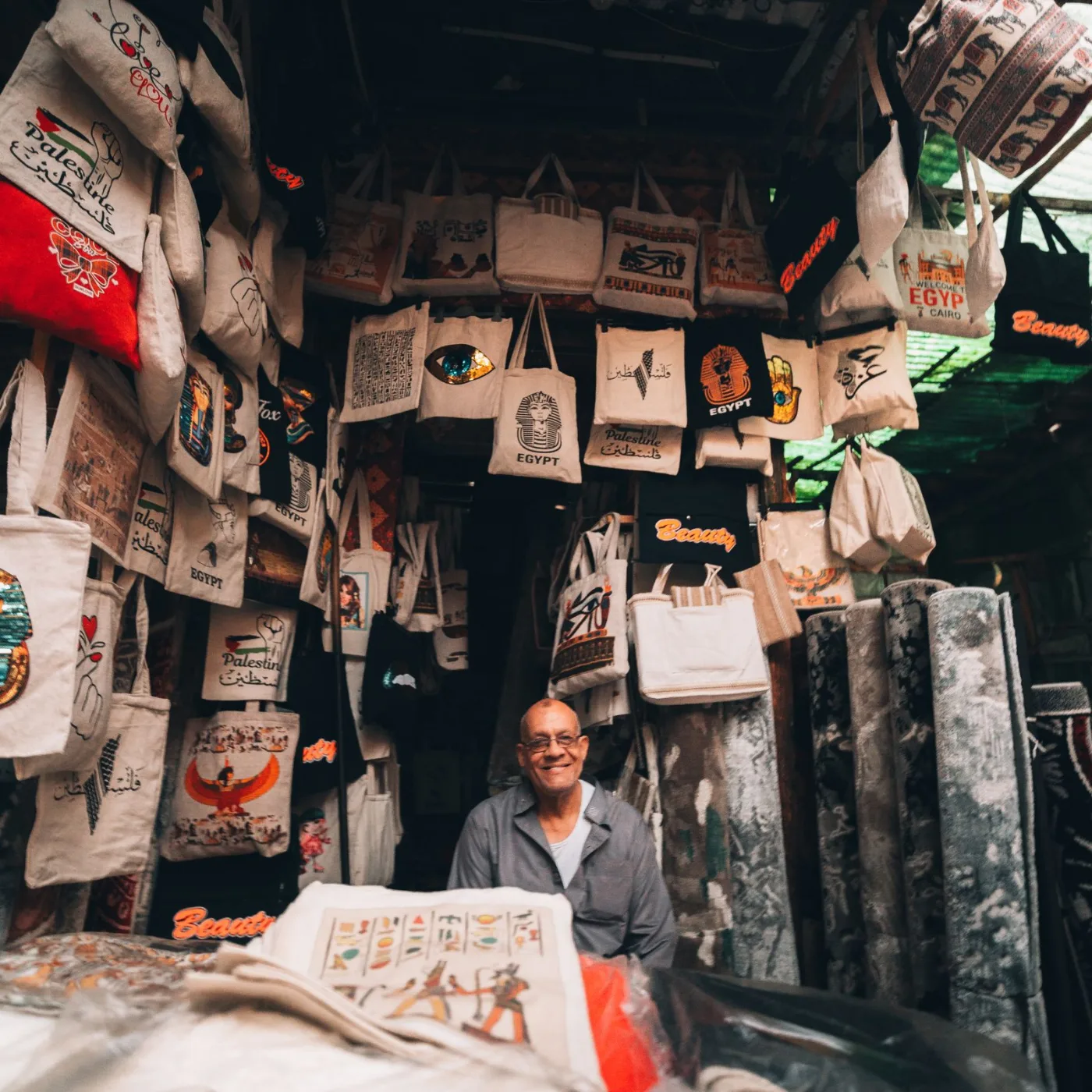
Khan el-Khalili can be visited year-round. From October to April, evenings are pleasant for strolling, while in summer the bazaar is best enjoyed after sunset, when the air cools and the streets fill with Cairo families.
Late afternoon into the evening is the most atmospheric time. Mornings are calmer for shopping, but some shops open later in the day. During Ramadan, the area becomes especially lively after the evening meal.
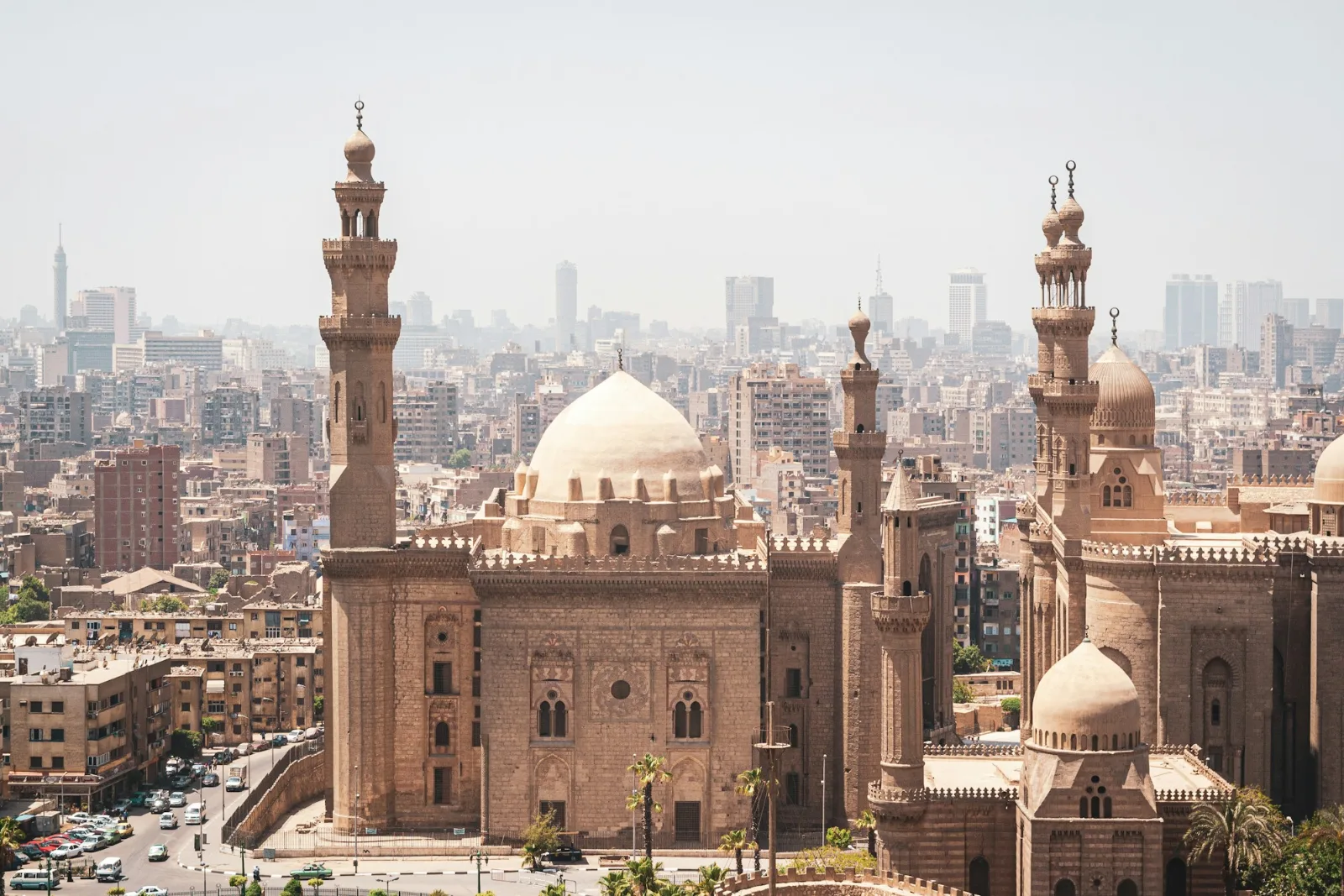
Khan el-Khalili is in Islamic Cairo, in the al-Gamaliya district, a few kilometres east of downtown and Tahrir Square.
By taxi or ride-hailing app: Ask for Al-Hussein Square, at the main entrance to the bazaar.
With a tour: It combines well with the Citadel of Saladin, Al-Azhar Mosque or an evening walk on al-Muizz Street.
From Giza: Allow 45–75 minutes from the pyramids area, depending on traffic.
El Fishawy café. Tucked into a narrow alley, this famous café has served mint tea and Turkish coffee for well over two centuries, with mirrors, carved wood and brass lanterns. Nobel laureate Naguib Mahfouz was among its regulars.
Al-Muizz Street. Just steps away, this medieval street is lined with mosques, madrasas and palaces from the Fatimid and Mamluk eras. In the evening the monuments are softly lit, perfect for a stroll.
Bayt al-Suhaymi. A beautifully preserved Ottoman merchant’s house with wooden mashrabiya windows, quiet courtyards and gardens.
Tanoura at Wekalet El Ghouri. In a restored caravanserai near the bazaar, dancers in colourful skirts spin for long stretches in the hypnotic Tanoura dance, a show loved by visitors.
Craftsmen at work. Look for artisans hammering copper, inlaying mother-of-pearl and blending perfumes in tiny workshops. Combine it with a visit to the Cairo Citadel.
Entry: Free. The bazaar is a public market area.
Opening hours: Shop hours vary. Many open from late morning and stay open until late in the evening, and cafés keep later hours.
Mosques: Mosques are free to enter outside prayer times, though some historic monuments on al-Muizz Street require a ticket.
Tips: - Bargaining is expected. Start well below the first price and keep it friendly. - Carry small notes in Egyptian pounds. - Keep valuables secure in crowded lanes. - Dress modestly, especially if you plan to enter mosques. Women should carry a scarf.
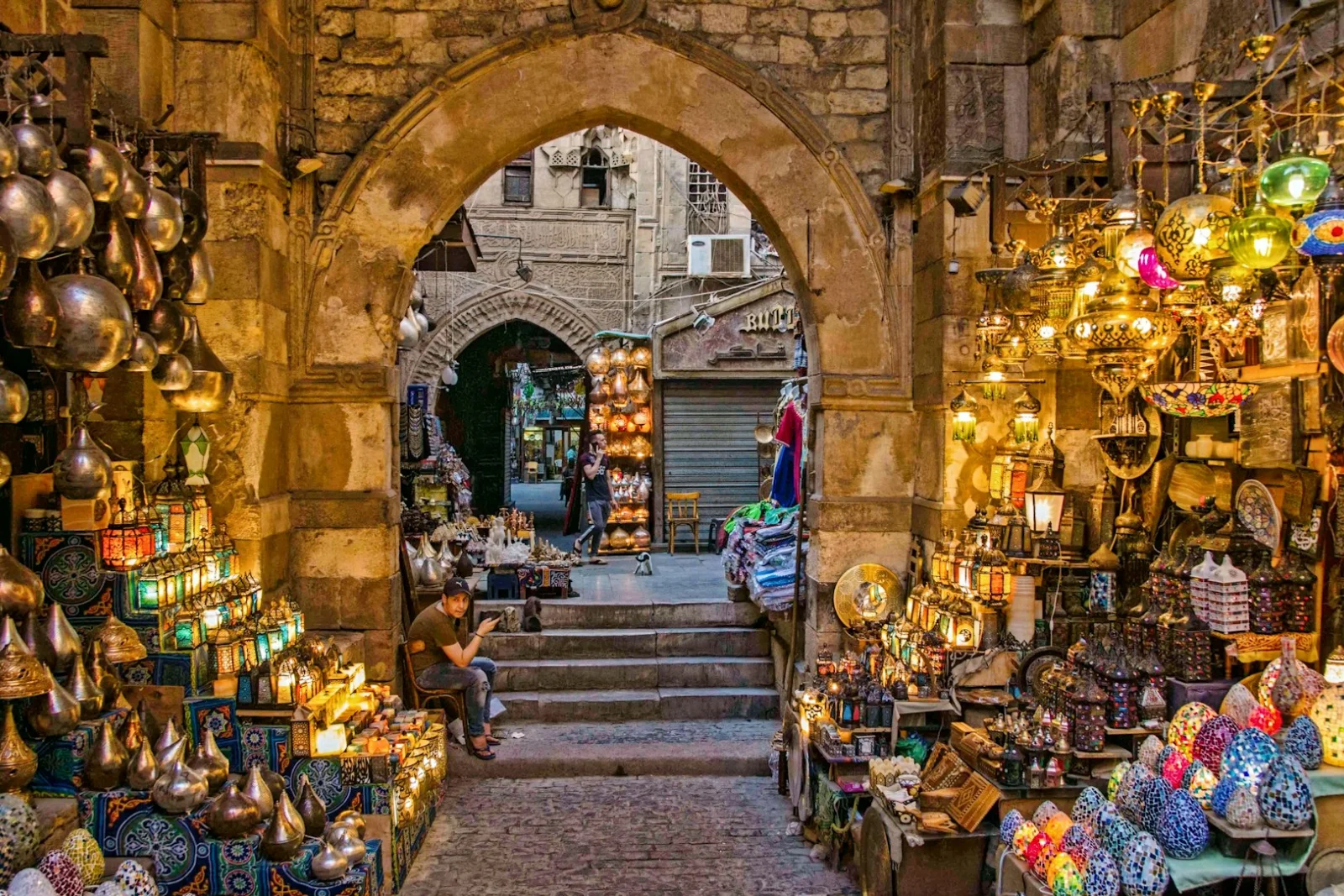
Visit in the evening, when hundreds of lanterns light up the shops and alleys.
The narrow lanes, copper workshops and colourful spice stalls are full of details to capture.
A table at one of the historic cafés is the perfect place to watch and photograph the life of the bazaar.
It is always polite to ask shopkeepers before taking close-up portraits.
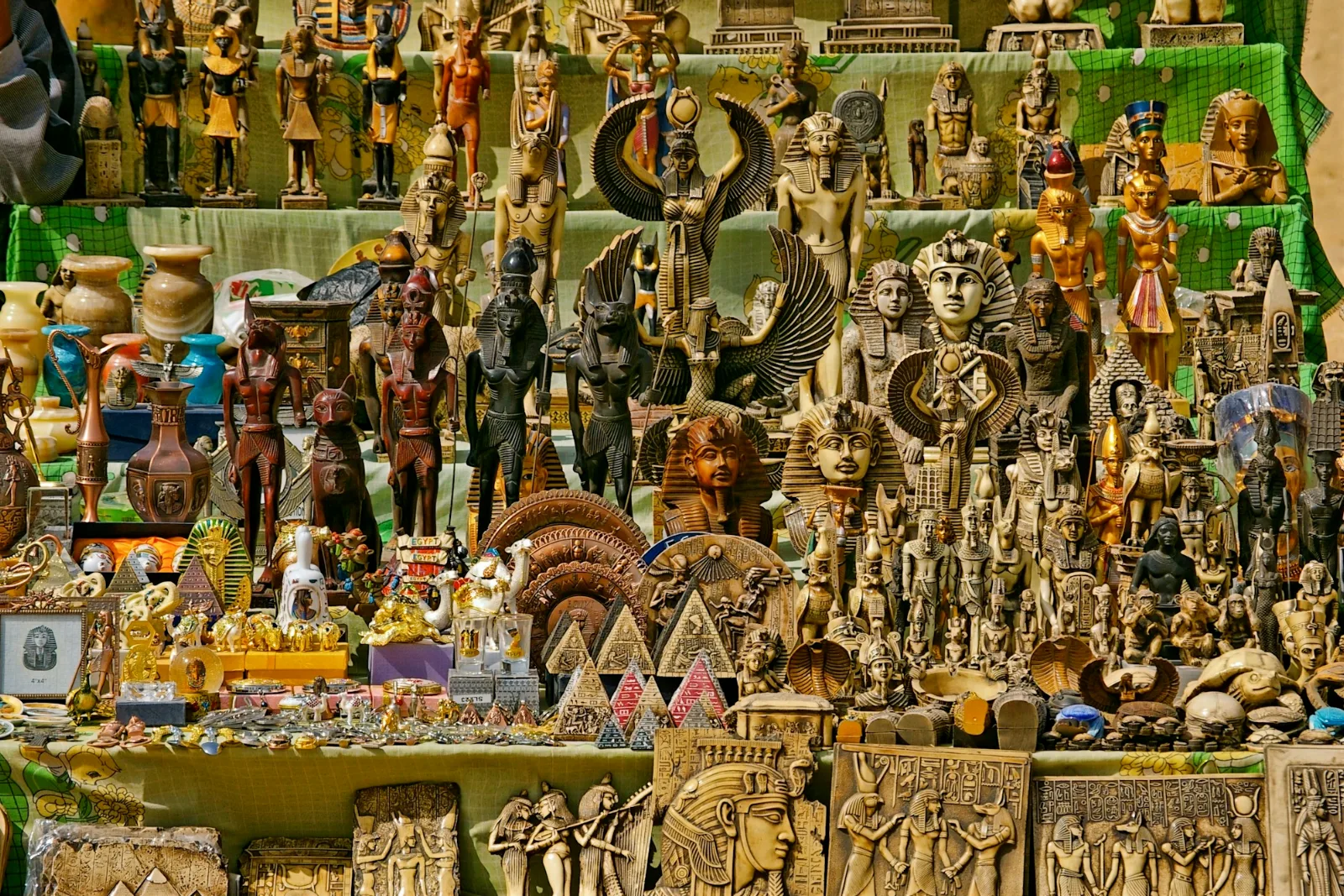
After days among the monuments of the pharaohs, Khan el-Khalili shows you Cairo as a living, breathing city. It is a place to bargain, wander, people-watch and taste. Medieval architecture, family workshops and centuries-old cafés make it the perfect end to a day of sightseeing.
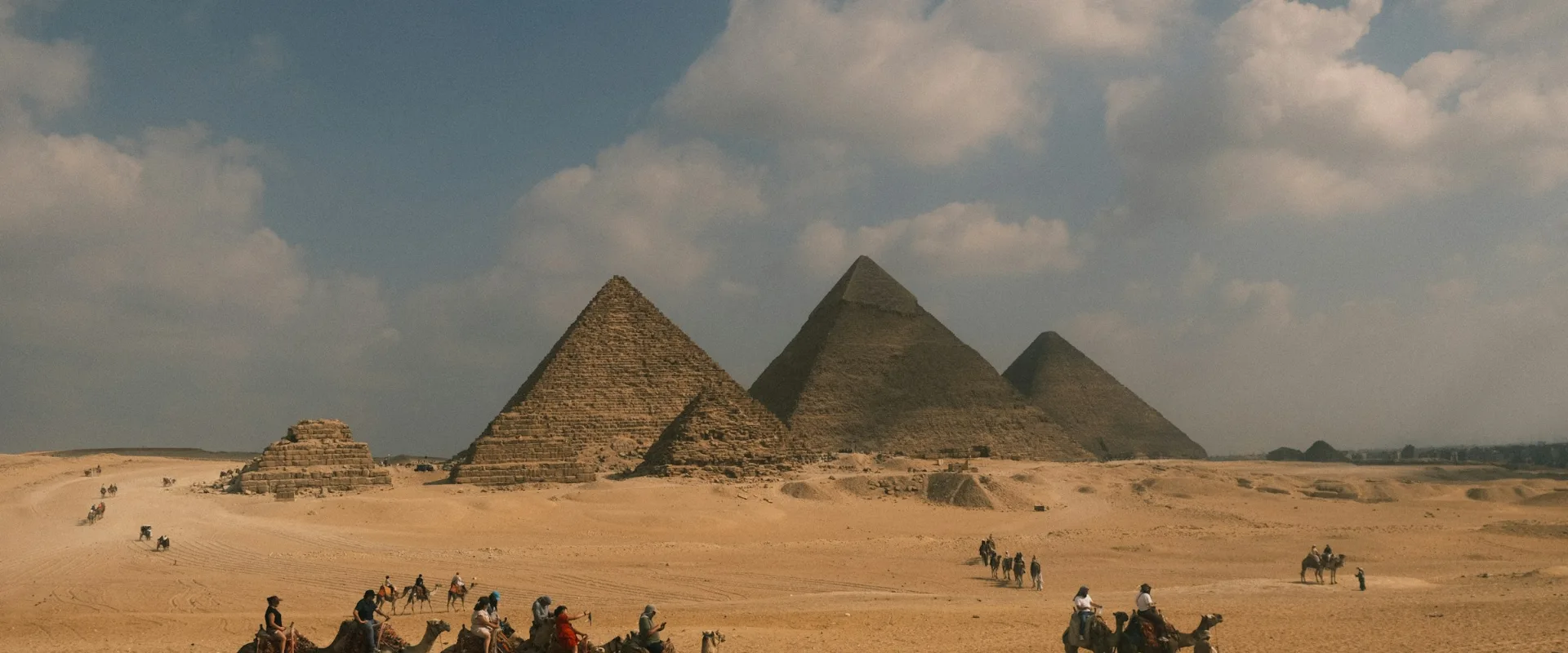
The Great Pyramids of Giza: spend the morning at Giza and the evening in the bazaar.
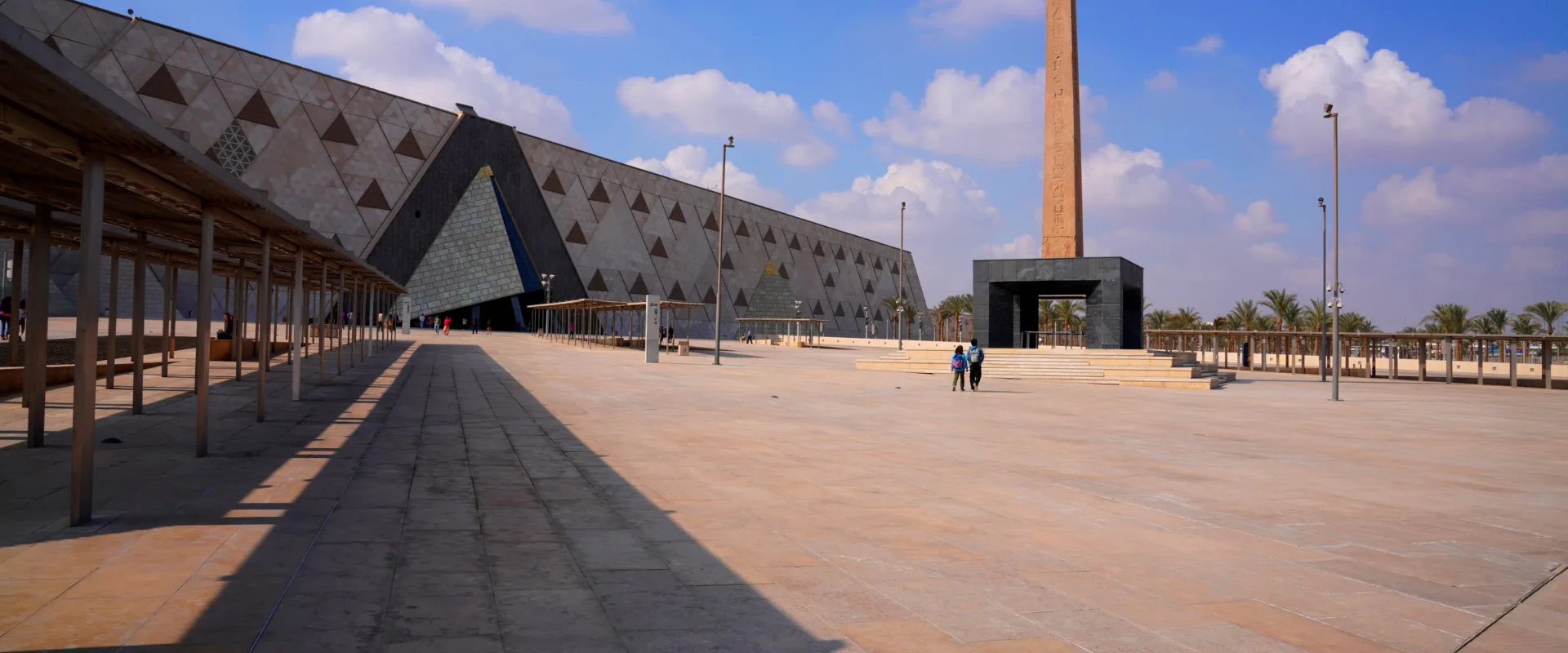
The Grand Egyptian Museum: Egypt’s newest landmark museum.
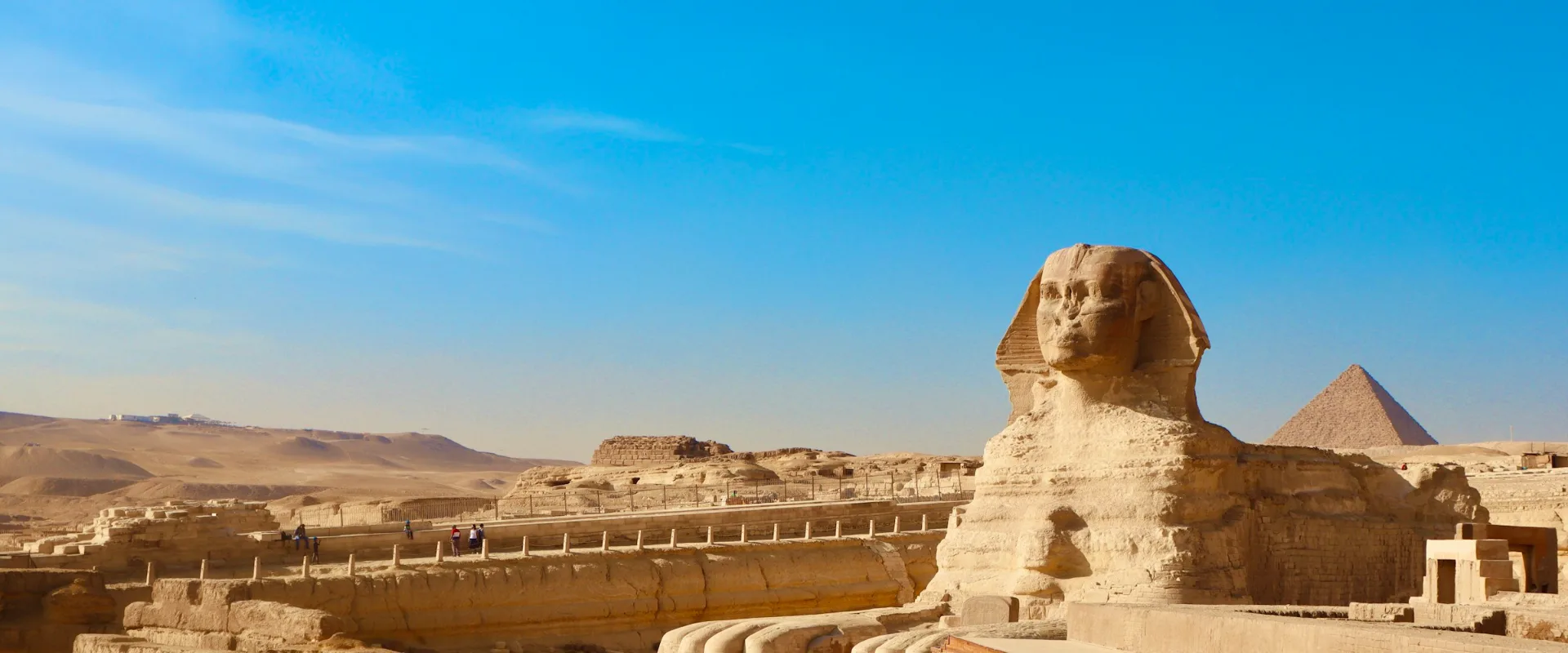
The Great Sphinx of Giza: the guardian of the pyramids.
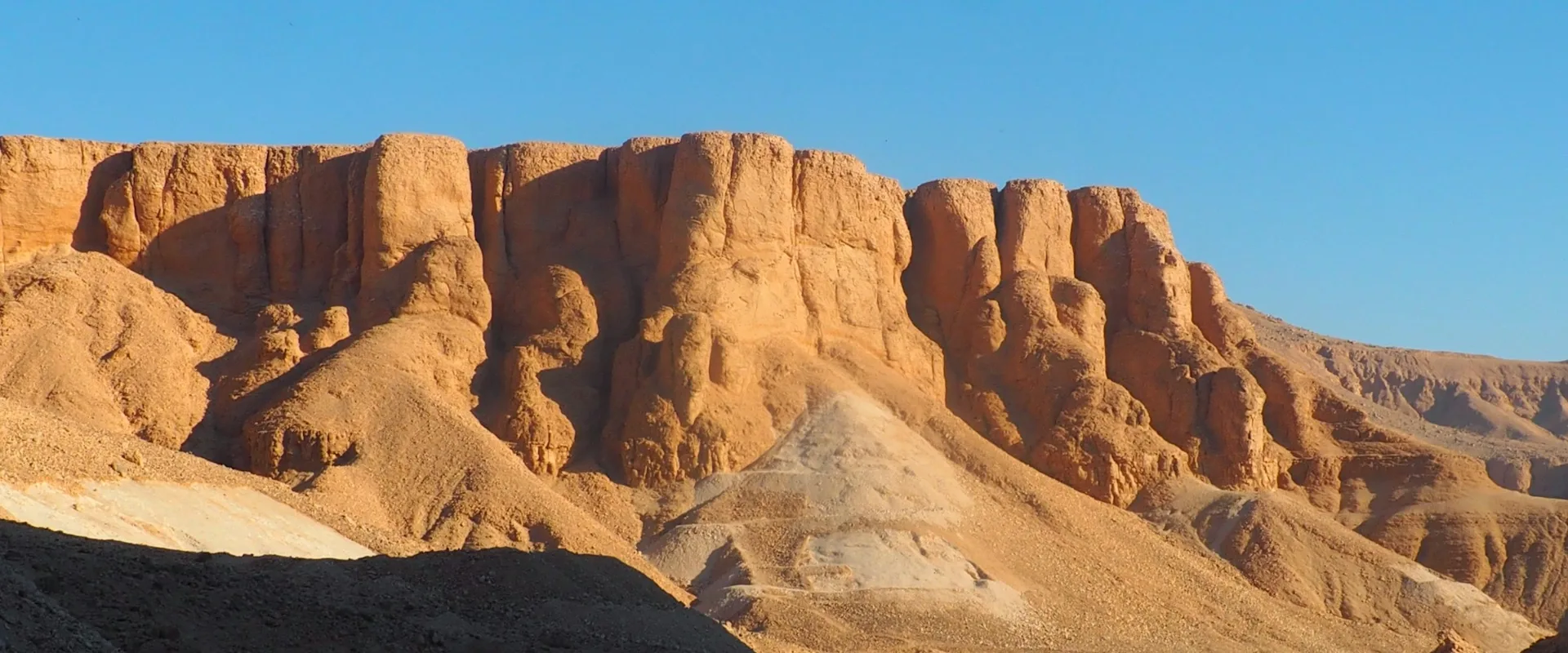
Luxor Temple: another great evening visit, in Upper Egypt.

Round-the-clock 24/7 support from expert local guides and a professional customer care team, before and throughout your trip.


Copyright © 2026 Egyptista